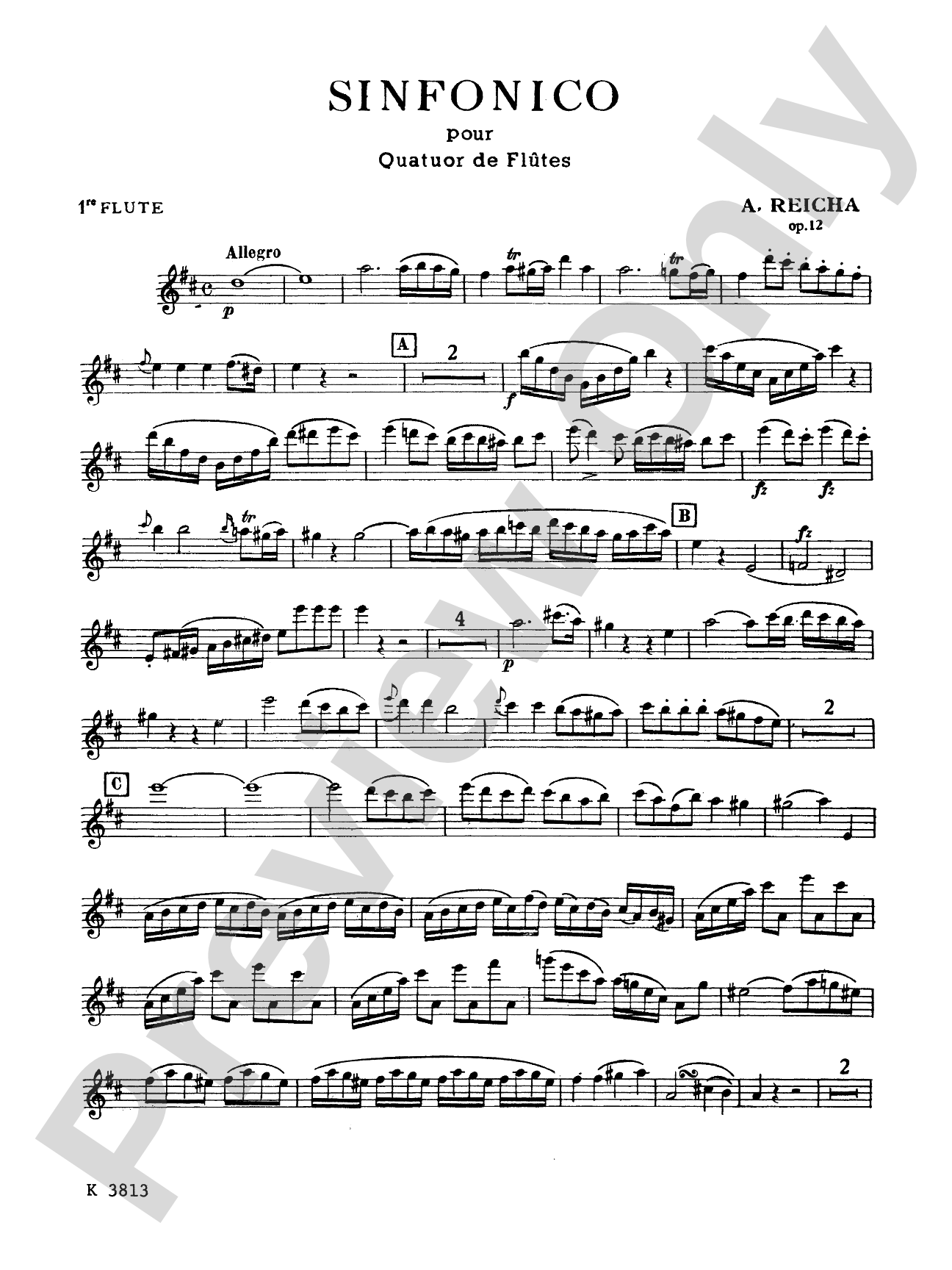
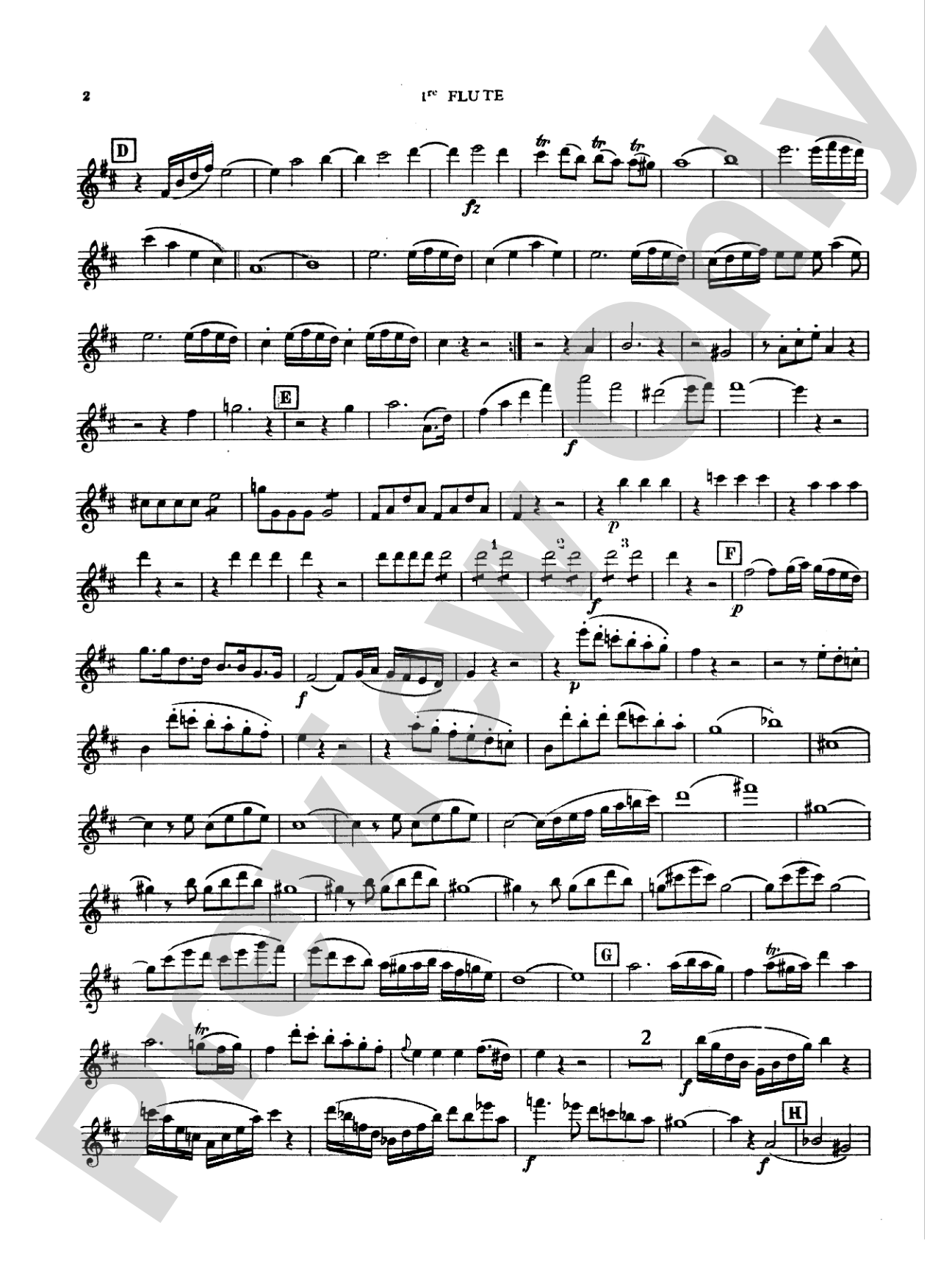
Reicha: Sinfonico, Op. 12 Sheet Music Preview

Reicha: Sinfonico, Op. 12

By Anton Reicha

Item: 00-PC-0008945

Digital Download
$8.99
Description
Expertly arranged Flute Quartet by Anton Reicha from the Kalmus Edition series. This is from the Classical and Romantic eras.

Don't just read it, hear it, play along with it, and watch your students grow with it. In MakeMusic Cloud, Reicha: Sinfonico, Op. 12 comes alive with professional accompaniment, adjustable tempo, and built-in practice tools that turn solo practice into real progress.

Sample Audio
No sample audio found.
Sample Video
Additional Details
Series: Kalmus Edition
Publisher: Alfred Music
Page Count: 36
SKU: 00-PC-0008945

More about this title

About the Composer: Antonin Reicha

Antonin Reicha (1770-1836) was a Czech-born composer and theorist who spent much of his career in Paris, where he became a respected voice in musical education and composition. His prolific output spans symphonies, chamber works, wind music, and vocal compositions, and he earned particular recognition for his fugues and his influential writings on composition and counterpoint. Reicha's chamber works demonstrate his gift for clear instrumental writing and formal clarity, making them valuable repertoire for serious student ensembles.

Why we love this

Reicha's Sinfonico presents four flutes with genuinely appealing material that respects the capacity of each player rather than demanding virtuosity for its own sake. The quartet writing is transparent and musical, giving every voice a stake in the texture without relying on unison passages to carry the weight. Directors working with intermediate flute ensembles gain substantial repertoire that sounds substantial without requiring soloists.

What to expect

Reicha's writing glows with the clarity and balance of Classical chamber music while hinting at the richer harmonic vocabulary emerging in the Romantic era. The music unfolds with logic and grace, inviting players into conversation rather than demanding they keep up. Each voice gets room to breathe, and the overall character is refined and intelligent without coldness.

Who it's for

This flute quartet works best with intermediate and advancing high school or community ensemble players who read with confidence and have developed basic intonation control. The 36-page score provides substantial repertoire for a focused sectional or for competition and recital programming. Flute teachers looking for ensemble repertoire that challenges students without exceeding their technical range will find this especially useful.

How to get the most out of it

  • Attend to the balance between first and second flute lines in passages where both carry melodic weight; neither player should dominate, and the texture thrives when both voices are equally present.
  • Use the Kalmus edition's clear part layout to identify places where harmonic support voices (third and fourth flutes) need stability and grounding to anchor chord structures.
  • Shape longer phrases by planning the arc of dynamics rather than treating each marked dynamic change in isolation; this creates forward momentum across multi-measure phrases.
  • Establish a clear ensemble pulse in passages with rhythmic complexity by counting through rehearsals before focusing on expressive elements.

How to use it

This quartet sits naturally in a chamber concert alongside other Classical and early Romantic woodwind literature, or as a substantial closing work on a flute sectional recital. Its moderate length and substantive musical content make it suitable for festival performances or for a concert pairing smaller flute ensembles with larger group repertoire. Consider programming it early in the year when ensemble members are still building confidence with sight-reading.

Skills your students will build

  • Ensemble listening and intonation adjustment in a four-part texture
  • Balance and blend of harmonic voices beneath a moving melody
  • Phrasing and dynamic shaping across extended musical lines
  • Reading and executing Classical formal structures (exposition, development, recapitulation patterns)
  • Rhythmic precision in passages mixing duple and compound meters

You May Also Like