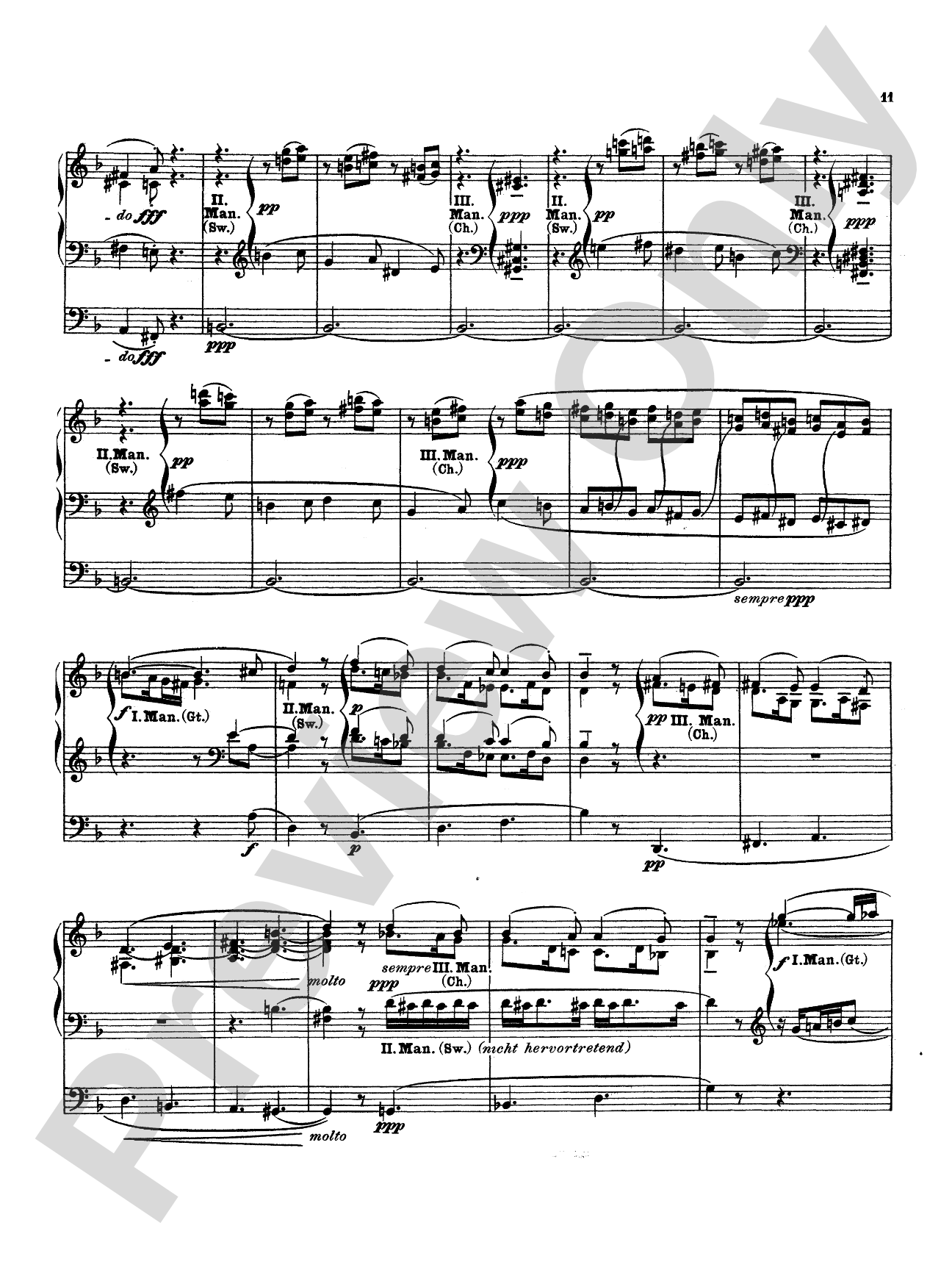
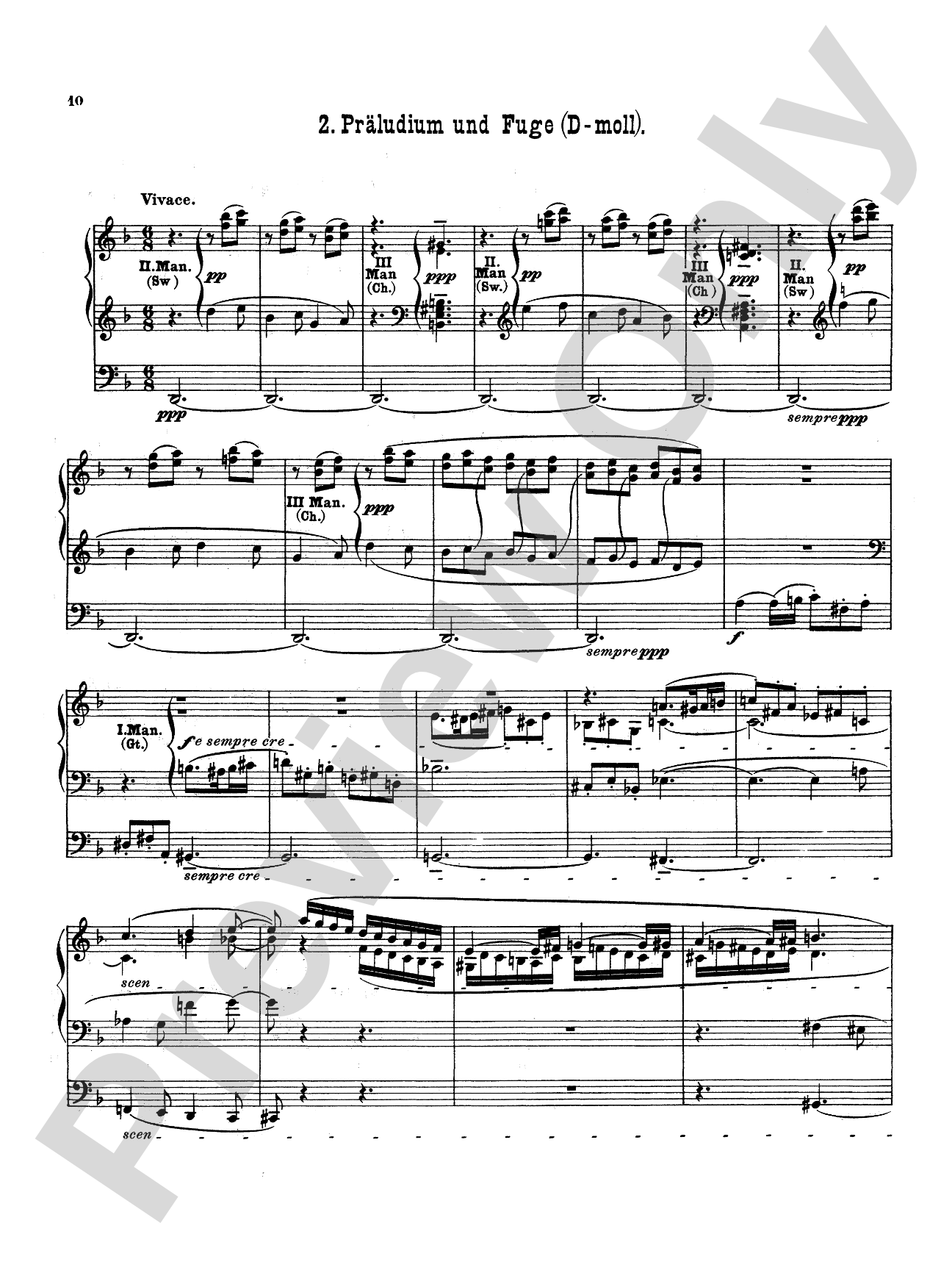
Reger: Two Easy Preludes and Fugues, Op. 56 Sheet Music Preview

Reger: Two Easy Preludes and Fugues, Op. 56

By Max Reger

Item: 00-PC-0009844

Digital Download
$3.99
Description
A collection of exercises, for Organ, composed by Max Reger.

Don't just read it, hear it, play along with it, and watch your students grow with it. In MakeMusic Cloud, Reger: Two Easy Preludes and Fugues, Op. 56 comes alive with professional accompaniment, adjustable tempo, and built-in practice tools that turn solo practice into real progress.

Sample Audio
No sample audio found.
Sample Video
Additional Details
Series: Kalmus Edition
Publisher: Alfred Music
Page Count: 20
SKU: 00-PC-0009844

More about this title

About the Composer: Max Reger

Max Reger (1873-1916) was a German composer, pianist, and organist whose prolific output spanned nearly every musical genre. His organ works stand among the most substantial contributions to the instrument's repertoire since Bach, combining Romantic harmonic language with rigorous contrapuntal structures. Reger held teaching positions at several German conservatories and served as Generalmusikdirektor in Meiningen, where he championed both contemporary music and masterworks from earlier centuries.

His approach to organ composition balanced technical demands with educational purpose. The Two Easy Preludes and Fugues, Op. 56 exemplify this philosophy, offering organists access to the structural clarity and harmonic sophistication of the prelude-and-fugue tradition without requiring the virtuosity his later organ works demand.

Why we love this

Reger understood the organ student's journey. These pieces offer genuine artistic substance while remaining within reach of developing players, and the pairing of prelude and fugue teaches form and counterpoint simultaneously. The harmonic language stretches students beyond early Baroque models without abandoning clarity or structural logic.

What to expect

The preludes establish a meditative, introspective mood through flowing figurations and rich harmonic movement, inviting the player into careful listening and expressive control. When the fugues arrive, intellectual clarity takes over: each voice enters with purpose, and the counterpoint unfolds with the inevitability of a logical argument. There is warmth here, not austerity, and the Romantic sensibility ensures these remain deeply musical despite their structural rigor.

Who it's for

Organists with 2-3 years of study seeking to deepen their command of two-part and three-part counterpoint while developing a sophisticated harmonic vocabulary. Teachers of advanced intermediate students will find these pieces ideal for bridging the gap between simple Bach exercises and larger Romantic-era organ works. These are also valuable recital pieces for organists preparing programs that blend historical tradition with Romantic sensibility.

How to get the most out of it

  • Shape each prelude's melodic line clearly over the harmonic progression rather than treating it as a technical study, even at moderate tempo.
  • Enter the fugue subject with confidence and distinct articulation; the subject's identity carries the entire movement.
  • Allow the registrations suggested by Reger's texture to guide your choice of stops, balancing clarity of line with warmth in the harmonic foundation.
  • Take time between the prelude and fugue to reset; the fugue represents a shift from free exploration to intellectual rigor.

How to use it

Program these as a paired set to show the prelude-and-fugue tradition as Reger understood it, or separate them to bookend a recital section dedicated to organ literature across centuries. They work equally well in a service context where a prelude alone can precede hymn singing or a shorter fugue can fill an interlude.

Skills your students will build

  • Three-part counterpoint and voice independence
  • Recognition and execution of fugal exposition and development
  • Harmonic analysis within Romantic-era tonal language
  • Independent pedal work in balance with manual voices
  • Phrasing and shaping in both free and strict forms

You May Also Like