
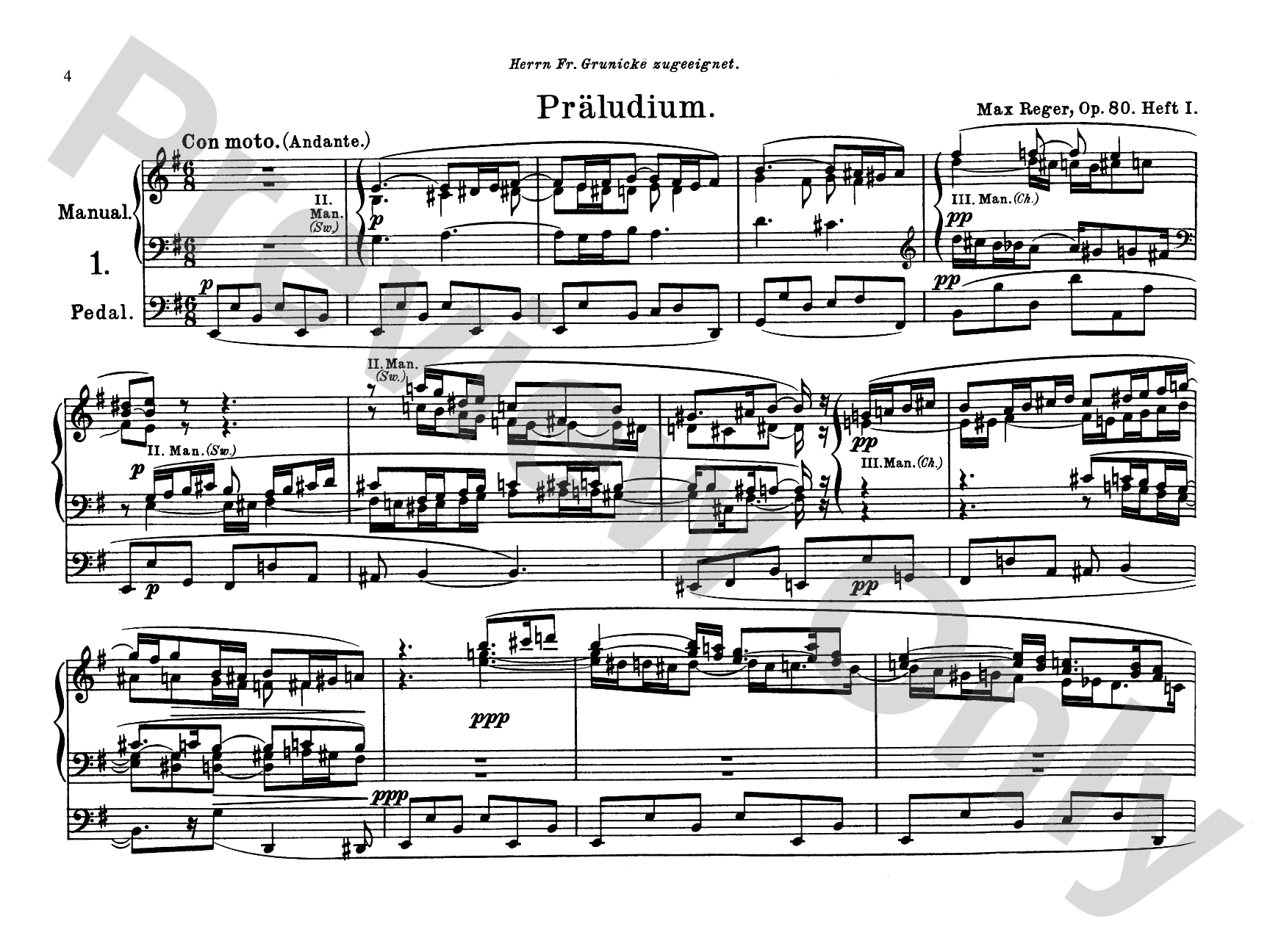
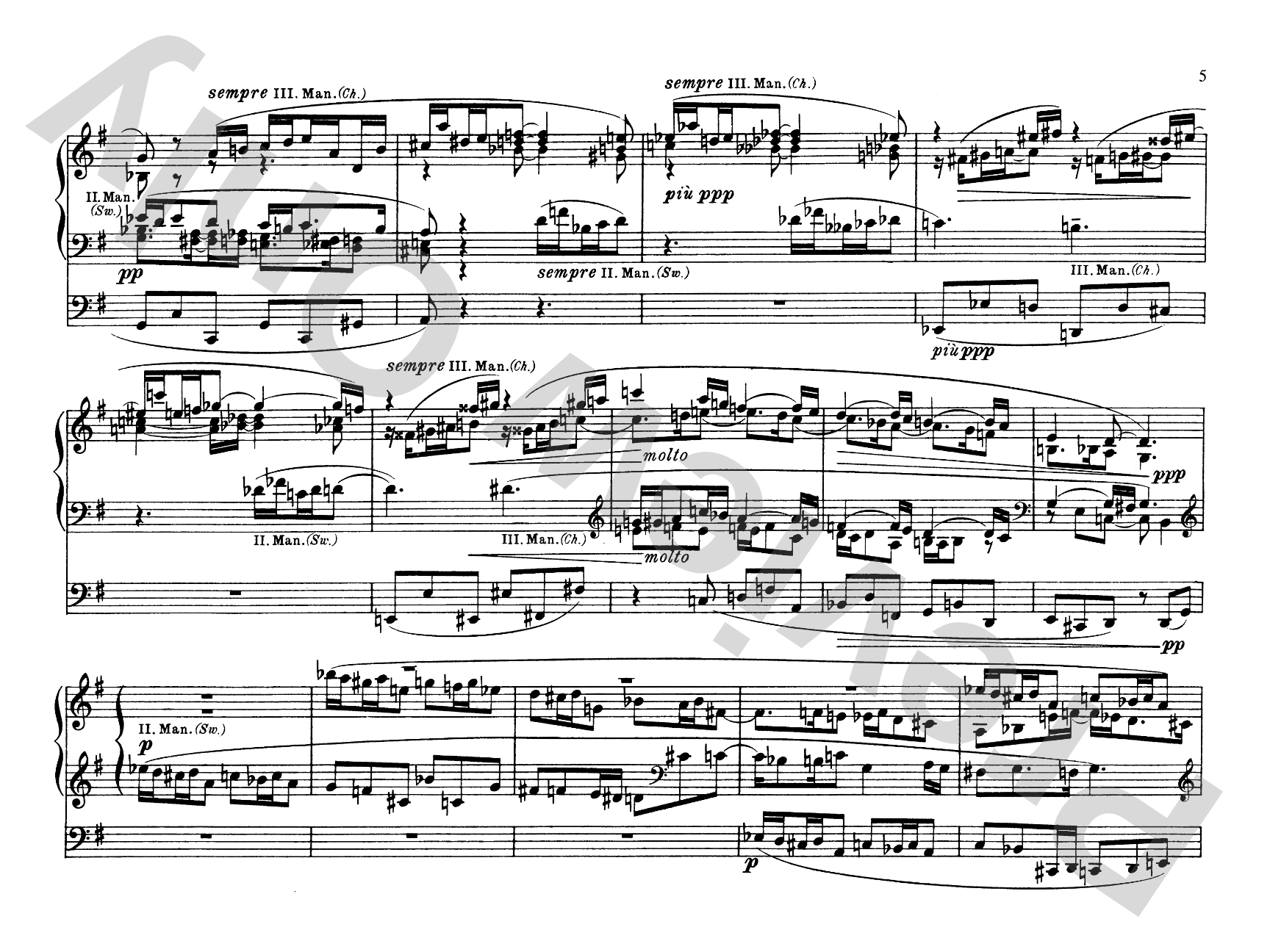
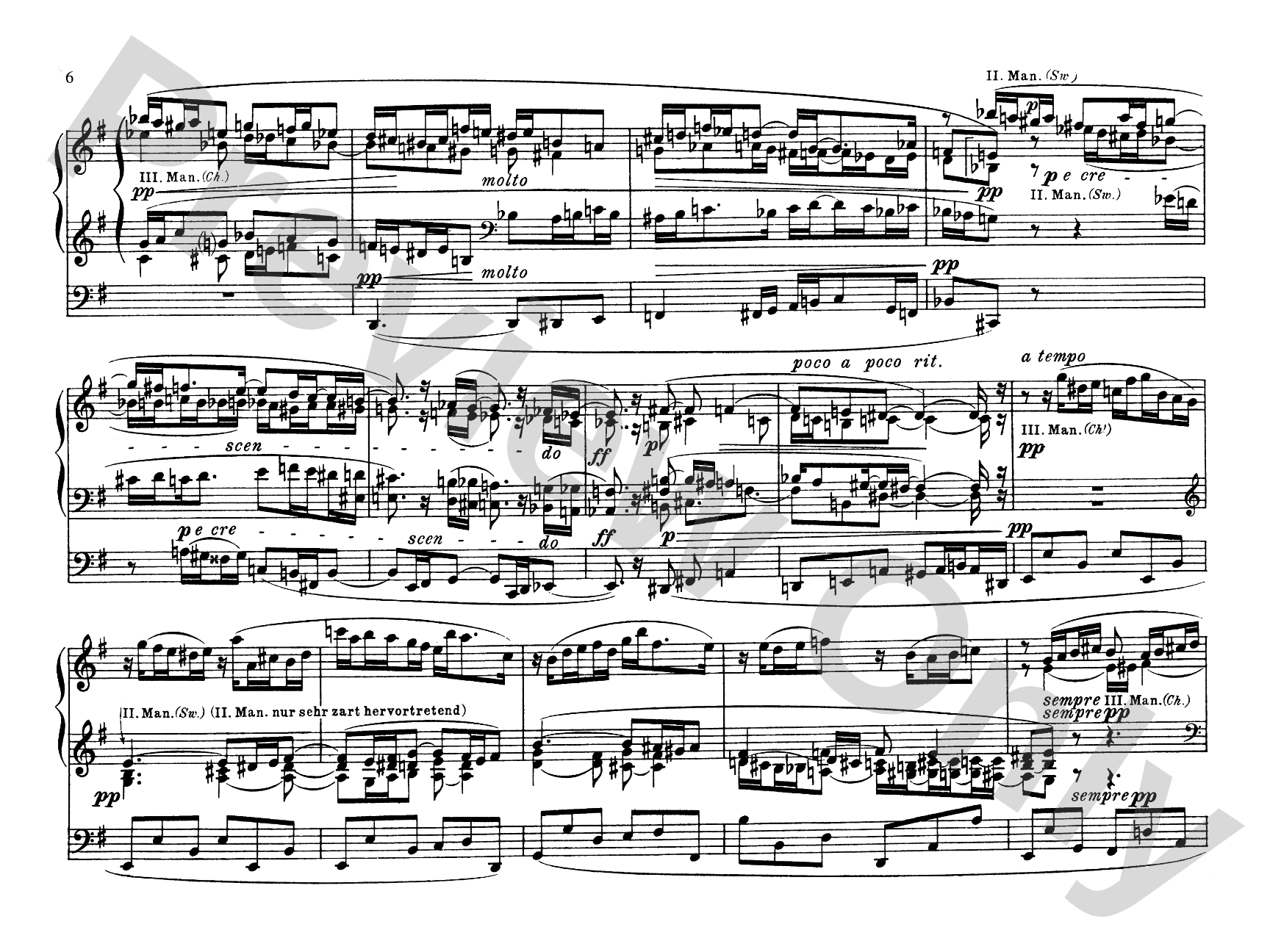
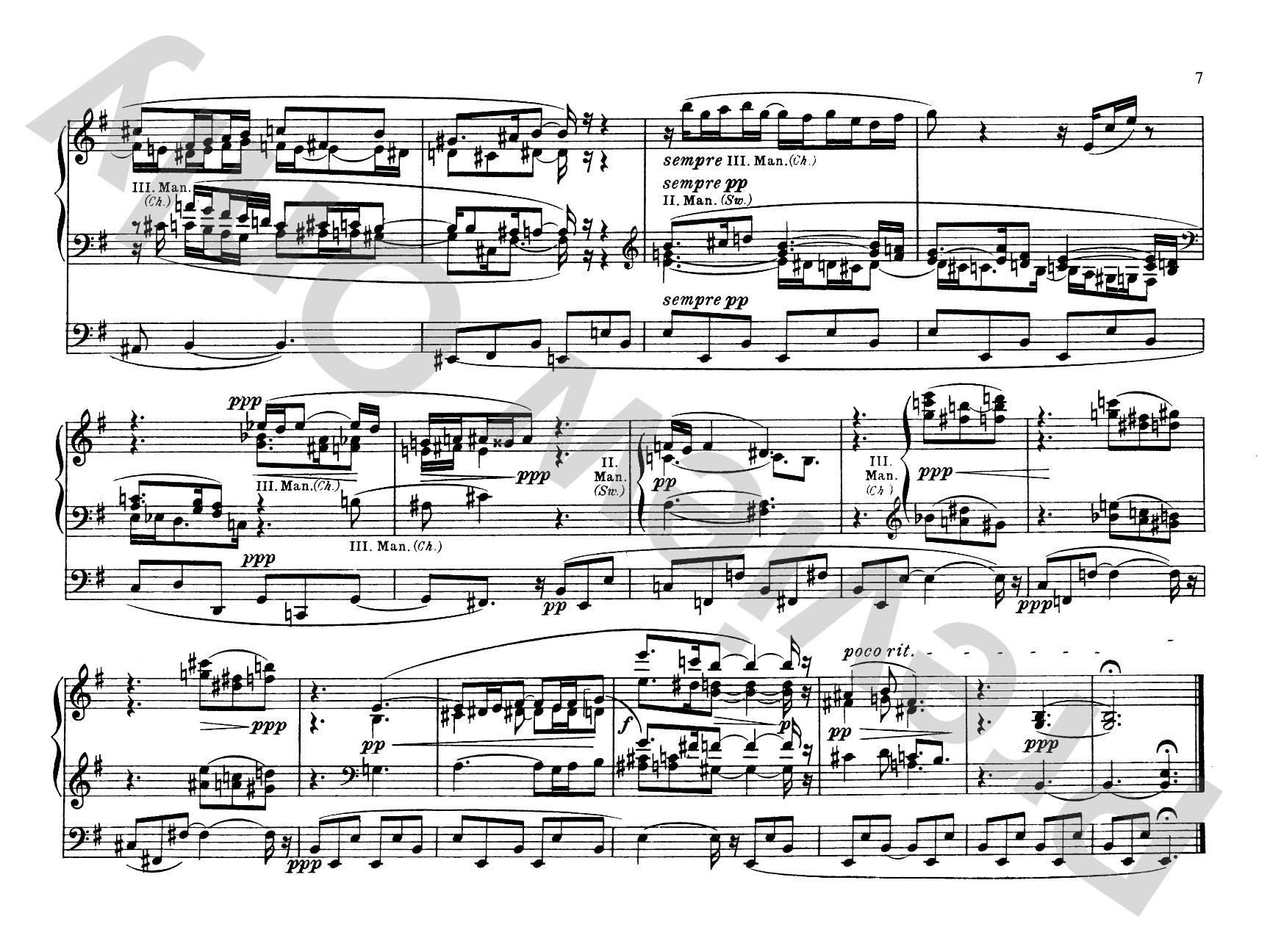

Reger: Twelve Pieces for Organ, Op. 80: Organ Comb Bound Book
By Max Reger
Item: 00-PK-0002822

$14.99
Pickup currently not available
Buy Extra Parts (Digital PDF Download)
Parts Added to Cart!
Related Items
Twelve Pieces for Organ, Opus 80: Organ Comb Bound Book |
$14.99
|
View |
Description
The comb binding creates a lay-flat book that is perfect for study and performance.


Don't just read it, hear it, play along with it, and watch your students grow with it. In MakeMusic Cloud, Reger: Twelve Pieces for Organ, Op. 80: Organ Comb Bound Book comes alive with professional accompaniment, adjustable tempo, and built-in practice tools that turn solo practice into real progress.
Open in the Player
Jump straight in and assign it today.
Start Your Free Trial
Open this title and explore the full library in minutes.
Sample Audio
No sample audio found.
Sample Video
No sample videos found.
Additional Details
Series:
Kalmus Edition
Publisher:
Alfred Music
Page Count:
56
SKU:
00-PK-0002822
More about this title
About the Composer: Max Reger
Max Reger (1873, 1916) was a German composer and organist whose prolific output transformed the organ repertoire for the twentieth century. A virtuoso at the keyboard himself, Reger wrote with intimate knowledge of the instrument's capabilities, creating works that demanded technical mastery while exploring the full expressive range of the organ.
Why we love this
These twelve pieces offer organ students and teachers a concentrated collection of Reger's compositional genius without requiring the commitment of his larger chorale preludes or fantasias. The comb binding makes score study and performance prep genuinely practical; pages stay open without weights or hands, which is essential when working through Reger's intricate counterpoint and registration demands. This collection captures the full range of his voice across different forms and moods, giving organists repertoire that strengthens both technical facility and interpretive musicianship.
What to expect
These pieces move between introspection and rhetorical gestures, often within a single work. Reger's harmonic palette brings warmth and chromatic richness to the Romantic sound world, yet his structural clarity keeps the music from dissolving into impression. There is both intellectual rigor and genuine lyricism here; the music demands engagement from the player but rewards that engagement with emotional resonance.
Who it's for
Advanced intermediate and advanced organists seeking substantial solo repertoire that deepens harmonic language and contrapuntal thinking. Teachers preparing students for competitions, recitals, or conservatory entrance examinations will find multiple performance-ready pieces in varied styles and lengths. This collection also serves organists rebuilding their solo repertoire or those exploring the Romantic organ canon beyond Bach transcriptions.
How to get the most out of it
- Map the harmonic progression before committing to tempos; Reger's chromaticism can obscure the underlying structure, and clarity of harmonic direction prevents the music from becoming muddy.
- Build registration strategy around phrase architecture rather than key areas; these pieces often shift harmonic territory without modulating, and thoughtful manual changes clarify the formal logic.
- Practice pedal passages separately until the independent line feels natural; Reger writes pedal parts that are genuinely musical, not accompaniment, and they demand attention equal to the manuals.
- Record yourself regularly during practice; the complexity of texture can mask balance problems that a listener catches immediately.
How to use it
Program individual pieces across a recital season to showcase different sides of Reger's voice, or group several shorter pieces together to build a single concert segment. These works sit comfortably alongside standard Romantic organ repertoire such as Franck or Widor, and they provide useful contrast to larger contemporary works. For teaching purposes, select pieces that target specific technique or harmonic goals; the collection's variety makes it easy to find models for particular learning objectives.
Skills your students will build
- Reading and executing complex chromatic harmony across three staves
- Independent pedal line execution in counterpoint with manual parts
- Phrase shaping and structural navigation through tonal ambiguity
- Registration choices that clarify harmonic motion and textural layers
- Balancing lyrical expression with formal architectural demands