
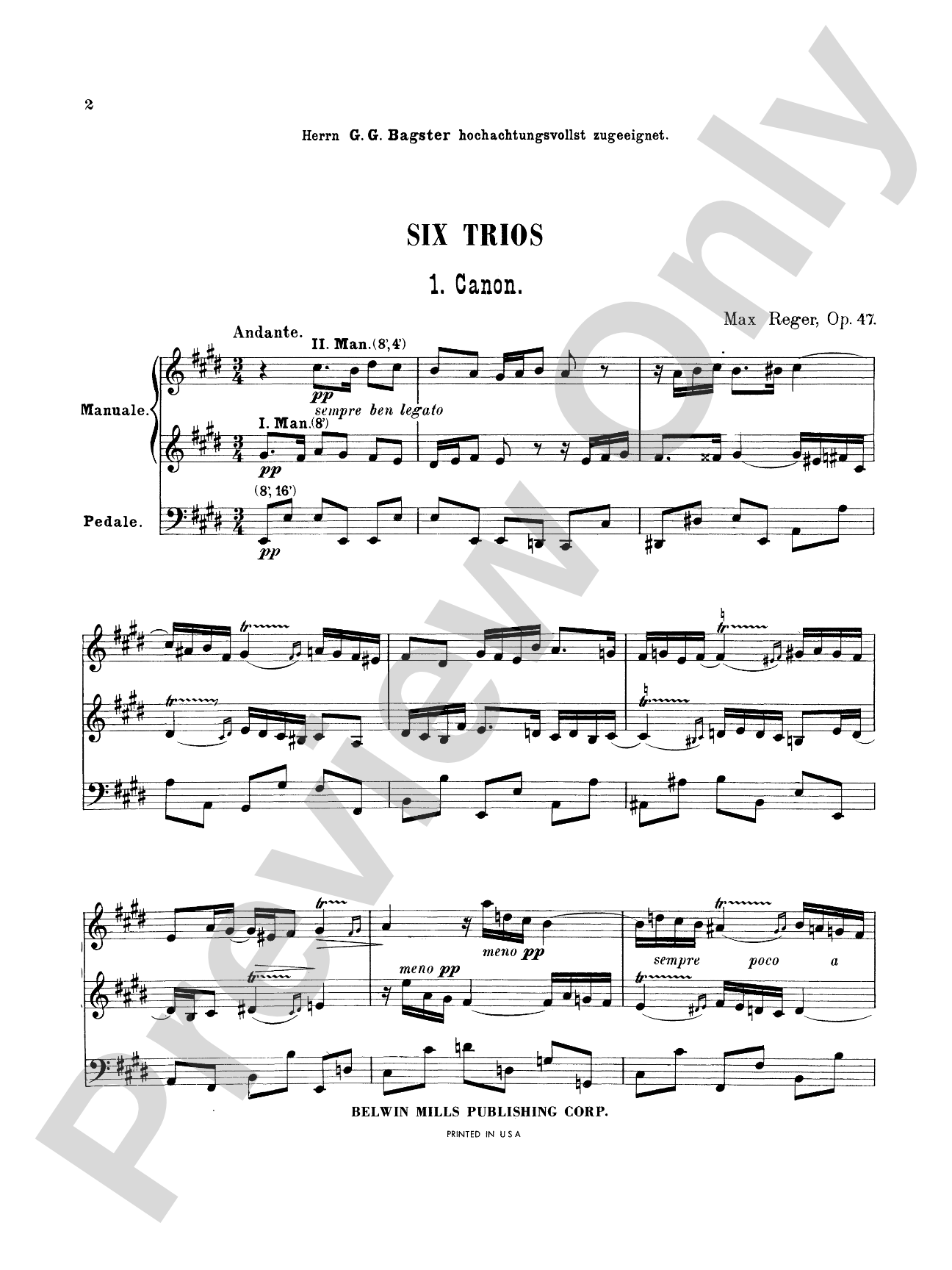
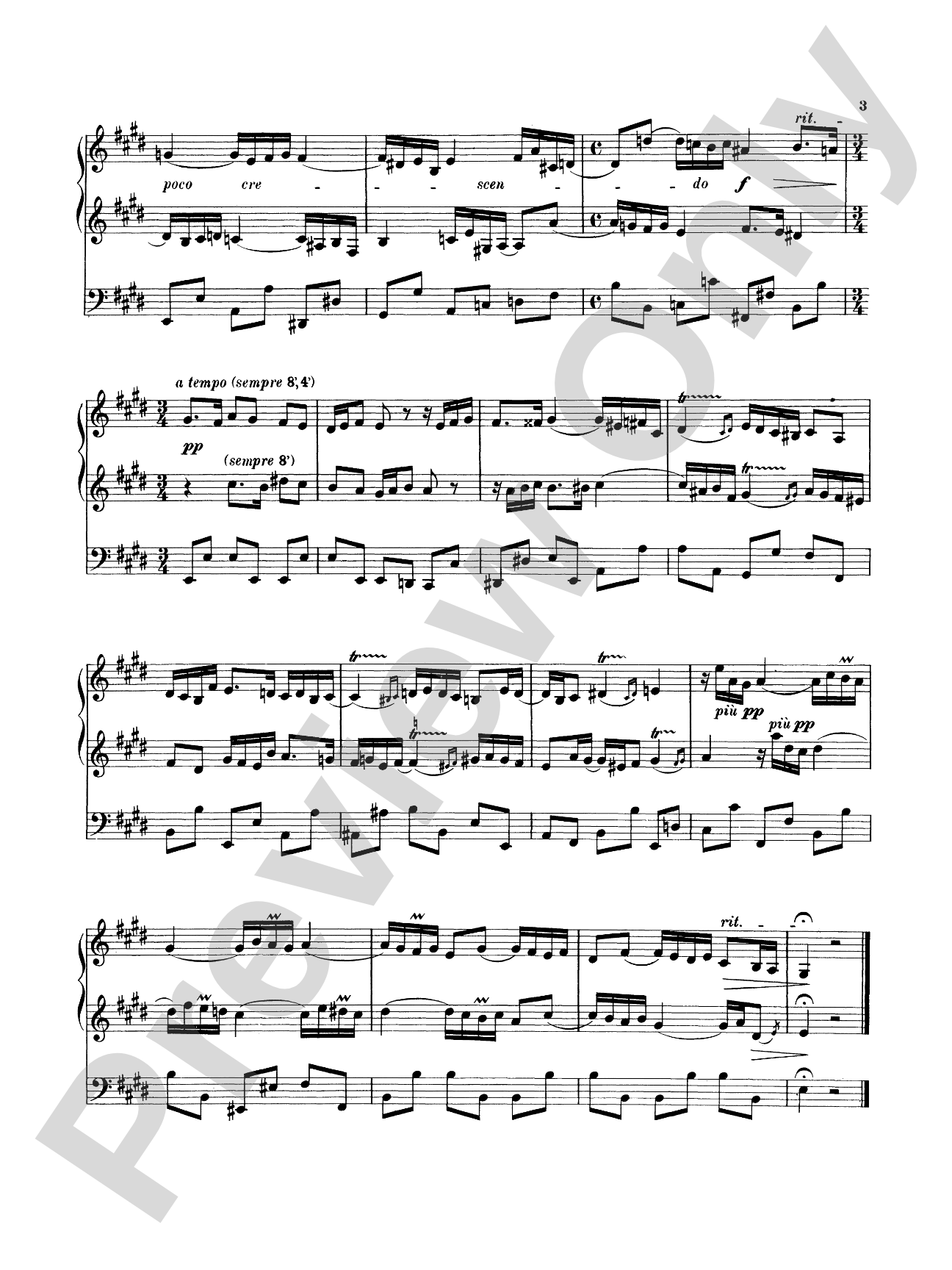

Reger: Six Trios, Op. 47
By Max Reger
Item: 00-PK-0003678

$7.99
Pickup currently not available
Buy Extra Parts (Digital PDF Download)
| Product | Price | Quantity |
|---|---|---|
| Reger: Six Trios, Op. 47 | $0.99 | |
| Reger: Six Trios, Op. 47 | $0.99 | |
| Reger: Six Trios, Op. 47 | $0.99 | |
| Reger: Six Trios, Op. 47 | $0.99 | |
| Reger: Six Trios, Op. 47 | $0.99 | |
| Reger: Six Trios, Op. 47 | $0.99 |
Parts Added to Cart!
Description


Don't just read it, hear it, play along with it, and watch your students grow with it. In MakeMusic Cloud, Reger: Six Trios, Op. 47 comes alive with professional accompaniment, adjustable tempo, and built-in practice tools that turn solo practice into real progress.
Open in the Player
Jump straight in and assign it today.
Start Your Free Trial
Open this title and explore the full library in minutes.
Sample Audio
No sample audio found.
Sample Video
No sample videos found.
Additional Details
Series:
Kalmus Edition
Publisher:
Alfred Music
Page Count:
24
SKU:
00-PK-0003678
More about this title
About the Composer: Max Reger
Max Reger (1873-1916) was a German composer, organist, and conductor whose prolific output spanned nearly every musical genre. Though often overshadowed by his contemporaries, Reger brought intellectual rigor and harmonic innovation to early twentieth-century music, earning particular respect as one of the great organ composers of his era.
Reger's organ works occupy a central place in his catalog. He understood the instrument with the precision of a master craftsman, writing idiomatically for both the mechanical and tonal possibilities of the organs he knew. His Six Trios, Op. 47, exemplify his gift for counterpoint and his ability to write music that is both demanding and grateful on the instrument.
Why we love this
These trios strike an ideal balance between technical substance and stylistic accessibility. Reger's writing is contrapuntally sophisticated yet musically direct, giving organists genuine compositional architecture to work with rather than mere technical exercises. The set rewards serious study and yields real artistic returns in performance.
What to expect
Intellectually alive and harmonically rich. Reger's writing unfolds with forward momentum despite its contrapuntal density, creating an experience that is both introspective and unexpectedly modern. The trios balance chromatic boldness with moments of disarming simplicity.
Who it's for
Advanced organists seeking substantial original works beyond the standard Baroque and early Romantic repertoire. These trios serve equally well as recital pieces and as serious pedagogical studies for developing interpretive maturity and contrapuntal skill.
How to get the most out of it
- Track the three voices with independence of touch and color; use the manual divisions to clarify the counterpoint rather than allowing voices to blur into harmonic wash.
- Approach the harmonic language with confidence. Reger's chromaticism and unexpected resolutions serve musical purpose, not obscurity.
- Practice hand independence rigorously in the slower movements; Reger often writes genuinely difficult voice-leading that demands separate preparation at the keyboards.
- Shape phrases through registration changes rather than relying on dynamic swells. The organ's strength lies in timbral variety, not volume.
How to use it
Program these as a unified set on a solo recital, or select individual trios to pair with earlier organ repertoire and demonstrate the evolution of the medium into the twentieth century. They work particularly well as concert closers for audiences already familiar with Reger's orchestral or choral music.
Skills your students will build
- Voice independence and counterpoint across three manual lines
- Harmonic analysis of chromatic progressions and functional harmony in the Romantic idiom
- Registration planning and timbral variety on the organ
- Rhythmic precision and phrasing across sustained, slow movements
- Pedal technique coordinated with manual independence