
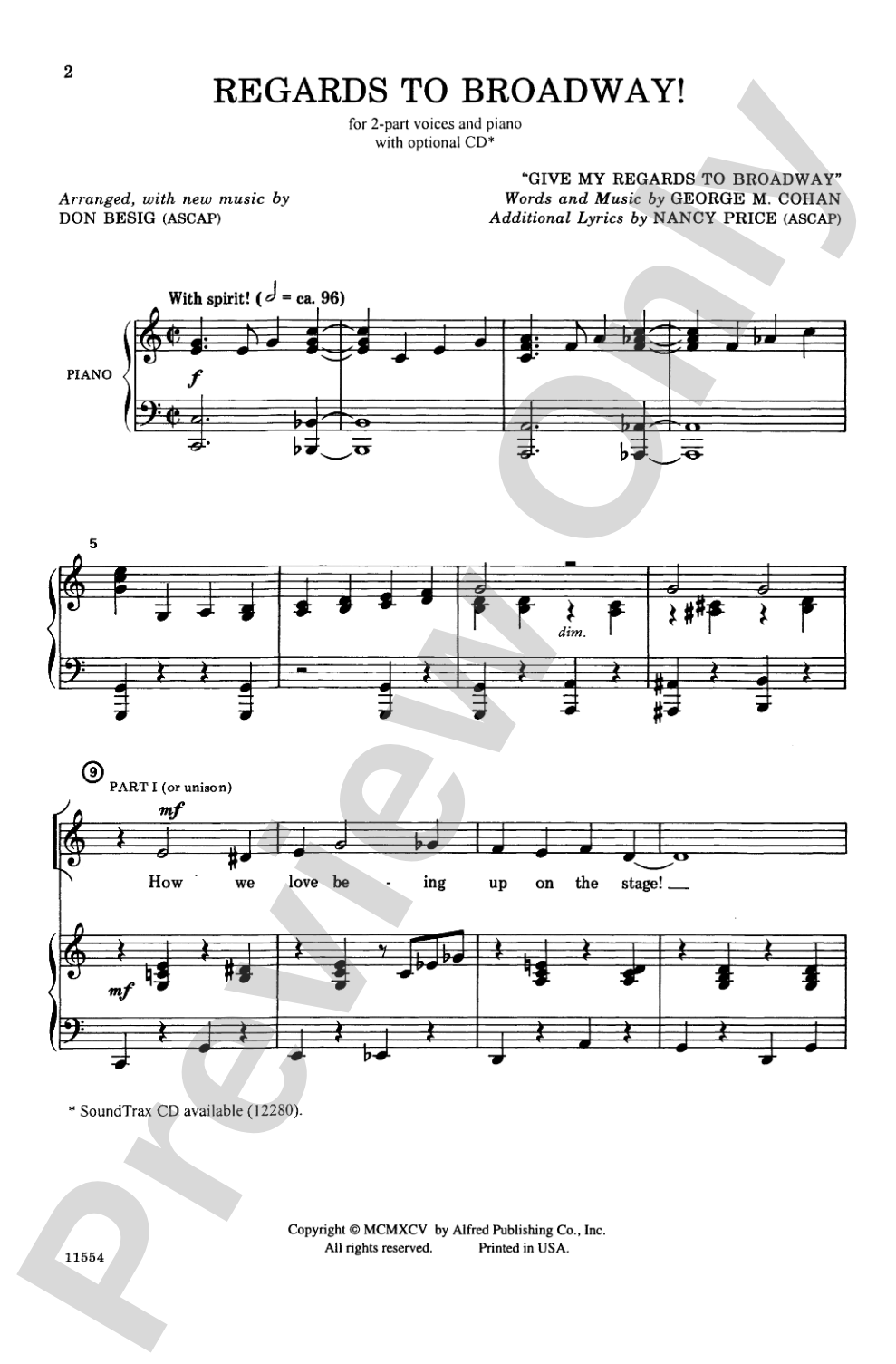

Regards to Broadway!: 2-Part Choral Octavo
Music by George M. Cohan / arr. Don Besig and Nancy Price
Item: 00-PO-0002059
$2.25
Minimum order quantity: 20 copies
Pickup currently not available
Description
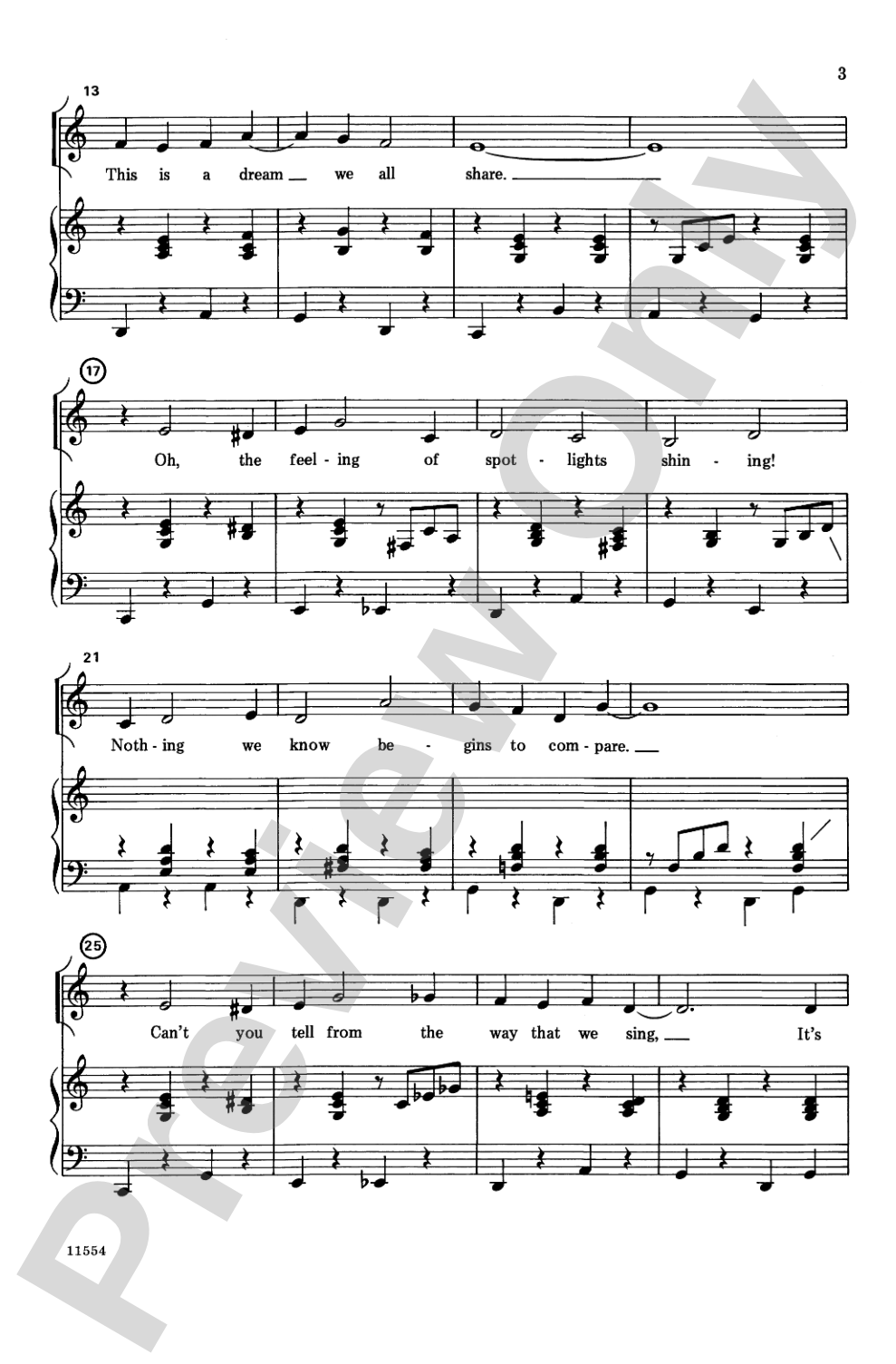
A spirited and fun-filled partner song in vaudeville style arranged with new music by Don Besig and new lyrics by Nancy Price. The great new partner melody is fun to sing and easy to learn. Add some pizzazz with the exceptional SoundTrax cassette or grab your hats and canes and add some staging or movement.


Regards to Broadway!: 2-Part Choral Octavo isn't in MakeMusic Cloud just yet...but it could be. Let us know you'd like to see it, and you'll help shape what comes next. In the meantime, start a free trial and dive into thousands of interactive titles your students can play along with today.
Request This Title
Tell us you want it.
Start Your Free Trial
Explore everything that's ready to play right now.
Sample Audio
1
Audio File
--:--
0:00
0:00
Sample Video
No sample videos found.
Additional Details
Series:
Alfred Archive Edition: Alfred Choral Designs
Publisher:
Alfred Music
Page Count:
12
SKU:
00-PO-0002059
More about this title
About the Composer: George M. Cohan
George M. Cohan (1878-1942) was a legendary figure in American musical theater, equally gifted as a composer, lyricist, playwright, and performer. His career spanned vaudeville, Broadway, and early film, and he shaped the sound of American popular music in the early 20th century with his gift for catchy melodies, energetic rhythms, and deeply patriotic themes.
Cohan's influence on music education extends beyond his famous standards. His compositions remain accessible entry points into American musical theater for young singers, offering straightforward melodic writing, clear harmonic structures, and the infectious energy that made him a household name. His work bridges classical training and popular music in ways that keep students engaged.
Why we love this
This arrangement captures everything that makes Cohan's music work in a school setting: infectious energy, a partner melody that's genuinely fun to sing, and a style flexible enough for both concert and staged performance. Don Besig and Nancy Price have preserved the vaudeville spirit while keeping the writing accessible for developing choirs, making it an uncommon piece that feels both theatrical and entirely singable.
What to expect
Bright, playful, and full of theatrical flair. The vaudeville style conjures tap shoes, jazz hands, and the spirited camaraderie of a performer's world. The new partner melody adds a layer of unexpected harmony that keeps the piece fresh and gives singers a reason to invest in listening to one another.
Who it's for
Young choirs and treble ensembles looking for material that's genuinely fun to perform without sacrificing musicianship. This octavo works equally well for middle school or high school singers seeking a crowd-pleasing encore or a concert opener that brings immediate energy to a program.
How to get the most out of it
- Approach the rhythm with rhythmic precision and buoyancy; the vaudeville style relies on crisp, clean articulation to land the comic timing.
- If using staging or movement, rehearse the choreography separately from the singing first, then layer them together gradually to avoid rushed entrances or sloppy rhythms.
- Balance the two vocal lines carefully so the partner melody doesn't overshadow the main tune; both voices need clarity for the song's humor to register.
- Use the recorded accompaniment during early rehearsals to lock the style and tempo, then move toward singing with piano to build independence.
How to use it
Program this as a concert opener or encore to energize your audience and reset the mood after a lengthy set of ballads. Its short length and high entertainment value make it ideal for variety-style programs, spring concerts, or competitions where you want to show the choir's personality alongside musicality.
Skills your students will build
- Singing in partner song format with clear harmonic awareness
- Performing rhythmically independent lines in vaudeville/ragtime style
- Integrating choreography or movement with vocal precision
- Balancing ensemble sound across two distinct melodic lines