
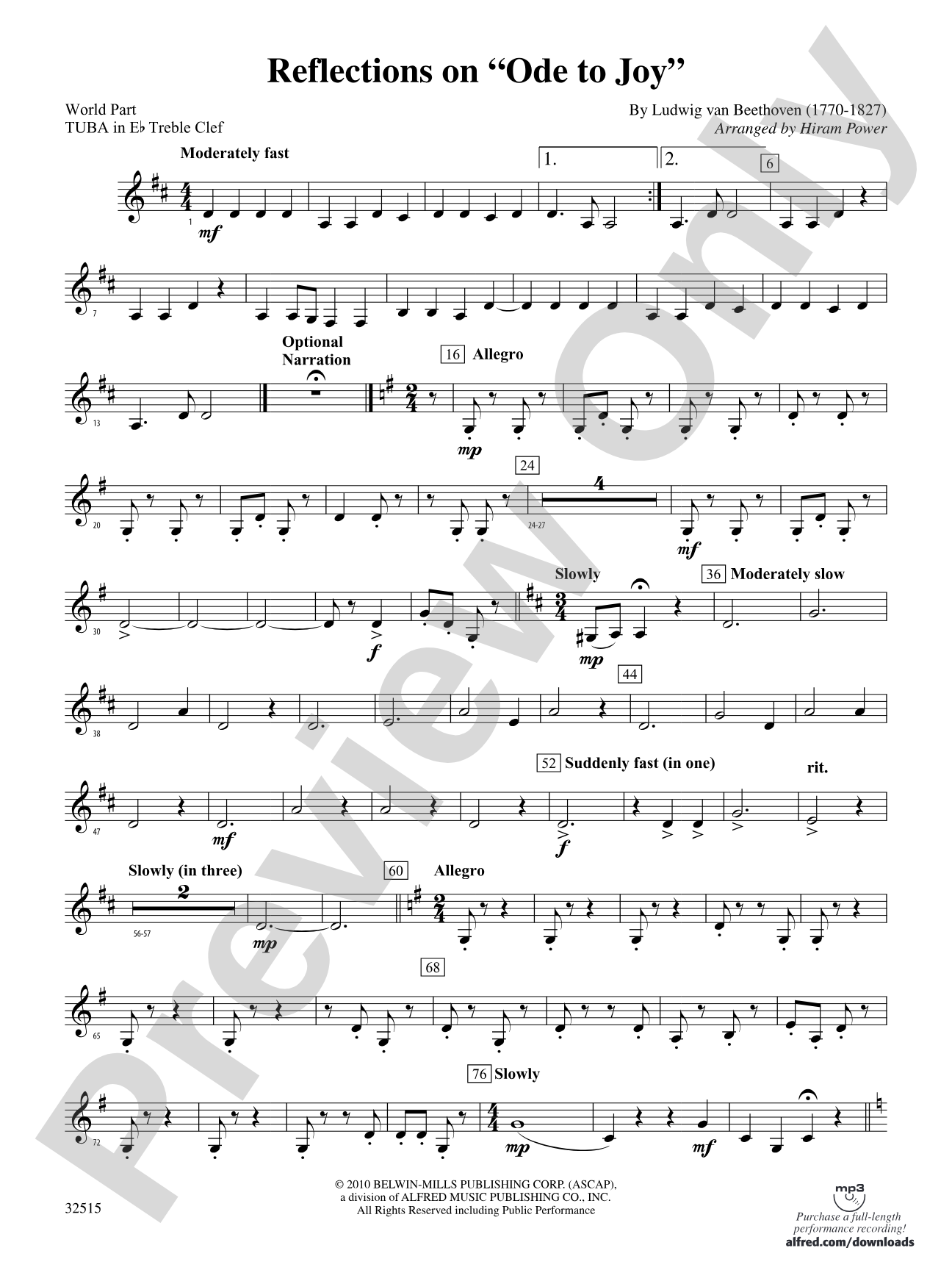

Reflections on "Ode to Joy": (wp) E-flat Tuba T.C.
By Ludwig van Beethoven / arr. Hiram Power
Grade: 3 (Medium Easy)
Item: 00-PC-0014392_wpTBETC
$5.99
Pickup currently not available
Description
"Ode to Joy" is a simple song familiar to most people. The song dates back to the 1800s and has been sung and played ever since. Although often used in various collections, this arrangement will give new and added insight to this wonderful melody. This arrangement is, of course, a spoof. Great fun for light concert programming!


Don't just read it, hear it, play along with it, and watch your students grow with it. In MakeMusic Cloud, Reflections on "Ode to Joy": (wp) E-flat Tuba T.C. comes alive with professional accompaniment, adjustable tempo, and built-in practice tools that turn solo practice into real progress.
Open in the Player
Jump straight in and assign it today.
Start Your Free Trial
Open this title and explore the full library in minutes.
Sample Audio
1
Audio File
--:--
0:00
0:00
Sample Video
No sample videos found.
Additional Details
Series:
Belwin Concert Band
Publisher:
Alfred Music
Page Count:
240
SKU:
00-PC-0014392_wpTBETC
More about this title
About the Composer: Ludwig van Beethoven
Ludwig van Beethoven (1770-1827) stands as one of the most influential composers in Western music history. His nine symphonies, thirty-two piano sonatas, and chamber works transformed music from the Classical into the Romantic era, expanding harmonic language and emotional depth in ways that composers are still reckoning with today. For music educators, Beethoven represents both accessibility and ambition: his melodies are instantly recognizable, yet the architecture beneath them reveals masterful command of form, development, and orchestration.
The "Ode to Joy" theme from his Ninth Symphony has transcended classical music to become a global symbol of human connection and celebration. Originally paired with Friedrich Schiller's poem in 1824, this melody has been embraced by cultures worldwide and appears in countless arrangements across genres and ensembles. Its simplicity and emotional directness make it ideal for educational settings, where students can engage with one of history's most significant composers through a work that speaks immediately to their ears.
Why we love this
This spoof arrangement reimagines a melody so familiar it risks sounding tired, and instead delivers genuine humor without sacrificing musical substance. Hiram Power's treatment adds unpredictable twists and clever orchestrations that keep audiences and performers alike guessing, making this an ideal palate cleanser on a concert program when you need to shift mood and energy.
What to expect
You know the melody instantly, but something delightful keeps happening that you didn't expect. The familiar "Ode to Joy" theme appears in fresh orchestrations and surprising harmonic twists, turning what could have been a predictable encore into a moment of genuine ensemble joy and audience delight.
Who it's for
Directors seeking a Grade 3 work that engages both student musicians and audiences through humor and recognition. This arrangement works equally well for concert bands still building technical facility and experienced ensembles looking for a spirited, accessible change of pace.
How to get the most out of it
- Embrace the comedic timing throughout. A spoof lands only when the ensemble commits fully to the musical surprises, so rehearse the unexpected moments with the same precision you'd give to dramatic passages.
- Balance transparency with playfulness in the arrangement. Light articulation and clear sectional voicing let the novelty elements shine without sounding sloppy.
- Communicate the joke to your audience through confident ensemble sound and crisp releases. When performers believe in what they're playing, listeners relax into the humor.
How to use it
Program this after a serious, demanding work to reset the concert's emotional tone. It performs equally well as a finale or as the opening to a lighter second half, and its Grade 3 level makes it an excellent confidence builder when placed alongside more challenging repertoire on the same concert.
Skills your students will build
- Reading and performing a recognizable melody with ensemble precision
- Responding to unexpected harmonic and orchestrational choices within a familiar context
- Balancing clarity and humor in group performance
- Understanding how arrangement and spoof techniques reshape existing material