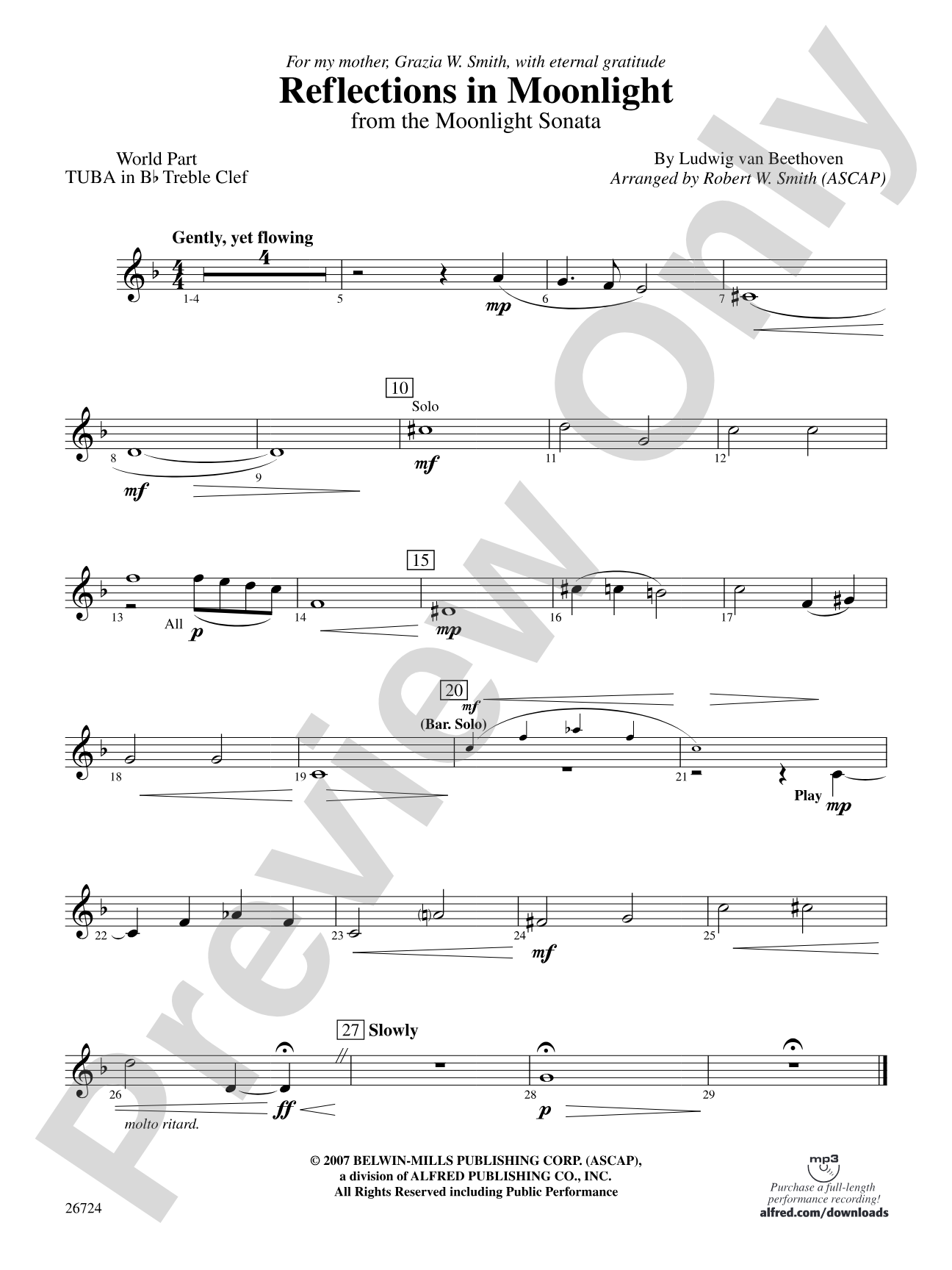
Reflections In Moonlight: (wp) B-flat Tuba T.C. Sheet Music Preview

Reflections In Moonlight: (wp) B-flat Tuba T.C.

By Ludwig van Beethoven / arr. Robert W. Smith

Grade: 2 (Easy)

Item: 00-PC-0001194_wpTBBTC

Digital Download
$3.00
Description
Robert W. Smith's Reflections In Moonlight is a lush concert band setting of Ludwig van Beethoven's Moonlight Sonata. The arrangement features generously cued opportunities for solo performers. Classic Beethoven for your young band presented in an emotionally musical arrangement! This title is available in MakeMusic Cloud.

Don't just read it, hear it, play along with it, and watch your students grow with it. In MakeMusic Cloud, Reflections In Moonlight: (wp) B-flat Tuba T.C. comes alive with professional accompaniment, adjustable tempo, and built-in practice tools that turn solo practice into real progress.

Sample Audio
0:00
0:00
Sample Video
Additional Details
Series: Belwin Young Band
Publisher: Alfred Music
Page Count: 66
SKU: 00-PC-0001194_wpTBBTC

More about this title

About the Composer: Ludwig van Beethoven

Ludwig van Beethoven (1770-1827) stands as a transformative figure in Western music, bridging the Classical and Romantic eras through works of unprecedented emotional depth and structural innovation. His nine symphonies, thirty-two piano sonatas, and chamber music catalog fundamentally expanded what composers could express through instrumental music, often exploring themes of human struggle, transcendence, and joy.

Why we love this

Robert W. Smith's arrangement brings one of the world's most recognizable melodies into a young band setting without sacrificing the piece's lyrical beauty or emotional impact. The generous solo cueing transforms what could be a straightforward transcription into a showcase for individual musicians, giving your developing players a chance to breathe life into a masterwork. Grade 2 accessibility combined with musical substance makes this a rare find for programs seeking repertoire that audiences love and students find genuinely moving to perform.

What to expect

Serene yet contemplative, with moments of quiet introspection that feel like gazing across moonlit water. The arrangement preserves Beethoven's original harmonic language while distributing the sonata's gentle, rolling accompaniment figures across the band, creating a warm, resonant texture that young musicians can sink into emotionally.

Who it's for

Young concert bands working at Grade 2 level who want to program something artistically substantive without overwhelming their musicians technically. This suits directors preparing for contest festivals, spring concerts, or programs designed to introduce students to classical masterworks through living performance.

How to get the most out of it

  • Shape the opening melody with vocal phrasing in mind; Beethoven conceived this as a pianist's meditation, so encourage legit tone and thoughtful rubato rather than mechanical execution.
  • Balance the featured solo passages against the supporting harmony so soloists can be heard without the ensemble overwhelming them.
  • Use the cued opportunities as rehearsal checkpoints; marking who plays the melody at each section helps younger players track the architecture of the piece.
  • Approach dynamics as gradual sculpting rather than sudden shifts; the piece inhabits a softer dynamic range overall, and contrast comes through nuance.

How to use it

Program this as a concert centerpiece or closer when you want to shift the mood toward reflection; it pairs well alongside lighter character pieces or as a bridge to more energetic works. It also works effectively in educational settings where student musicians can connect a beloved solo piano work to ensemble performance.

Skills your students will build

  • Legit phrasing and sustaining long melodic lines
  • Balancing solo and tutti textures
  • Playing softly with presence and tonal control
  • Following harmonic contour and harmonic progression
  • Responding to subtle dynamic changes

You May Also Like