Reflections from the Edge of the Millennium for Violin Duo Cover Image

Reflections from the Edge of the Millennium for Violin Duo: Violin, Duo, Playing Score

$12.00 USD
Sale price  $12.00 USD Regular price 
Skip to product information
Reflections from the Edge of the Millennium for Violin Duo Cover Image

Reflections from the Edge of the Millennium for Violin Duo: Violin, Duo, Playing Score

By Amy Barlowe

Grade: 5

Item: 36-BSMIS135

$12.00
Shipped

One moment…

Description
A fantastic teaching tool for maturing students who are preparing to work on Bach's Sonatas and Partitas, REFLECTIONS FROM THE EDGE OF THE MILLENNIUM is in seven movements: I. Preludio; II. Siciliano; III. Minuet I; IV. Minuet II; V. Gavotte; VI. Sarabande; VII. Gigue. It introduces the dance movements of a suite to students while remaining accesible. Versions for Violin solo, Viola solo, and Violin duo are available from the publisher.

Reflections from the Edge of the Millennium for Violin Duo: Violin, Duo, Playing Score isn't in MakeMusic Cloud just yet...but it could be. Let us know you'd like to see it, and you'll help shape what comes next. In the meantime, start a free trial and dive into thousands of interactive titles your students can play along with today.

Sample Pages

No sample pages found.

Sample Audio
No sample audio found.
Sample Video
Additional Details
Series: Black Squirrel Music - LudwigMasters
Publisher: Keiser Productions, Inc.
ISBN10: 8-89-270466-4
ISBN13: 979-8-89-270466-3
UPC: 659359657245
SKU: 36-BSMIS135
Instrumentation: 2 Violins

More about this title

About the Composer: Amy Barlowe
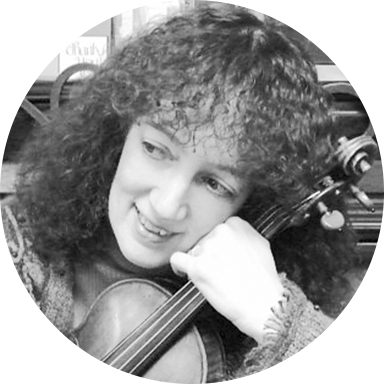
Amy Barlowe

Amy Barlowe studied violin at Juilliard School under Ivan Galamian and Margaret Pardee, earning both her B.M. and M.M. degrees. Her chamber music training came from respected pedagogues including Josef Gingold, Felix Galimir, Samuel Rhodes, and Earl Carlyss. She has performed as a soloist and chamber musician across North America and in major New York concert halls, earning praise from Gingold for her "fine musicianship, excellent instrumental qualities, and a devotion to all things musical."

In 1988, Barlowe co-founded the Duo [AB]2 with her husband Alan Bodman, recording for the Medici and Azica labels to critical acclaim. Her original compositions and arrangements span chamber works for strings with piano, vocal-dramatic works, and liturgical music. She has taught at Juilliard Pre-College, the School for Strings in New York, Willamette University, and summer festivals including Meadowmount and Bowdoin. Her arrangement of Schindler's List for two violins and piano received endorsement from John Williams and was published by Hal Leonard.

Why we love this

Barlowe creates a direct pedagogical bridge between contemporary playing and the Baroque suite tradition without simplifying the musical substance. Each movement stands as a complete miniature with its own character while maintaining the technical coherence that makes Bach's Sonatas and Partitas such rewarding study. The duo format turns preparation into collaboration, giving students both ensemble experience and the accountability that comes from playing with a partner.

What to expect

Walking through a historical gallery where each room reveals a different courtly gesture. The writing honors Baroque movement types while speaking in a voice recognizably contemporary, creating a bridge rather than a recreation. Beneath the elegant surface runs genuine musical substance that rewards careful attention to rhetoric and style.

Who it's for

Advanced intermediate violinists ready to engage with Baroque idiom and its dance forms as preparation for solo Bach repertoire. This works equally well for music students in a preparatory setting or for adult amateur duos seeking substantive collaborative literature. The pair format makes it suitable for studio partnerships or coached ensemble classes.

How to get the most out of it

  • Shape each dance movement with its distinctive rhythmic and textural profile; the Gavotte's lilting step should feel fundamentally different from the grave Sarabande.
  • Balance the violin parts as equals rather than featuring the first violin throughout; many passages reward a conversational tone where both players trade musical ideas.
  • Use the seven-movement structure as an opportunity to explore different bowings and articulation strategies across the piece rather than applying one approach uniformly.

How to use it

Program this as a substantial chamber work on a student recital or informal studio concert, where its seven-movement breadth allows a single duo to occupy meaningful concert time. Use it within a teaching year as a cumulative project that brings together study of Baroque forms, stylistic awareness, and ensemble skills before tackling Bach's solo works. The accessible difficulty level makes it suitable for a studio showcase or preparatory school chamber concert.

Skills your students will build

  • Understanding Baroque dance movement characteristics (Gavotte, Siciliano, Sarabande, Gigue)
  • Reading and interpreting Baroque style conventions including articulation and phrasing
  • Ensemble balance and independence between two equal violin parts
  • Stylistic preparation for Bach Sonatas and Partitas
  • Musical form recognition across seven contrasting movements
  • Ornamentation and expressive technique within early music contexts

You May Also Like