Reflections from the Edge of the Millennium for Violin Cover Image

Reflections from the Edge of the Millennium for Violin: Violin, Solo, Unaccompanied, Solo

$12.00 USD
Sale price  $12.00 USD Regular price 
Skip to product information
Reflections from the Edge of the Millennium for Violin Cover Image

Reflections from the Edge of the Millennium for Violin: Violin, Solo, Unaccompanied, Solo

By Amy Barlowe

Grade: 5

Item: 36-BSMIS115

$12.00
Shipped

One moment…

Description
A fantastic teaching tool for maturing students who are preparing to work on Bach's Sonatas and Partitas, REFLECTIONS FROM THE EDGE OF THE MILLENNIUM is in seven movements: I. Preludio; II. Siciliano; III. Minuet I; IV. Minuet II; V. Gavotte; VI. Sarabande; VII. Gigue. It introduces the dance movements of a suite to students while remaining accesible. Versions for Violin solo, Viola solo, and Violin duo are available from the publisher.

Reflections from the Edge of the Millennium for Violin: Violin, Solo, Unaccompanied, Solo isn't in MakeMusic Cloud just yet...but it could be. Let us know you'd like to see it, and you'll help shape what comes next. In the meantime, start a free trial and dive into thousands of interactive titles your students can play along with today.

Sample Pages

No sample pages found.

Sample Audio
No sample audio found.
Sample Video
Additional Details
Series: Black Squirrel Music - LudwigMasters
Publisher: Keiser Productions, Inc.
ISBN10: 8-89-270464-8
ISBN13: 979-8-89-270464-9
UPC: 659359654046
SKU: 36-BSMIS115
Instrumentation: Unaccompanied Violin

More about this title

About the Composer: Amy Barlowe
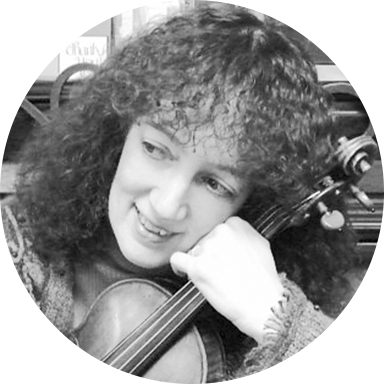
Amy Barlowe

Amy Barlowe studied violin at Juilliard School under Ivan Galamian and Margaret Pardee, earning both her B.M. and M.M. degrees. Her chamber music training included work with Josef Gingold, Felix Galimir, Samuel Rhodes, and Earl Carlyss. She has performed as a soloist and chamber musician throughout North America and in New York's major concert halls, and in 1988 formed the Duo [AB]2 with her husband, Alan Bodman, recording for the Medici and Azica labels.

Barlowe has taught violin at Juilliard Pre-College, the School for Strings in New York, and served as Associate Professor of Violin at Willamette University in Salem, Oregon. She has also held faculty positions at the Estherwood and Bowdoin Summer Music Festivals. Beyond her performance career, Barlowe is an active composer and arranger whose works span chamber music, opera ballet, sacred choral music, and arrangements that have earned endorsements from major film composers. She currently serves on the artist and faculty rosters of the Meadowmount School of Music and the Ohio Conservatory.

Why we love this

Barlowe crafts a suite that honors the structure and style of the baroque masters without overwhelming intermediate students. The progression through seven distinct dances builds both technical confidence and stylistic awareness in a single work, making this an intelligent stepping stone toward the deeper demands of Bach's solo violin literature.

What to expect

The work captures the elegance and clarity of the baroque court, moving through familiar dance forms with genuine musicality. Each movement unfolds in its own character, from the reflective opening Preludio through the spirited Gigue, creating a satisfying arc that feels both structured and expressive.

Who it's for

This piece is written for advancing young violinists (around Grade 5) who have solid technique and are ready to explore baroque style without the extreme technical demands of Bach's Sonatas and Partitas. Students preparing for advanced solo repertoire will find this both accessible and genuinely valuable preparation.

How to get the most out of it

  • Approach the Preludio with a singing tone and clear phrasing, letting the line breathe naturally rather than rushing through scalar passages.
  • In the Siciliano, maintain the characteristic dotted rhythm without exaggeration; clarity serves the movement better than dramatic emphasis.
  • Keep the two minuets distinct in character by varying tone color and articulation between them, even though they share the same form.
  • Shape the Sarabande with long, lyrical lines; this movement rewards restraint and allows room for expressive depth within a moderate tempo.

How to use it

Program this as a solo recital work to showcase a student's stylistic range and maturity in a single piece, or break it into smaller suites for different recital programs throughout the year. Its unaccompanied format also makes it ideal for chamber music festivals, competitions, and standalone concert appearances where accompaniment may not be available.

Skills your students will build

  • Baroque style and phrasing conventions
  • Suite structure and dance form recognition
  • Unaccompanied violin independence and sustained tone production
  • Articulation and style variation across contrasting movements
  • Musical structure awareness through formal analysis

You May Also Like