Reflections from the Edge of the Millennium for Viola Cover Image

Reflections from the Edge of the Millennium for Viola: Viola, Solo, Unaccompanied, Solo

$12.00 USD
Sale price  $12.00 USD Regular price 
Skip to product information
Reflections from the Edge of the Millennium for Viola Cover Image

Reflections from the Edge of the Millennium for Viola: Viola, Solo, Unaccompanied, Solo

By Amy Barlowe

Grade: 5

Item: 36-BSMIS118

$12.00
Shipped

One moment…

Description
A fantastic teaching tool for maturing students who are preparing to work on Bach's Sonatas and Partitas, REFLECTIONS FROM THE EDGE OF THE MILLENNIUM is in seven movements: I. Preludio; II. Siciliano; III. Minuet I; IV. Minuet II; V. Gavotte; VI. Sarabande; VII. Gigue. It introduces the dance movements of a suite to students while remaining accesible. Versions for Violin solo, Viola solo, and Violin duo are available from the publisher.

Reflections from the Edge of the Millennium for Viola: Viola, Solo, Unaccompanied, Solo isn't in MakeMusic Cloud just yet...but it could be. Let us know you'd like to see it, and you'll help shape what comes next. In the meantime, start a free trial and dive into thousands of interactive titles your students can play along with today.

Sample Pages

No sample pages found.

Sample Audio
No sample audio found.
Sample Video
Additional Details
Series: Black Squirrel Music - LudwigMasters
Publisher: Keiser Productions, Inc.
ISBN10: 8-89-270465-6
ISBN13: 979-8-89-270465-6
UPC: 659359657191
SKU: 36-BSMIS118
Instrumentation: Unaccompanied Viola

More about this title

About the Composer: Amy Barlowe
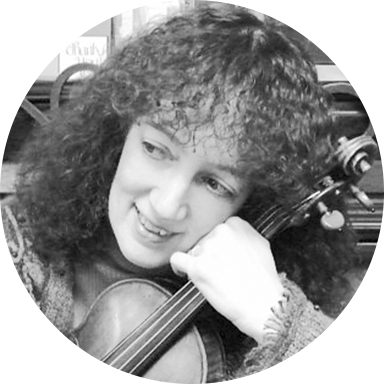
Amy Barlowe

Amy Barlowe studied violin at Juilliart School under Ivan Galamian and Margaret Pardee, earning both B.M. and M.M. degrees. She refined her chamber music craft through coaching with Josef Gingold, Felix Galimir, Samuel Rhodes, and Earl Carlyss, earning recognition including the Helena Rubinstein Scholarship and Atkinson and Northwest Area grants. Her performances have appeared throughout North America and in New York's major concert halls, with Josef Gingold noting her "fine musicianship, excellent instrumental qualities, and a devotion to all things musical."

Barlowe's dual career as performer and composer has flourished across multiple formats. In 1988, she co-founded Duo [AB]2 with her husband Alan Bodman, recording for the Medici and Azica labels. Her published works include compositions and arrangements for strings, chamber ensembles, and larger forces; her arrangement of Schindler's List for two violins and piano received endorsement from John Williams and has been published by Hal Leonard. She has served on the faculty at Juilliard Pre-College, New York's School for Strings, and Willamette University, and has been affiliated with the Meadowmount School of Music and the Ohio Conservatory.

Why we love this

Barlowe understands exactly what intermediate violists need before tackling Bach: a carefully structured introduction to Baroque dance forms and counterpoint, all within a single cohesive work. The seven-movement suite design borrows the architecture of historical suites while the writing remains genuinely musical rather than pedagogical in feel, so students experience authentic stylistic exploration, not just technical exercises. By the time they reach Bach's Sonatas and Partitas, they'll recognize the structural and melodic language they've already internalized.

What to expect

Like stepping into a mirror that reflects both the refinement of the Baroque and the clarity of a contemporary hand shaping tradition. The music breathes with period style while sounding fresh and direct, moving through dance rhythms, intimate slow movements, and energetic finales without pretense.

Who it's for

Intermediate violists (Grade 5) preparing to study Bach's unaccompanied works will find this suite an essential stepping stone. It works equally well for mature students seeking accessible Baroque repertoire with genuine musical substance, or for those building a recital program that bridges technique and artistry.

How to get the most out of it

  • Approach each movement as a distinct character study. The Preludio establishes the harmonic language; use it to establish your tone quality and phrasing vocabulary for what follows.
  • Pay close attention to the rhythmic precision required in the dance movements (Minuets, Gavotte, Gigue). These forms demand clear articulation and controlled tempo, which transfers directly to Baroque style.
  • Shape long lines in the Siciliano and Sarabande with subtle dynamic shaping and strategic breath points. Viola tone deepens these expressive movements considerably.
  • Practice the unaccompanied context deliberately. Without harmonic support, every pitch and phrase shape carries structural weight; record yourself and listen critically to intonation and voice leading.

How to use it

Feature this as a solo performance in a recital context where you want to showcase Baroque understanding without the full demand of Bach. It pairs naturally with other unaccompanied string works or with Baroque chamber music, and serves as natural program preparation for a student's eventual Bach performance debut.

Skills your students will build

  • Baroque dance forms and their rhythmic conventions (minuet, gavotte, gigue, sarabande, siciliano)
  • Melodic phrasing and voice leading in unaccompanied contexts
  • Stylistically informed articulation and ornamentation
  • Harmonic awareness and tonal architecture across extended solo passages
  • Structural listening and narrative shape across a multi-movement work

You May Also Like