

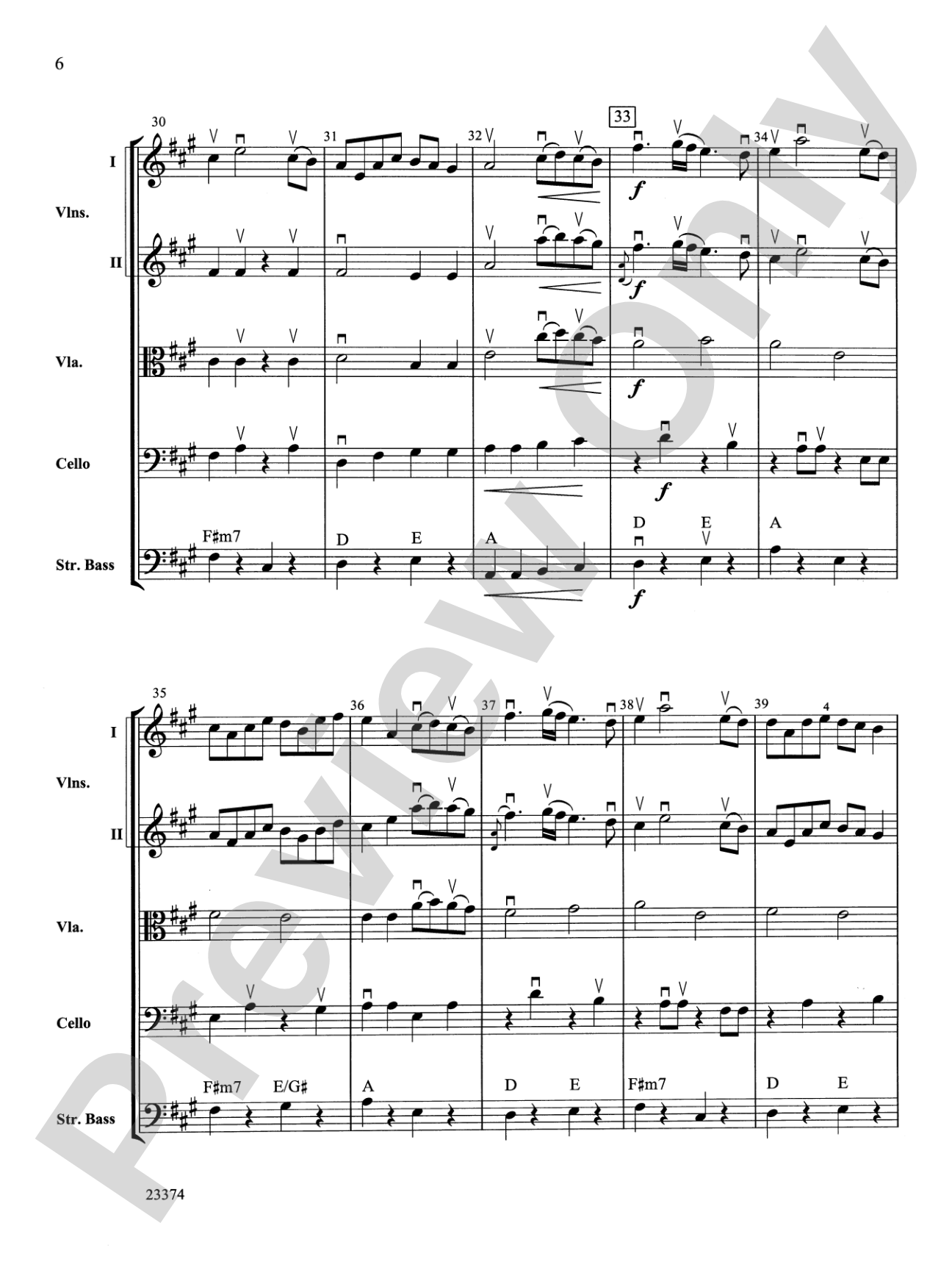
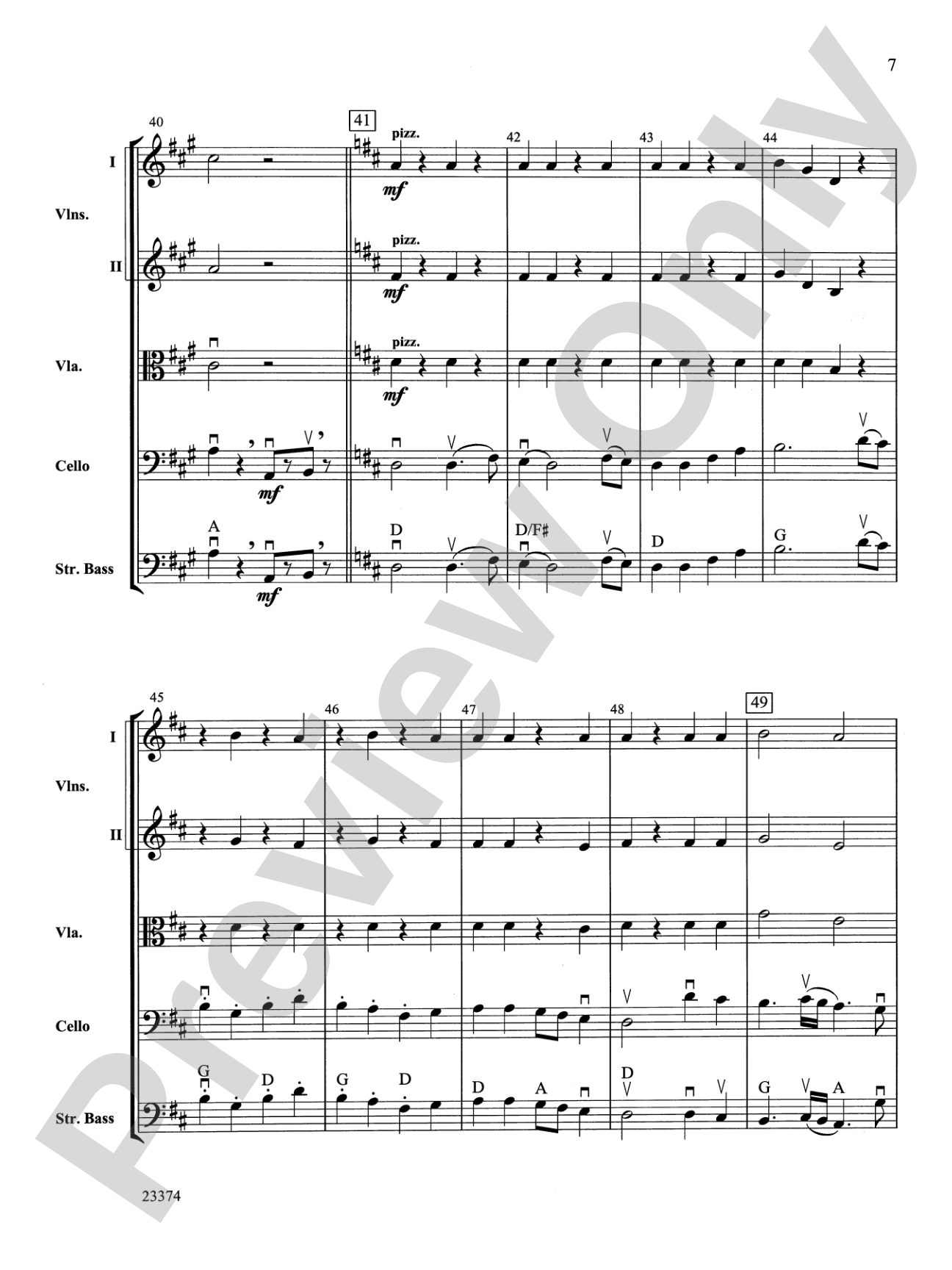
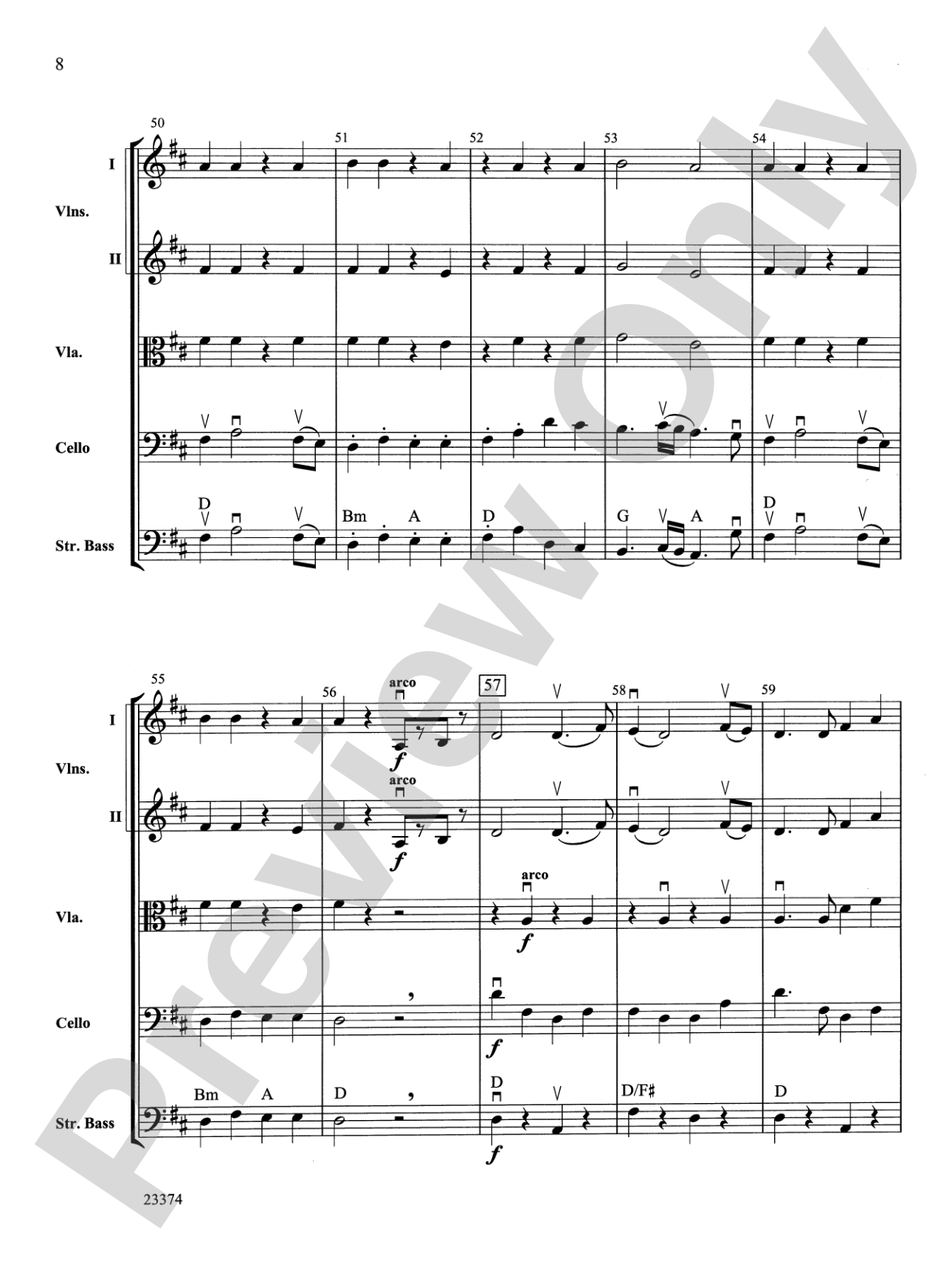
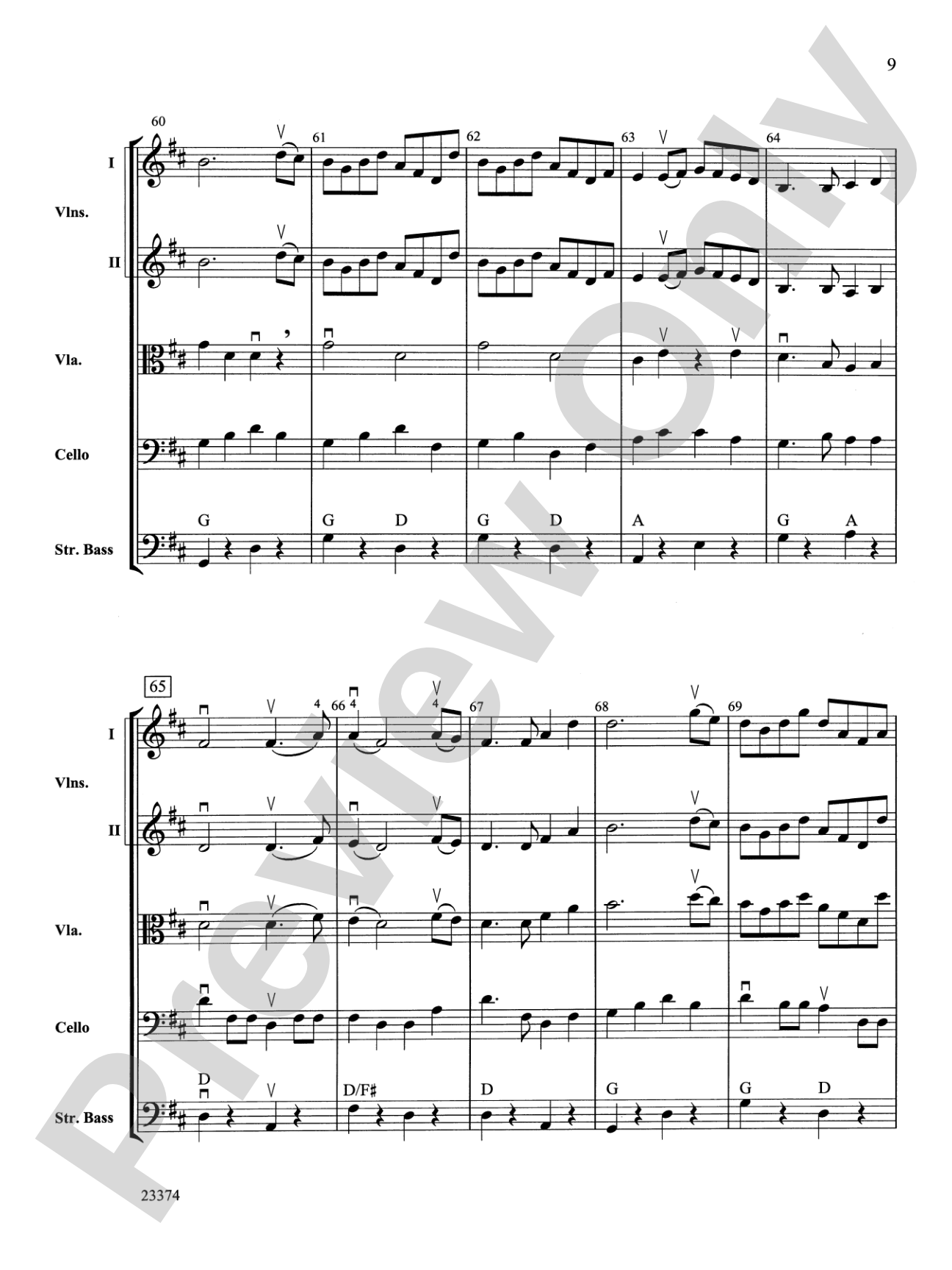


Red Lodge Reel: String Orchestra Conductor Score & Parts
By Peter Ostroushko / arr. Bob Phillips
Grade: 2.5
Item: 00-PK-0000723

$49.00
Pickup currently not available
Buy Extra Parts (Digital PDF Download)
| Product | Price | Quantity |
|---|---|---|
| Red Lodge Reel: Score | $7.00 | |
| Red Lodge Reel: 1st Violin | $5.99 | |
| Red Lodge Reel: 2nd Violin | $5.99 | |
| Red Lodge Reel: Viola | $5.99 | |
| Red Lodge Reel: Cello | $5.99 | |
| Red Lodge Reel: String Bass | $5.99 |
Parts Added to Cart!
Description
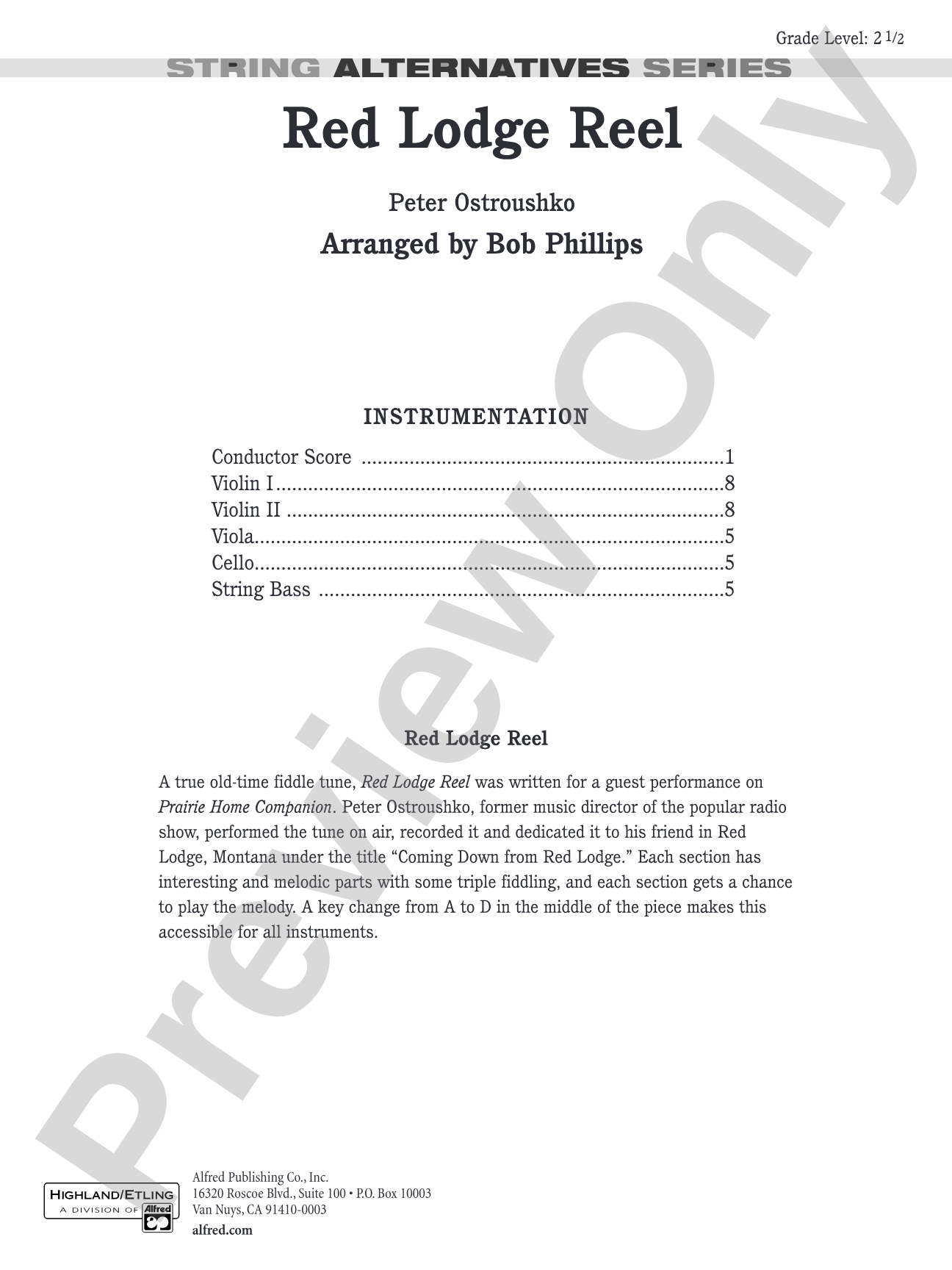
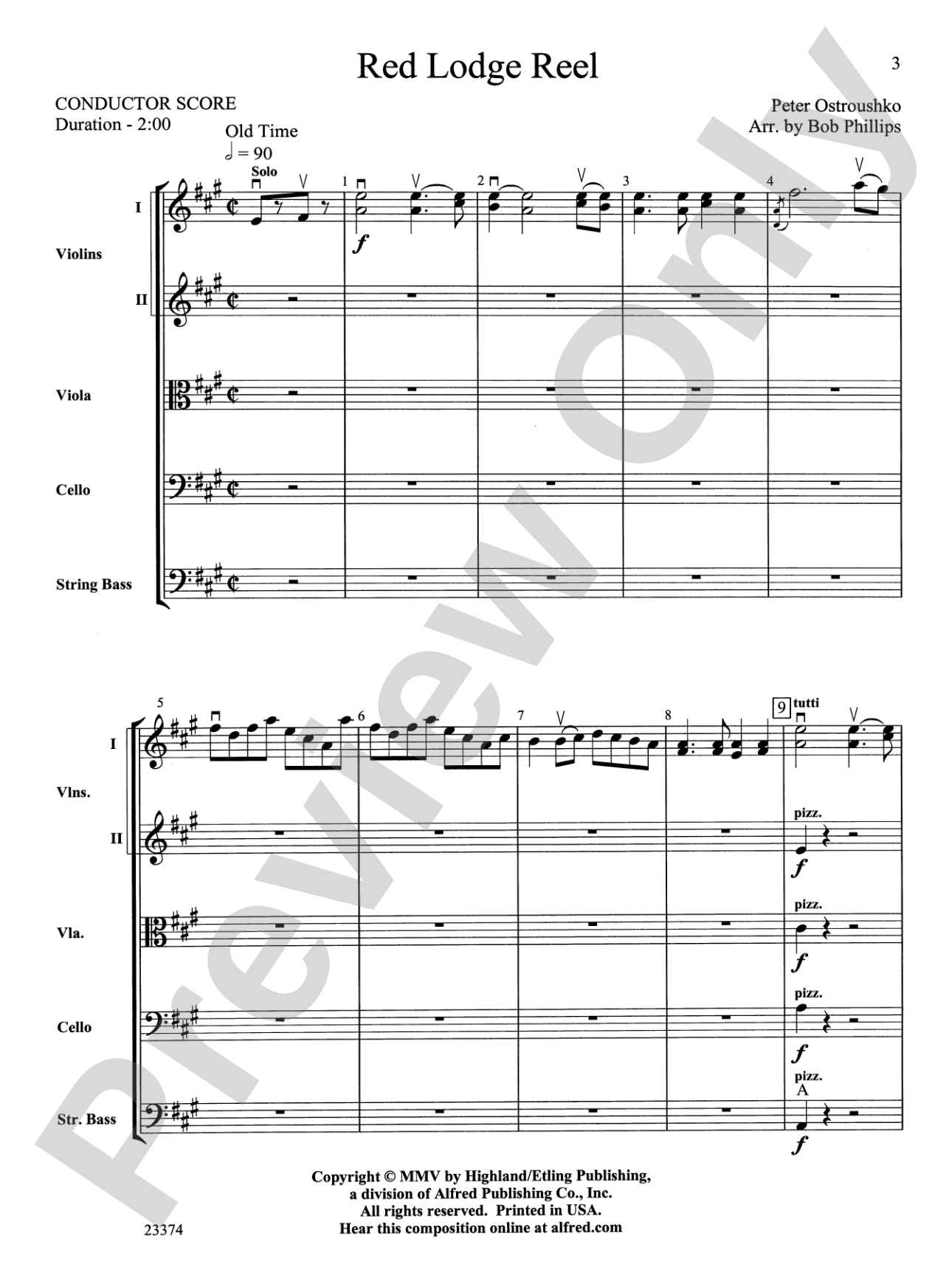
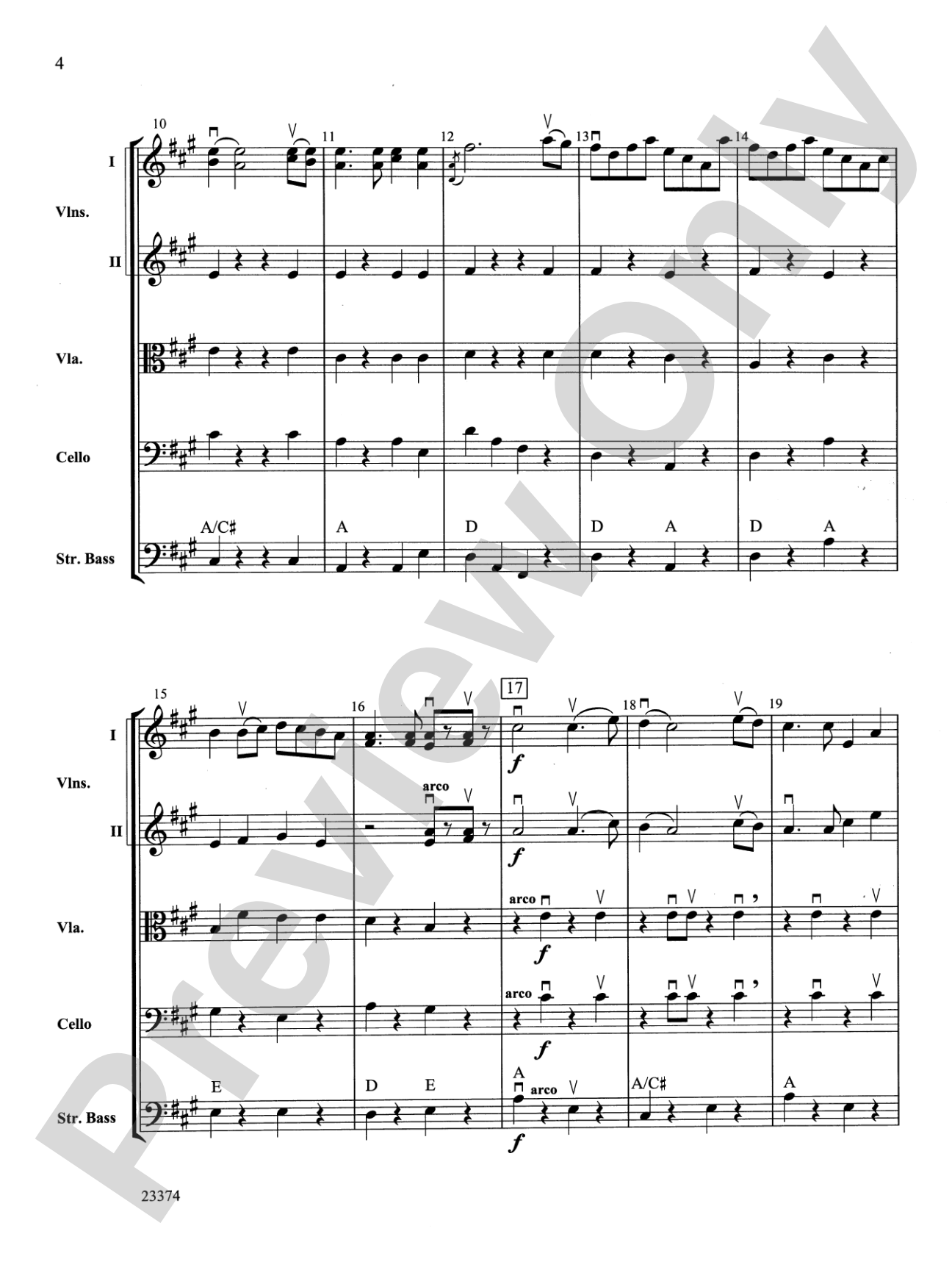
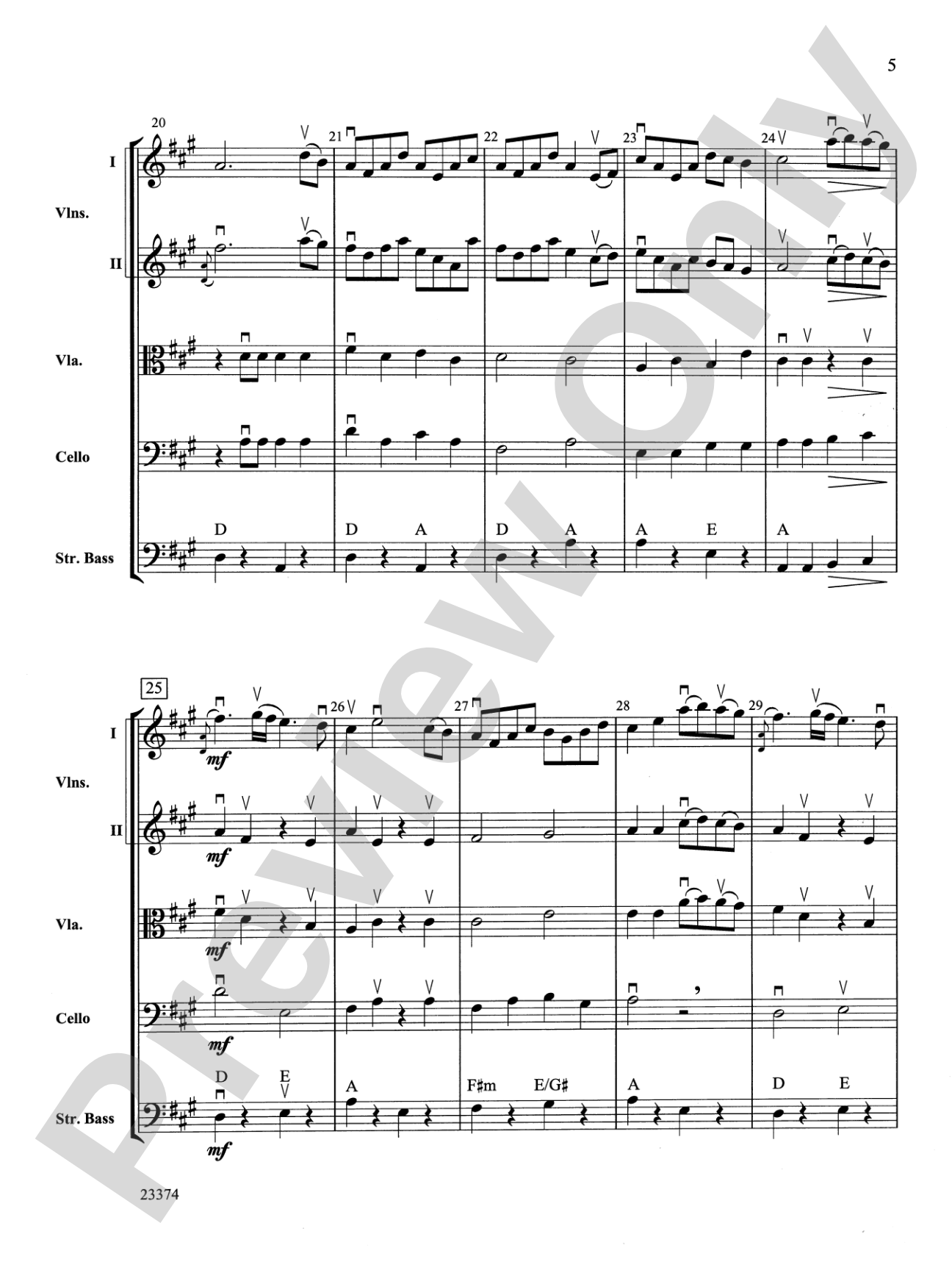
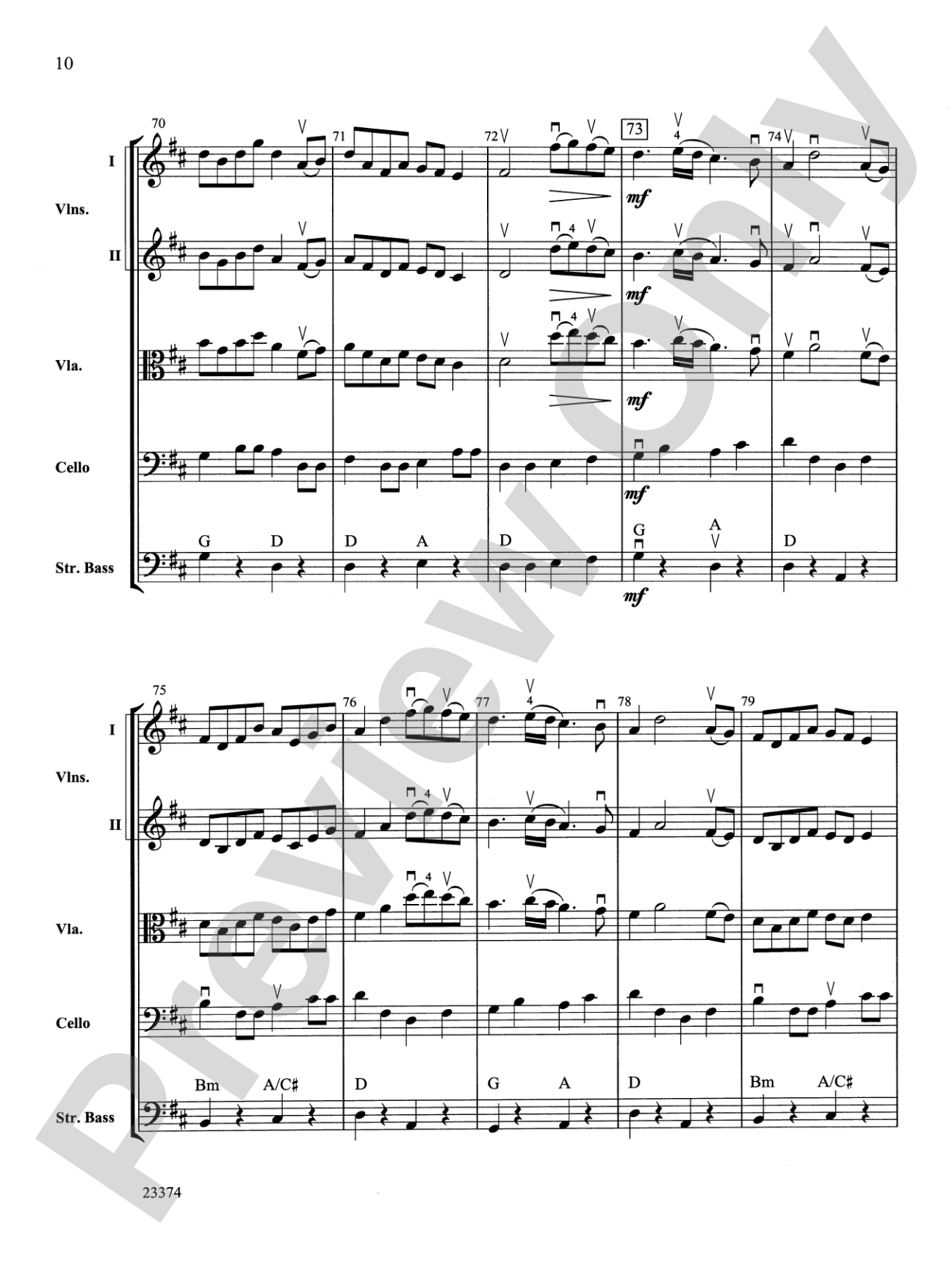
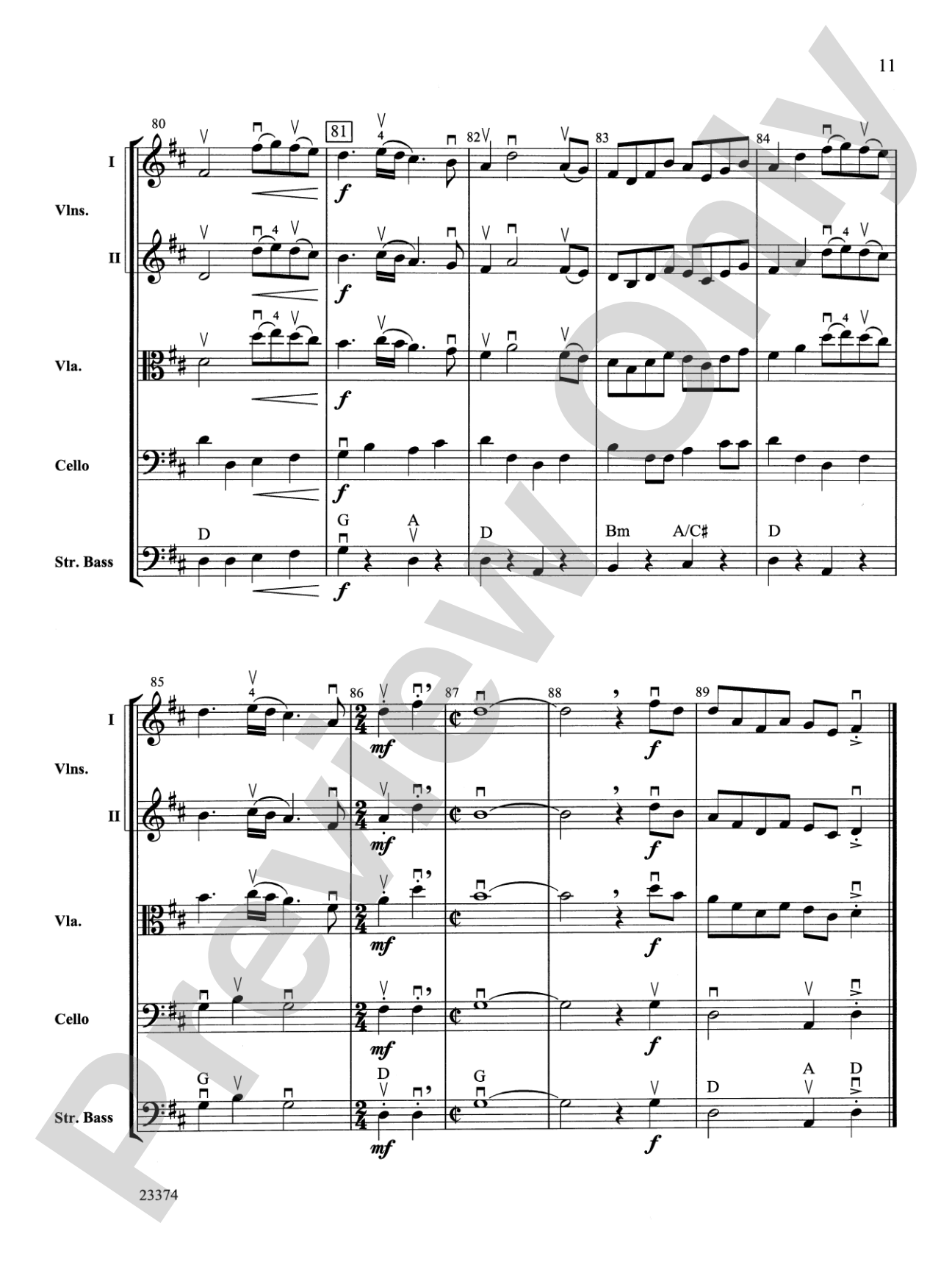
A true old-time fiddle tune, Red Lodge Reel was written for a guest performance on Prairie Home Companion. Peter Ostroushko, former music director of the popular radio show, performed the tune on air, recorded it and dedicated it to his friend in Red Lodge, Montana under the title, "Coming Down from Red Lodge." Each section has interesting and melodic parts with some triple fiddling, and each section gets a chance to play the melody. A key change from A to D in the middle of the piece makes this accessible for all instruments.


Don't just read it, hear it, play along with it, and watch your students grow with it. In MakeMusic Cloud, Red Lodge Reel: String Orchestra Conductor Score & Parts comes alive with professional accompaniment, adjustable tempo, and built-in practice tools that turn solo practice into real progress.
Open in the Player
Jump straight in and assign it today.
Start Your Free Trial
Open this title and explore the full library in minutes.
Sample Audio
1
Audio File
--:--
0:00
0:00
Sample Video
No sample videos found.
Additional Details
Series:
Highland/Etling String Alternatives
Publisher:
Alfred Music
Page Count:
124
SKU:
00-PK-0000723
More about this title
About the Composer: Peter Ostroushko
Peter Ostroushko is a versatile musician and composer rooted in the Upper Midwest folk tradition. As former music director of A Prairie Home Companion, he shaped the musical identity of one of American public radio's most enduring programs, blending classical training with deep knowledge of traditional fiddle music and contemporary composition.
Ostroushko's work bridges concert hall and folk stage. His compositions honor the melodic generosity and rhythmic vitality of American fiddle traditions while meeting the needs of ensemble musicians at all levels. Red Lodge Reel exemplifies his gift for writing accessible arrangements that never sacrifice musicality or interest.
Why we love this
This reel captures the spirit of a working fiddle tune without pretense or oversimplification. Bob Phillips's arrangement distributes the melodic content generously across sections, ensuring every stand gets meaningful material rather than accompanying figures. The key change from A to D mid-piece solves a real accessibility problem while creating genuine musical momentum.
What to expect
Infectious and spirited, like listening to musicians trading solos at a fiddle session. The tune has the natural momentum of a dance form; each section blooms with its own character while propelling the whole forward. There's warmth in the writing and genuine joy in the shared melody.
Who it's for
String orchestras at the intermediate level (Grade 2.5) looking for repertoire with folk authenticity and clear ensemble writing. Directors seeking concert and festival material that engages students without requiring advanced technical facility.
How to get the most out of it
- Keep the ornamentation crisp and rhythmically tight in the triple fiddling passages. Precision here prevents the texture from becoming muddy, especially when multiple sections are trading figures.
- Balance the melody line dynamically across sections. When a new instrumental group takes the tune, let it rise naturally without requiring the conductor to pull back the accompaniment.
- Shape phrases toward the key change rather than playing each eight-bar section as a discrete unit. This builds the forward motion that makes a reel work.
- Treat the D major section as a genuine key area, not just a transposition. The new key should feel like a lift in both brightness and energy.
How to use it
Program this as a palate cleanser in a concert mixing classical and folk repertoire, or as a contest piece that showcases ensemble musicianship and sectional balance. The reel's radio heritage makes it particularly effective in educational contexts where demonstrating the breadth of American musical traditions matters.
Skills your students will build
- Balancing sectional melody line across divisi strings
- Maintaining rhythmic precision in fast ornamental passages
- Playing through a key change while maintaining stylistic consistency
- Shaping eight-bar phrases with forward motion