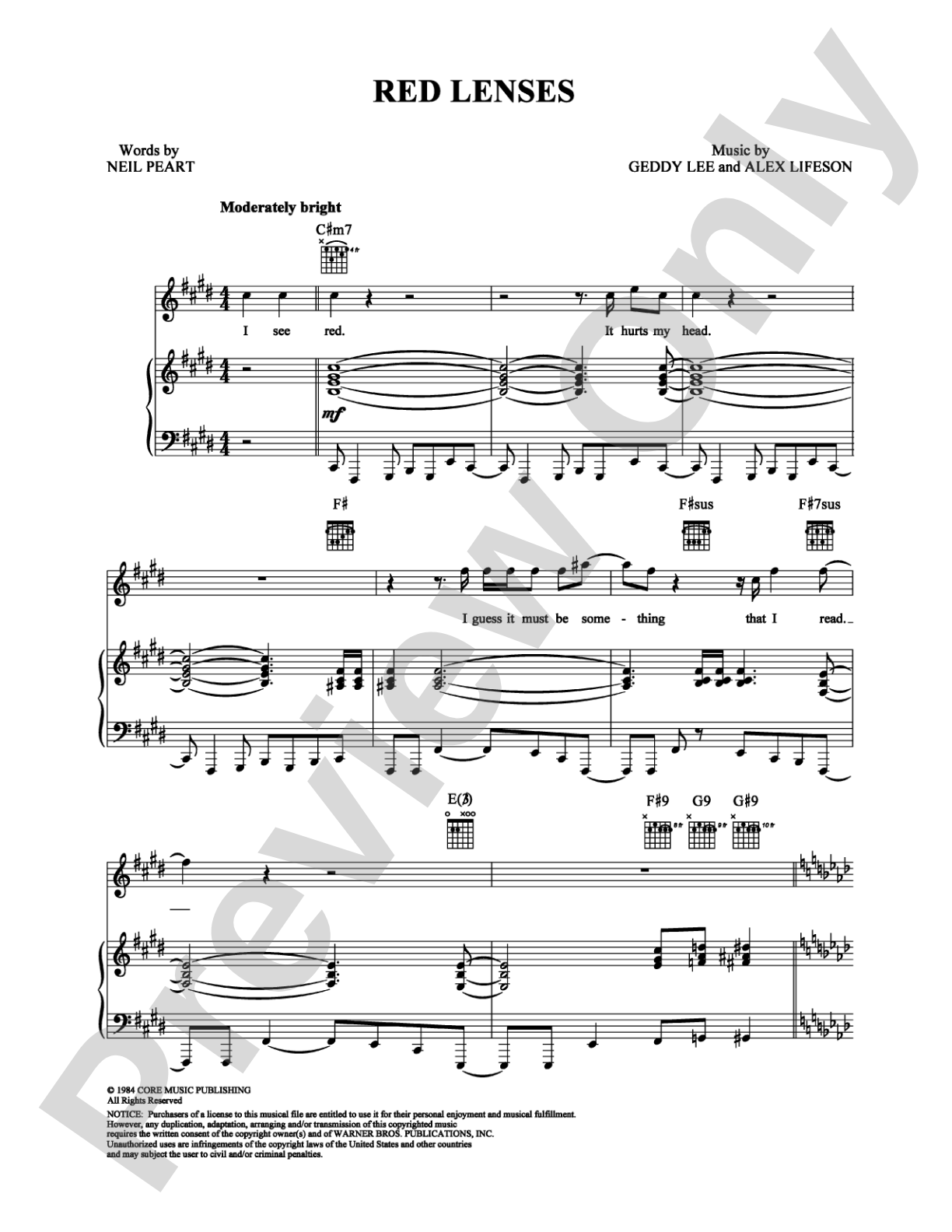
Red Lenses: Piano/Vocal/Chords Digital Sheet Music

Red Lenses: Piano/Vocal/Chords Digital Sheet Music

Rush, Geddy Lee, Alex Lifeson

Item: 00-PS-0002571

Digital Download
$3.99
Description

Red Lenses: Piano/Vocal/Chords Digital Sheet Music isn't in MakeMusic Cloud just yet...but it could be. Let us know you'd like to see it, and you'll help shape what comes next. In the meantime, start a free trial and dive into thousands of interactive titles your students can play along with today.

Sample Audio
No sample audio found.
Sample Video
Additional Details
SKU: 00-PS-0002571

More about this title

About the Artist: Rush

Rush is a Canadian rock band that emerged in the 1970s and became known for sophisticated musicianship, complex arrangements, and philosophical lyrics. The trio of Geddy Lee (vocals, keyboards, bass), Alex Lifeson (guitar), and Neil Peart (drums, lyrics) pushed the boundaries of progressive rock while maintaining accessibility, influencing generations of musicians across genres.

Why we love this

Red Lenses offers musicians a chance to learn from one of rock's most technically demanding and musically inventive bands. The piano/vocal/chords format makes this complex material accessible for singers and accompanists who want to understand how Rush constructed vocal lines over intricate harmonic progressions, translating prog-rock sophistication into a singable, learnable arrangement.

What to expect

Red Lenses carries the intensity and precision Rush is known for, with driving rhythms beneath introspective lyrics. Even in this reduced piano/vocal format, the song retains its architectural complexity and emotional directness, inviting performers to inhabit both the technical challenge and the song's contemplative character.

Who it's for

This arrangement works for vocalists and pianists with intermediate to advanced skills who want to explore rock material with harmonic depth. It's ideal for recital programs, contemporary music classes, or singers interested in learning how progressive rock uses unconventional song structures and chord progressions.

How to get the most out of it

  • Study the chord voicings carefully; Rush's harmonic language moves beyond standard triads, so understanding the voice leading will help you anticipate harmonic direction and play with confidence.
  • Balance the vocal melody against the keyboard part by listening critically to which element should sit forward in your particular performance space; acoustic pianos and full bands require different mixing choices than solo piano/voice.
  • Lock into the rhythmic precision the song demands by practicing hands separately first, then gradually building the coordination between your vocal line and piano part at performance tempo.

How to use it

Include this in a contemporary or rock-focused recital to demonstrate advanced pianistic accompaniment technique and give audiences a familiar touchstone from a band known for musical sophistication. It works equally well in a singer's portfolio when auditioning for programs that value genre diversity and technical skill.

Skills your students will build

  • Reading and playing complex chord progressions with extended harmonies
  • Coordinating syncopated rhythmic patterns between voice and piano
  • Interpreting prog-rock vocal phrasing and lyrical delivery
  • Managing dynamic contrast in a piano/voice texture without additional instrumental support

You May Also Like