
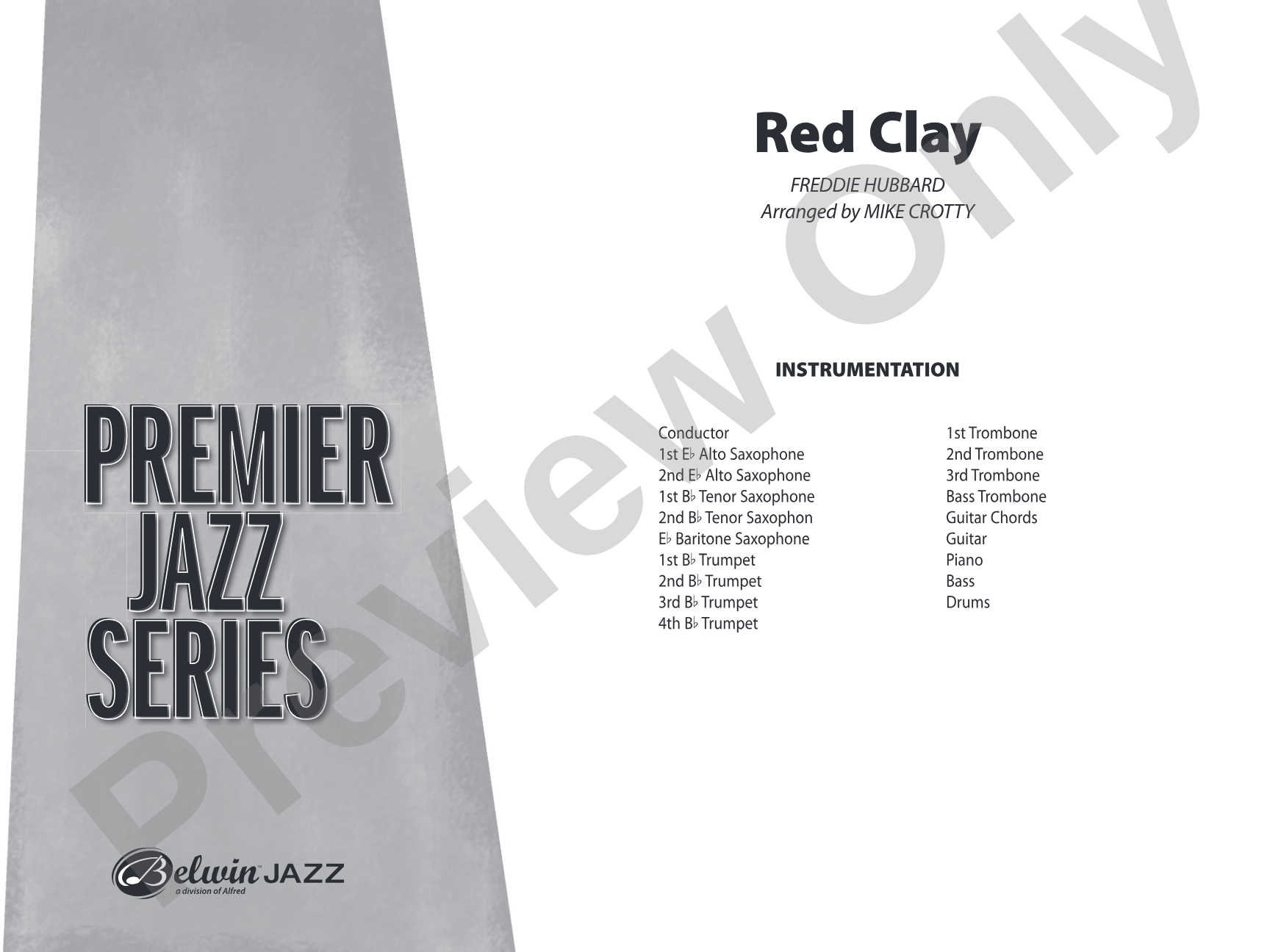
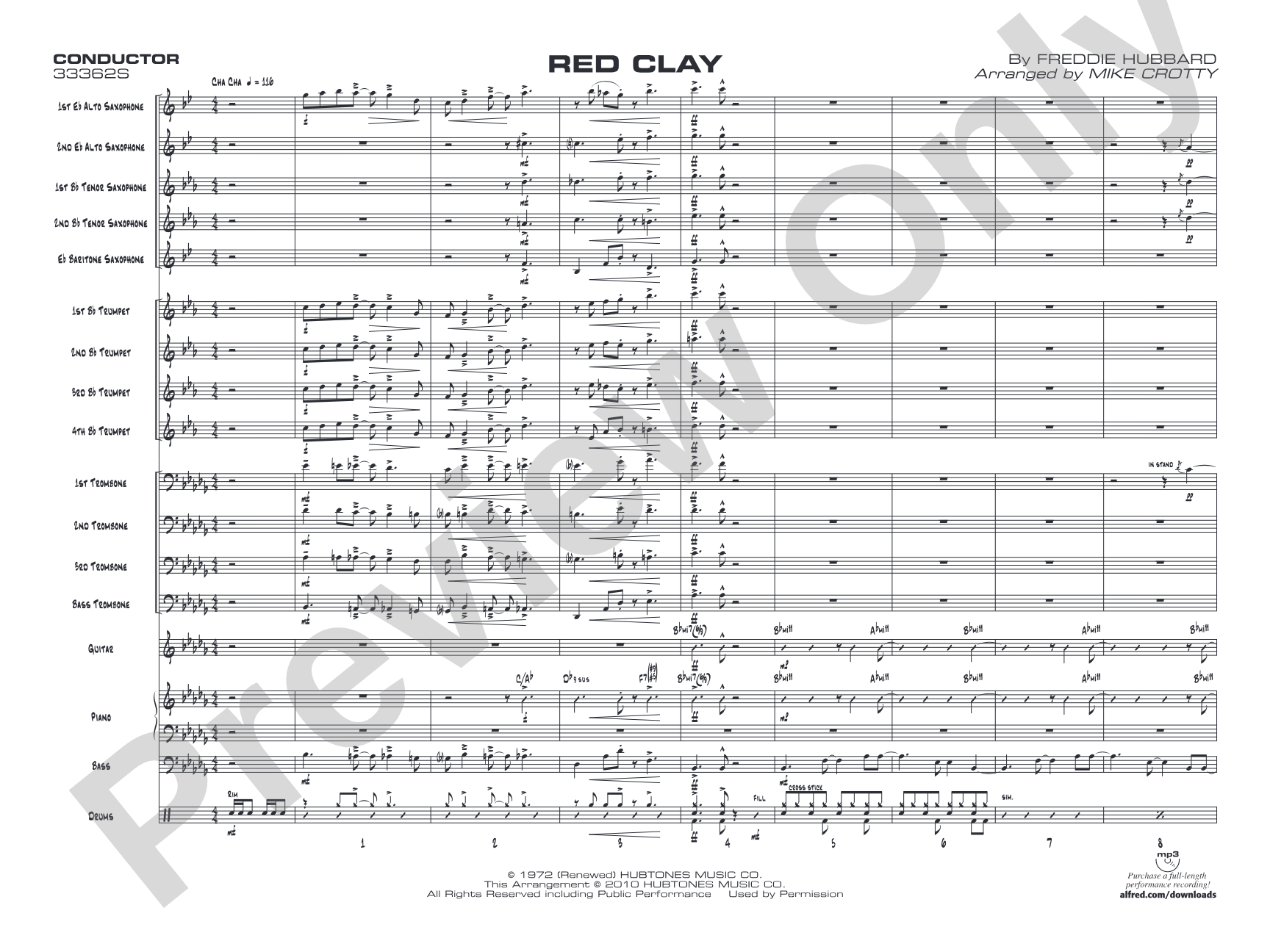
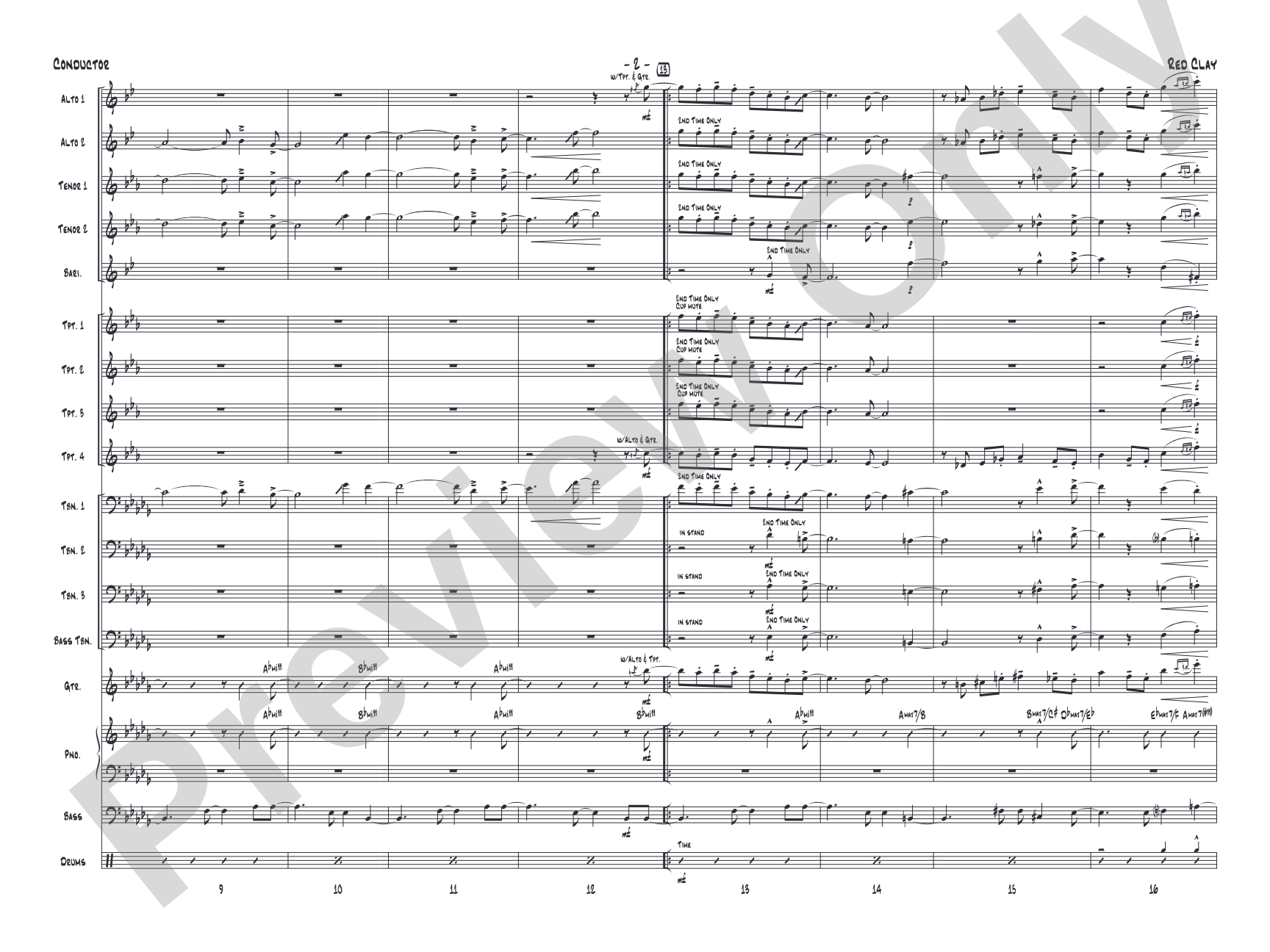
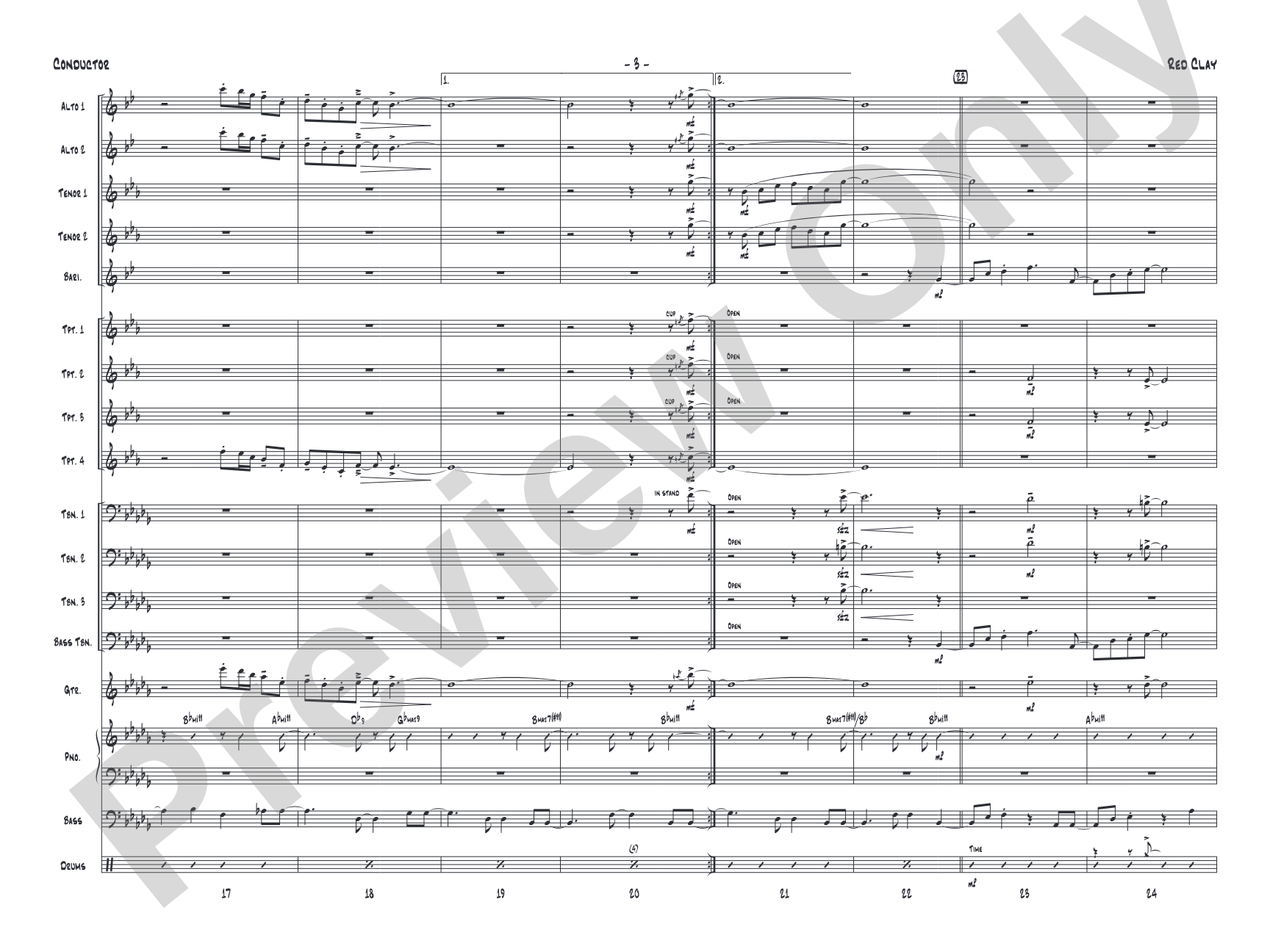
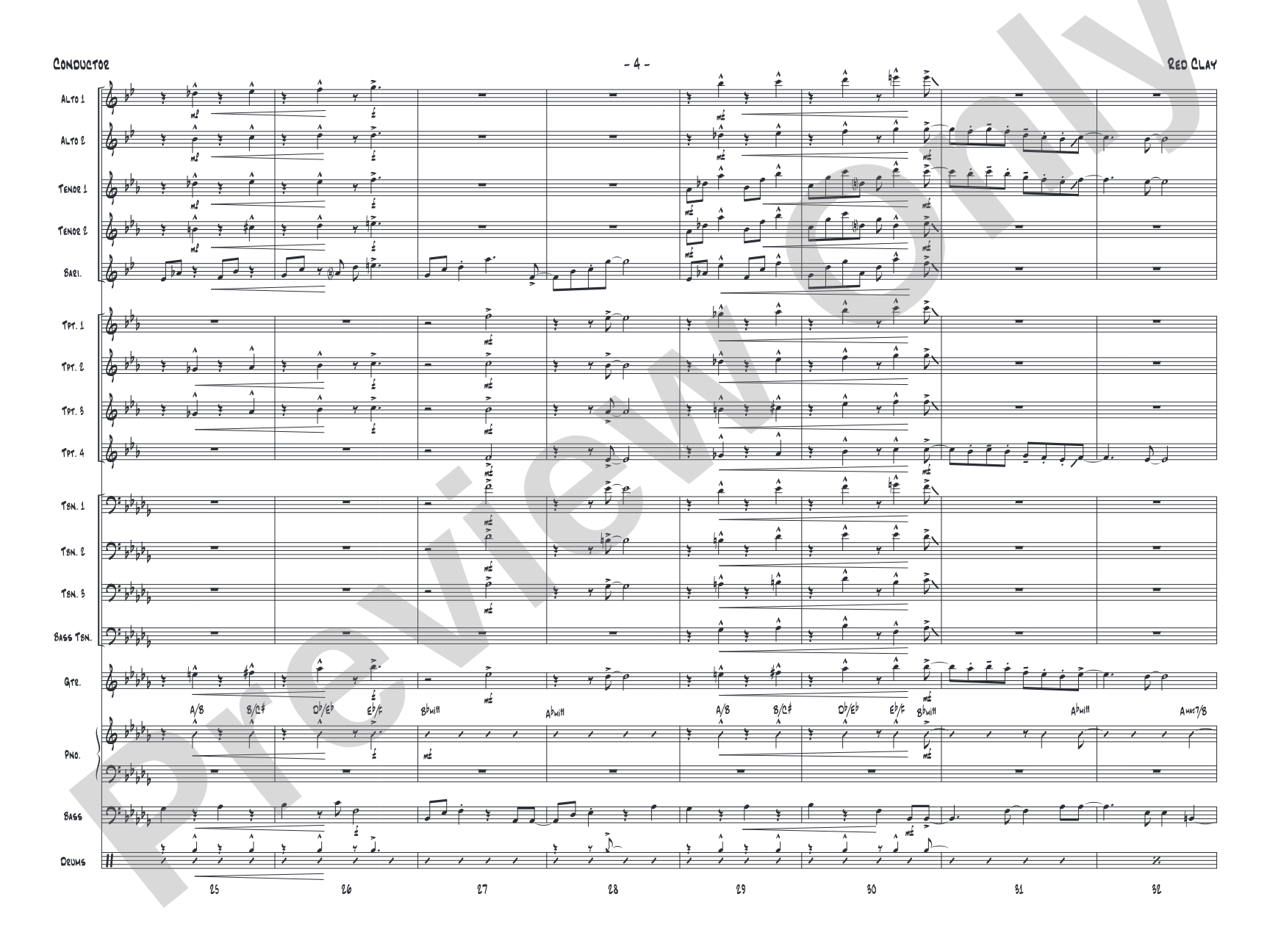
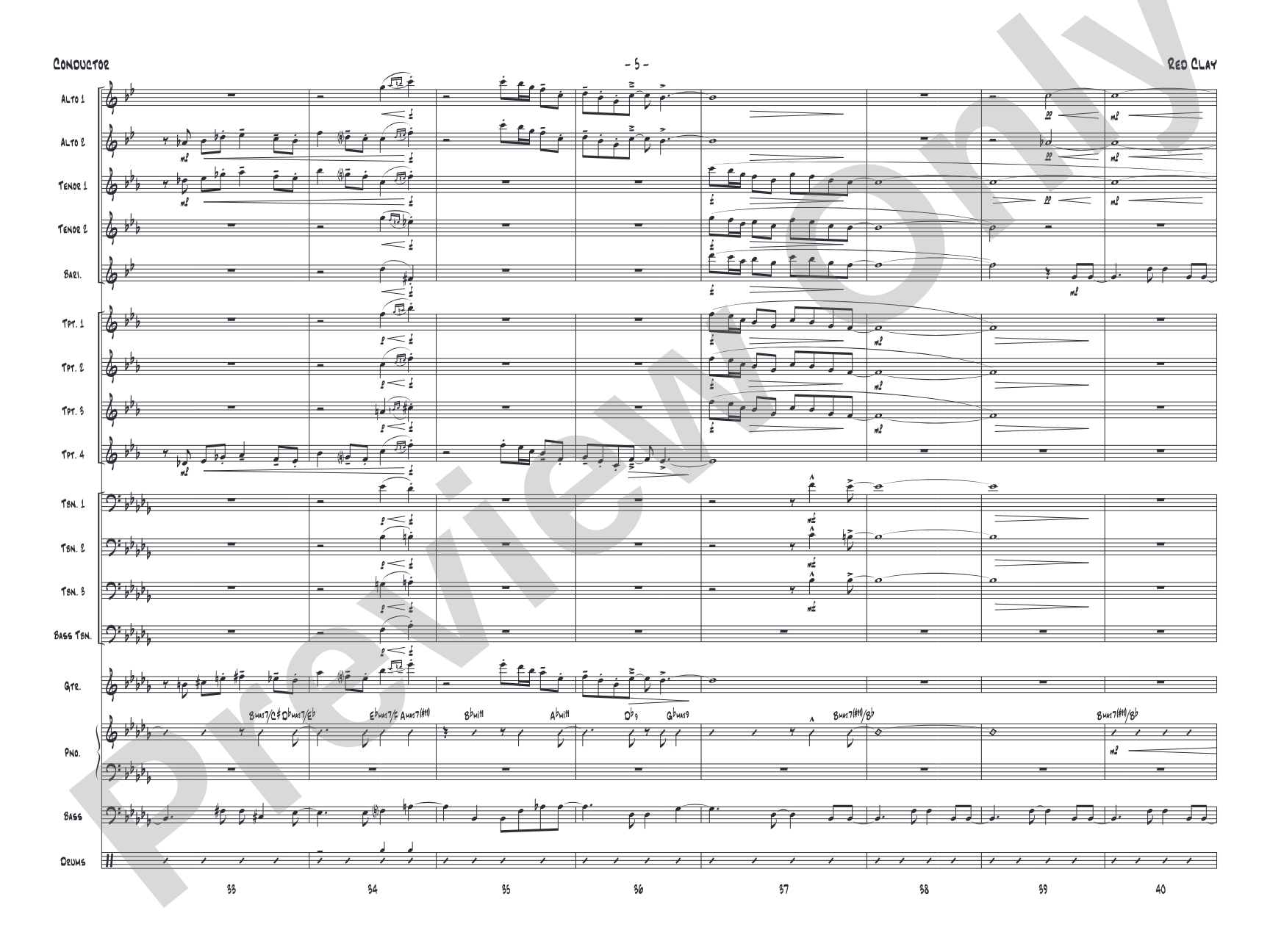
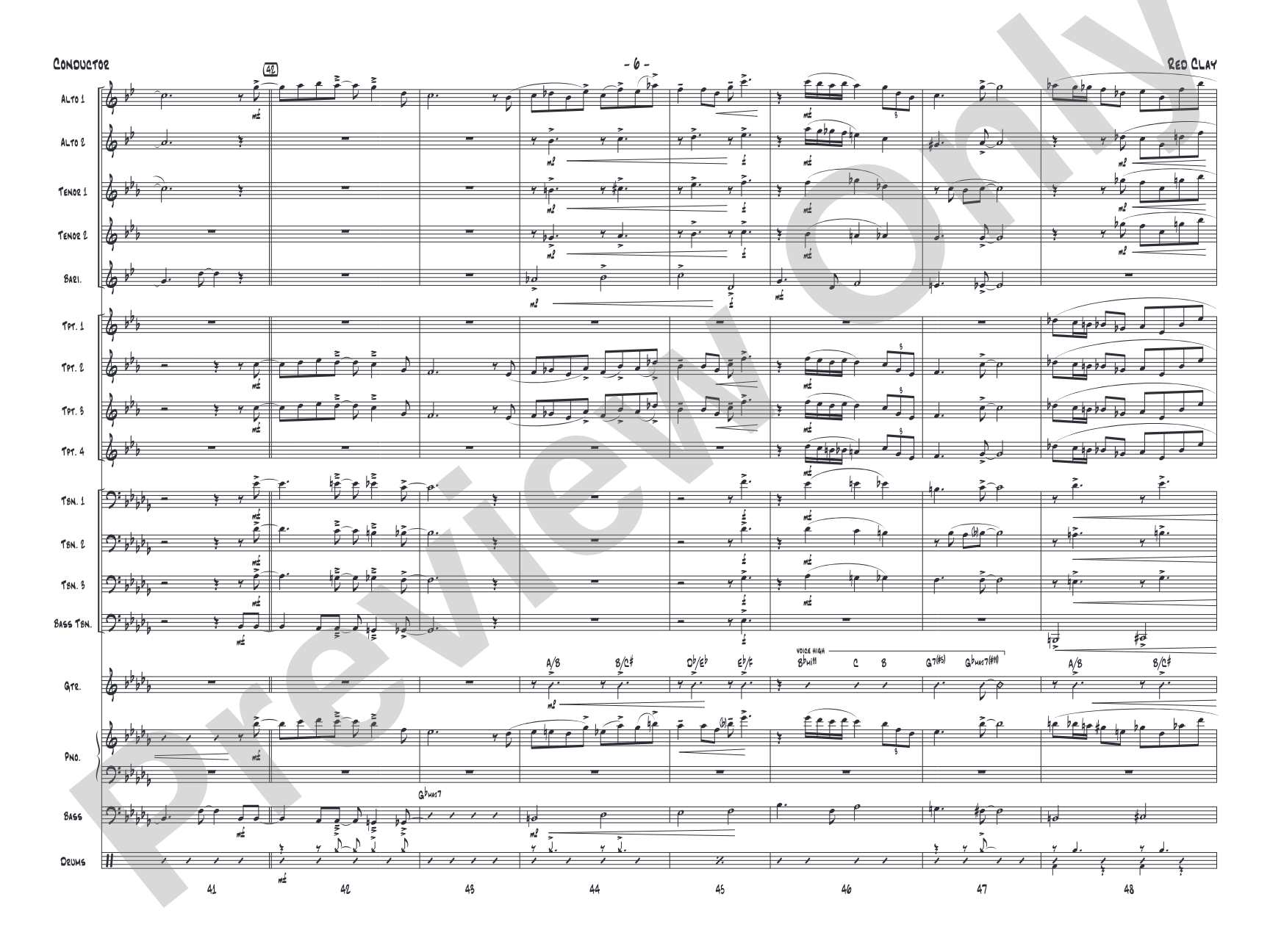
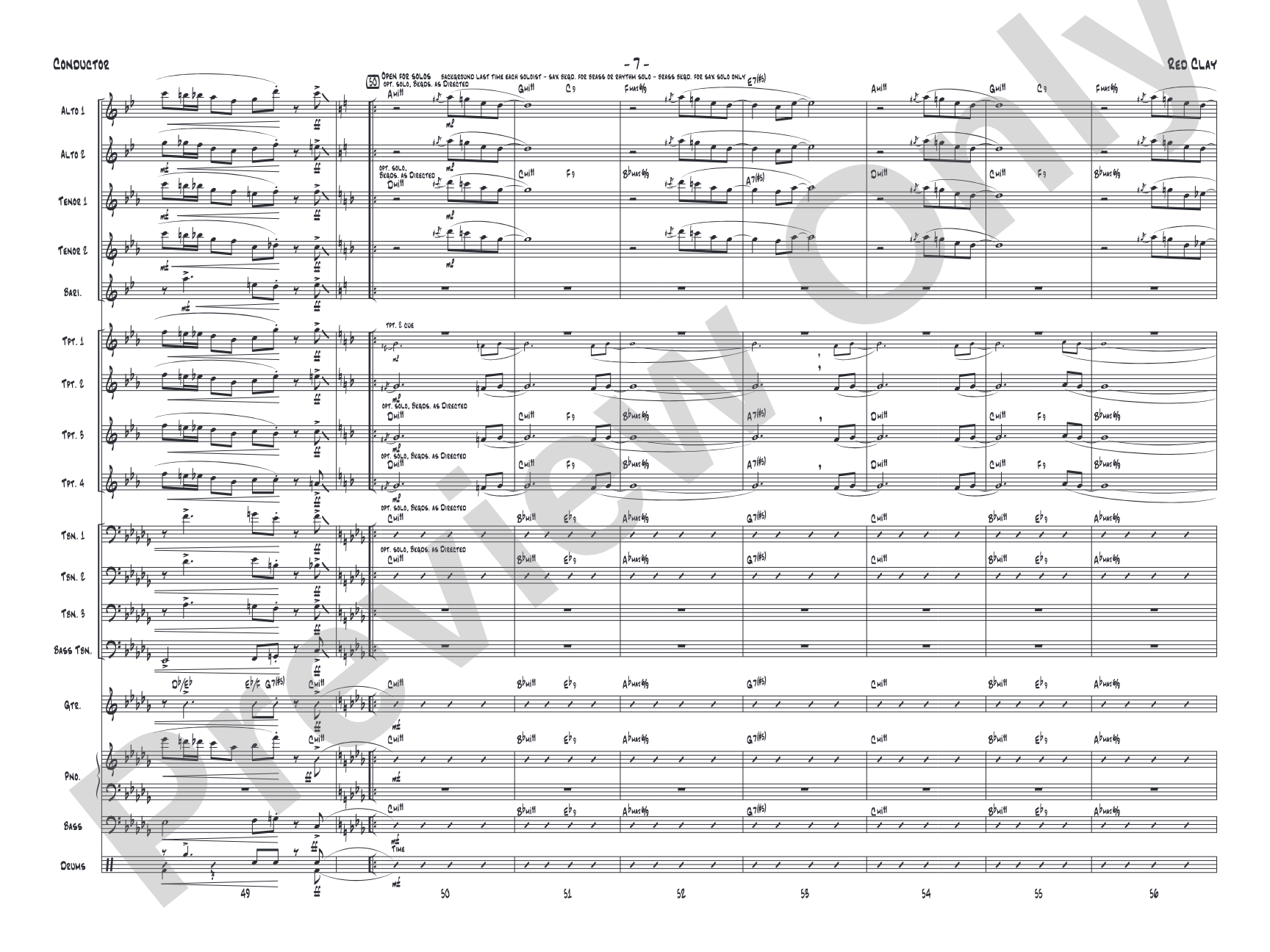
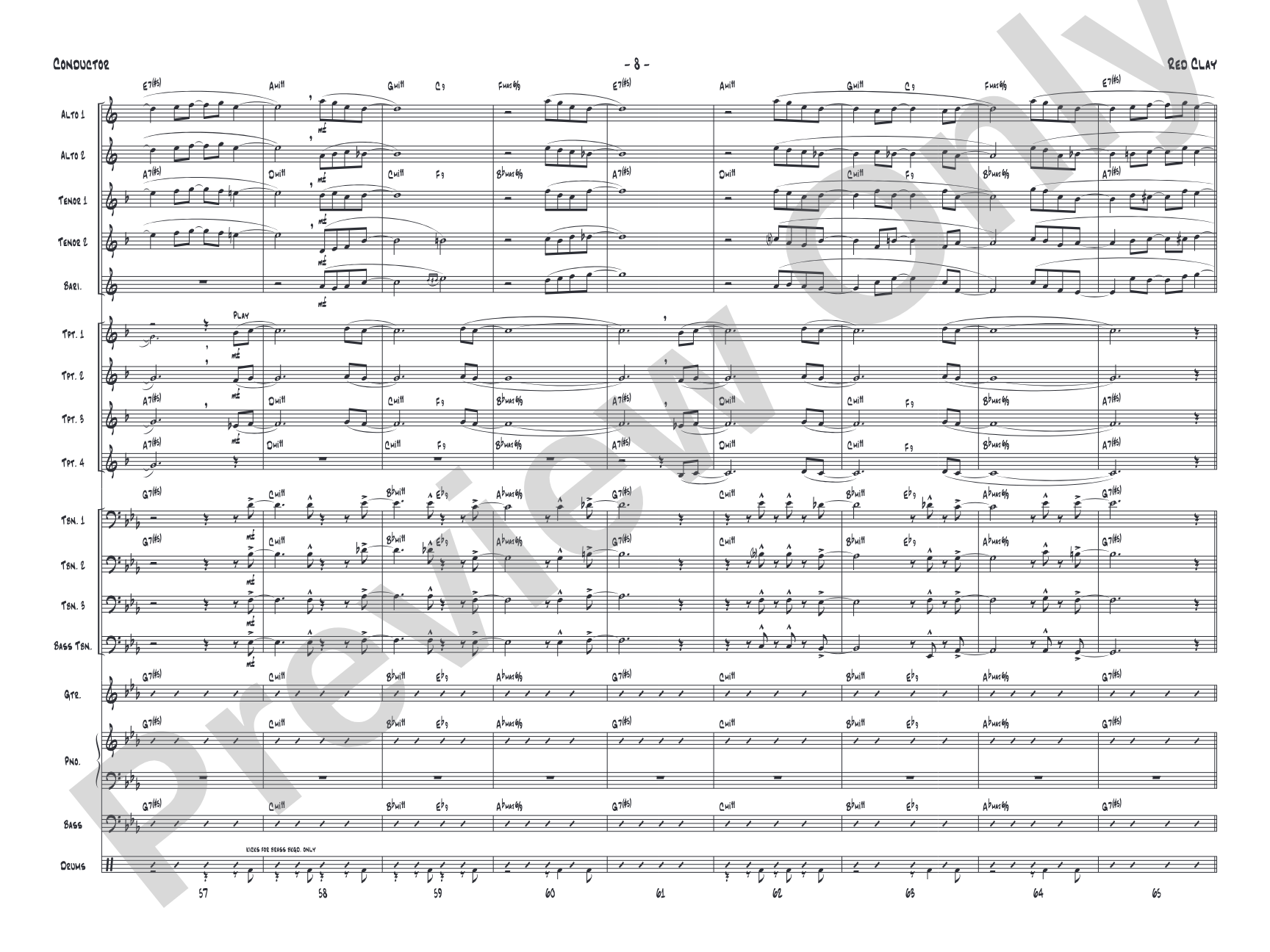
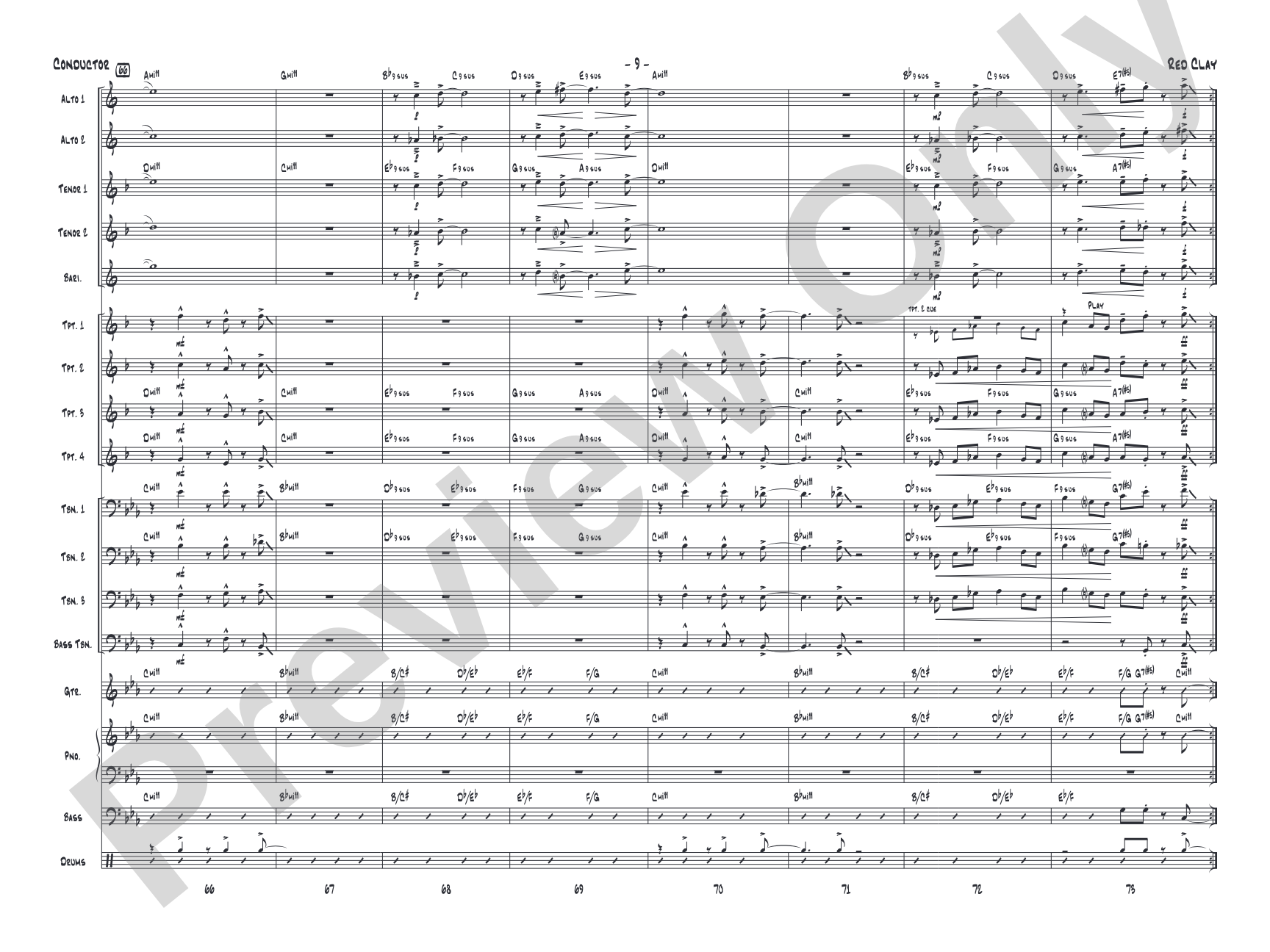
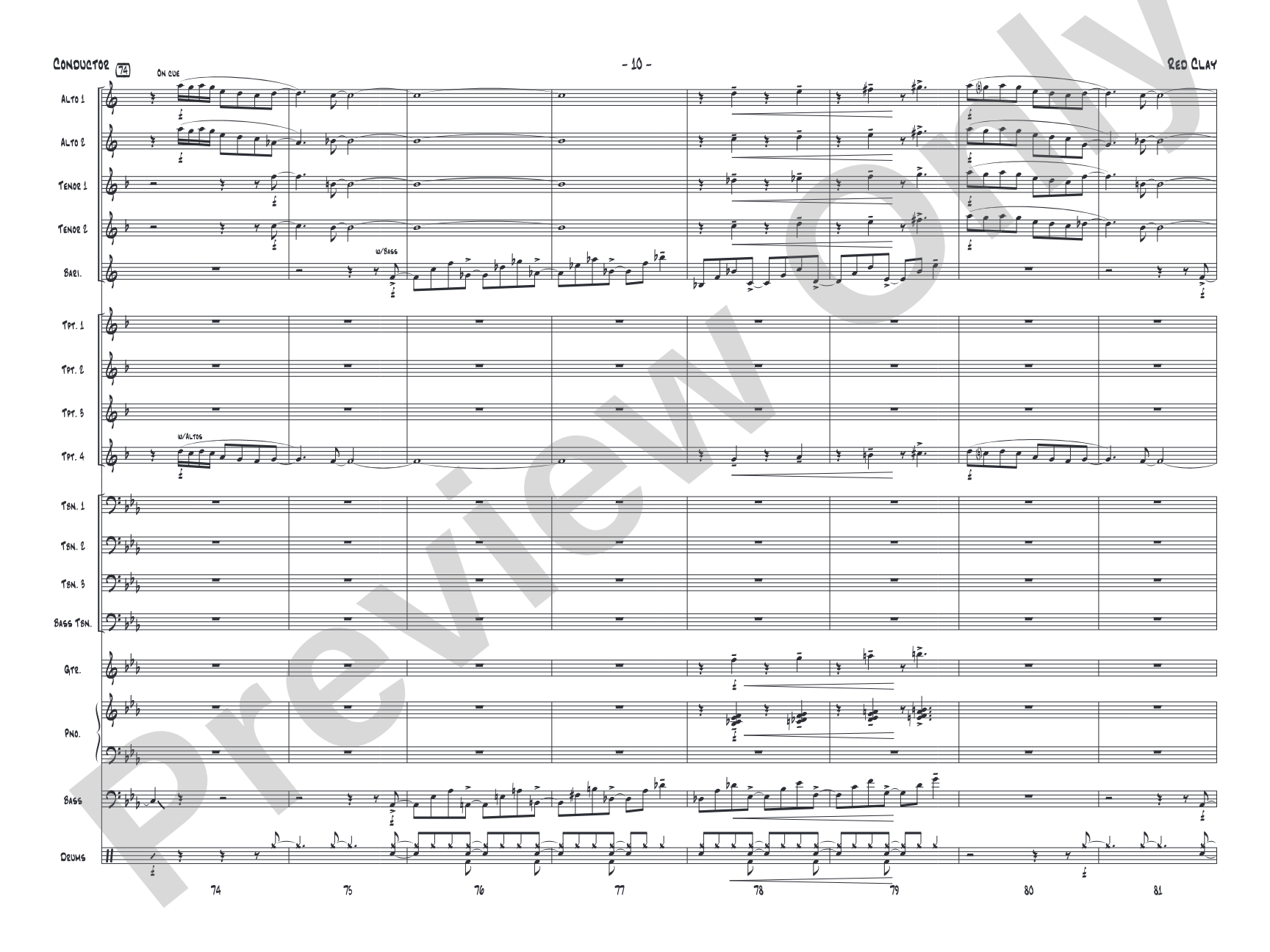
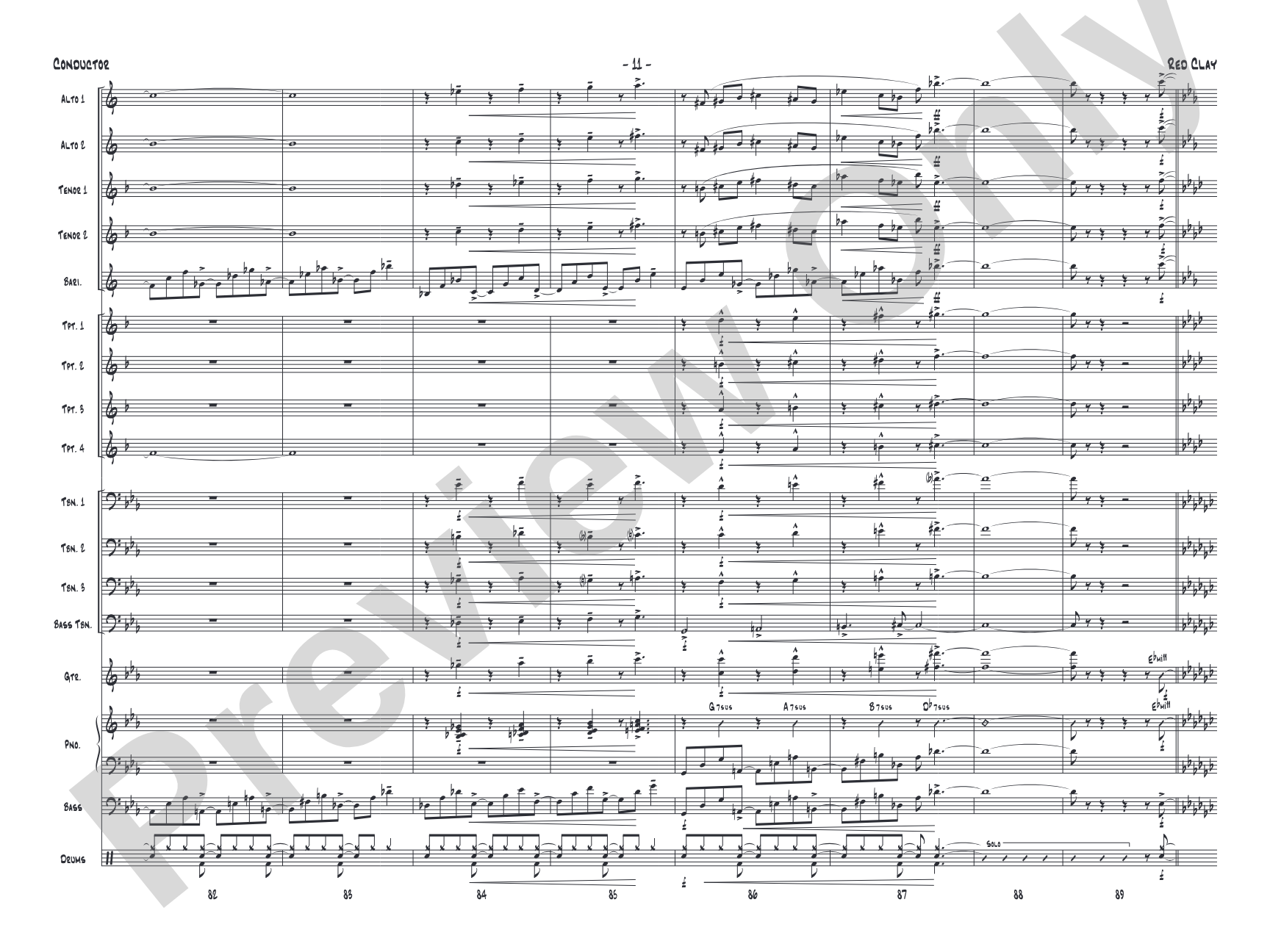
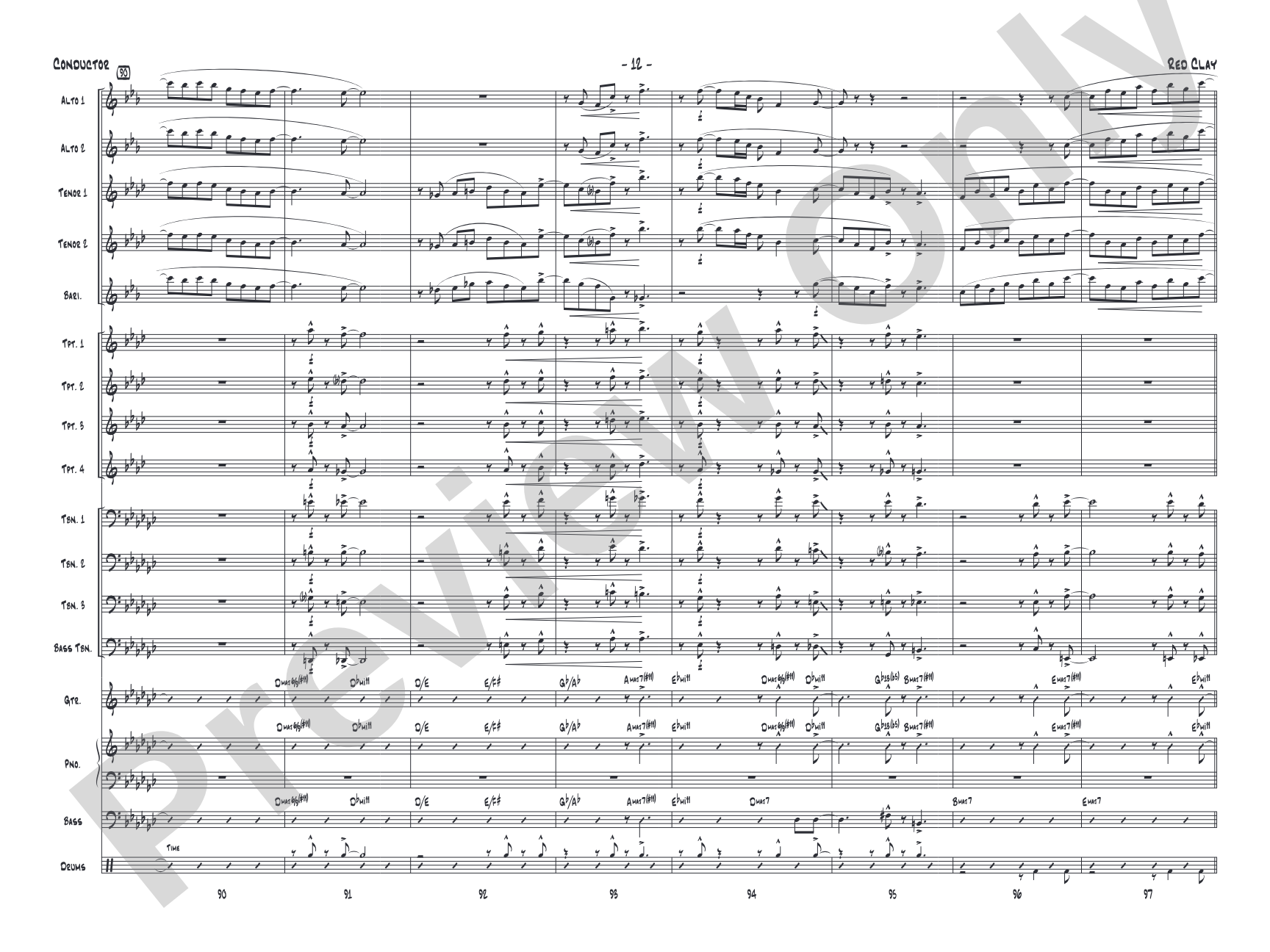
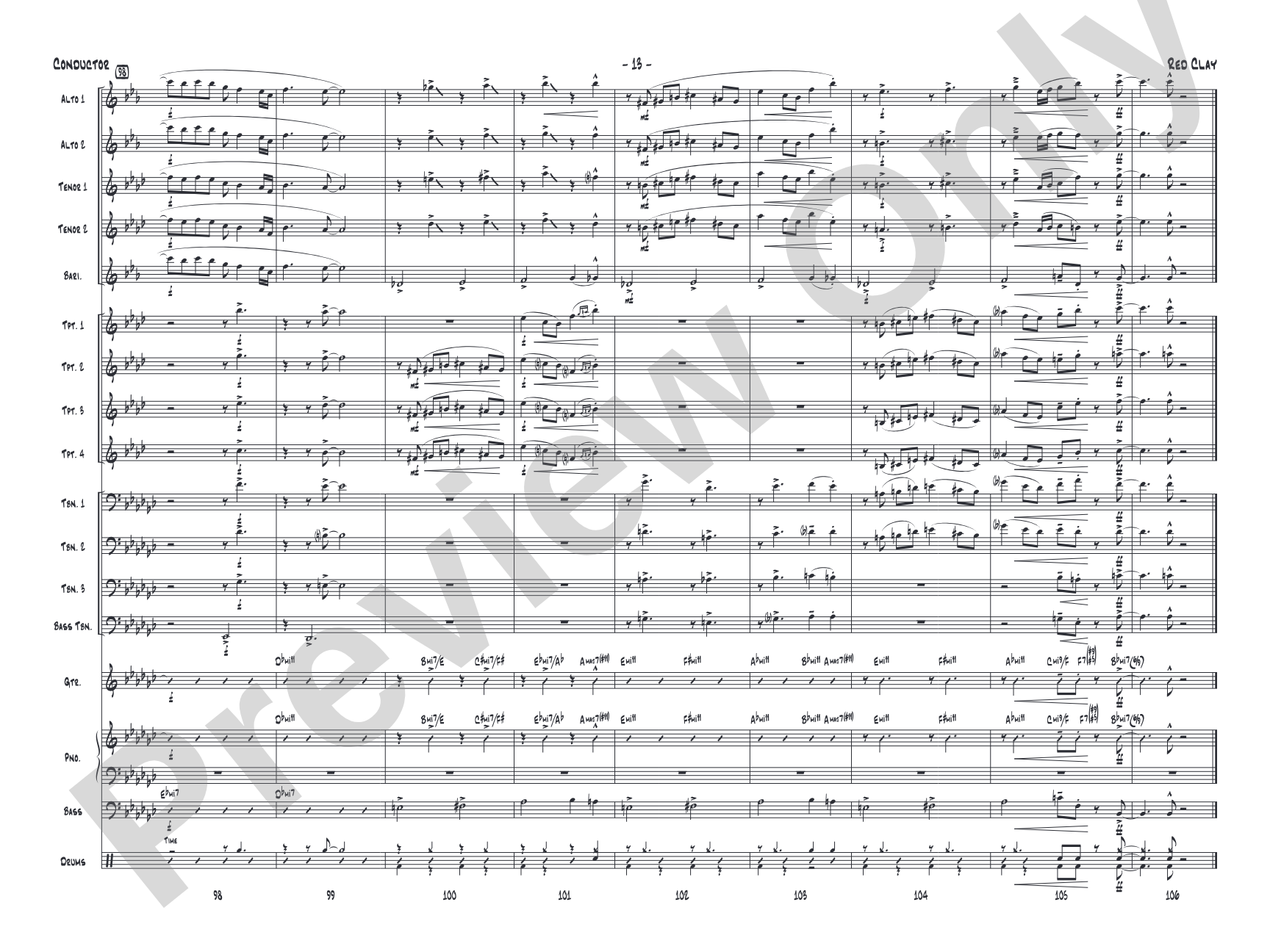

Red Clay: Jazz Ensemble Conductor Score & Parts
By Freddie Hubbard / arr. Mike Crotty
Grade: 4 (Medium Advanced / Difficult)
Item: 00-PK-0006930

$55.00
Pickup currently not available
Buy Extra Parts (Digital PDF Download)
| Product | Price | Quantity |
|---|---|---|
| Red Clay: Score | $10.00 | |
| Red Clay: E-flat Alto Saxophone | $3.00 | |
| Red Clay: 2nd E-flat Alto Saxophone | $3.00 | |
| Red Clay: B-flat Tenor Saxophone | $3.00 | |
| Red Clay: 2nd B-flat Tenor Saxophone | $3.00 | |
| Red Clay: E-flat Baritone Saxophone | $3.00 | |
| Red Clay: 1st B-flat Trumpet | $3.00 | |
| Red Clay: 2nd B-flat Trumpet | $3.00 | |
| Red Clay: 3rd B-flat Trumpet | $3.00 | |
| Red Clay: 4th B-flat Trumpet | $3.00 | |
| Red Clay: 1st Trombone | $3.00 | |
| Red Clay: 2nd Trombone | $3.00 | |
| Red Clay: 3rd Trombone | $3.00 | |
| Red Clay: Bass Trombone | $3.00 | |
| Red Clay: Guitar Chords | $3.00 | |
| Red Clay: Guitar | $3.00 | |
| Red Clay: Piano Accompaniment | $3.00 | |
| Red Clay: String Bass | $3.00 | |
| Red Clay: Drums | $3.00 |
Parts Added to Cart!
Related Items
Red Clay: Jazz Ensemble Conductor Score |
$10.00
|
View |
Description
Red Clay from the Premier Jazz Series is designed for highs school and college bands. Full instrumentation includes 5 saxophones, 8 brass and 4 rhythm parts. background parts are provided behind improvised solos and guitar chord frames are provided to assist young guitarists.


Don't just read it, hear it, play along with it, and watch your students grow with it. In MakeMusic Cloud, Red Clay: Jazz Ensemble Conductor Score & Parts comes alive with professional accompaniment, adjustable tempo, and built-in practice tools that turn solo practice into real progress.
Open in the Player
Jump straight in and assign it today.
Start Your Free Trial
Open this title and explore the full library in minutes.
Sample Audio
1
Audio File
--:--
0:00
0:00
Sample Video
No sample videos found.
Additional Details
Series:
Premier Jazz Series
Publisher:
Alfred Music
Page Count:
88
SKU:
00-PK-0006930
More about this title
About the Composer: Freddie Hubbard
Freddie Hubbard (1938-2008) was a virtuoso trumpeter and composer whose contributions shaped the sound of hard bop, soul jazz, and fusion across five decades. His compositions balance accessibility with sophistication, making them ideal teaching vehicles for young improvisers learning to navigate complex harmonic and rhythmic terrain.
Why we love this
Red Clay gives your ensemble a genuine jazz standard with professional orchestration that never condescends to younger players. The arrangement provides meaningful backgrounds that support improvisation without overwhelming it, and the inclusion of chord frames for guitar makes the harmonic foundation transparent for everyone reading the parts.
What to expect
Warm, grounded, and slightly introspective. Red Clay sits in that sweet spot where hard bop's melodic lyricism meets the lean efficiency of a working jazz composition. The tune has enough space for individual voices to emerge without sacrificing the ensemble's cohesion.
Who it's for
High school and college jazz ensemble directors seeking substantial repertoire with genuine jazz credibility. This score works for bands ready to tackle Grade 4 harmonic complexity and comfortable with structured improvisation over fixed background parts.
How to get the most out of it
- Balance the saxophone section carefully during head statements; the five-part writing can easily overshadow the soloists if players aren't listening across the ensemble.
- Use the chord frames in rehearsal to reinforce harmonic function for all players, not just the guitarist. Point out key modulations and how they affect solo approaches.
- Lock the rhythm section before adding horns. The time feel and pocket here are non-negotiable; spend rehearsal time on just bass, drums, and guitar until that groove is airtight.
- Encourage soloists to listen to the original recording and other interpretations so they understand the tune's soul before taking their turns.
How to use it
Program this as a centerpiece for a jazz concert or as a closing number on a mixed band concert; its accessibility to general audiences and musical substance make it equally at home either way. It pairs well with other Premier Jazz Series pieces at similar or contrasting tempos, giving you a chance to showcase soloists across multiple charts.
Skills your students will build
- Playing over ii-V-I progressions in multiple keys
- Reading chord frames and translating them to improvised lines
- Maintaining steady time while accompanying soloists
- Balancing homophonic section parts with forward melodic momentum
- Responding to solo structure and phrasing in ensemble contexts