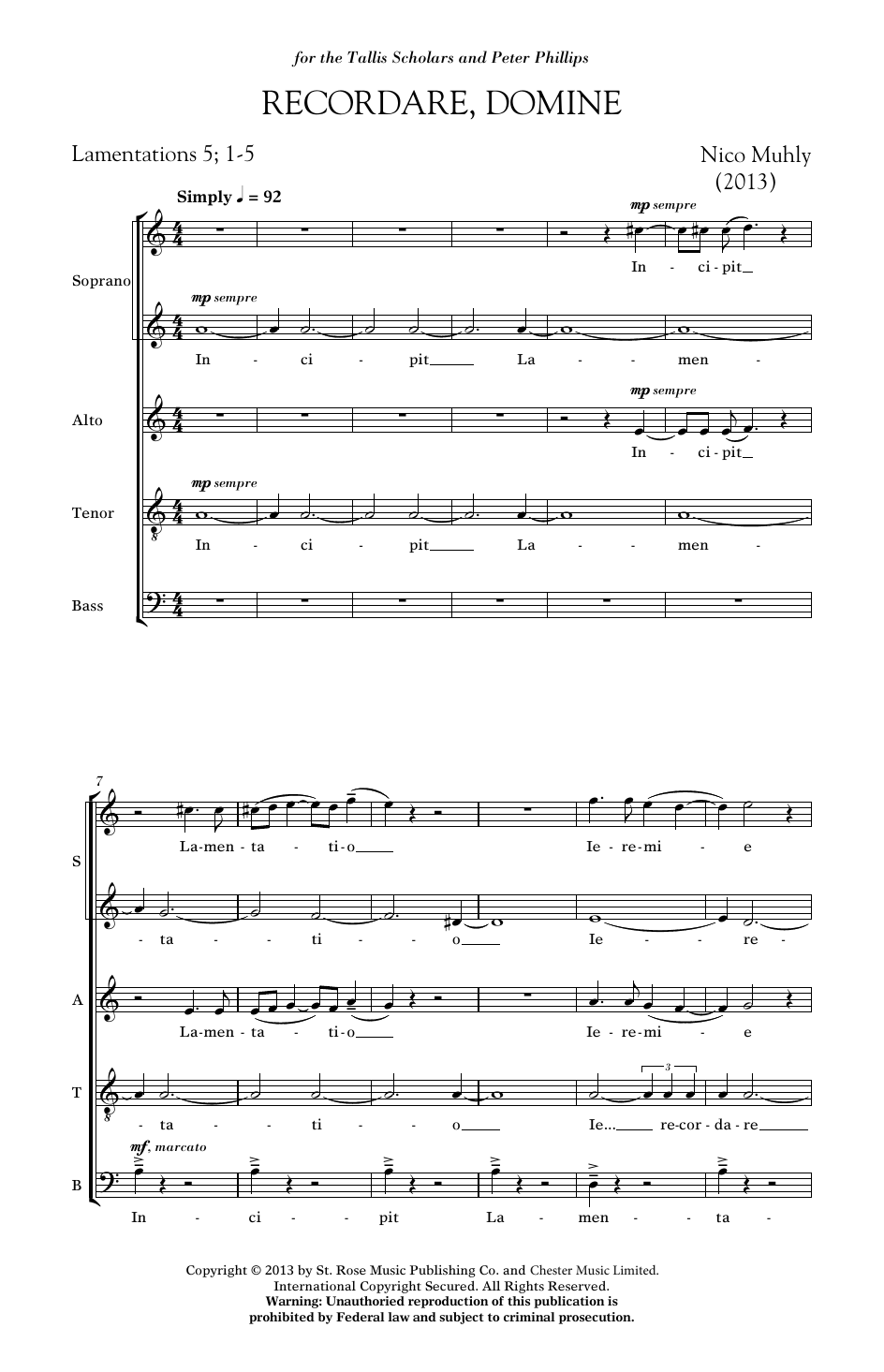
Recordare, Domine Sheet Music Preview

Recordare, Domine: SATB Choral Octavo

As performed by Nico Muhly

Item: 35-DS00362159

Digital Download
$2.99
Description

Recordare, Domine: SATB Choral Octavo isn't in MakeMusic Cloud just yet...but it could be. Let us know you'd like to see it, and you'll help shape what comes next. In the meantime, start a free trial and dive into thousands of interactive titles your students can play along with today.

Sample Audio
No sample audio found.
Sample Video
Additional Details
Publisher: Hal Leonard
Page Count: 13
SKU: 35-DS00362159

More about this title

About the Artist: Nico Muhly

Nico Muhly is an American composer known for blending contemporary classical techniques with accessible, lyrical writing. His choral works span sacred and secular texts, often characterized by intricate harmonic language and a gift for setting words with both intellectual rigor and emotional directness.

Why we love this

Muhly's setting treats this medieval Latin text with sophisticated harmonic language that rewards careful listening without demanding technical gymnastics from your singers. The piece sits comfortably in the SATB range while offering genuine compositional substance that elevates a concert program.

What to expect

The piece unfolds with a sense of formal contemplation, its harmonic language creating moments of brightness and shadow without abandoning lyricism. There's an intellectual clarity beneath the surface, reflecting on the text's meaning through musical architecture rather than theatrical gesture.

Who it's for

This octavo works for choirs with solid fundamentals in part singing and mature ears for contemporary harmony. It suits programs seeking thoughtful, well-crafted contemporary music that doesn't require extended vocal techniques or extreme ranges.

How to get the most out of it

  • Balance the inner voices during harmonic shifts; Muhly's writing often places melodic material in the alto or tenor line that can disappear without deliberate attention in rehearsal.
  • Approach text declamation with precision. The Latin phrasing benefits from clean consonants and shaped vowels that let the harmonic movement breathe.
  • Shape phrases across longer spans rather than stopping at bar lines. This counteracts the potential for the piece to feel fragmented and helps unify sections that shift harmonically.

How to use it

Position this as a centerpiece in a concert focused on contemporary sacred or secular texts, or pair it with Renaissance settings of similar material to highlight how composers across centuries approach the same words. It works equally well in a program of modern American choral music.

Skills your students will build

  • Reading and sustaining contemporary harmonic language
  • Balancing inner voice independence with overall ensemble blend
  • Text declamation in Latin with attention to musical phrasing
  • Listening to and adjusting intonation in chromatic harmony

You May Also Like