
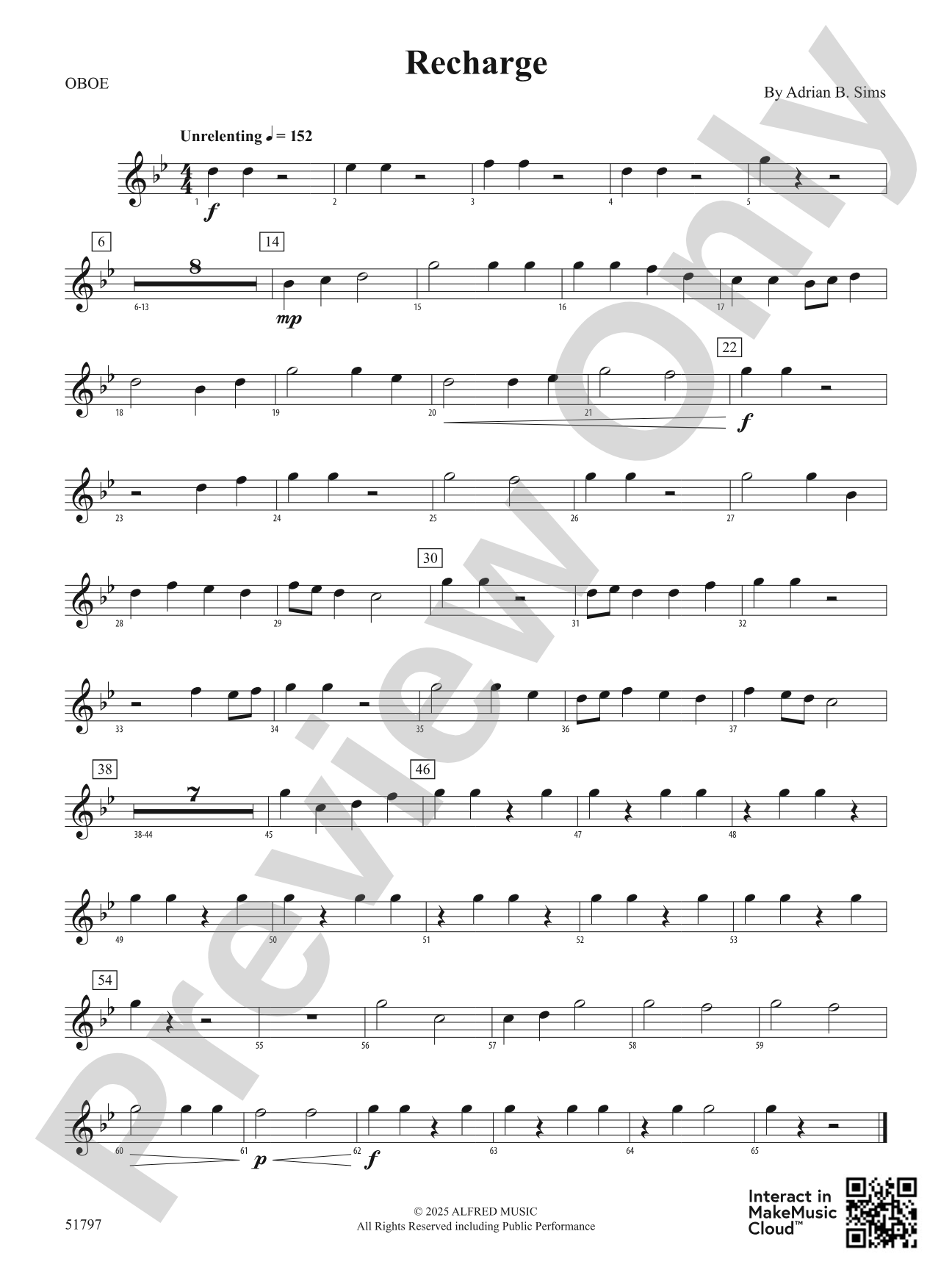

Recharge: Oboe
By Adrian B. Sims
Level:.5
Item: 00-PC-0019411_O1
$5.99
Pickup currently not available
Description
Recharge, by Adrian B. Sims, begins with an initial burst of energy that charges back up over time. After a short, softer section, brass fanfares and intense rhythms bring us to ultimate intensity, where the music concludes with one final swell to the end. (1:45)


Don't just read it, hear it, play along with it, and watch your students grow with it. In MakeMusic Cloud, Recharge: Oboe comes alive with professional accompaniment, adjustable tempo, and built-in practice tools that turn solo practice into real progress.
Open in the Player
Jump straight in and assign it today.
Start Your Free Trial
Open this title and explore the full library in minutes.
Sample Audio
1
Audio File
--:--
0:00
0:00
Sample Video
Additional Details
Series:
Developing Band
Publisher:
Alfred Music
SKU:
00-PC-0019411_O1
More about this title
About the Composer: Adrian B. Sims

Adrian B. Sims is a composer, conductor, educator, and trombonist born in Seattle in 2000. His compositions have earned recognition at the Midwest Band and Orchestra Clinic, landed on the Bandworld Top 100 List, and won multiple awards including the Maryland Music Educators Association Young Composers Project and the Make Music Young Composers Contest. As a trombonist, he has performed across pit orchestras, symphony orchestras, jazz ensembles, and concert bands, including performances with the Baltimore Symphony Orchestra and selections to the Maryland All-State Band.
Sims is currently pursuing a dual degree in Music Education and Composition at the University of Maryland, where he studies composition with Dr. Robert Gibson and bass trombone with Matthew Guilford of the National Symphony Orchestra. He has conducted his own works in performances across Maryland schools and credits his band directors Christopher Gnagey and Cindy Stevenson, as well as composer Brian Balmages, for shaping his development as a musician.
Why we love this
Recharge delivers exactly what developing bands need: a piece with genuine dramatic arc that fits a half band's technical range without sacrificing excitement. The structure is masterful for teaching ensemble control. Building from a burst of energy, pulling back for contrast, then driving toward brass fanfares and rhythmic intensity teaches students how musical tension works at a fundamental level. For festival season, this is a smart choice that scores well and keeps musicians engaged.
What to expect
Recharge pulses with restless energy that never quite settles. After its initial rush, the piece catches its breath in a softer section that feels almost vulnerable before brass fanfares and driving rhythms snap back to attention. The final swell suggests satisfaction earned through intensity rather than reached by accident.
Who it's for
Developing bands at the half level seeking contest or festival repertoire that demands real musicianship without overwhelming technical demands. This piece works for ensembles ready to explore musical shaping and ensemble balance through a complete dramatic narrative.
How to get the most out of it
- Isolate the opening burst in sectionals early. The initial energy sets the entire piece's tone, and clarity in the first eight measures pays dividends when you add the full sound.
- Shape the softer section with real contrast, not just volume reduction. This passage should feel like genuine rest before the brass fanfares re-enter. Have students lower their dynamic ceiling temporarily to make the section breathe.
- Lock the brass entrances for the fanfare section. These moments define the final push toward intensity, and rhythmic cohesion between brass choirs will make the conclusion land with real impact.
- Build the final swell gradually rather than jumping to full volume. Let the music grow organically from the rhythmic intensity into that closing surge. This teaches restraint and makes the ending feel earned.
How to use it
Program Recharge as an opener or closer on a festival or contest set where you need a piece that showcases ensemble control and musical maturity. At under two minutes, it pairs efficiently with longer works on the same concert, and the clear three-part structure gives adjudicators and audiences something tangible to follow.
Skills your students will build
- Dynamic contrast and musical shaping across a complete form
- Ensemble balance in sectional writing, particularly between brass and full band
- Rhythmic precision and unification during syncopated and intense passages
- Coordinating musical entries and releases across multiple sections simultaneously