Reboot: Tuba Sheet Music Preview

Reboot: Tuba

By Vince Gassi

Grade: 1 (Easy)

Item: 00-PC-0017188_TB1

Digital Download
$3.00
Description
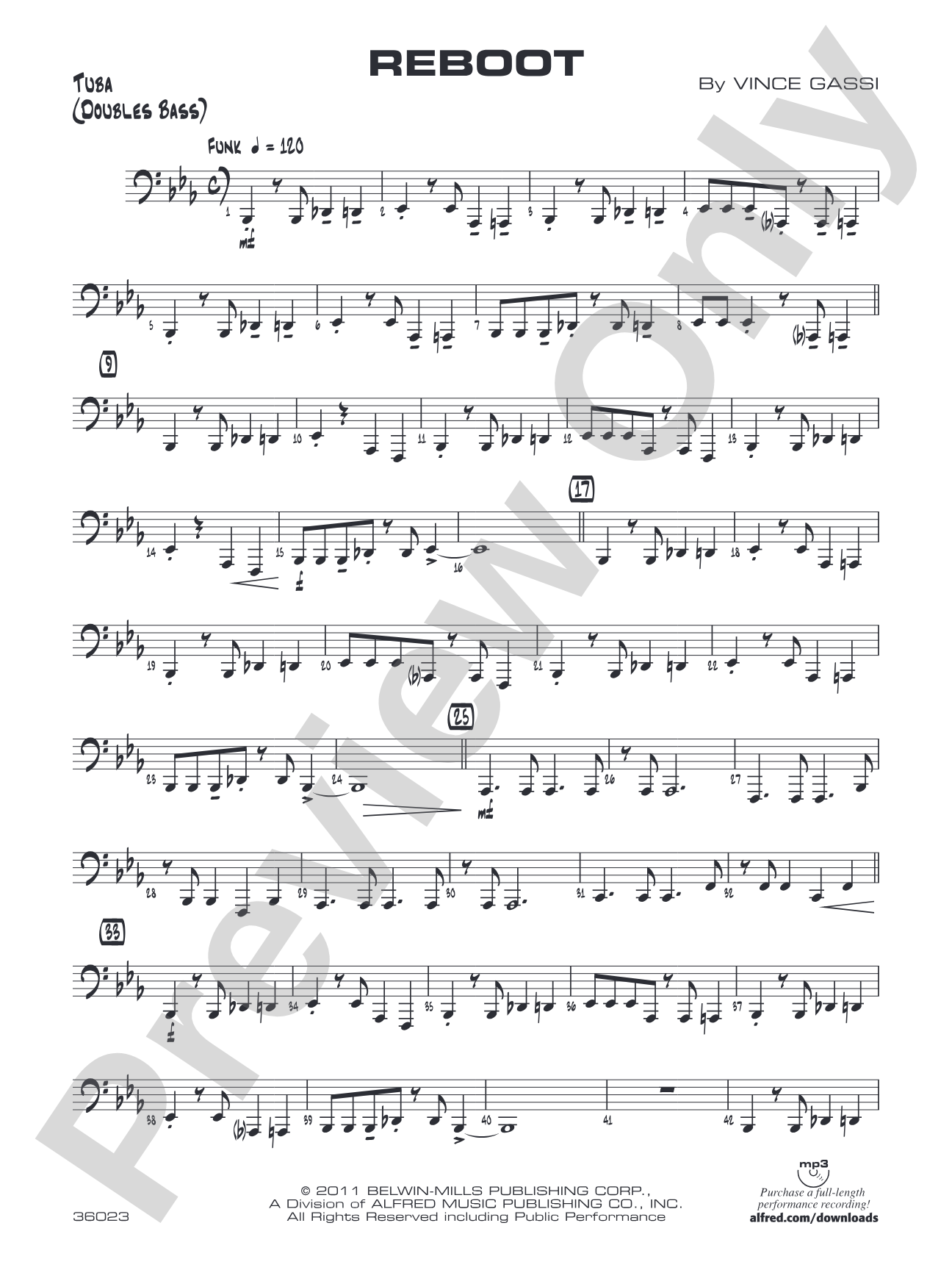
Here's a drivin', funky rock chart at 124 BPM that will grab you with its infectious hook and way cool, blues-centric melody. Dig the brief written-out solos for alto sax 1 and trumpet 1. After the hip bridge, a modulation steps it up a notch.

Don't just read it, hear it, play along with it, and watch your students grow with it. In MakeMusic Cloud, Reboot: Tuba comes alive with professional accompaniment, adjustable tempo, and built-in practice tools that turn solo practice into real progress.

Sample Audio
0:00
0:00
Sample Video
Additional Details
Series: First Year Charts for Jazz Ensemble
Publisher: Alfred Music
Page Count: 78
SKU: 00-PC-0017188_TB1

More about this title

About the Composer: Vince Gassi

Vince Gassi

Vince Gassi has been composing and arranging for young ensembles since earning his Bachelor of Music from the University of Western Ontario. He studied composition and arranging at the Dick Grove School of Music in Los Angeles and completed his Ph.D. at York University in Toronto. His catalog exceeds 100 published works, many of which appear regularly on festival and contest programs across North America, Europe, and Japan.

For more than two decades, Gassi taught instrumental music at elementary and secondary levels while building a reputation as a sought-after guest conductor, adjudicator, and clinician. He leads workshops on creative engagement and digital workflows for music directors, and his pieces are frequent selections at the prestigious Midwest Clinic in Chicago.

Why we love this

Gassi nails the balance between accessibility and style here. Grade 1 ensembles rarely get charts this groovy; the written-out solos for alto and trumpet give your section leaders something tangible to own, and the modulation into the bridge feels earned rather than tacked on. This is the kind of opener that reminds students why they joined jazz band.

What to expect

Funky and propulsive. The infectious hook pulls you in immediately, and once the blues-centric melody settles in, you're locked into a pocket that feels both modern and timeless. The energy builds naturally through the bridge; by the time the modulation hits, the ensemble is riding the momentum.

Who it's for

Beginning jazz ensemble students who need high-energy material that feels sophisticated without technical overwhelming. First-year players thrive when they can play something that sounds and feels real, and this chart delivers both the groove and the melody that make that possible.

How to get the most out of it

  • Lock the funk pocket early in rehearsals. The 124 BPM feels deceptively relaxed, but the rhythmic precision underneath the hook is what makes this chart swing. Have the rhythm section work together before adding the rest of the ensemble.
  • Shape the written solos with dynamics and air. The alto and trumpet parts are short enough that they should feel like conversations, not climaxes. Encourage both soloists to listen to each other and respond.
  • Let the bridge breathe. The modulation is your moment to build intensity; resist the urge to rush into it. A slight tempo hold before stepping up the key will land the effect cleanly.
  • Emphasize the blues vocabulary in the melody. The phrasing isn't straight; bend notes, lay back slightly on certain hits, and let the minor tonality color the sound.

How to use it

This works beautifully as an opening number for a jazz concert or as a set-opener that gets the audience engaged right away. It also pairs well with ballads or more intricate charts later in the set, giving the program dynamic contrast. Consider programming it early in the season when your ensemble needs confidence and joy in equal measure.

Skills your students will build

  • Funk and swing articulation in a rock context
  • Trading and responding as a soloist within a band texture
  • Reading and executing a modulation with ensemble clarity
  • Blues tonality and phrasing conventions
  • Maintaining groove consistency across repeated harmonic structures

You May Also Like