
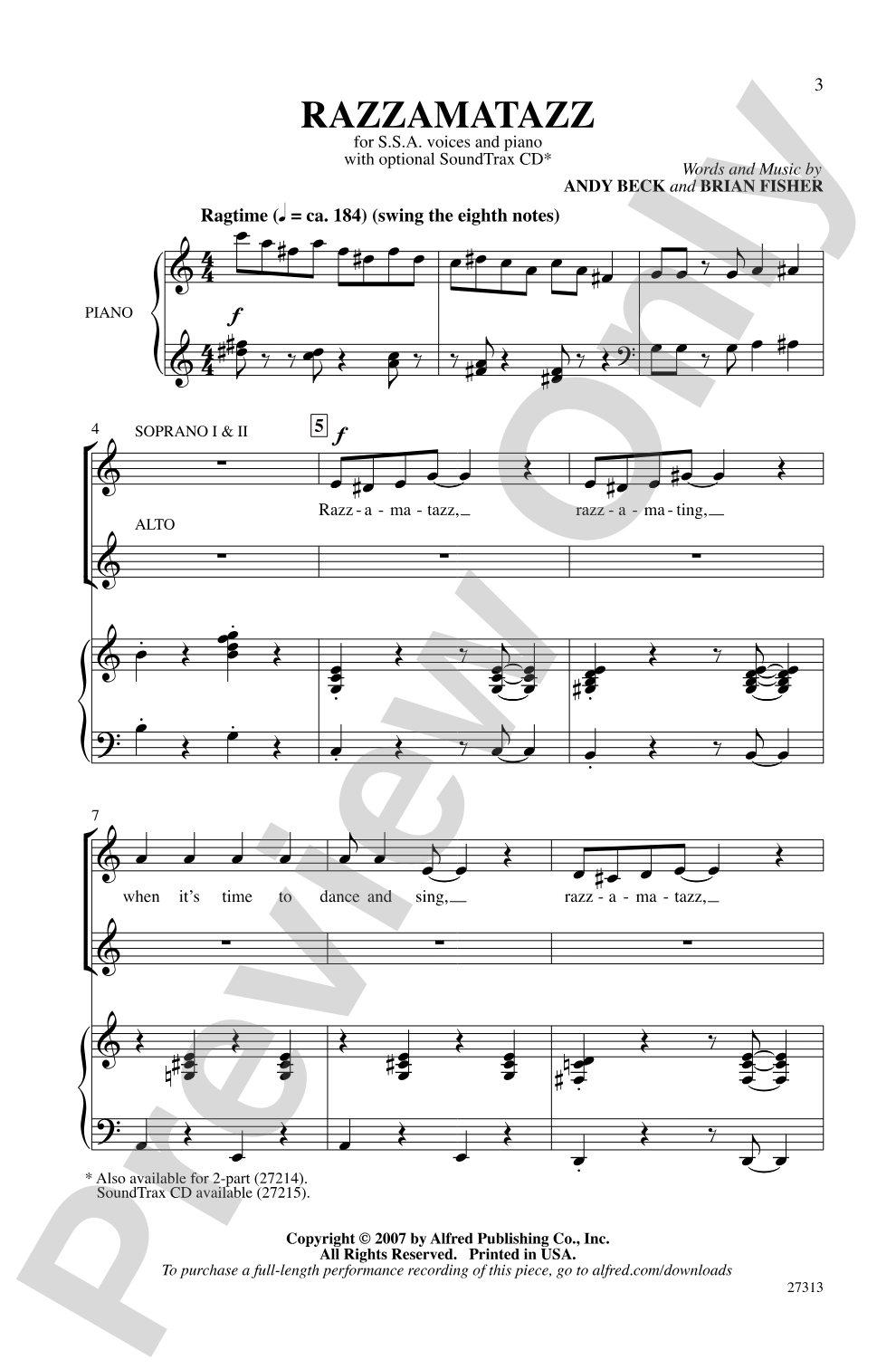

Razzamatazz: SSA Choral Octavo
Words and music by Andy Beck and Brian Fisher
Item: 00-PO-0000374
$1.75
Minimum order quantity: 20 copies
Pickup currently not available
Description
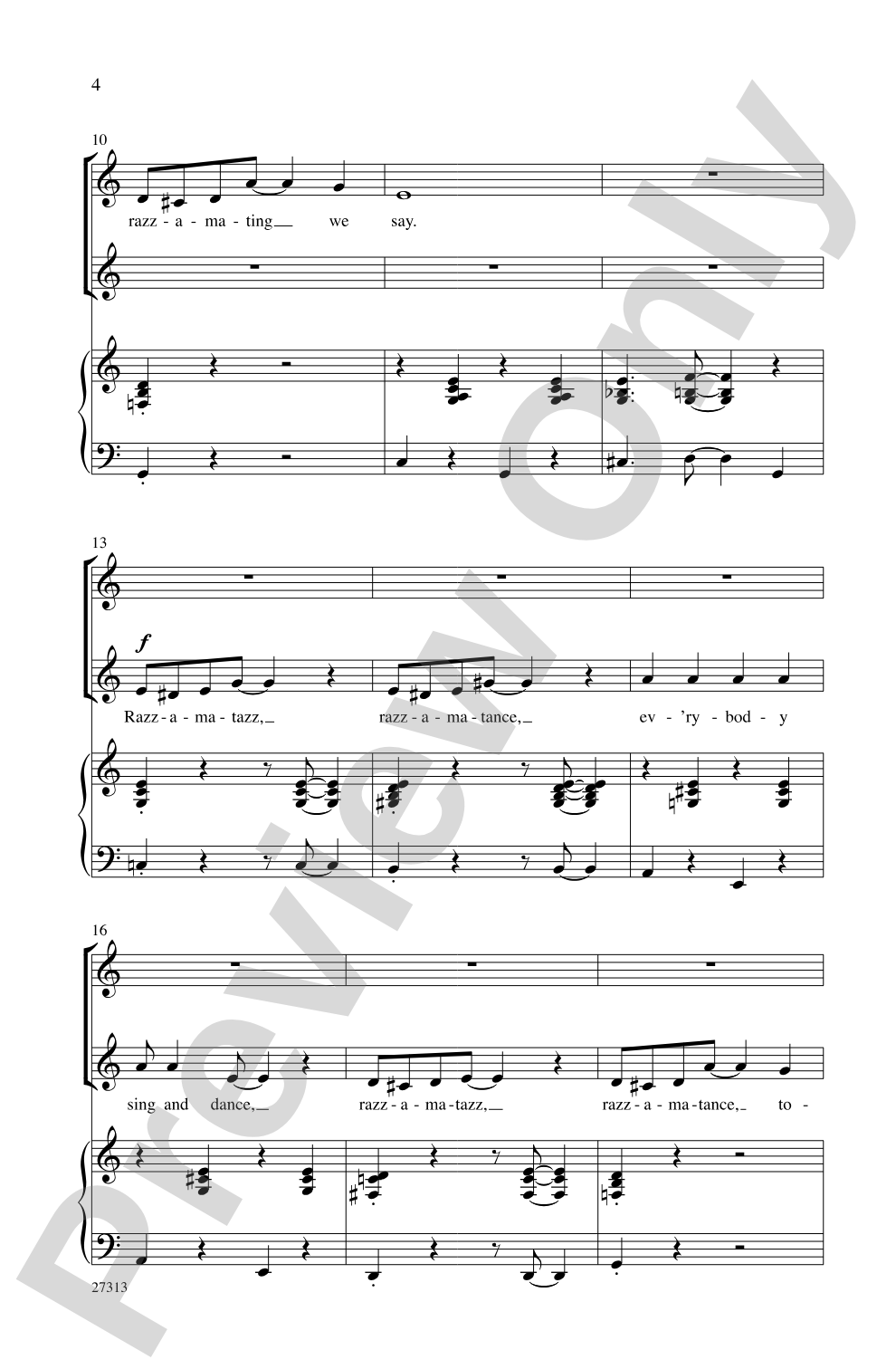
As if written in the ragtime era, this flashy novelty number includes a syncopated melody, a stride piano feature, and a light-hearted air. The nonsensical text opens the door for the rhyme scheme, and whimsical "wee's" crave choreography (available on "Razzamatazz!" DVD, item 00-27430). Terrific in 2-part, and equally appealing for SSA.


Razzamatazz: SSA Choral Octavo isn't in MakeMusic Cloud just yet...but it could be. Let us know you'd like to see it, and you'll help shape what comes next. In the meantime, start a free trial and dive into thousands of interactive titles your students can play along with today.
Request This Title
Tell us you want it.
Start Your Free Trial
Explore everything that's ready to play right now.
Sample Audio
1
Audio File
--:--
0:00
0:00
Sample Video
No sample videos found.
Additional Details
Series:
Alfred Choral Designs
Publisher:
Alfred Music
Page Count:
12
SKU:
00-PO-0000374
More about this title
About the Composer: Andy Beck

Andy Beck directs choral publications at Alfred Music and has composed and arranged more than 450 choral works, vocal resources, and children's musicals currently in publication. His pedagogical resources, including Sing at First Sight, Foundations in Choral Sight Singing, and Vocalize! 45 Vocal Warm-Ups That Teach Technique, are standard tools in choral classrooms across the country. YouTube performances of his music span continents and age groups, reflecting the accessibility and appeal of his writing.
Beck holds degrees in Music Education from Ithaca College and Northwest Missouri State University. He serves as a guest conductor, choreographer, adjudicator, and clinician for music educators nationwide, and has been commissioned to conduct and compose for honor choirs and all-state groups throughout the Southeast. A trained tenor and devoted musical theatre director, he has been an Alfred Music studio singer since 1992 and sings with the North Carolina Master Chorale Chamber Choir.
Why we love this
The syncopated melody and stride piano writing give this piece authentic ragtime flavor without requiring an ensemble to navigate genuinely complex rhythmic terrain. Beck's nonsensical, rhyme-driven text creates a performance style that invites choreography and humor, making the "wee's" and whimsical moments feel like natural places for movement rather than awkward add-ons.
What to expect
Razzamatazz sparkles with the mischievous energy of a vaudeville number, complete with syncopated rhythms that bounce and a stride piano that propels the whole ensemble forward. The nonsensical lyrics and whimsical "wee's" create a playful, tongue-in-cheek atmosphere that feels lighthearted and joyful, inviting singers to embrace both precision and personality.
Who it's for
This is ideal for middle school and high school choirs seeking a crowd-pleasing novelty that teaches syncopation and rhythmic independence in an engaging context. The SSA voicing makes it accessible to treble ensembles and developing singers, while the novelty style keeps energy and morale high during rehearsals.
How to get the most out of it
- Nail the rhythmic precision of the syncopated passages by subdividing in rehearsal; ragtime style demands clean articulation and rhythmic confidence, not rushing.
- Reference the recorded accompaniment early and often so singers internalize the stride piano pattern and land their entrances with the characteristic bounce of the era.
- Work the choreography in tandem with vocal rehearsal rather than as an afterthought; the text's playful spirit and "wee" moments are designed to move.
How to use it
Program this as a pacing piece in a concert to break up heavier repertoire and remind audiences that choirs can be genuinely fun. Its theatrical staging options and novelty appeal make it a natural fit for spring concerts, cabaret-style events, or any program where you want to showcase your singers' ability to bring character and movement to music.
Skills your students will build
- Reading and performing syncopated rhythms with confidence and precision
- Maintaining rhythmic independence while listening to stride piano accompaniment
- Coordinating ensemble blend with added choreography and movement
- Interpreting text expression and comedic timing in vocal performance