
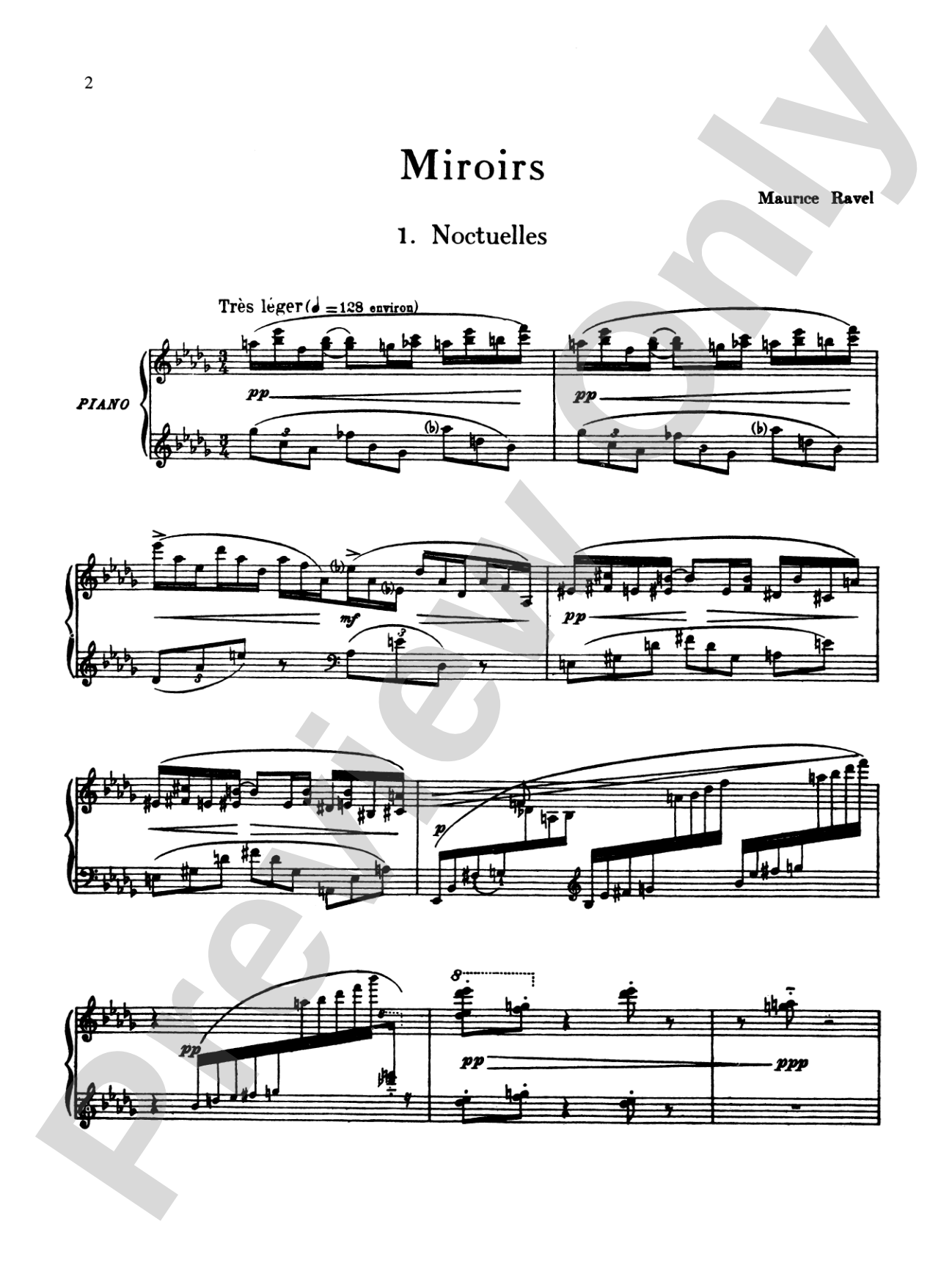

Ravel: Miroirs
By Maurice Ravel
Item: 00-PC-0004018
$0.99
Pickup currently not available
Description
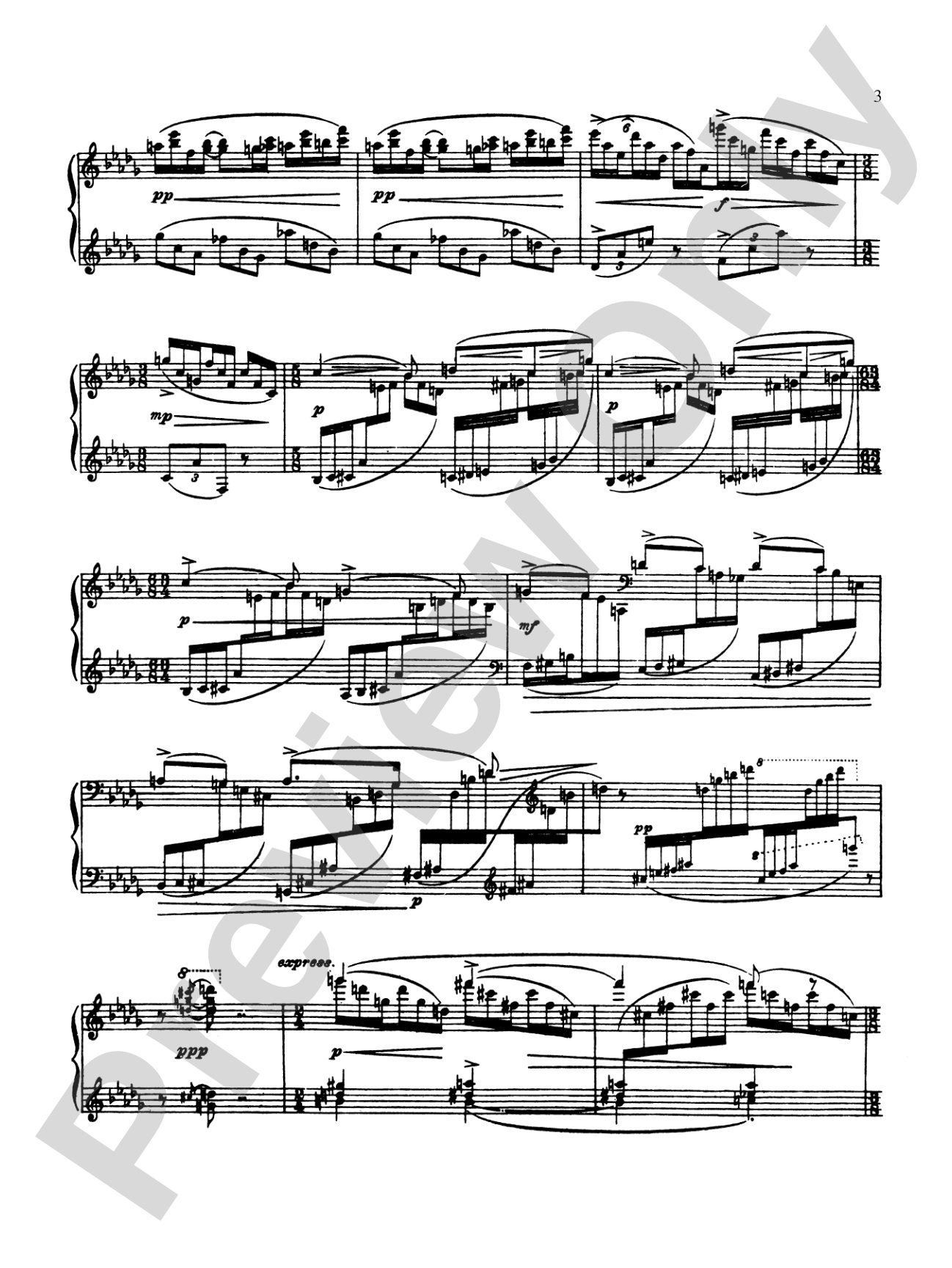
Maurice Ravel's Miroirs is perfect for the aspiring piano player who desires more challenging material. Written in 1905, this collection of five piano solos clearly represents Ravel's compositional style during the Impressionistic period. Each work contained sharply defined ideas and modal/tonal concepts unrivaled by any of his contemporaries. This cycle is presented in its entirety with French editorial markings throughout. Titles are: Noctuelles * Oiseau Tristes * Une Barque Sur L'ocèan * Alborada del Gracioso * La Vallée des Cloches.


Don't just read it, hear it, play along with it, and watch your students grow with it. In MakeMusic Cloud, Ravel: Miroirs comes alive with professional accompaniment, adjustable tempo, and built-in practice tools that turn solo practice into real progress.
Open in the Player
Jump straight in and assign it today.
Start Your Free Trial
Open this title and explore the full library in minutes.
Sample Audio
No sample audio found.
Sample Video
No sample videos found.
Additional Details
Series:
Kalmus Edition
Publisher:
Alfred Music
Page Count:
52
SKU:
00-PC-0004018
More about this title
About the Composer: Maurice Ravel
Maurice Ravel (1875-1937) was a French composer whose fastidious approach to orchestration and harmonic innovation shaped early twentieth-century music. While often grouped with the Impressionists, Ravel rejected that label, insisting his work was rooted in clarity of form and structural precision rather than atmospheric suggestion alone. His influence on piano writing extends far beyond his lifetime; his works remain cornerstones of the intermediate-to-advanced repertoire because they demand both technical facility and interpretive maturity.
Why we love this
Miroirs stands apart because each of its five pieces explores a distinct pianistic and harmonic world without sacrificing coherence as a cycle. The collection rewards students who have mastered basic Romantic repertoire but need authentic twentieth-century material that challenges them on multiple fronts at once: voicing, pedal technique, rhythmic precision, and the discipline required to balance Impressionistic color with structural integrity.
What to expect
Miroirs evokes a world of shifting light and texture, where traditional melody dissolves into shimmering sonorities and unexpected harmonic juxtapositions. The five pieces conjure specific images—fluttering nocturnal insects, sorrowful birds, a boat on dark water, a Spanish aubade, and tolling bells in a distant valley—yet the music's power lies less in pictorial program than in its sensory immediacy and formal sophistication.
Who it's for
Advanced intermediate and advanced pianists seeking substantial concert or recital material that bridges Romantic virtuosity with twentieth-century harmonic sophistication. This collection suits students preparing for music school auditions, serious amateurs building a contemporary repertoire, and teachers looking for authentic pedagogical stepping stones into modernist piano literature.
How to get the most out of it
- Attend closely to the French editorial markings; Ravel's indications for pedal, touch, and dynamic nuance are integral to the sound world of each piece and deserve literal execution rather than interpretation.
- Approach the harmonic language as sound-color rather than functional harmony; let the ear guide your voice leading and balance, allowing dissonant chords to shimmer rather than resolve.
- Shape phrases across larger spans than the written slurs suggest; Ravel often conceals melodic contours within dense textures, and discovering them in slow practice yields more natural phrasing at tempo.
- Secure rhythmic independence between hands early in preparation; the asymmetries and cross-rhythms Ravel favors demand hand independence that cannot be rushed or approximated.
How to use it
Program individual movements as recital pieces to suit the mood and length of a concert program; conversely, perform the entire cycle as a single work to showcase the breadth of Ravel's piano language and reward listeners with thematic and harmonic coherence. Each piece stands alone effectively, making Miroirs flexible for both solo recitals and curated concerts pairing early modernist works with late Romantic repertoire.
Skills your students will build
- Pedal control and sensitivity in creating harmonic blur and transparency
- Voice leading and balance in polyphonic textures with non-functional harmony
- Rhythmic independence and asymmetrical phrasing across hand divisions
- Interpretation of French editorial markings and Impressionistic touch vocabulary
- Sight-reading and memorization of dense, chromatic harmonic language
- Color differentiation and dynamic subtlety across five distinct musical worlds