
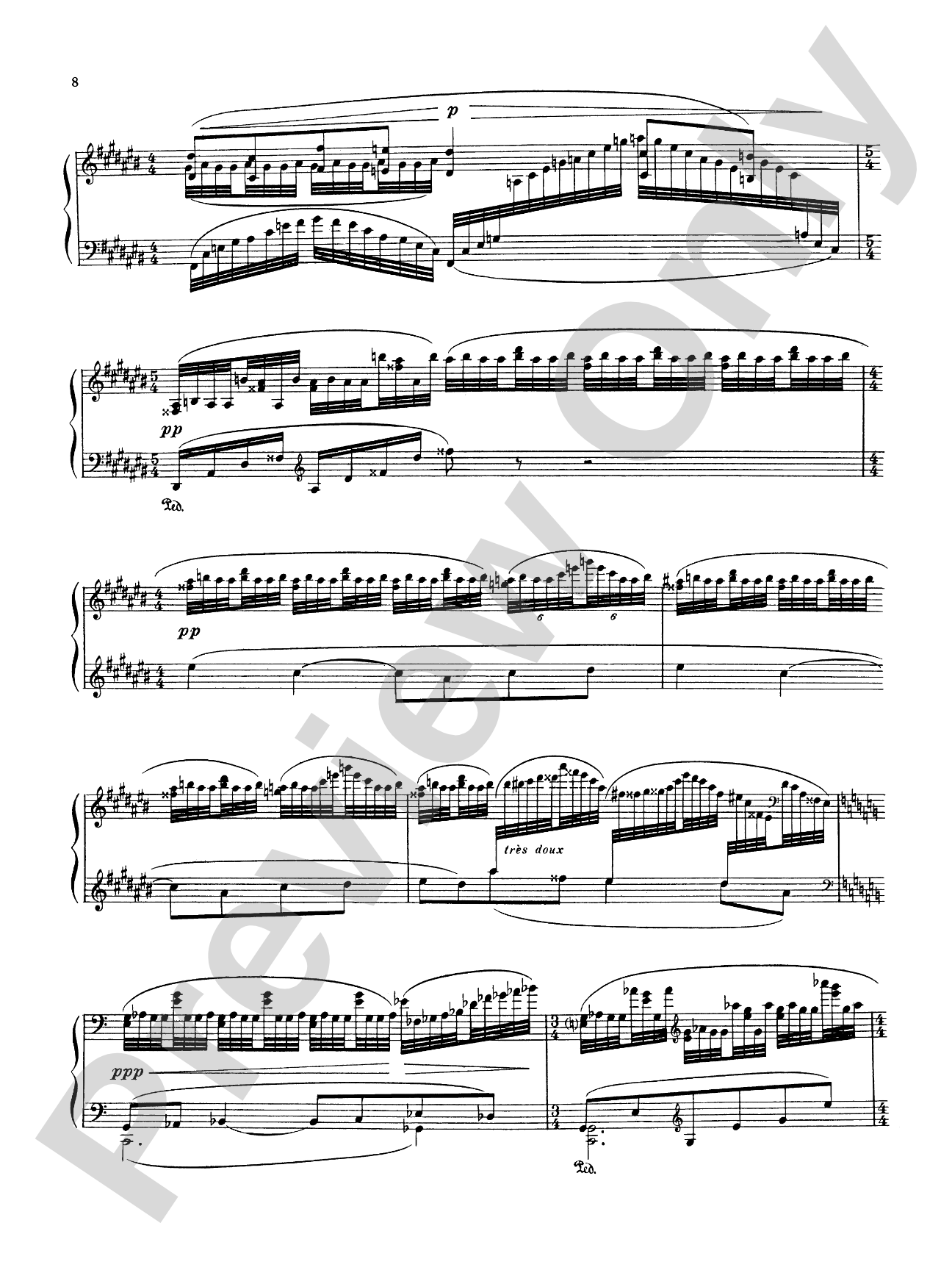
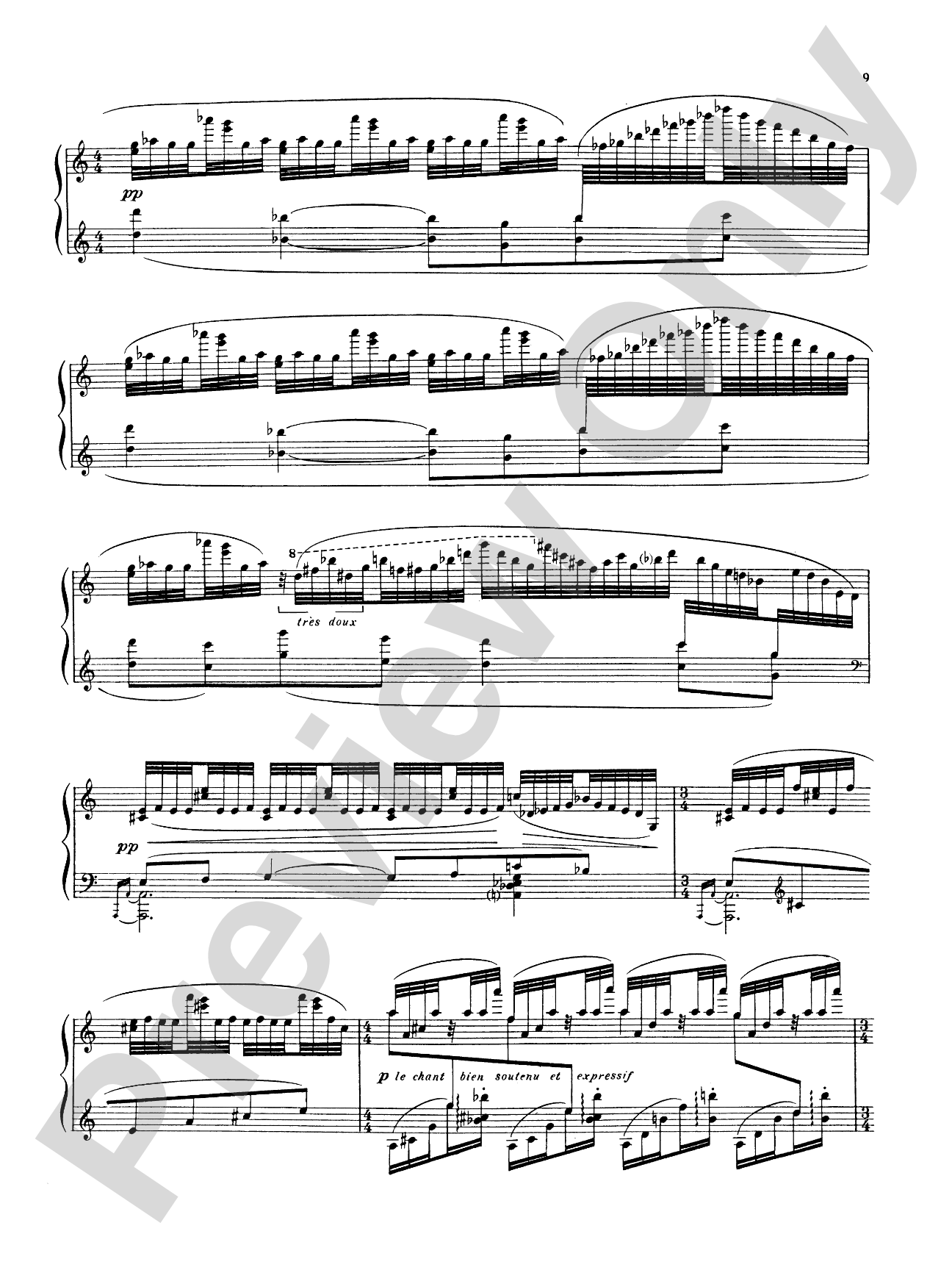
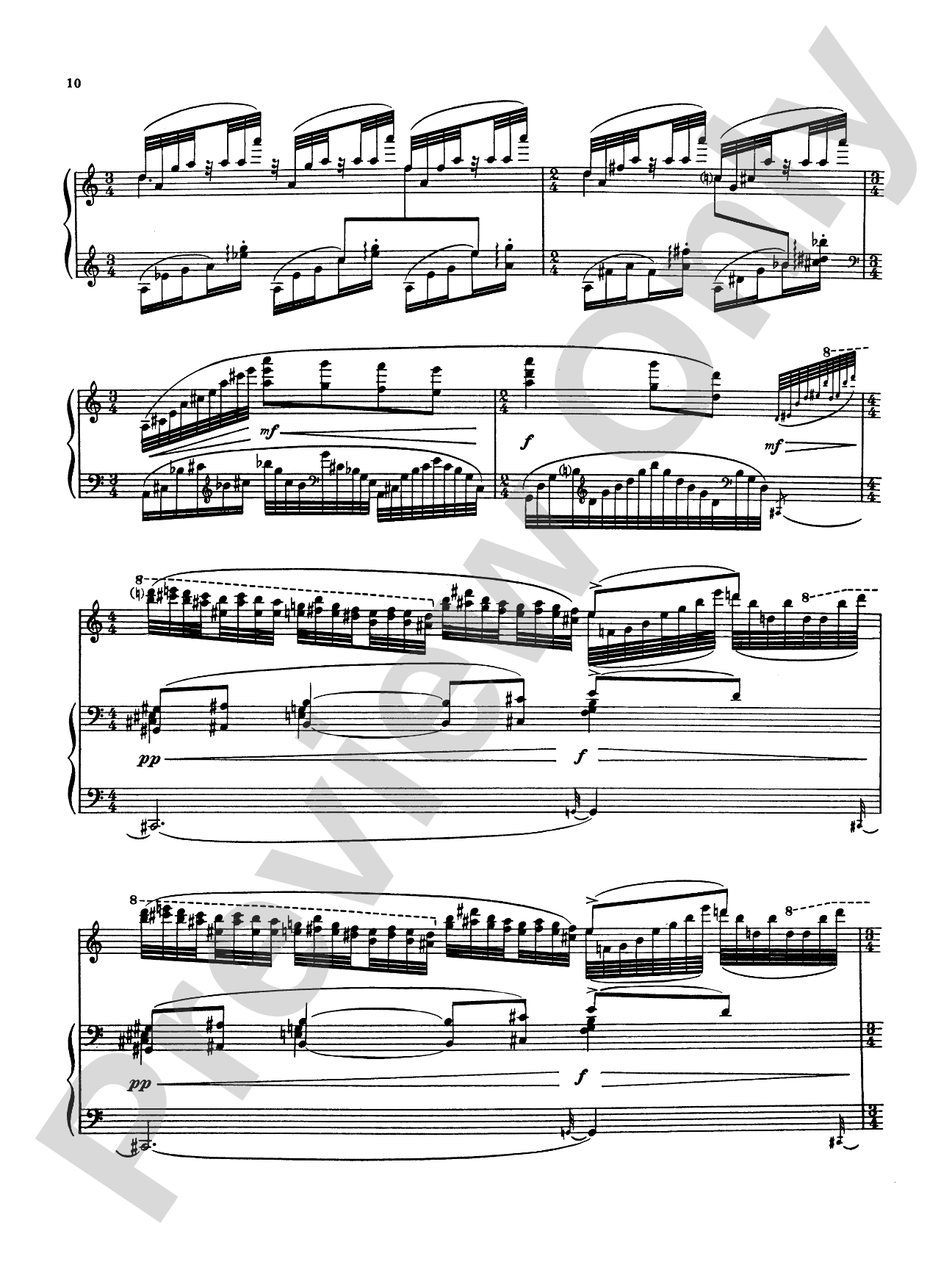
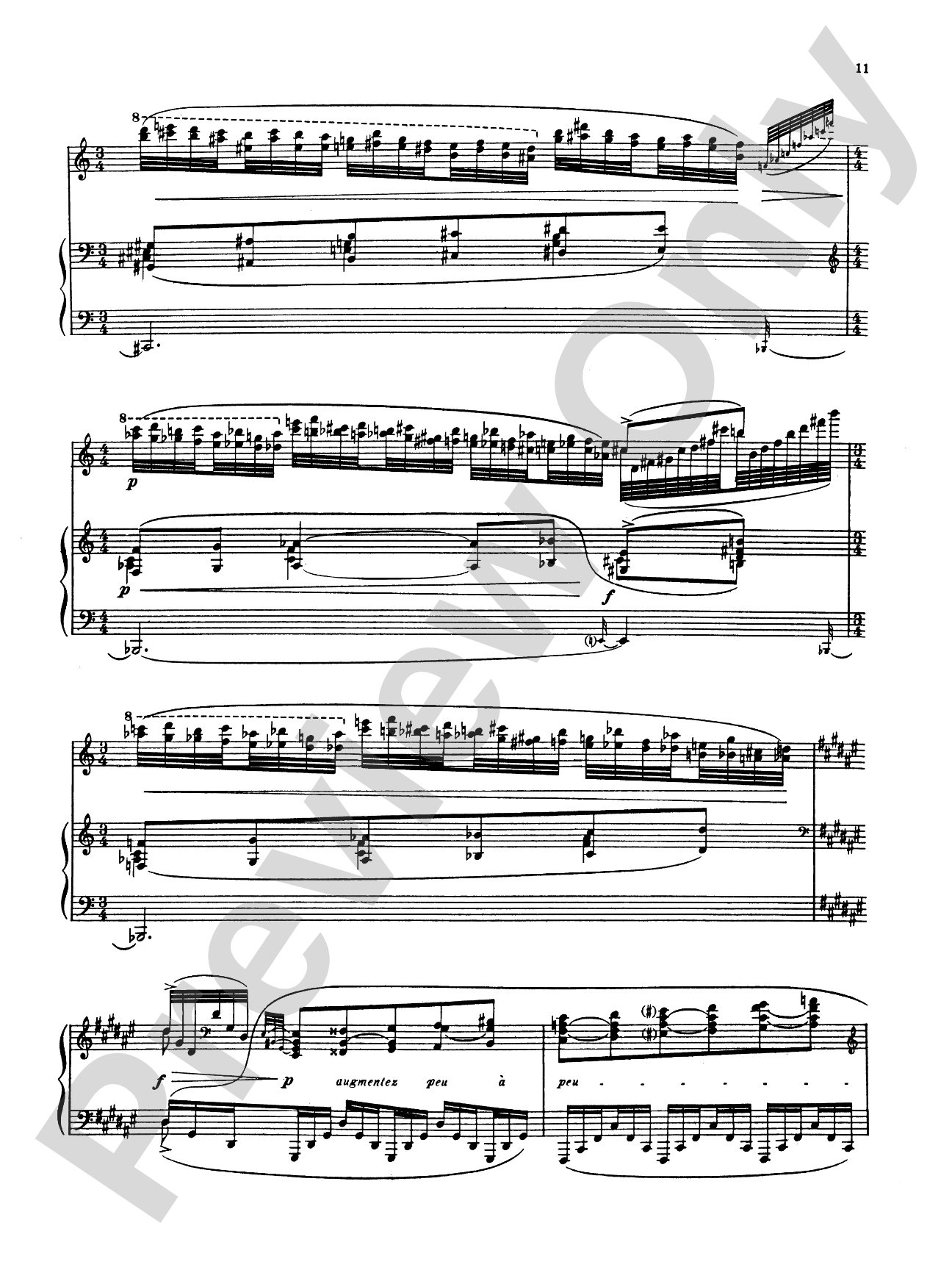

Ravel: Gaspard de la Nuit: Piano
By Maurice Ravel
Level: Intermediate / Advanced
Item: 00-PK-0003924

$12.99
Pickup currently not available
Buy Extra Parts (Digital PDF Download)
| Product | Price | Quantity |
|---|---|---|
| Ravel: Gaspard de la Nuit | $3.99 | |
| Ravel: Gaspard de la Nuit | $3.99 | |
| Ravel: Gaspard de la Nuit | $3.99 |
Parts Added to Cart!
Related Items
Gaspard de la nuit: Piano |
$12.95
|
View |
Description


Don't just read it, hear it, play along with it, and watch your students grow with it. In MakeMusic Cloud, Ravel: Gaspard de la Nuit: Piano comes alive with professional accompaniment, adjustable tempo, and built-in practice tools that turn solo practice into real progress.
Open in the Player
Jump straight in and assign it today.
Start Your Free Trial
Open this title and explore the full library in minutes.
Sample Audio
No sample audio found.
Sample Video
No sample videos found.
Additional Details
Series:
Kalmus Edition
Publisher:
Alfred Music
Page Count:
44
SKU:
00-PK-0003924
More about this title
About the Composer: Maurice Ravel
Maurice Ravel (1875, 1937) was a French composer who shaped modern piano writing as profoundly as any figure in the twentieth century. His approach to the keyboard, layering color, texture, and harmonic innovation, fundamentally expanded what pianists could express through the instrument. Gaspard de la Nuit stands as his most technically demanding and poetically complex work for solo piano, a piece that rewards both virtuosity and interpretive depth.
Ravel's influence on music education extends far beyond his own era. Teachers and pianists study his work to understand how modernism can serve expression rather than obscure it, and how technical difficulty becomes meaningful only when it illuminates musical character. For students ready to engage with twentieth-century pianism, Ravel's catalog offers an essential pathway.
Why we love this
This triptych demands everything from an advanced pianist and rewards the effort with three starkly contrasting worlds: a nightmarish scherzo, a tender romance, and a dizzying, relentless finale. The orchestration of the keyboard itself, the way Ravel deploys register, resonance, and rhythmic texture, teaches players how to think symphonically at the piano. Programming it signals serious artistic ambition while offering audiences an unforgettable experience.
What to expect
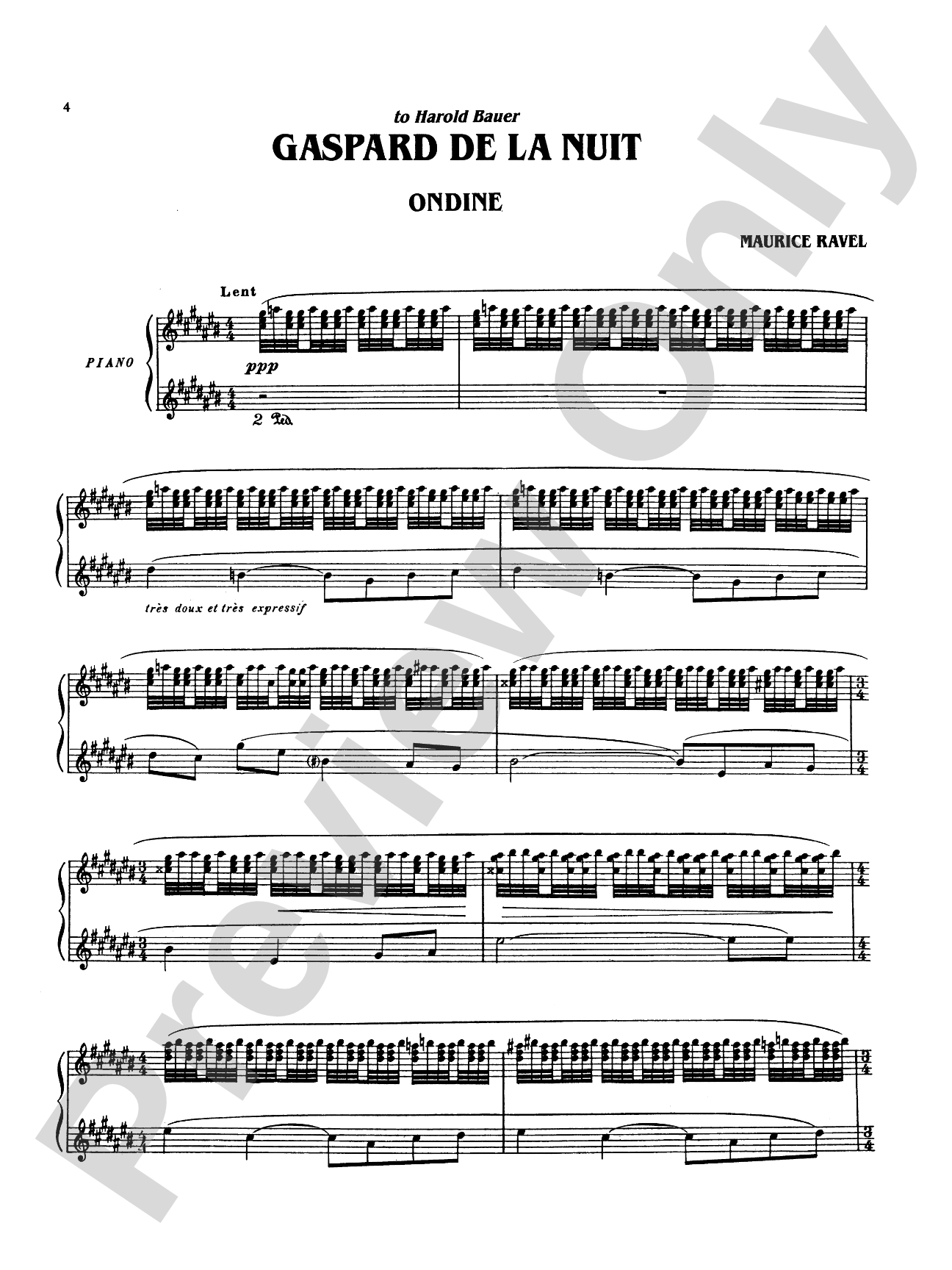
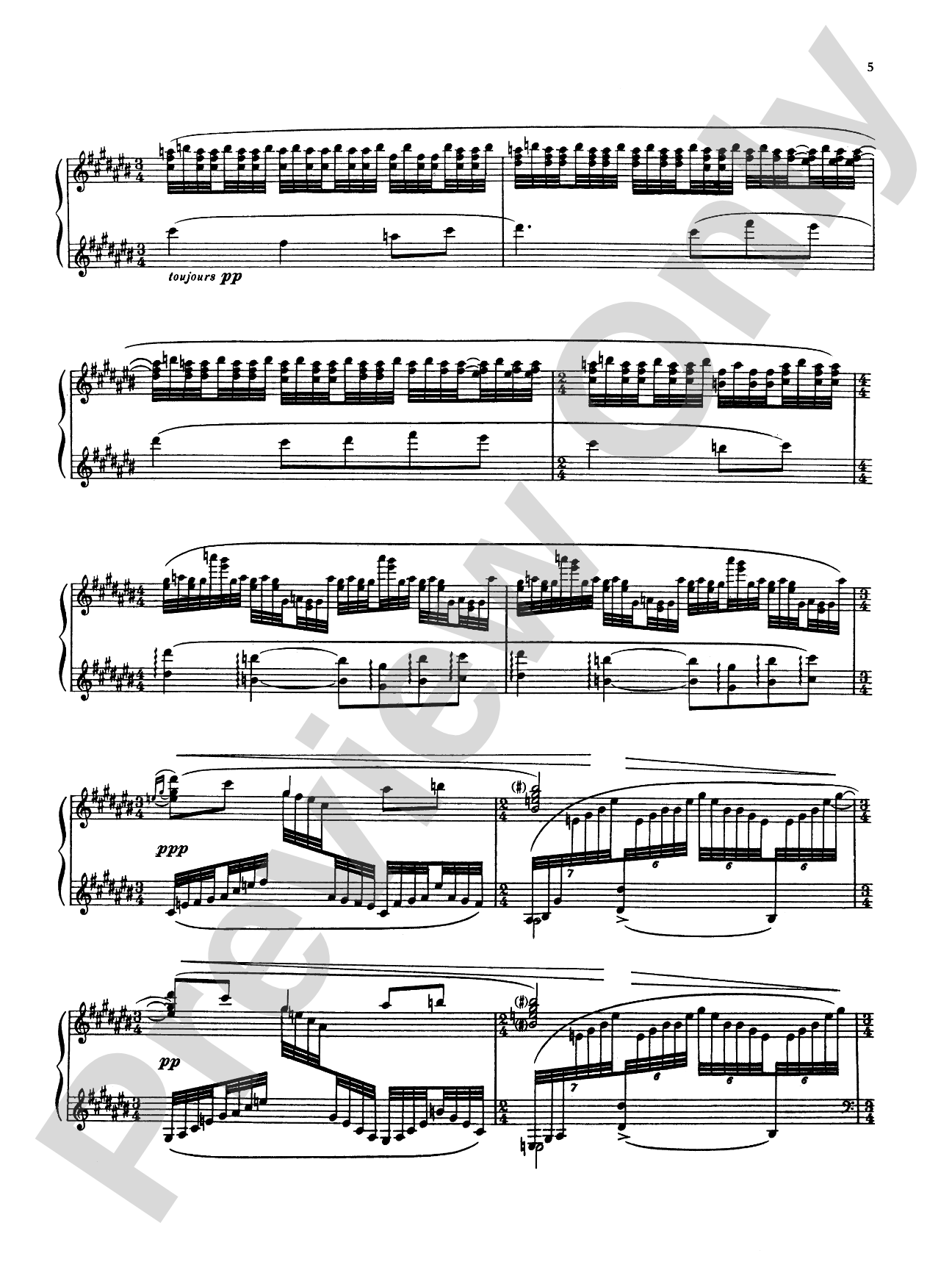
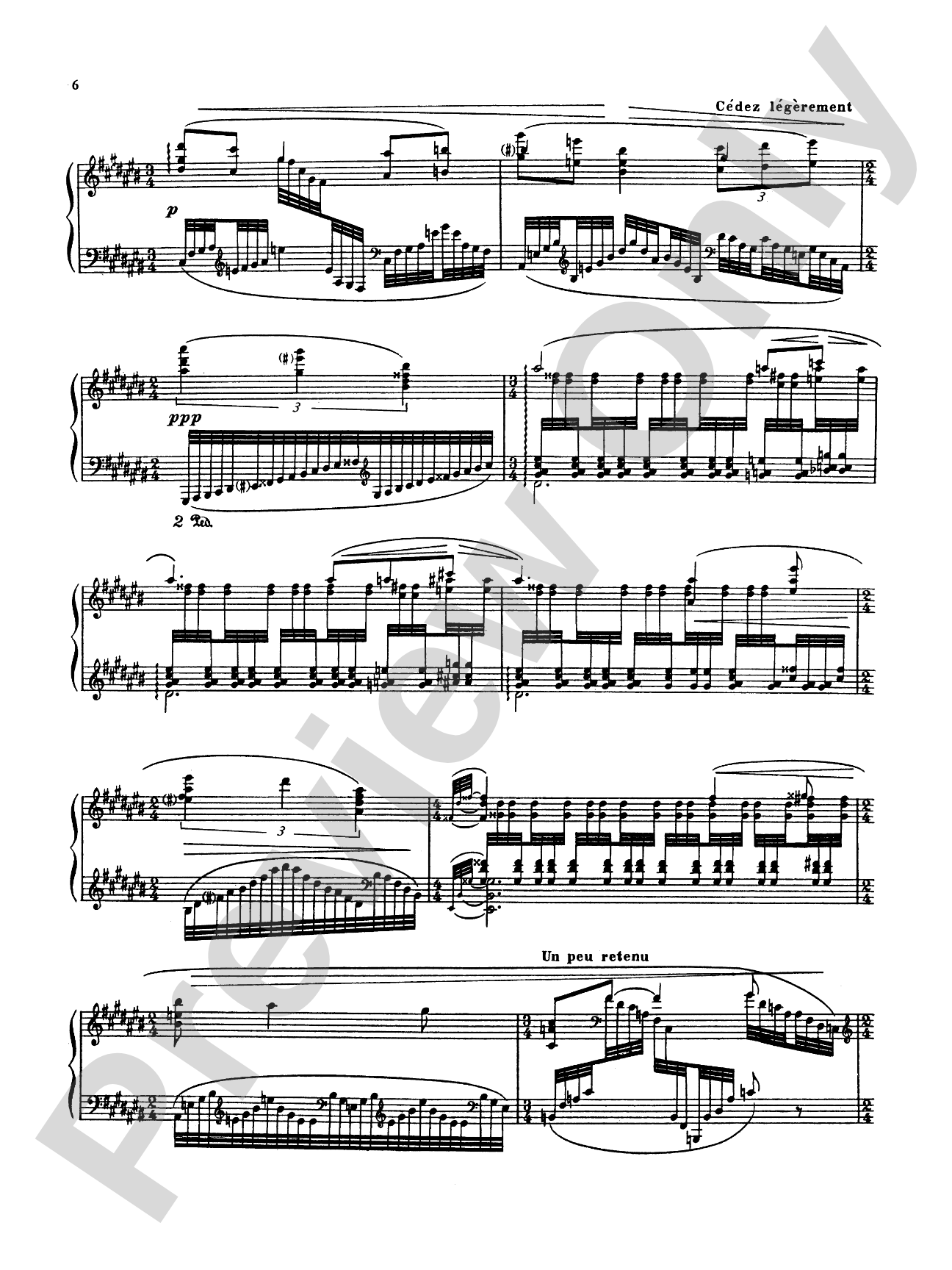
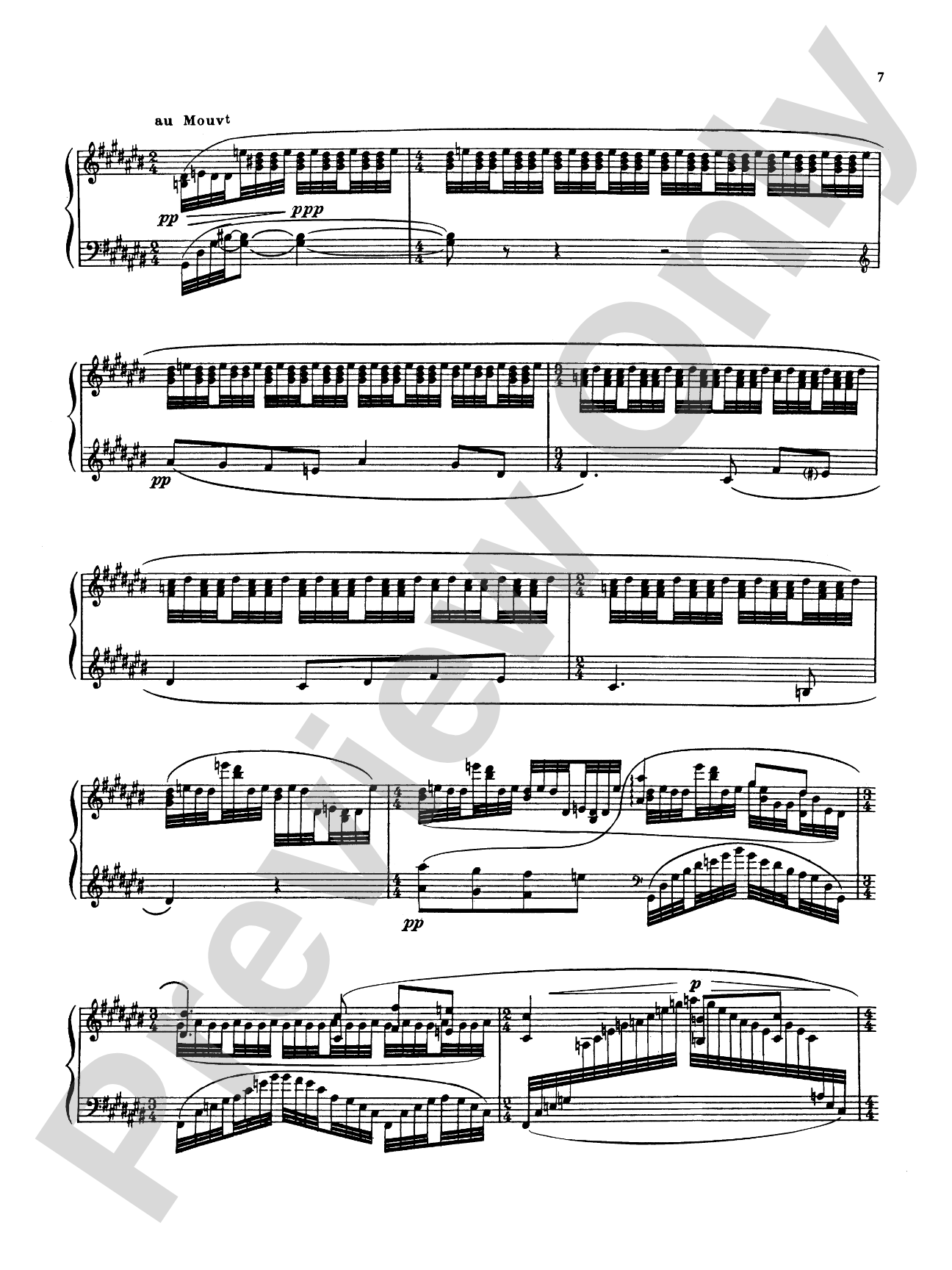
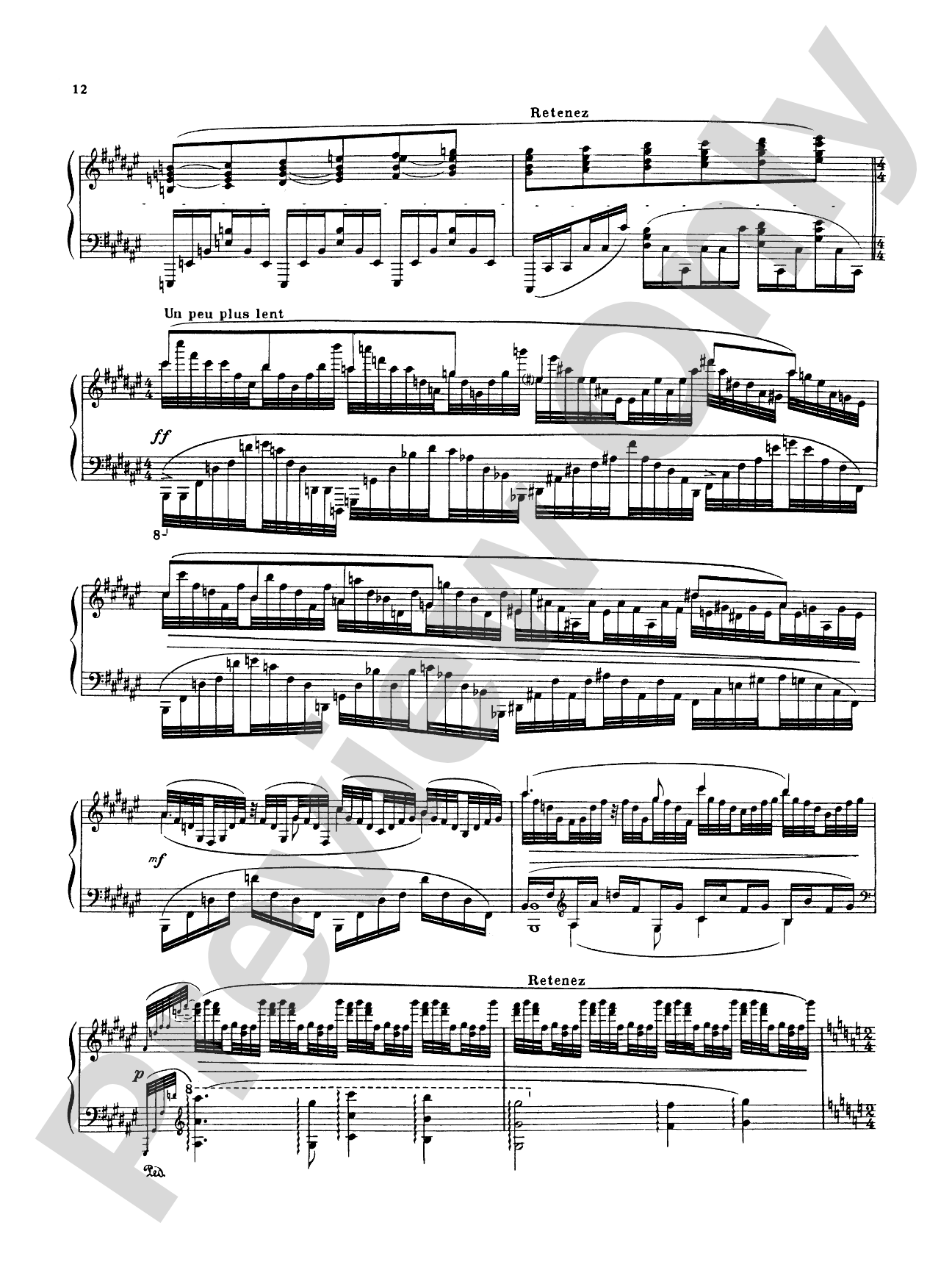
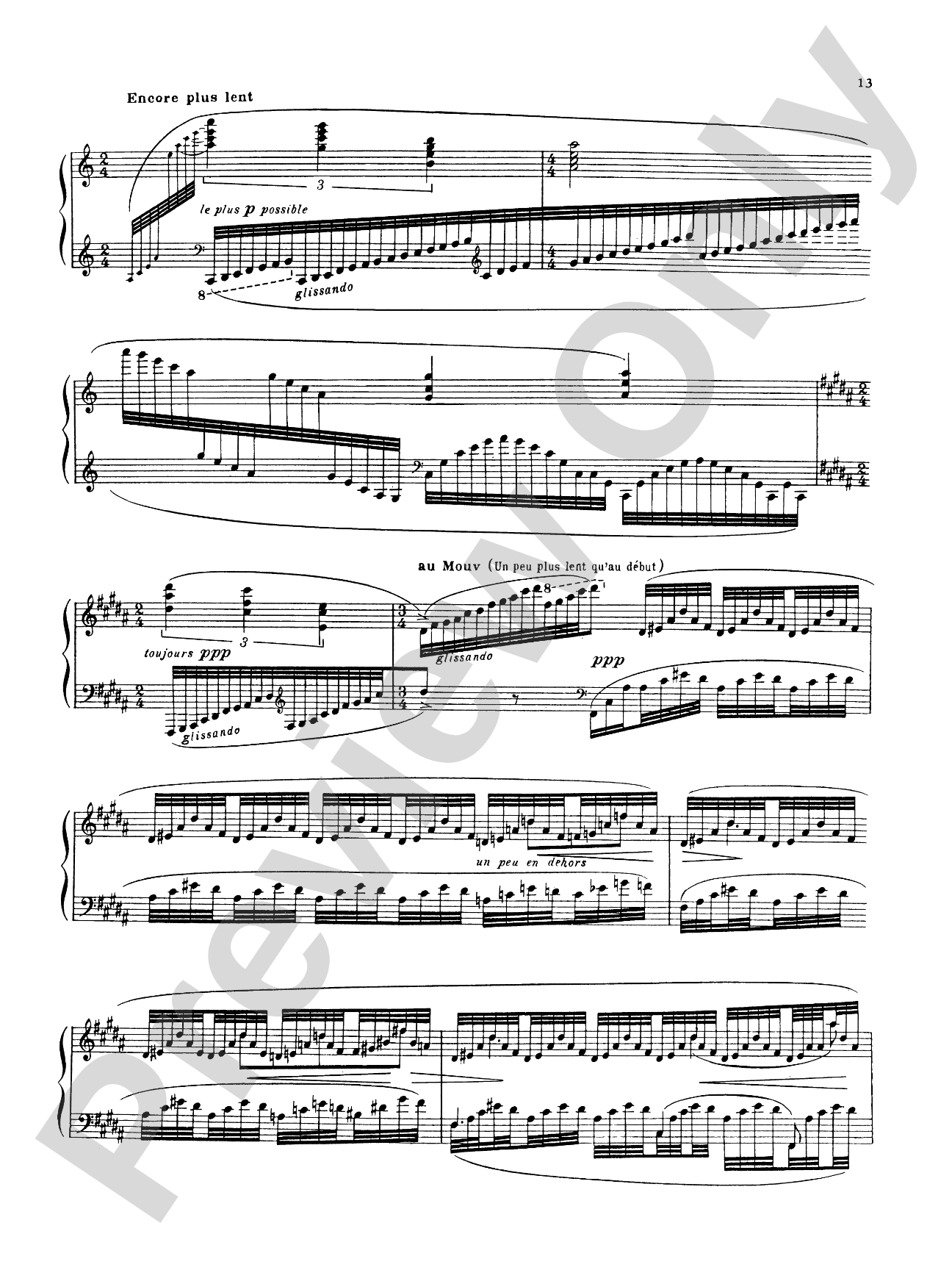
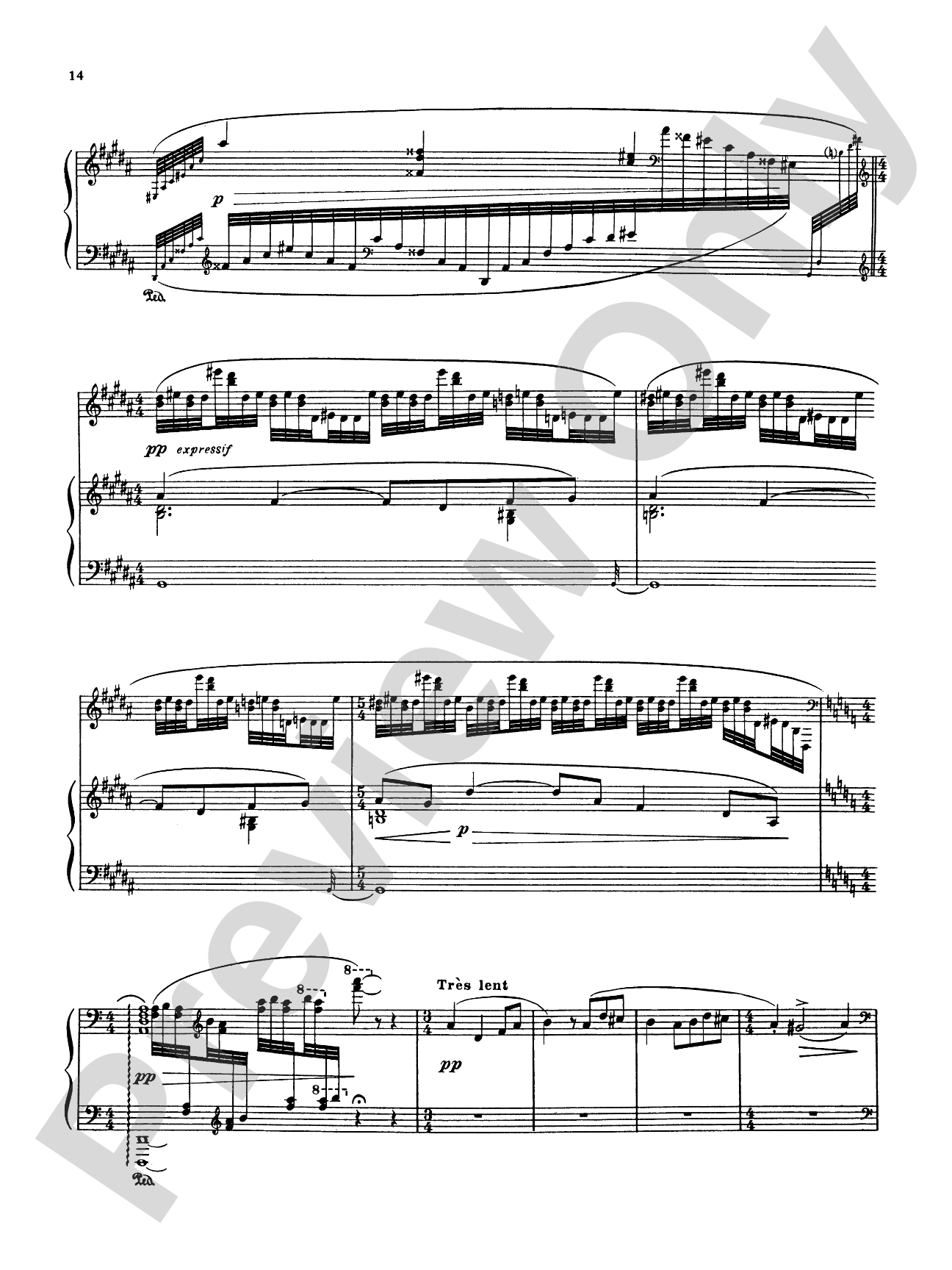
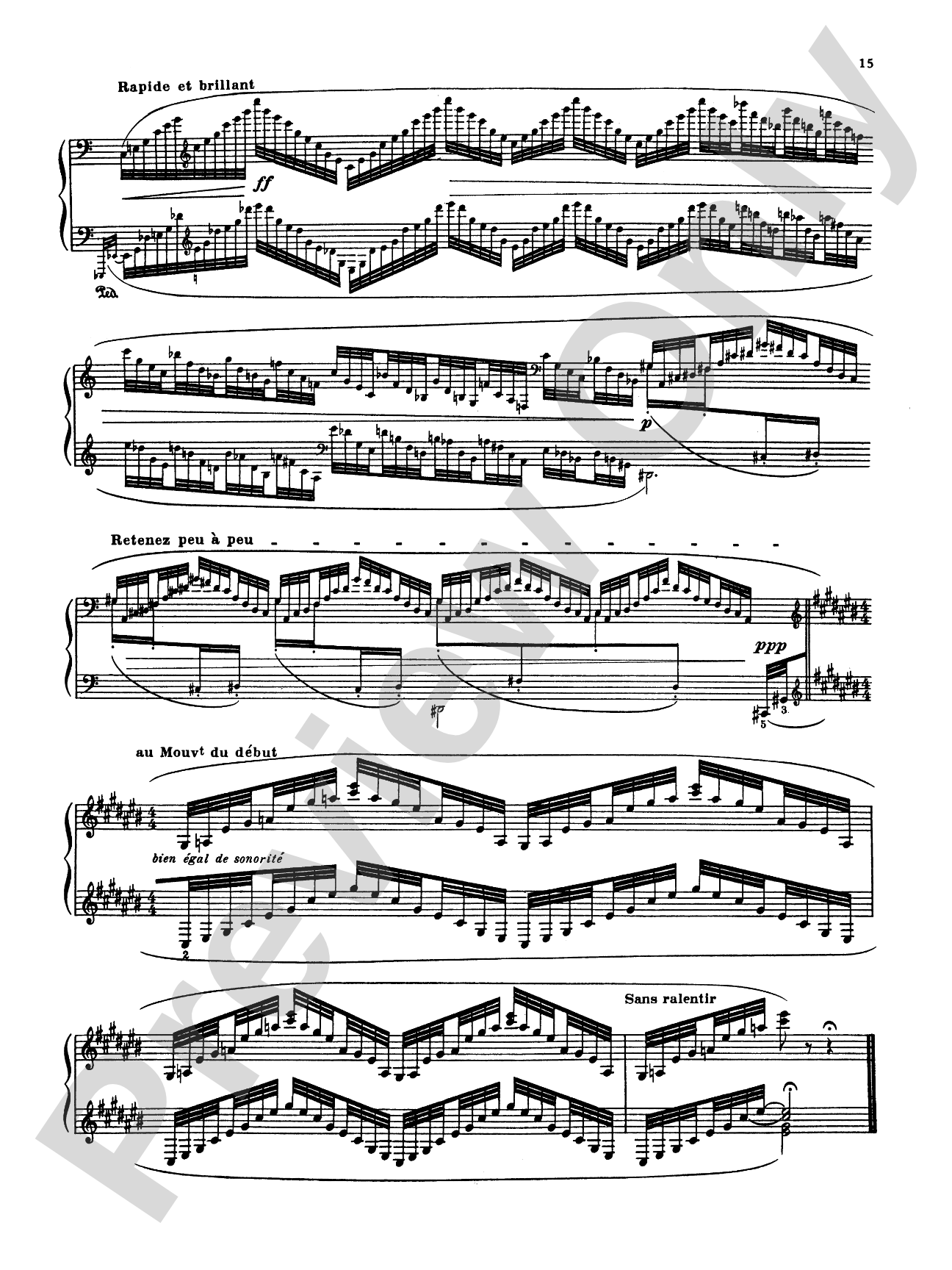
Gaspard de la Nuit unfolds like a Gothic narrative in sound. Scarbo opens with mischievous, dancing rhythms that twist and accelerate into something unsettling; Le Gibet casts a single, haunting pitch against shimmering harmonic shifts; Ondine swells with liquid, supernatural beauty that seems to shift beneath your fingers. Throughout, Ravel's orchestral thinking creates a sense of space and mystery that transcends the piano's physical boundaries.
Who it's for
Pianists approaching the advanced intermediate to advanced repertoire who seek technically challenging music with genuine dramatic and expressive depth. This work suits performers preparing for competitions, advanced undergraduate recitals, or graduate-level study where command of twentieth-century piano writing is essential.
How to get the most out of it
- Map out the three movements separately before attempting to link them in performance. Each movement (Scarbo, Le Gibet, Ondine) has distinct technical demands and interpretive challenges; treating them as individual studies first accelerates progress.
- Attend closely to pedal notation, especially in Le Gibet and Ondine. Ravel's pedal markings are compositional instructions, not suggestions. The sustain pedal creates the harmonic wash that defines these movements' sonority.
- Isolate the left-hand figuration in Scarbo and Ondine at slow tempos until the repeated patterns sit comfortably under the hand. Speed comes naturally once the muscle memory is secure.
- Listen for the narrative arc within each movement rather than treating rapid passages as pure display. Ravel composed these pieces to evoke specific scenes and emotions; let that storytelling guide your interpretation.
How to use it
This work functions powerfully as a recital centerpiece or the climax of a program built around impressionistic and twentieth-century piano music. Its dramatic arc and technical display command full attention; programming it after intermission or as the final substantial work before encores ensures it receives the audience focus it deserves. It pairs well thematically with Debussy or Scriabin or can anchor a concert exploring music inspired by literature and visual art.
Skills your students will build
- Rapid scalar and arpeggiated figuration at varying tempos
- Independent hand coordination under technical pressure
- Voicing multiple melodic lines simultaneously within a single hand
- Pedal technique for creating and controlling harmonic resonance
- Interpretive clarity in impressionistic harmony and atmospheric writing
- Dramatic storytelling and character definition across contrasting movements