
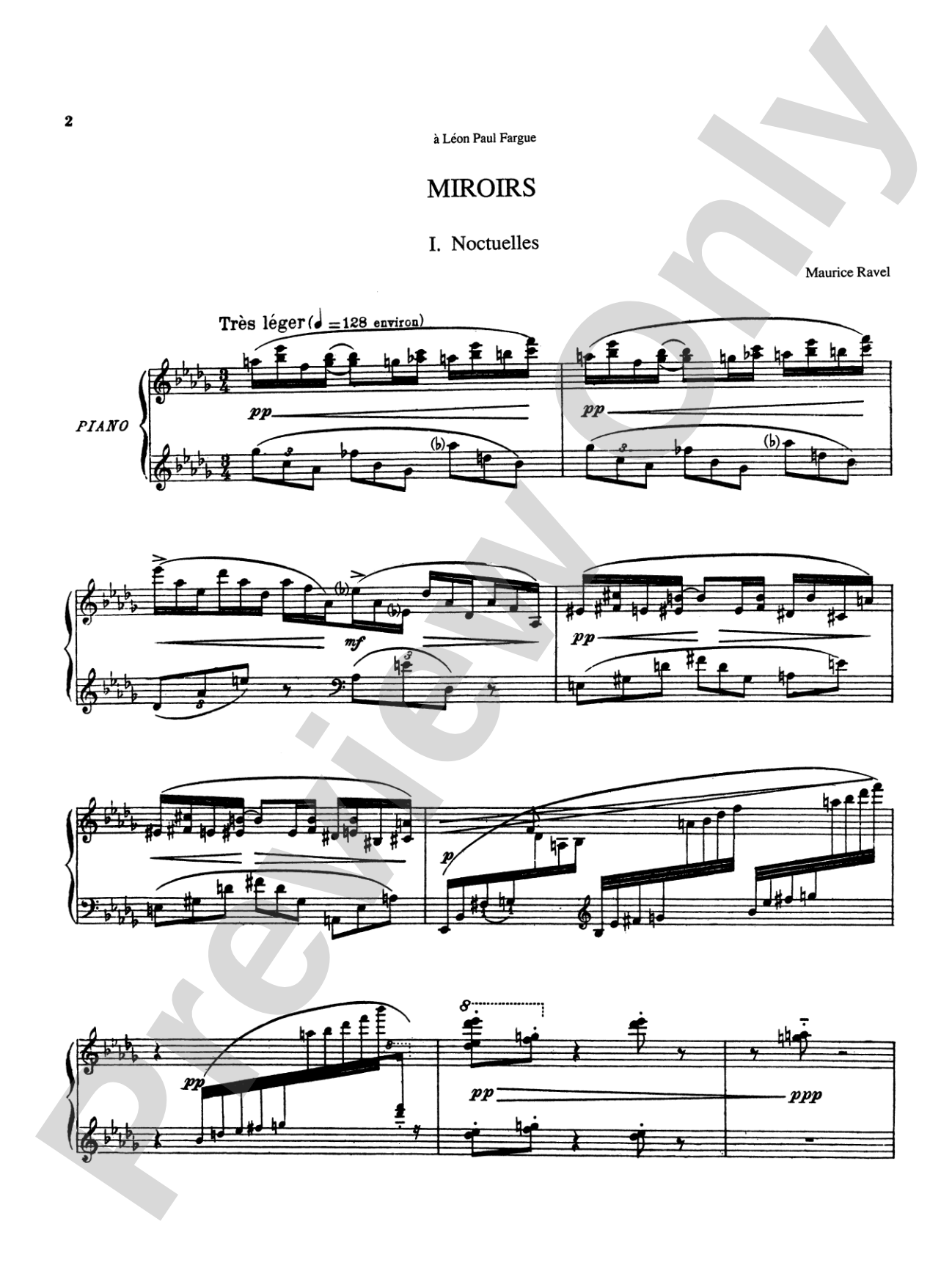
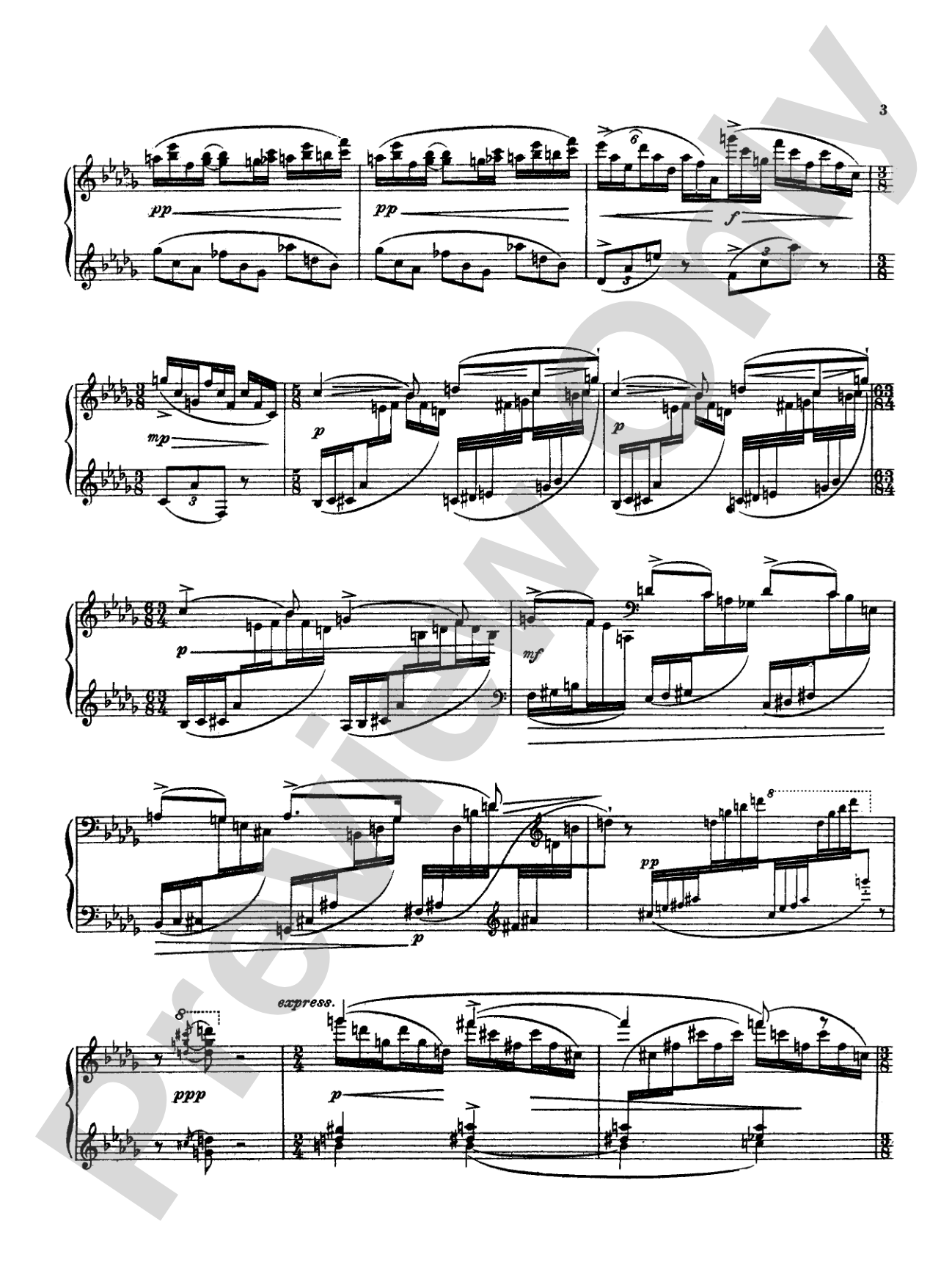

Ravel: An Album for Piano Solo
By Maurice Ravel
Item: 00-PC-0009007
$1.99
Pickup currently not available
Description
Titles: Noctuelles, Oiseaux tristes, Une Barque sur l'océan, Alborada del gracioso, and La Vallée des cloches from Miroirs; Sonatine; Jeux d'eux


Don't just read it, hear it, play along with it, and watch your students grow with it. In MakeMusic Cloud, Ravel: An Album for Piano Solo comes alive with professional accompaniment, adjustable tempo, and built-in practice tools that turn solo practice into real progress.
Open in the Player
Jump straight in and assign it today.
Start Your Free Trial
Open this title and explore the full library in minutes.
Sample Audio
No sample audio found.
Sample Video
No sample videos found.
Additional Details
Series:
Kalmus Edition
Publisher:
Alfred Music
Page Count:
80
SKU:
00-PC-0009007
More about this title
About the Composer: Maurice Ravel
Maurice Ravel (1875-1937) stands as one of the twentieth century's most refined orchestrators and pianists. His compositions prioritize clarity, harmonic innovation, and instrumental color, drawing from impressionism while maintaining structural rigor that sets him apart from his contemporaries. Ravel's piano works demand technical virtuosity paired with sensitivity to texture and nuance, making them essential repertoire for pianists serious about mastering modern classical literature.
Why we love this
This collection gathers five movements from Miroirs alongside two major solo works, offering a compact entry point to Ravel's piano aesthetic without overwhelming performers or listeners. The pieces span his stylistic range from the delicate impressionistic poetry of Noctuelles and Oiseaux tristes to the rhythmic vitality of Alborada del gracioso, creating natural programming variety. Each work showcases different facets of his pianistic voice: harmonic experimentation, rhythmic complexity, and the kind of crystalline texturing that rewards careful attention to dynamics and pedaling.
What to expect
These pieces shimmer with impressionistic wash and color while maintaining an almost architectural precision underneath. Listeners experience flickering bird calls, the gentle rocking of a boat on water, and the shimmering resonance of distant bells, all rendered through technical keyboard writing that never sacrifices musical poetry for display. The collection radiates sophistication and restraint, with drama emerging through suggestion rather than assertion.
Who it's for
Advanced pianists and conservatory students preparing recital repertoire or strengthening their command of early twentieth-century modernism. Teachers looking for substantial solo works to assign students ready to move beyond nineteenth-century romanticism into more harmonically sophisticated territory. Pianists performing salon-style or chamber concert settings where these compact, vivid pieces create strong individual impressions.
How to get the most out of it
- Treat the pedal as an instrument in its own right; Ravel's harmonic palette often depends on subtle resonance layering rather than sustaining single bass notes. Change the pedal between chords to blur colors without muddying transitions.
- Work sections separately by hand assignment before combining them, especially in pieces like Une Barque sur l'océan where left-hand figurations can obscure the melodic line. This isolation clarifies the compositional architecture.
- Study the score's dynamic markings and tempo indications with the same rigor you would give to pitch; Ravel uses these tools expressively rather than decoratively, and ignoring them flattens the musical intent.
- Record yourself regularly during practice. Many passages succeed only when heard back; what feels secure at the keyboard may lack the transparency Ravel's writing demands.
How to use it
Program individual movements from Miroirs as contrasting pieces within a recital, pairing them with works from different eras to highlight Ravel's unique harmonic language. The Sonatine serves as an ideal centerpiece for a recital focused on early modernism or twentieth-century French music. These pieces work equally well in pedagogy concerts where accomplished students demonstrate command of contemporary classical technique.
Skills your students will build
- Pedaling technique and harmonic blending specific to impressionistic texture
- Reading complex rhythmic figures and syncopated patterns across both hands
- Executing rapid scalar passages and arpeggiated figures with clarity and control
- Interpreting graphic and written dynamic markings to shape phrase contours
- Managing hand independence in polyphonic writing where multiple melodic lines compete
- Developing sensitivity to tonal color through varied touch and tempo flexibility