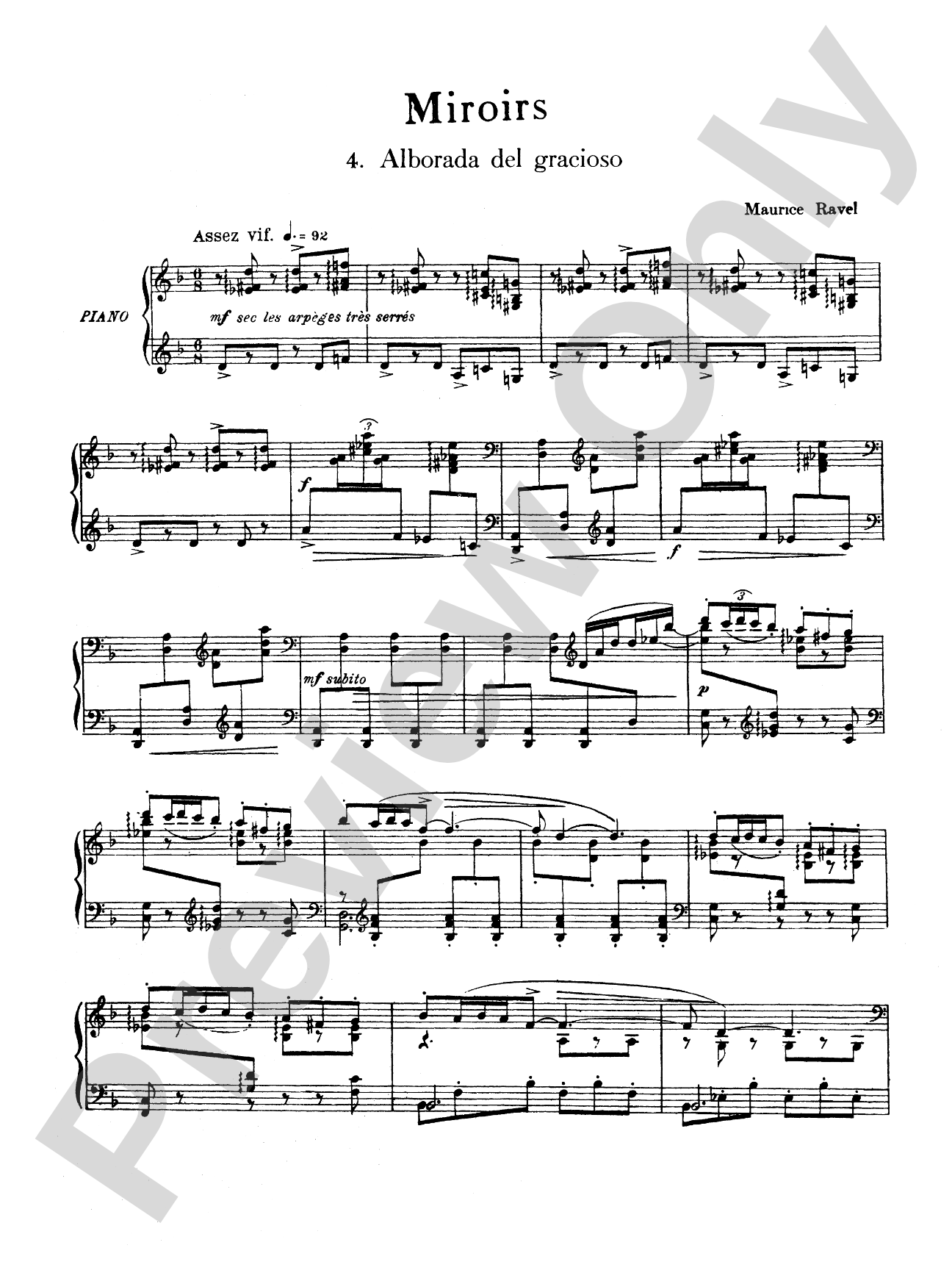
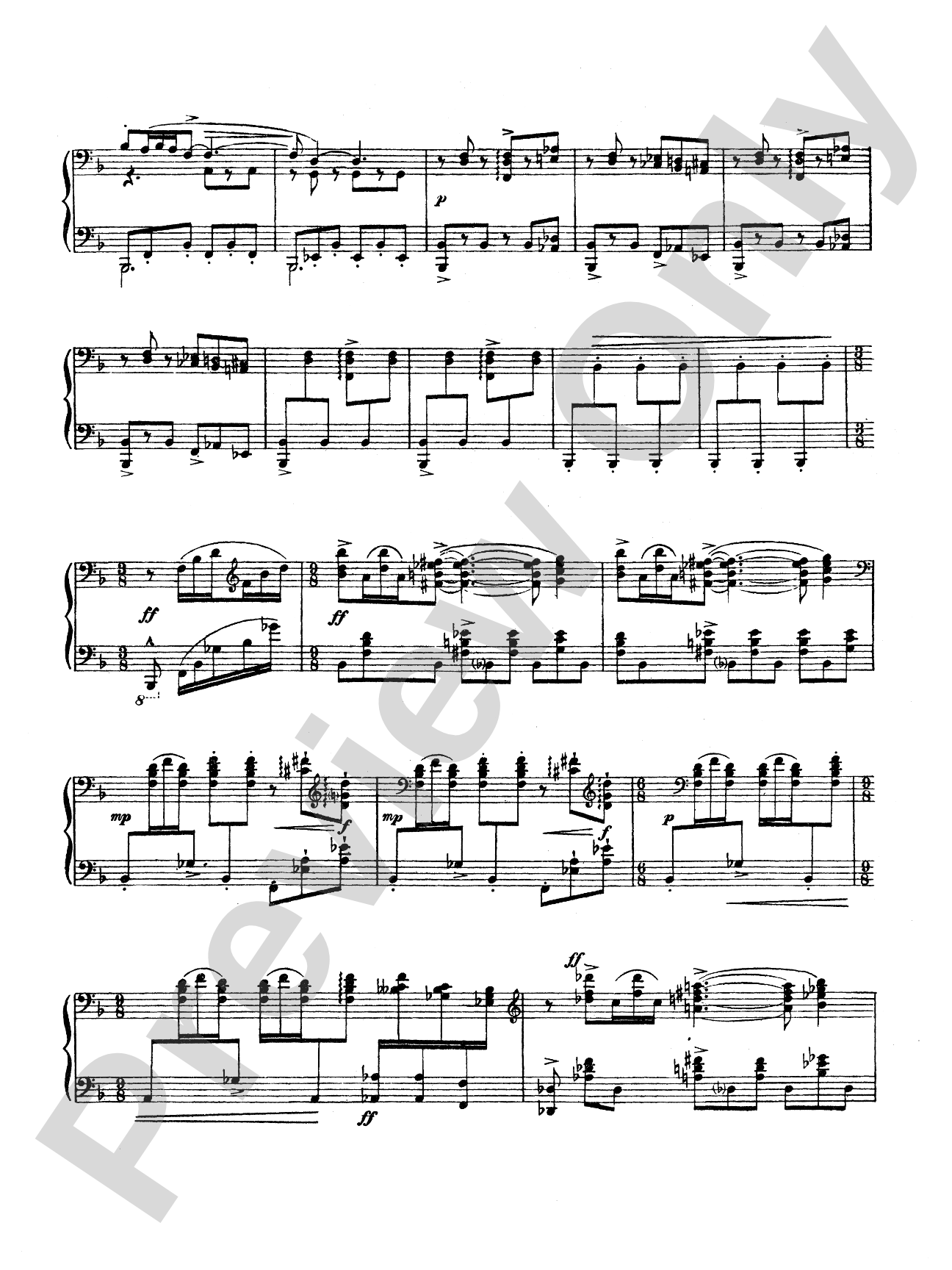
Ravel: Alborada Del Gracioso from Miroirs Sheet Music Preview

Ravel: Alborada Del Gracioso from Miroirs

By Maurice Ravel

Level: Intermediate / Advanced

Item: 00-PC-0009014

Digital Download
$6.99
Description

Don't just read it, hear it, play along with it, and watch your students grow with it. In MakeMusic Cloud, Ravel: Alborada Del Gracioso from Miroirs comes alive with professional accompaniment, adjustable tempo, and built-in practice tools that turn solo practice into real progress.

Sample Audio
No sample audio found.
Sample Video
Additional Details
Series: Kalmus Edition
Publisher: Alfred Music
Page Count: 16
SKU: 00-PC-0009014

More about this title

About the Composer: Maurice Ravel

Maurice Ravel (1875-1937) shaped twentieth-century piano writing through his obsession with color, texture, and orchestral thinking at the keyboard. His harmonic language expanded what pianists could accomplish with impressionistic sonorities, whole-tone scales, and intricate rhythmic layering, establishing him as one of the most influential composers for the instrument.

Why we love this

Alborada del Gracioso demands technical brilliance while rewarding players who grasp its Spanish character and shimmering harmonic world. The writing sits at that sweet spot where ambitious intermediate players can access genuine Impressionist mastery without requiring virtuosic pyrotechnics, making it an ideal recital piece that sounds far more complex than it requires in raw speed.

What to expect

Sunlit and energetic, Alborada del Gracioso captures the spirit of a Spanish morning gathering with shimmering figuration that evokes guitar textures and folk melodies filtered through Ravel's crystalline harmonic sensibility. The piece dances with rhythmic vitality while maintaining an impressionistic haze, creating tension between clear melody and shifting, iridescent accompaniment.

Who it's for

Advanced intermediate pianists seeking substantial solo repertoire that showcases technical control, interpretive maturity, and comfort with twentieth-century harmonic language. This work suits recitalists preparing a program that includes modern masterworks without stepping into contemporary avant-garde territory.

How to get the most out of it

  • Layer the texture so the melodic line sings above the perpetual motion of accompanying figures; resist playing it all at one dynamic level.
  • Treat pedal as an orchestral tool rather than a sustain pedal. Change it frequently to clarify harmonic shifts and prevent muddiness in the rapid passagework.
  • Approach the rhythmic freedom with specificity. The piece breathes like Spanish music, but those breaths must be intentional and consistent, not arbitrary.
  • Balance left-hand figuration so it sparkles without overwhelming the harmonies. The effect should feel effortless, not labored.

How to use it

Program this as a centerpiece in a recital exploring early twentieth-century piano literature, or pair it with other works from Miroirs to showcase Ravel's approach to character pieces. It works equally well as a bridge between Romantic and modern aesthetics in a mixed-era program.

Skills your students will build

  • Impressionistic harmonic language and voice leading
  • Pedal technique for clarifying rather than sustaining sound
  • Rhythmic flexibility within a steady pulse
  • Balancing multi-layered textures (melody, harmonic support, figuration)
  • Spanish musical idioms and stylistic interpretation

You May Also Like