
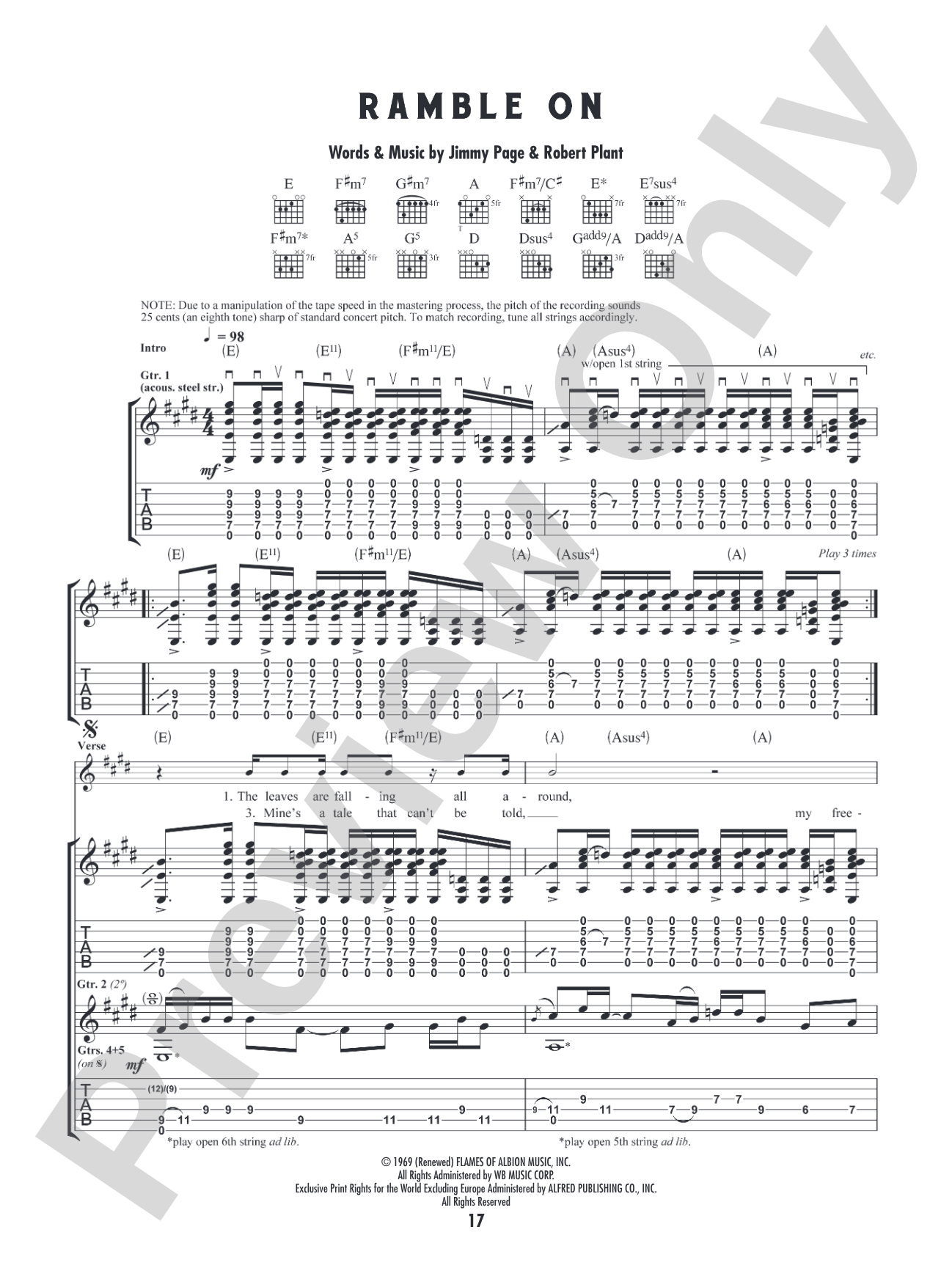
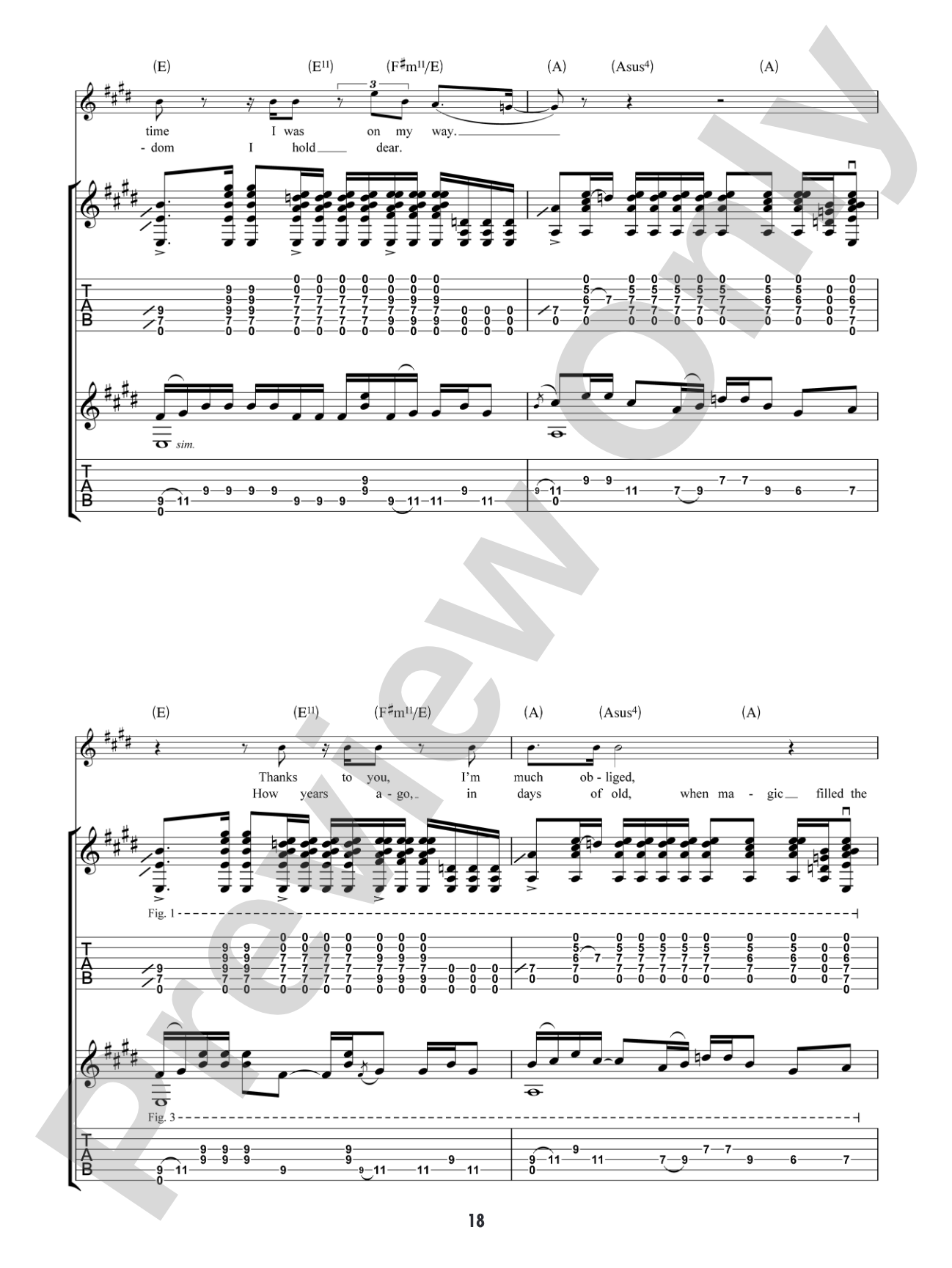

Ramble On: Authentic Guitar TAB
Led Zeppelin
Item: 00-PS-0013900
$5.99
Pickup currently not available
Related Items
Misty Mountain Hop: Authentic Guitar TAB |
$5.99
|
View | |
No Quarter: Authentic Guitar TAB |
$5.99
|
View | |
Since I've Been Loving You: Authentic Guitar TAB |
$9.99
|
View | |
The Song Remains the Same: Authentic Guitar TAB |
$9.99
|
View | |
Whole Lotta Love: Authentic Guitar TAB |
$5.99
|
View | |
Dazed and Confused: Authentic Guitar TAB |
$9.99
|
View | |
Good Times, Bad Times: Authentic Guitar TAB |
$5.99
|
View | |
Black Dog: Authentic Guitar TAB |
$5.99
|
View | |
Rock and Roll: Authentic Guitar TAB |
$5.99
|
View | |
Stairway to Heaven: Authentic Guitar TAB |
$9.99
|
View | |
For Your Life: Authentic Guitar TAB |
$9.99
|
View | |
Nobody's Fault but Mine: Authentic Guitar TAB |
$9.99
|
View | |
In My Time of Dying: Authentic Guitar TAB |
$9.99
|
View | |
Kashmir: Authentic Guitar TAB |
$5.99
|
View | |
Trampled Under Foot: Authentic Guitar TAB |
$9.99
|
View | |
Led Zeppelin: Celebration Day: Authentic Guitar TAB Book |
$26.99
|
View |
Description
On December 10, 2007, Led Zeppelin reunited to headline the Ahmet Ertegun Tribute Concert at the O2 Arena, London. This exclusive songbook presents authentic guitar TAB transcriptions of the 16 classic songs that made up the set, based on the original studio recordings. Titles: Good Times Bad Times * Ramble On * Black Dog * In My Time of Dying * For Your Life * Trampled Under Foot * Nobody's Fault but Mine * No Quarter * Since I've Been Loving You * Dazed and Confused * Stairway to Heaven * The Song Remains the Same * Misty Mountain Hop * Kashmir * Whole Lotta Love * Rock and Roll.


Ramble On: Authentic Guitar TAB isn't in MakeMusic Cloud just yet...but it could be. Let us know you'd like to see it, and you'll help shape what comes next. In the meantime, start a free trial and dive into thousands of interactive titles your students can play along with today.
Request This Title
Tell us you want it.
Start Your Free Trial
Explore everything that's ready to play right now.
Sample Audio
No sample audio found.
Sample Video
No sample videos found.
Additional Details
Publisher:
Alfred Music
Page Count:
176
SKU:
00-PS-0013900
More about this title
About the Composer: Jimmy Page
Jimmy Page shaped rock music as the guitarist and primary composer of Led Zeppelin, one of the most influential bands of the 1970s. His innovative approach to guitar tone, arrangement, and studio production established sonic textures that remain foundational to hard rock and heavy metal pedagogy. Page's work spans folk-influenced acoustic pieces to heavily distorted electric riffs, demonstrating technical mastery across the entire instrument.
Why we love this
This collection captures 16 songs from one of rock history's most significant live performances, offering guitarists access to transcriptions of essential repertoire that defined a generation. The TAB format makes these arrangements accessible to players at intermediate and advanced levels who want to understand Page's approach to riff construction, fingering efficiency, and stylistic phrasing across acoustic and electric contexts.
What to expect
These transcriptions span the full emotional and dynamic range of classic rock: heavy, blues-derived riffs that sit in the body; haunting acoustic passages that require careful voicing and sustain control; and intricate finger-picking sequences that demand precision and musicality. Together, they represent a masterclass in how to balance raw power with technical sophistication.
Who it's for
This book serves intermediate to advanced electric and acoustic guitarists who want to understand how classic rock repertoire is constructed and performed. Players pursuing rock guitar styles, whether in ensemble contexts or solo study, will benefit from learning these industry-standard songs at the technical level.
How to get the most out of it
- Study the rhythmic precision of the riff patterns before focusing on speed; lock the pocket with a metronome starting at half tempo, then gradually increase to match the studio recording's feel.
- Pay attention to palm muting and sustain markings in the TAB, as these dynamics separate a loose interpretation from an authentic performance.
- Listen to the original studio recordings repeatedly while reading the transcriptions; Page's tone choices and dynamics are as important as note placement.
- Work through the acoustic pieces (Such as 'No Quarter' and 'The Song Remains the Same') separately from the heavier electric material to develop fluency in both approaches.
How to use it
Include this material in advanced rock ensemble rehearsals, guitar showcase concerts, or as reference material for students studying the history and technique of rock composition. Individual songs work well as solo recital pieces for guitarists seeking challenging, repertoire-focused material that audiences immediately recognize and respect.
Skills your students will build
- Reading and executing authentic guitar TAB with dynamic and articulation markings
- Mastering blues-based pentatonic scales and major/minor modal riff construction
- Controlling tone production across palm-muted, sustained, and clean electric tones
- Transitioning fluently between acoustic and electric playing styles within a single piece
- Understanding rhythmic precision and swing feel in classic rock contexts
- Developing fingerpicking dexterity on both single-note and open-position patterns