
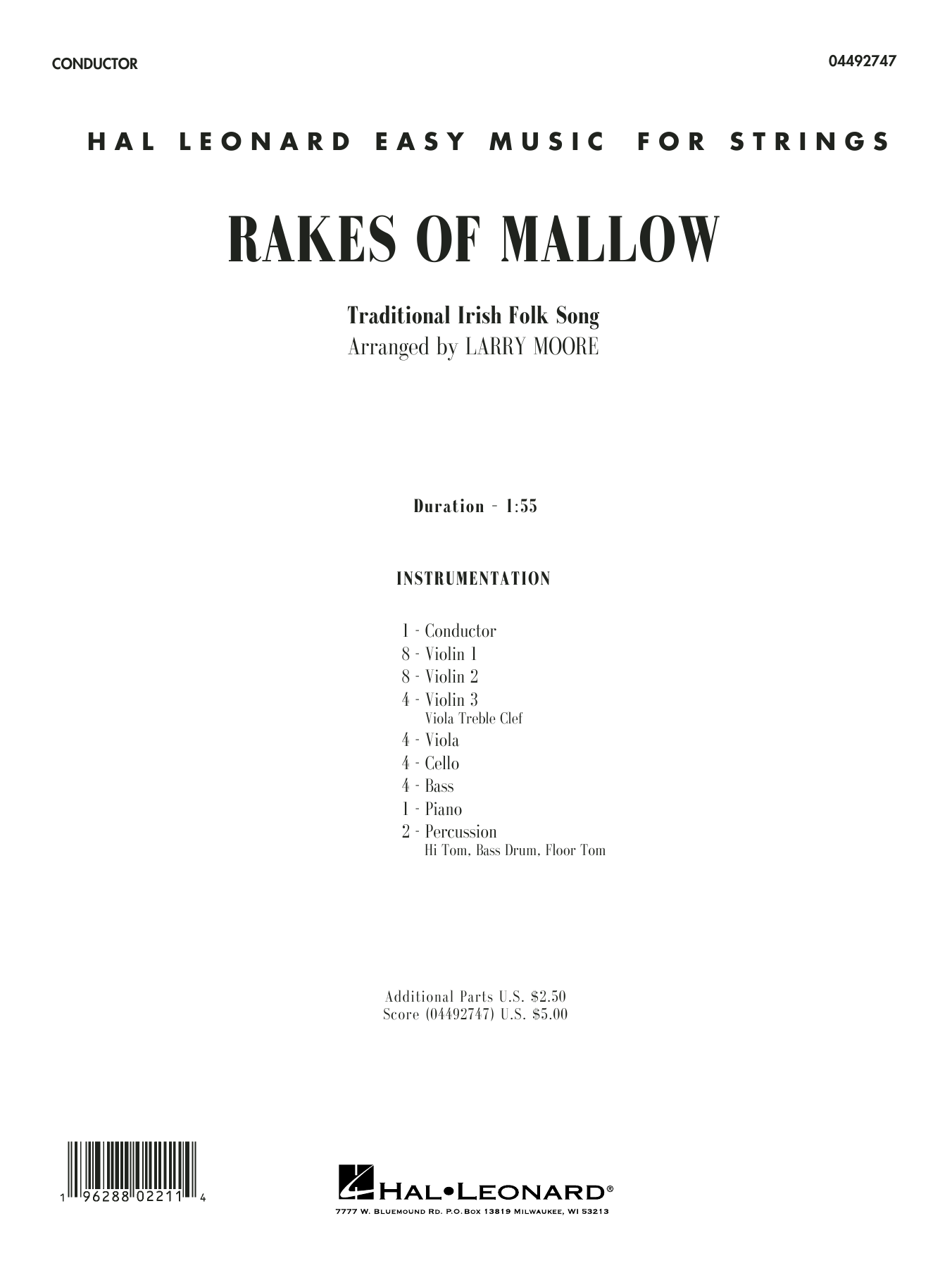

Rakes of Mallow (arr. Larry Moore): String Orchestra Conductor Score & Parts
Arranged by Larry Moore
Grade: 2
Item: 35-PK01108915
$45.00
Pickup currently not available
Buy Extra Parts (Digital PDF Download)
Parts Added to Cart!
Description
This iconic traditional Irish medley shines in this accessible arrangement by Larry Moore. Moore's cut-time version begins in G major and modulates to A major for the final section, providing much-needed experience with C-sharps and G-sharps!


Rakes of Mallow (arr. Larry Moore): String Orchestra Conductor Score & Parts isn't in MakeMusic Cloud just yet...but it could be. Let us know you'd like to see it, and you'll help shape what comes next. In the meantime, start a free trial and dive into thousands of interactive titles your students can play along with today.
Request This Title
Tell us you want it.
Start Your Free Trial
Explore everything that's ready to play right now.
Sample Audio
No sample audio found.
Sample Video
No sample videos found.
Additional Details
Publisher:
Hal Leonard
SKU:
35-PK01108915
More about this title
Why we love this
Moore's decision to use cut time gives this traditional medley a lean, propulsive energy that keeps young players engaged without overwhelming them technically. The modulation from G major to A major is handled cleanly, introducing accidentals in a purposeful way rather than scattered throughout, making it an ideal vehicle for teaching key changes at Grade 2.
What to expect
Spirited and rhythmically alive, with the jaunty lilt of Irish traditional music translated into terms string players can make their own. Moore's arrangement respects the source material while keeping the writing clear and idiomatic for young players finding their way into ensemble performance.
Who it's for
Developing string orchestras ready to tackle their first key modulation with repertoire that has genuine character and cultural roots. This works particularly well for ensembles that want to build fundamental musicianship while programming something audiences recognize and enjoy.
How to get the most out of it
- Establish a steady cut-time pulse in rehearsal before the first play-through; the faster harmonic rhythm can feel rushed if the foundational beat wavers.
- Mark the modulation point clearly in your score and parts so players understand it's a fresh harmonic center, not a key signature error.
- Balance the melody across your string sections; this medley works best when the tune sings rather than getting buried in harmonic detail.
- Use the dynamic contrast between sections to maintain shape; without careful attention to articulation and volume, one tune can blur into the next.
How to use it
Pair this with other British Isles repertoire for a concert theme, or use it as a bridge piece between serious classical works and lighter fare. Its accessibility and audience appeal make it valuable for pops concerts, community performances, or end-of-unit celebrations where you want to showcase growth without excessive technical demands.
Skills your students will build
- Reading and executing cut-time signatures
- Playing through key modulations (G major to A major)
- Navigating accidentals introduced by the new key signature (C-sharps and G-sharps)
- Balancing rhythmic precision in a fast-moving harmonic context
- Articulation and phrasing of melodic material in a folk idiom