Raise Your Hands Sheet Music Preview

Raise Your Hands: SAB Choral Octavo

By Heather Sorenson

Item: 35-DS00360256

Digital Download
$2.99
Description

Raise Your Hands: SAB Choral Octavo isn't in MakeMusic Cloud just yet...but it could be. Let us know you'd like to see it, and you'll help shape what comes next. In the meantime, start a free trial and dive into thousands of interactive titles your students can play along with today.

Sample Audio
No sample audio found.
Sample Video
Additional Details
Publisher: Hal Leonard
Page Count: 10
SKU: 35-DS00360256

More about this title

About the Composer: Heather Sorenson

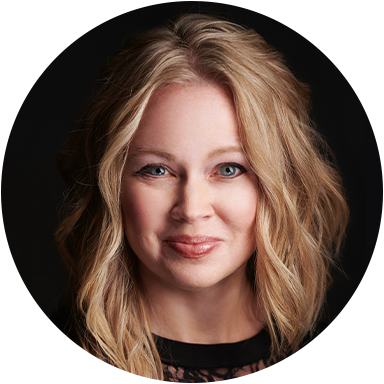
Heather Sorenson

Heather Sorenson ranks among today's most performed composers, with her works gracing sanctuaries, concert halls, and festival stages across the globe. Based in Dallas, Texas, she built her reputation on an unusual fluency: the ability to write with equal authenticity in traditional hymnic idioms and contemporary Christian styles, often weaving both into a single coherent musical statement that feels entirely her own.

Her career spans composition, arrangement, orchestration, and education. She has taught music at all elementary levels, held faculty positions at Baylor University, and continues to lead workshops and master classes at universities and worship conferences nationwide. Recent commissions have come from major institutions including Texas A&M University, the John F. Kennedy Memorial Foundation, and Carnegie Hall. When not composing or conducting, Sorenson regularly organizes benefit concerts for organizations she supports.

Why we love this

Sorenson understands the particular challenge of SAB writing: making the third part genuinely musical rather than merely accommodating. Here, she crafts all three lines with the same care and independence you'd expect from her larger works, so every singer has something purposeful to sing. The text setting feels natural, the harmonic language avoids predictability, and the piece sits comfortably for mixed ensembles without sacrificing any musical substance.

What to expect

The piece radiates encouragement and lift without resorting to saccharine simplification. Sorenson's harmonic palette is warm and modern, her phrasing conversational yet purposeful, creating a sound that feels both immediate and substantive. Singing it leaves performers energized rather than drained.

Who it's for

This octavo works for church choirs seeking contemporary sacred music with real musical depth, as well as school and community choirs willing to invest time in genuine ensemble work. SAB voicing makes it accessible to less experienced singers while the compositional craft keeps it engaging for more advanced ensembles.

How to get the most out of it

  • Establish the rhythmic pocket early. Sorenson's phrasing often sits just off the obvious downbeat, so locking ensemble rhythm requires more precision than the notation might initially suggest.
  • Voice the alto part with awareness of its independence. This isn't a filling part; balance it to match the soprano and baritone lines rather than tucking it under.
  • Shape the dynamics through harmonic progression rather than simply following marked dynamics. Sorenson's voice leading creates its own arch, and letting that guide your interpretation will feel more organic than a mechanical crescendo and decrescendo.
  • If using the accompaniment, rehearse without it first. Your singers will develop stronger ownership of the harmonic foundation and lock more securely when the accompaniment is added.

How to use it

Pair this with a traditional hymn arrangement on a sacred music program to showcase the breadth of contemporary Christian writing, or use it as a standalone opening for a worship service when you need music that's accessible to a broad congregation but musically sophisticated enough to hold a director's respect. Its moderate length makes it ideal for church services, festival programs, or concert encores.

Skills your students will build

  • Independent line singing in three-part harmony
  • Shaping phrases through harmonic rhythm rather than mechanical dynamic marking
  • Reading and interpreting contemporary Christian idiom
  • Balancing part independence with ensemble blend

You May Also Like