Rainbow's End: Viola Sheet Music Preview

Rainbow's End: Viola

By Susan H. Day

Grade: 1.5

Item: 00-PC-0018010_VA1

Digital Download
$5.99
Description
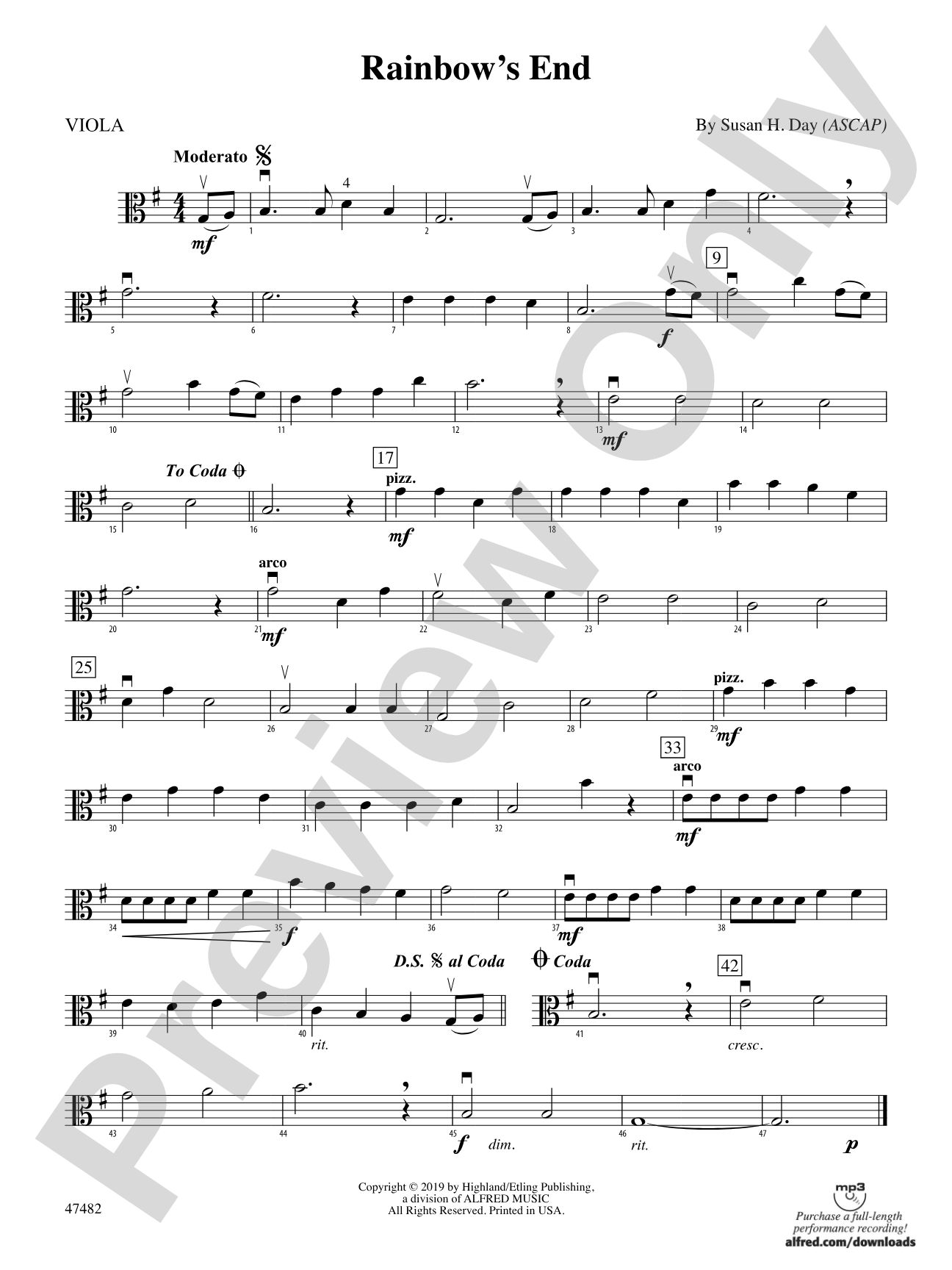
Take a musical journey to the end of the rainbow in this upbeat and majestic piece by Susan H. Day, written in the key of G, featuring easy rhythms and satisfying melodies for all sections. Teaching points include dotted quarter notes, legato bowing, two-note slurs, and pizzicato. The viola part doubles the violin 2 part. Students and audience will consider this piece their own pot of gold! This title is available in MakeMusic Cloud.

Don't just read it, hear it, play along with it, and watch your students grow with it. In MakeMusic Cloud, Rainbow's End: Viola comes alive with professional accompaniment, adjustable tempo, and built-in practice tools that turn solo practice into real progress.

Sample Audio
0:00
0:00
Sample Video
Additional Details
Series: Highland/Etling String Orchestra
Publisher: Alfred Music
Page Count: 62
SKU: 00-PC-0018010_VA1

More about this title

About the Composer: Susan H. Day

Susan H. Day has established herself as a trusted voice in string education, with a catalog of accessible works that meet students where they are while refusing to talk down to them. Her writing balances clear pedagogical purpose with genuine musical substance, making her pieces favorites among directors who value both learning outcomes and audience engagement.

Why we love this

Day writes with a genuine understanding of what early string orchestras can accomplish musically without technical overreach. The piece balances genuine melodic satisfaction with pedagogical clarity, making it rewarding for both players and listeners. The viola doubling of violin 2 is a small but smart choice that strengthens the harmonic foundation while keeping all sections engaged.

What to expect

Bright and optimistic, with an almost folk-like simplicity that makes the piece immediately accessible while still offering genuine melodic charm. The G major tonality gives the piece warmth and openness, and the combination of pizzicato, legato, and slurred figures creates textural variety that keeps the sound fresh throughout.

Who it's for

Beginning string orchestras and early intermediate groups ready to tackle articulation variety and sustained legato playing without navigating complex rhythms or extended positions. Conductors seeking a concert piece that teaches essential bowing techniques while keeping the orchestra's focus on musical phrasing rather than survival.

How to get the most out of it

  • Shape the dotted quarter note figures with a clear pulse; these rhythms sound best when the players feel the subdivision without rushing into the short notes that follow.
  • Let the legato bowing passages breathe; avoid over-connecting phrases so that the melodic line remains transparent rather than blurred.
  • Balance the pizzicato sections by having players pluck with consistent finger contact, producing a bright, articulate sound that cuts through without sounding thin.
  • Use the two-note slurs to teach bow direction and independence; have students practice these slurs as a separate technical exercise before full rehearsal.

How to use it

This works especially well as a concert opener or lighter offering on a program heavy with slower or more complex pieces. The upbeat character and straightforward narrative also make it suitable for young audiences or family concerts where clarity and charm matter more than virtuosity.

Skills your students will build

  • Dotted quarter note rhythms with fluent execution
  • Sustained legato bowing with controlled tone production
  • Two-note slur technique and bow independence
  • Pizzicato articulation with consistent tone
  • Harmonic awareness through section doubling

You May Also Like