
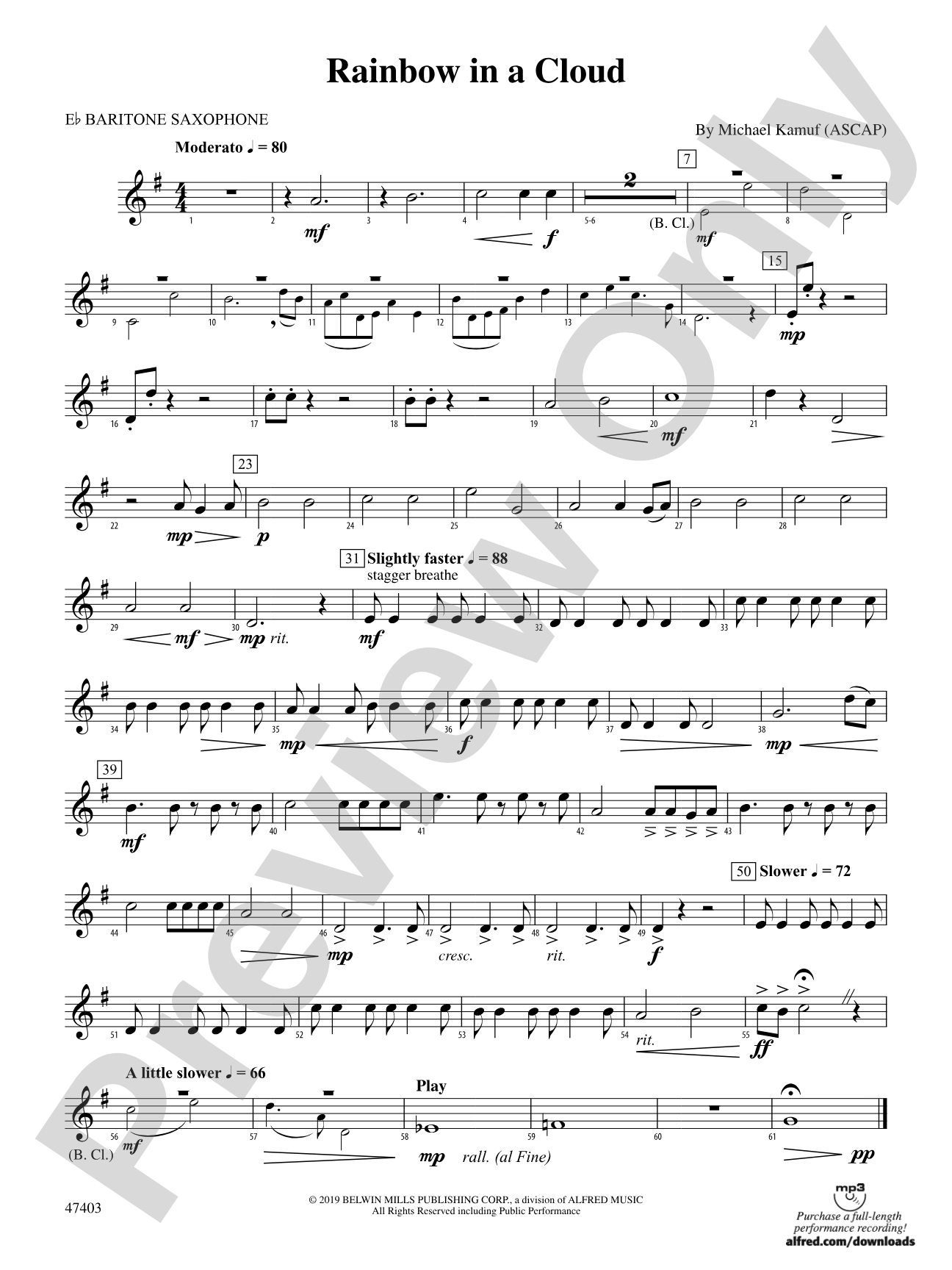

Rainbow in a Cloud: E-flat Baritone Saxophone
A Fanfare
By Michael Kamuf
Grade: 2 (Easy)
Item: 00-PC-0017936_BTX
$3.00
Pickup currently not available
Description
Soaring melodies and rich harmonies come together is this expressive and powerful work for your young band, making the piece the perfect choice for a lyrical festival selection. Written in memory of an extraordinary parent volunteer, the piece is dedicated to all music parents everywhere for giving their time and resources to help enrich the lives of their own children. (3:15)


Don't just read it, hear it, play along with it, and watch your students grow with it. In MakeMusic Cloud, Rainbow in a Cloud: E-flat Baritone Saxophone comes alive with professional accompaniment, adjustable tempo, and built-in practice tools that turn solo practice into real progress.
Open in the Player
Jump straight in and assign it today.
Start Your Free Trial
Open this title and explore the full library in minutes.
Sample Audio
1
Audio File
--:--
0:00
0:00
Sample Video
Additional Details
Series:
Belwin Young Band
Publisher:
Alfred Music
Page Count:
128
SKU:
00-PC-0017936_BTX
More about this title
About the Composer: Michael Kamuf

Michael Kamuf earned degrees in Jazz Performance and Music Education from Youngstown State University's Dana School of Music, followed by a Master of Arts in Instrumental Conducting from George Mason University. His compositions and arrangements have been recorded by major ensembles including the Woody Herman and Glenn Miller Orchestras, the USAF Airmen of Note, and the US Navy Commodores, while soloists such as James Moody, Eddie Daniels, and Sean Jones have performed his work.
Kamuf spent three decades teaching instrumental music in Montgomery County Public Schools in Maryland, serving for twenty-seven years as Director of Bands and Orchestras and Music Department Chairperson at John T. Baker Middle School in Damascus. Under his leadership, the Baker ensembles earned consistent high ratings at festivals and commissioned several works for young concert bands. As an exclusive Belwin composer, Kamuf has over 100 publications in print across jazz, orchestra, and concert band catalogs. He currently leads the Mike Kamuf Little Big Band, a jazz octet based in the Baltimore and Washington, DC area.
Why we love this
Kamuf writes with genuine warmth toward young musicians without sacrificing musical substance. The piece balances lyrical, soaring melodies with rich harmonic colors, giving your band genuine expressive material to sink their teeth into rather than mere technical exercises. The dedication to music parents resonates deeply, adding emotional weight that students connect with and can pour into their performance.
What to expect
Soaring yet intimate, the work opens with gentle, singing melodies that gradually expand into fuller harmonic textures. There's a quiet nobility here, the kind of emotional directness that speaks to genuine human experience without overwrought drama.
Who it's for
This piece is ideal for Grade 2 concert bands looking for substantial festival material with real lyrical depth. Whether you're building a program around expressive work or seeking a selection that moves audiences while remaining accessible to younger musicians, this score delivers.
How to get the most out of it
- Shape long phrases with gentle dynamic waves rather than holding one volume throughout; allow the melodic contour to breathe naturally across the phrase.
- Balance the inner voices carefully so accompaniment figures support rather than overshadow the soaring melodies in upper parts.
- Let the harmonic richness unfold without rushing; resist the urge to push the tempo, as the expressive quality depends on space and clarity.
- Encourage woodwinds to listen across the section for blend, especially in sustained chord changes where tuning and tone matching matter most.
How to use it
Program this as a centerpiece for a lyrical or tribute concert, or use it as your festival selection when you want judges to hear what your band can express musically. The moderate length and Grade 2 accessibility make it perfect for mid-season programming when your ensemble has developed enough control for nuance but before you load them with technically demanding repertoire.
Skills your students will build
- Shaping extended melodic phrases with dynamic control
- Listening to blend and balance across chord changes
- Reading and executing expressive articulations and tempo markings
- Supporting melodic lines with focused accompaniment voice writing
- Sustaining long tones with consistent pitch and tone quality