
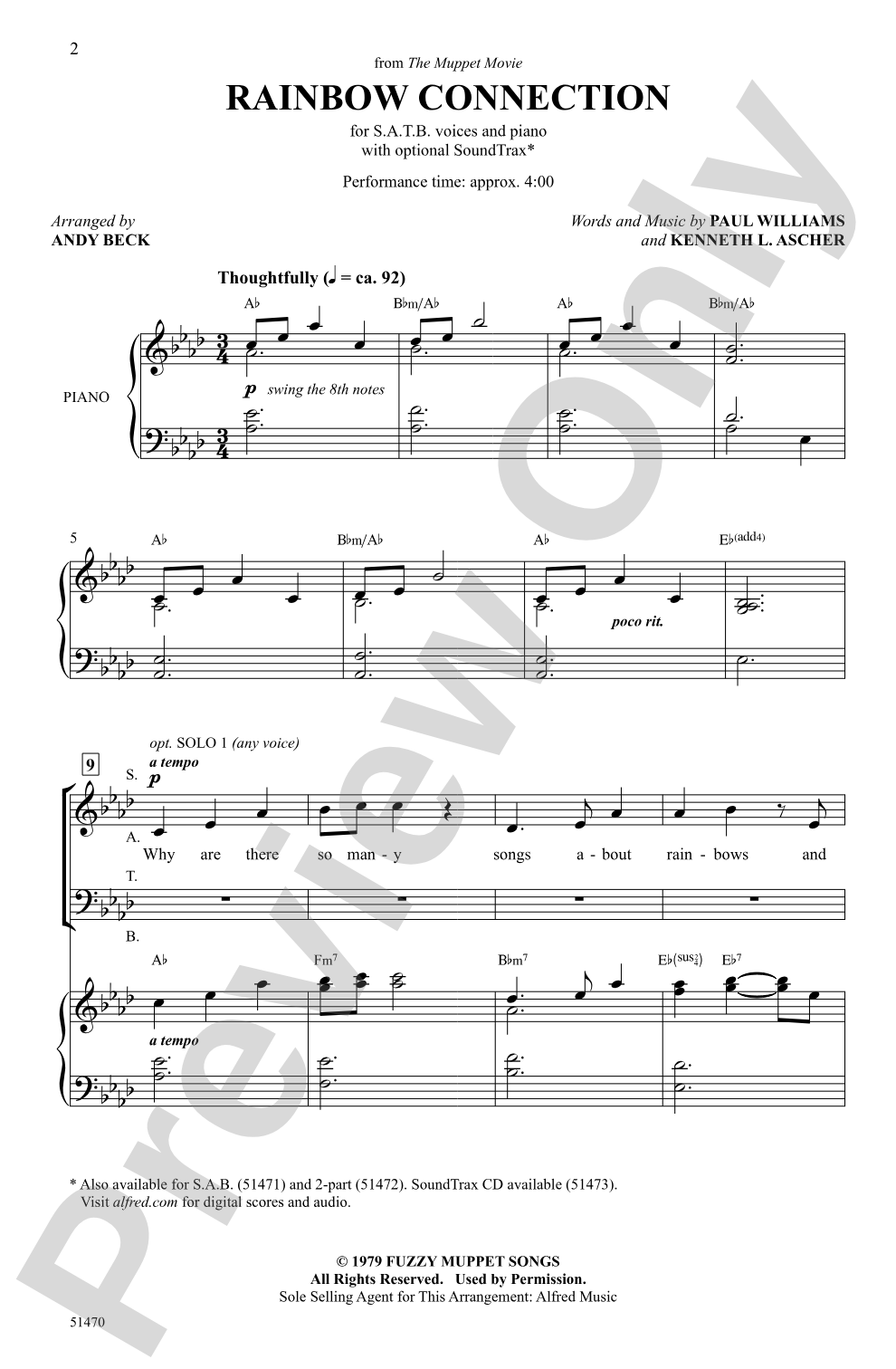

Rainbow Connection: SATB Choral Octavo
from The Muppet Movie
Words and music by Paul Williams and Kenneth L. Ascher / arr. Andy Beck
Item: 00-PO-0008147
$2.65
Minimum order quantity: 10 copies
Please note: Under U.S. copyright law, you must purchase the exact number of copies needed for your ensemble. Printing, duplicating or sharing additional copies is strictly prohibited.
One moment…
Related Items
Rainbow Connection: SAB Choral Octavo |
$2.65
|
View | |
Rainbow Connection: 2-Part Choral Octavo |
$2.65
|
View | |
Rainbow Connection: SATB Choral Octavo |
$2.65
|
View | |
Rainbow Connection: SAB Choral Octavo |
$2.65
|
View | |
Rainbow Connection: 2-Part Choral Octavo |
$2.65
|
View | |
Rainbow Connection: Choral SoundTrax CD |
$29.99
|
View |
Description
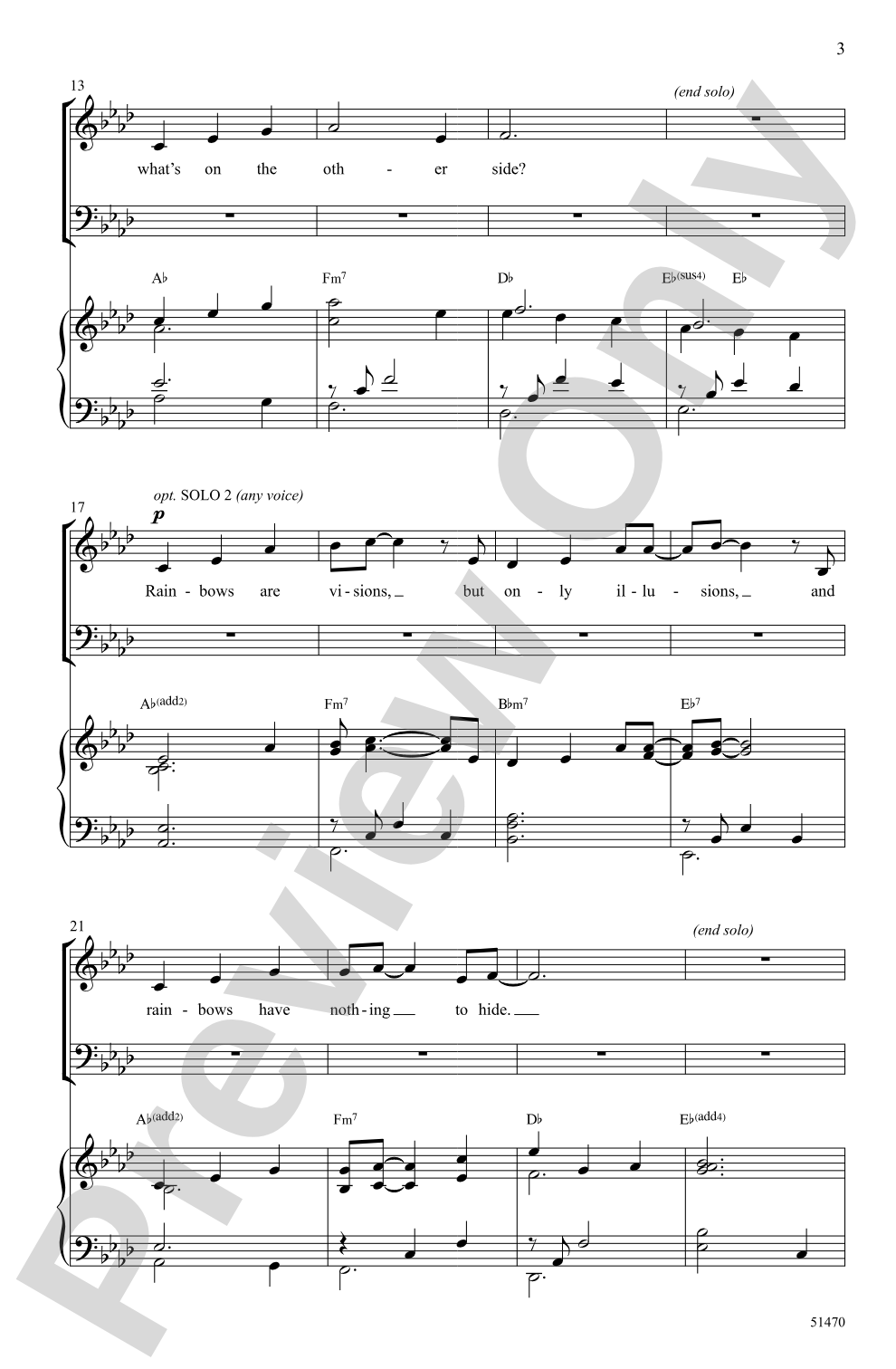
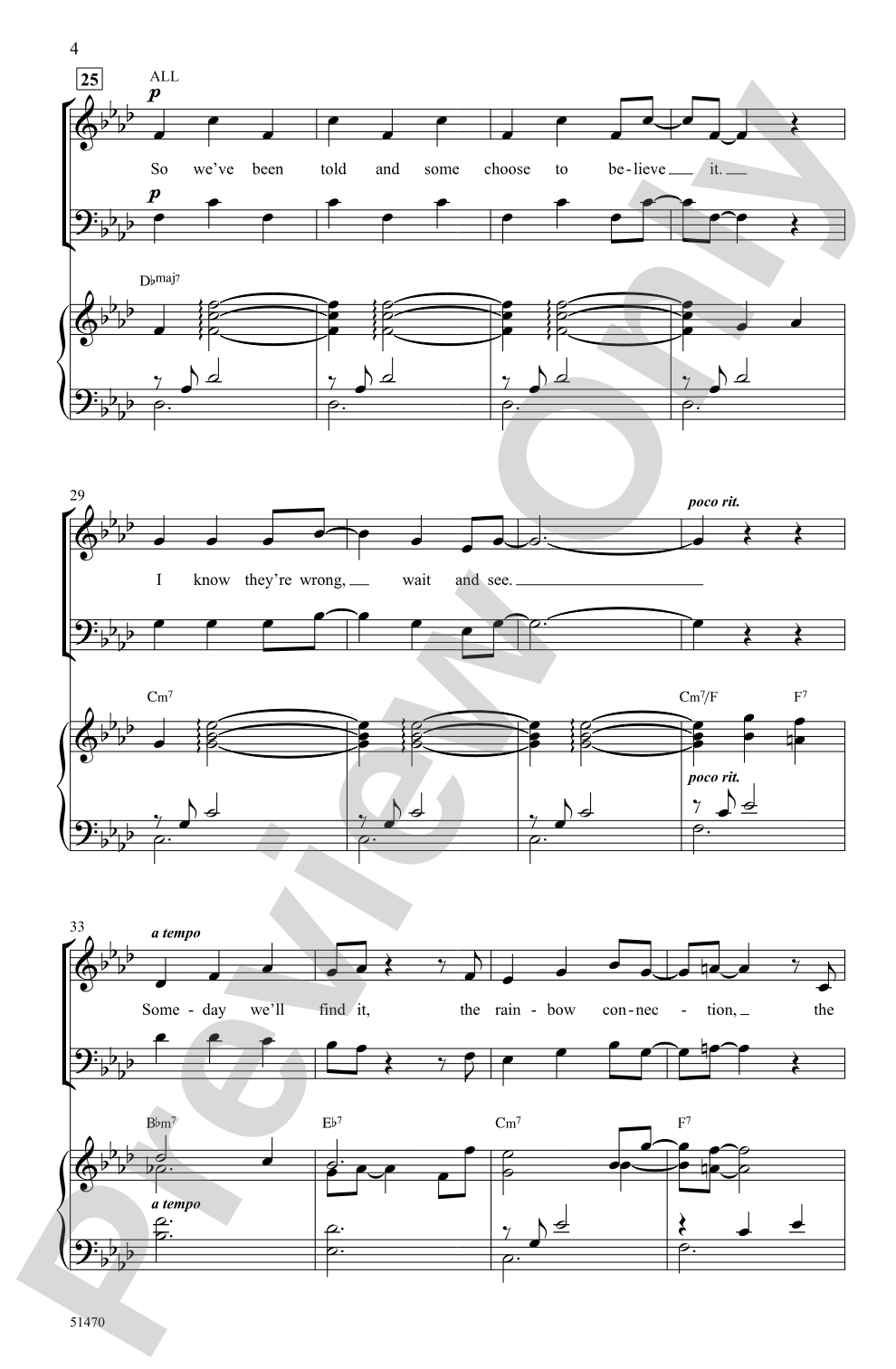
Proudly presenting Kermit the Frog's most cherished ballad in an exquisite arrangement for choirs of any age. This stunning treatment places specific emphasis on the wistful lyrics of the Oscar-nominated song from Disney's The Muppet Movie. The American Film Institute named this unlikely radio hit one of the greatest movie songs of all time. Lush harmonies, fresh counterlines, expressive tempos, and a sparkling piano (or SoundTrax) accompaniment make this a fitting selection for any concert program.


Discover MakeMusic Cloud: thousands of interactive titles your students can play along with today.
Sample Audio
1
Audio File
--:--
0:00
0:00
Sample Video
Additional Details
Series:
Alfred Pop Choral Series
Publisher:
Alfred Music
Page Count:
12
SKU:
00-PO-0008147
More about this title
About the Composer: Paul Williams
Paul Williams is a songwriter and composer whose work spans film, television, and popular music. His gift for crafting emotionally direct melodies paired with singable, meaningful lyrics has made him a fixture in American songwriting since the 1970s. Williams won the Academy Award for Best Original Song for "Evergreen" from A Star Is Born and earned multiple Grammy nominations across his career.
In music education settings, Williams' compositions offer accessible entry points into contemporary songwriting that doesn't condescend to singers or audiences. His melodies sit naturally in the voice, and his lyrics reward careful interpretation. For choirs, his work demonstrates how commercial songwriting crafted with genuine artistry can anchor meaningful concert experiences.
Why we love this
Andy Beck's arrangement rescues this song from novelty territory by treating the wistful yearning of the lyrics with real musical care. The lush harmonies and counterlines feel fresh without overshadowing the melody, and the piece gives every voice section moments to shine. Programming this signals to your audience that you're choosing substantial repertoire rooted in genuine emotion, not just crowd-pleasing nostalgia.
What to expect
This arrangement opens with quiet introspection, building through lush harmonic layers that honor the song's essential hopefulness. The piano shimmers underneath, creating an almost dreamlike quality that matches the imagery of rainbows and wishes. Singing this leaves performers and listeners with a sense of gentle yearning touched by light.
Who it's for
Any age choir seeking repertoire that combines accessibility with genuine musicality. High school, college, and community ensembles will find this arrangement sits comfortably on the voice while offering satisfying harmonic complexity. Teachers wanting to program recognizable material without sacrificing artistic integrity will find solid ground here.
How to get the most out of it
- Balance the piano part carefully so it supports without drowning the ensemble; the sparkling accompaniment should enhance, not compete with the voices.
- Shape phrases around the emotional arc of the lyrics rather than treating each line as rhythmically equal; let the yearning in 'What do you think you'd see' breathe.
- Emphasize the clarity of any counterlines in the upper voices; they're written to be heard as independent musical ideas, not background filler.
- Experiment with the recorded accompaniment in rehearsal to find your preferred tempo for the reflective passages; this arrangement rewards flexibility in pacing.
How to use it
Pair this with other contemporary or popular arrangements to show the range of your choir's repertoire in a single concert set. The reflective, hopeful character makes it especially effective as a closing piece or as part of a thematic program exploring peace and connection. Consider programming it alongside art song or standard choral repertoire to demonstrate how quality arranging elevates familiar material.
Skills your students will build
- Sustaining legit tone across longer phrase shapes
- Balancing ensemble blend while maintaining counterline independence
- Interpreting lyrical nuance and emotional subtext in contemporary material
- Rhythmic precision in accompaniment coordination
- Voice leading awareness across four-part harmony