Ragazzaccie, che senza cervello Sheet Music Preview

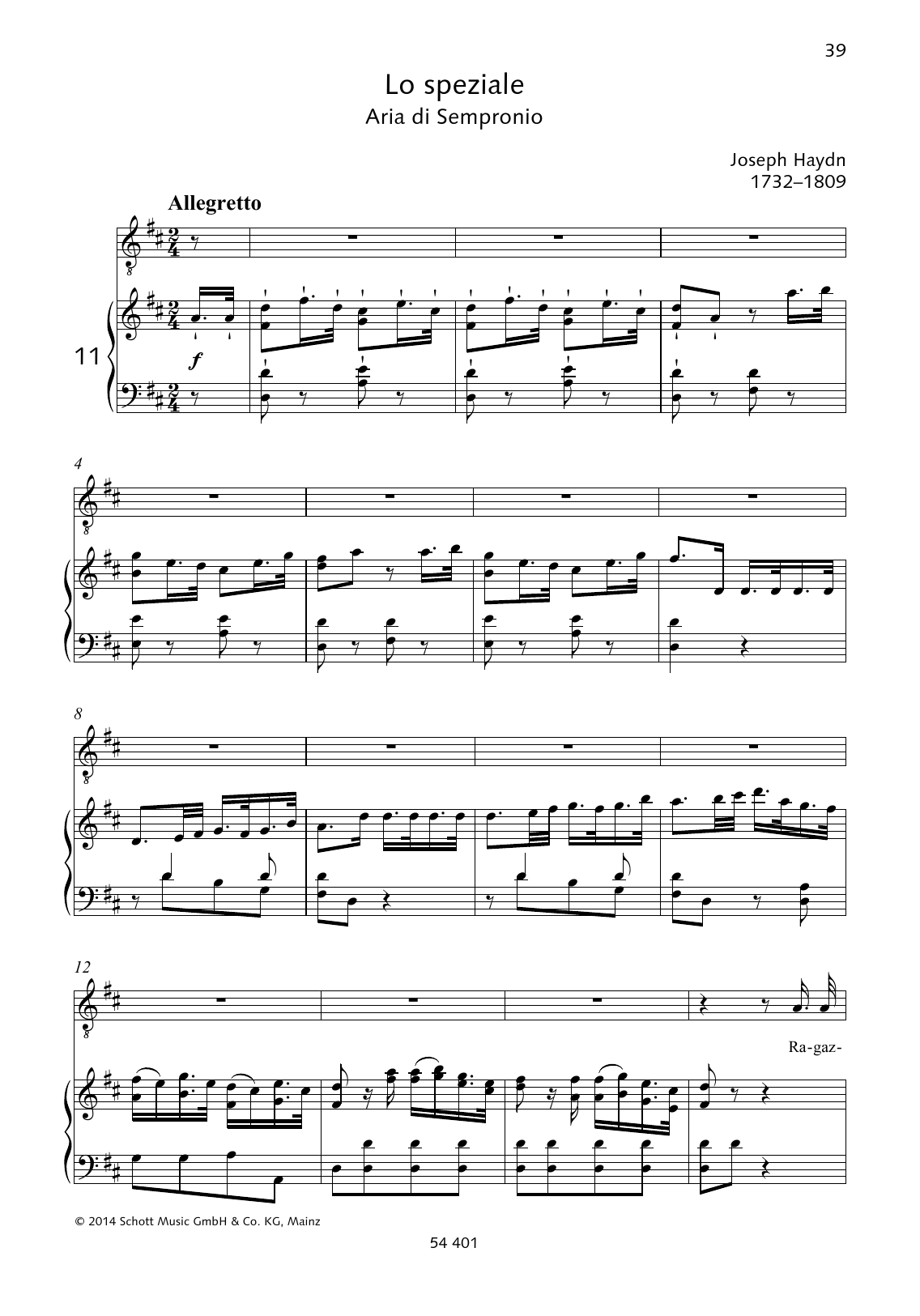
Ragazzaccie, che senza cervello: Piano Vocal

By Joseph Haydn / Edited by Claudia Eder / Edited by Wolfgang Birtel

Item: 35-DS00372026

Digital Download
$4.99
Description

Discover MakeMusic Cloud: thousands of interactive titles your students can play along with today.

Sample Audio
No sample audio found.
Sample Video
Additional Details
Publisher: Hal Leonard
Page Count: 6
SKU: 35-DS00372026

More about this title

About the Composer: Joseph Haydn

Joseph Haydn (1732–1809) shaped the Classical era by establishing the symphonic form and chamber music idioms that defined the period. His prolific output across genres, from 104 symphonies to masses, string quartets, and vocal works, demonstrates a composer constantly refining and experimenting with structure and harmony.

Haydn's approach to vocal music reveals his gift for text setting and melodic clarity. His dramatic works and songs showcase a keen sense of character and theatrical timing, qualities that make his vocal pieces engaging for singers and audiences alike.

Why we love this

This is a character piece with personality. Haydn captures a specific dramatic moment with musical precision, and the text suggests both humor and vocal challenge. The accompaniment sits naturally for collaborative pianists and singers working together in rehearsal or performance.

What to expect

Quick, pointed, and dramatically alive. Haydn writes with a lightness that masks intelligence; the piece has spark and attitude beneath its elegant surface. The Italian text and Classical vocabulary create an intimate moment between performer and listener.

Who it's for

Singers preparing Classical repertoire for recitals or competitions will find this piece rewarding. Voice teachers building classical song literature into lessons benefit from Haydn's direct musical language and reasonable demands on both student and collaborative pianist.

How to get the most out of it

  • Establish a clear sense of the character's attitude before rehearsal begins. The title hints at attitude; let that inform phrasing and text delivery.
  • Coordinate the vocal line with the piano's harmonic rhythm to keep the texture cohesive. Classical writing often places structural weight on the keyboard part.
  • Support the singer's articulation choices through the piano. Haydn's accompaniments respond to the text, so clarity in both parts reinforces meaning.

How to use it

Include this in an all-Haydn chamber or song recital to showcase his range beyond orchestral works. It pairs well with other 18th-century vocal selections and offers a compact, character-rich piece for variety within a longer song set.

Skills your students will build

  • Execution of rapid scalar passages with clarity and precision
  • Interpretation of text through musical phrase shaping
  • Collaborative listening between voice and piano
  • Idiomatic Classical ornamentation and articulation

You May Also Like