
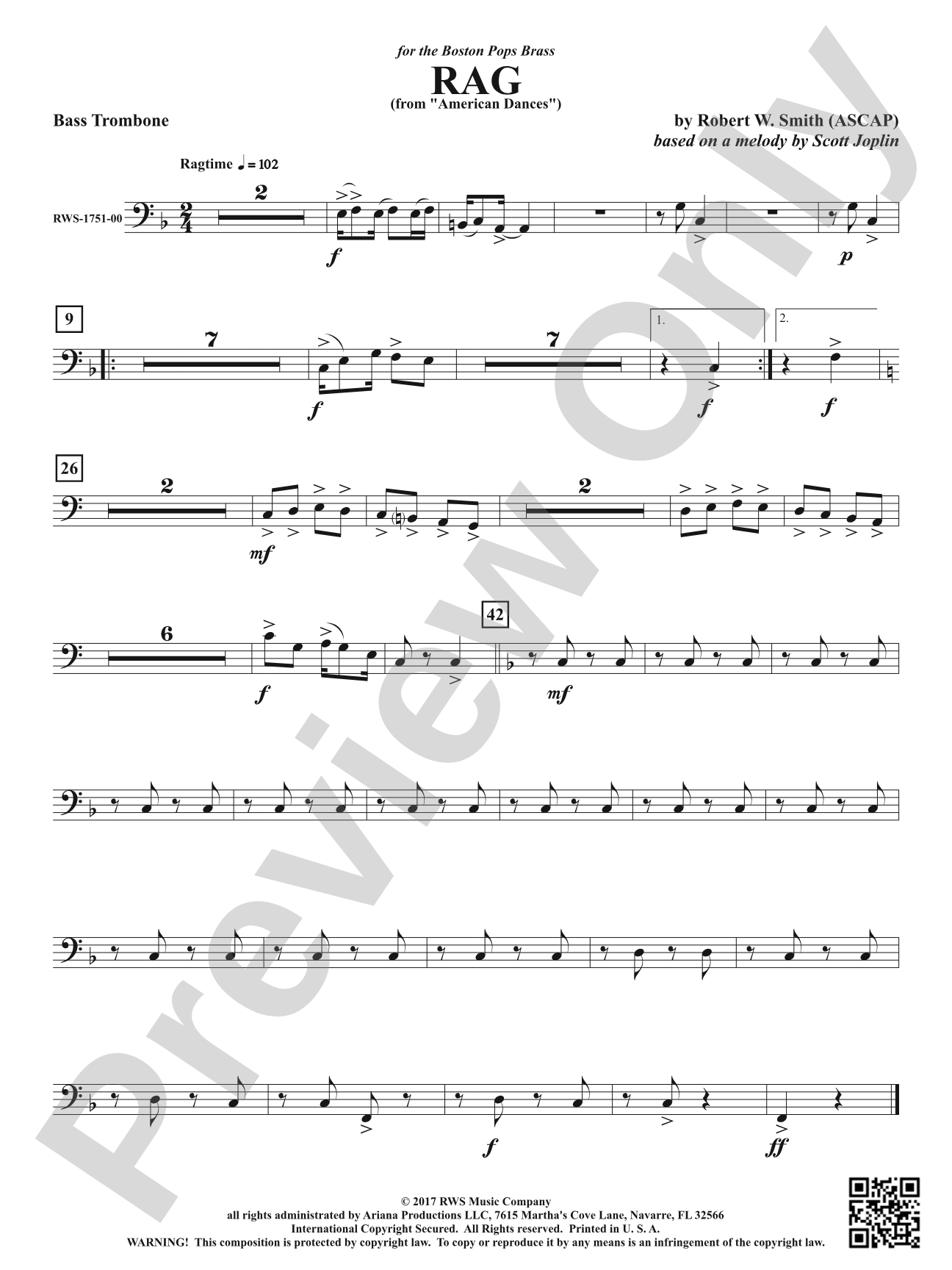

Rag - From American Dances: Bass Trombone
From American Dances
By Robert W. Smith
Grade: 4
Item: 98-PC-RWS1751_BTN1
$3.99
Pickup currently not available
Description
"American Dances" is a three movement suite originally composed for the Boston Pops Brass. Each movement features an American popular music genre. This first movement, "Rag", draws upon the ragtime style most often associated with Scott Joplin and the city of New Orleans. This work for the brass and percussion ensemble will delightfully challenge your brass section while appealing to audiences in any concert setting.
Original Item#: RWS-1751-00


Original Item#: RWS-1751-00
Rag - From American Dances: Bass Trombone isn't in MakeMusic Cloud just yet...but it could be. Let us know you'd like to see it, and you'll help shape what comes next. In the meantime, start a free trial and dive into thousands of interactive titles your students can play along with today.
Request This Title
Tell us you want it.
Start Your Free Trial
Explore everything that's ready to play right now.
Sample Audio
1
Audio File
--:--
0:00
0:00
Sample Video
No sample videos found.
Additional Details
Series:
RWS - Festival Ensemble
Publisher:
RWS Music Company
SKU:
98-PC-RWS1751_BTN1
More about this title
About the Composer: Robert W. Smith

Robert W. Smith stands among America's most prolific composers, with over 400 published works spanning concert band, orchestra, and chamber ensembles. His music has traveled globally, performed from North America and Europe to Australia and Asia, and his symphonies The Divine Comedy and The Odyssey have become cornerstones of the repertoire.
Smith holds degrees from Troy State University (AL) and the University of Miami (FL). Beyond composing, he has built a distinguished conducting and clinician career, appearing at venues ranging from the Olympic Games and the Macy's Thanksgiving Day Parade broadcast to opening ceremonies in Japan and performances across the United States, Canada, and several international destinations.
Why we love this
Smith captures the swagger and rhythmic drive of ragtime without requiring the technical fireworks that can bog down younger ensembles. The orchestration sits idiomatically in brass voices, giving each section clear moment to shine while the percussion propels the action forward. It's the kind of piece that sounds sophisticated to an audience but feels achievable in the rehearsal room.
What to expect
Rag channels the spirit of early twentieth-century ragtime with period charm and accessible energy. The writing swings with confidence, bouncing syncopated figures off steady brass chords while percussion keeps the listener engaged. It's a piece that invites audiences in with a familiar idiom while giving the ensemble a chance to play with style and ensemble awareness.
Who it's for
Brass ensembles at the Grade 4 level with solid foundational technique and comfort with syncopated rhythms will find this piece genuinely musical without feeling stretched. It works equally well for brass choirs, community brass bands, and festival-focused chamber ensembles looking to program something with immediate appeal.
How to get the most out of it
- Nail the rhythmic precision early. Ragtime lives or dies by crisp articulation and locked ensemble timing; spend rehearsal time locking the brass section with the percussion before worrying about style or dynamics.
- Let the syncopation breathe naturally rather than forcing it. Too much emphasis on the off-beats kills the swing; treat syncopated figures as conversational rather than mechanical.
- Balance the percussion texture carefully. In a smaller brass ensemble, timpani and percussion can easily overwhelm the horns. Keep mallets soft and let the brass cut through.
- Shape the melodic lines with period-appropriate phrasing. Ragtime melodies benefit from subtle rubato and shape that lifts the traditional march-band sound into something more lyrical.
How to use it
This movement works beautifully as a palate-cleansing lighter work in a concert that includes larger symphonic pieces or more demanding contemporary literature. It also pairs naturally with other American vernacular works or can stand alone as a crowd-pleasing festival selection that demonstrates your ensemble's musicality and rhythmic sophistication.
Skills your students will build
- Syncopated rhythmic reading and ensemble locks in ragtime idiom
- Brass sectional balance and blend at varied dynamic levels
- Period-appropriate articulation and phrasing in early twentieth-century American style
- Coordination between brass and percussion in syncopated contexts