
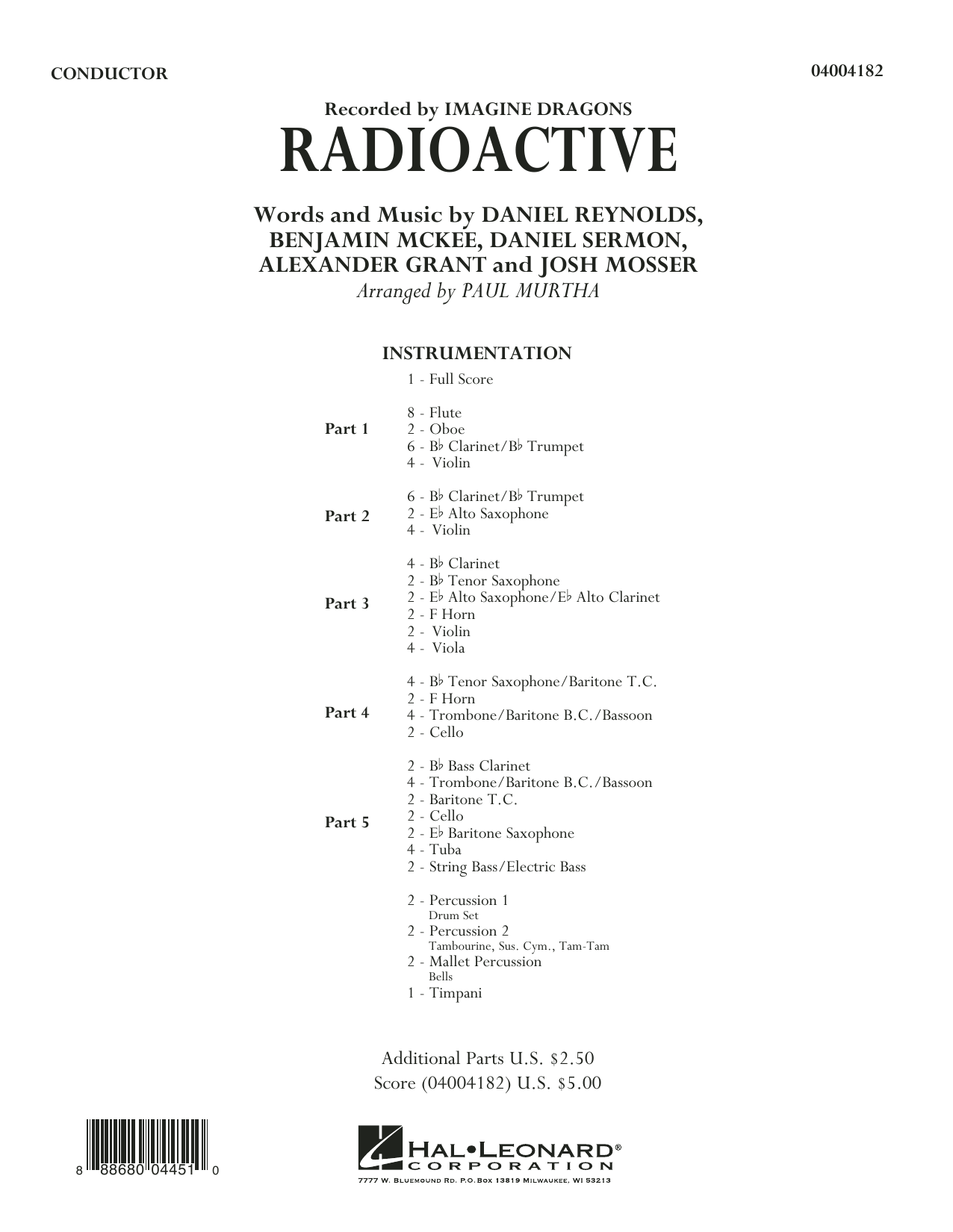

Radioactive: Flex Ensemble Conductor Score & Parts
As performed by Imagine Dragons / Arranged by Paul Murtha
Grade: 2-3
Item: 35-PK00303680
$65.00
Pickup currently not available
Buy Extra Parts (Digital PDF Download)
Parts Added to Cart!
Description
Not many contemporary rock songs exhibit the staying power of this recent hit recorded by Imagine Dragons. Here's a great sounding version for flexible instrumentation that goes together easily.
Dur: 2:00


Radioactive: Flex Ensemble Conductor Score & Parts isn't in MakeMusic Cloud just yet...but it could be. Let us know you'd like to see it, and you'll help shape what comes next. In the meantime, start a free trial and dive into thousands of interactive titles your students can play along with today.
Request This Title
Tell us you want it.
Start Your Free Trial
Explore everything that's ready to play right now.
Sample Audio
No sample audio found.
Sample Video
No sample videos found.
Additional Details
Publisher:
Hal Leonard
SKU:
35-PK00303680
More about this title
About the Artist: Imagine Dragons
Imagine Dragons formed in Las Vegas in 2008 and quickly became one of the defining rock bands of the 2010s. Their synth-driven alternative rock sound blends electronic production with raw instrumental energy, creating songs that resonate across both radio and streaming platforms. The band's songwriting centers on emotionally direct lyrics paired with hooks that stick with listeners long after the first hearing.
For music educators, Imagine Dragons represent the contemporary repertoire students actually want to play. Their arrangements translate remarkably well to educational ensembles without sacrificing the drive and intensity that makes their records compelling.
Why we love this
Radioactive has genuine staying power in a landscape cluttered with one-hit wonders. Paul Murtha's arrangement captures the song's propulsive electronic backbone while keeping the instrumentation flexible enough that your ensemble can sound full whether you're running a five-piece or twenty-piece configuration. Students recognize it immediately, play it with genuine enthusiasm, and the two-minute duration makes it perfect for concert pacing or festival rotations.
What to expect
Radioactive pulses with electronic urgency and controlled intensity. The arrangement doesn't blast from start to finish; instead it creates a sense of momentum building and releasing, with moments of melodic clarity cutting through shimmering harmonic backgrounds. It feels modern and energetic without sacrificing musicality.
Who it's for
Flex ensemble directors looking for current repertoire that engages students without requiring a specific instrumentation. Works equally well for jazz ensembles, pep bands, or mixed concert groups where personnel changes semester to semester. This is also smart programming for directors who want to bridge the gap between what students hear at home and what they play in school.
How to get the most out of it
- Lock in the driving rhythm section before layering in the melodic elements. The pulse is what makes this arrangement work, so get your percussionists and bass line locked in first.
- Shape the dynamic arc across the full two minutes rather than playing it at one level. This song builds energy, and your ensemble should reflect that trajectory.
- Balance the lead line against the harmonic support. The melody needs to sing clearly without drowning out the synth-like textures underneath.
- Emphasize the rhythmic precision on syncopated passages. The arrangement's contemporary feel depends on crisp execution of off-beat figures.
How to use it
Open a concert with this to immediately capture audience attention and signal that your ensemble plays music from this century. The compact length makes it ideal for splitting a program between classical and contemporary works, showing range without eating up rehearsal time on material with diminishing returns. Consider pairing it with other contemporary pop or rock arrangements to create a distinct section that appeals to students and families alike.
Skills your students will build
- Reading rhythmic precision in syncopated contemporary rock patterns
- Balancing melody and accompaniment in ensemble textures
- Shaping dynamic contours across a complete arrangement
- Adapting to flexible instrumentation and doubling parts
- Executing clean attacks and releases in a fast-moving two-minute form