Radio Ga Ga (arr. Dirk Kokx) Sheet Music Preview

Radio Ga Ga (arr. Dirk Kokx): SSAA Choral Octavo

As performed by Queen / Arranged by Dirk Kokx

Item: 35-DS00489780

Digital Download
$2.99
Description

Radio Ga Ga (arr. Dirk Kokx): SSAA Choral Octavo isn't in MakeMusic Cloud just yet...but it could be. Let us know you'd like to see it, and you'll help shape what comes next. In the meantime, start a free trial and dive into thousands of interactive titles your students can play along with today.

Sample Audio
No sample audio found.
Sample Video
Additional Details
Publisher: Hal Leonard
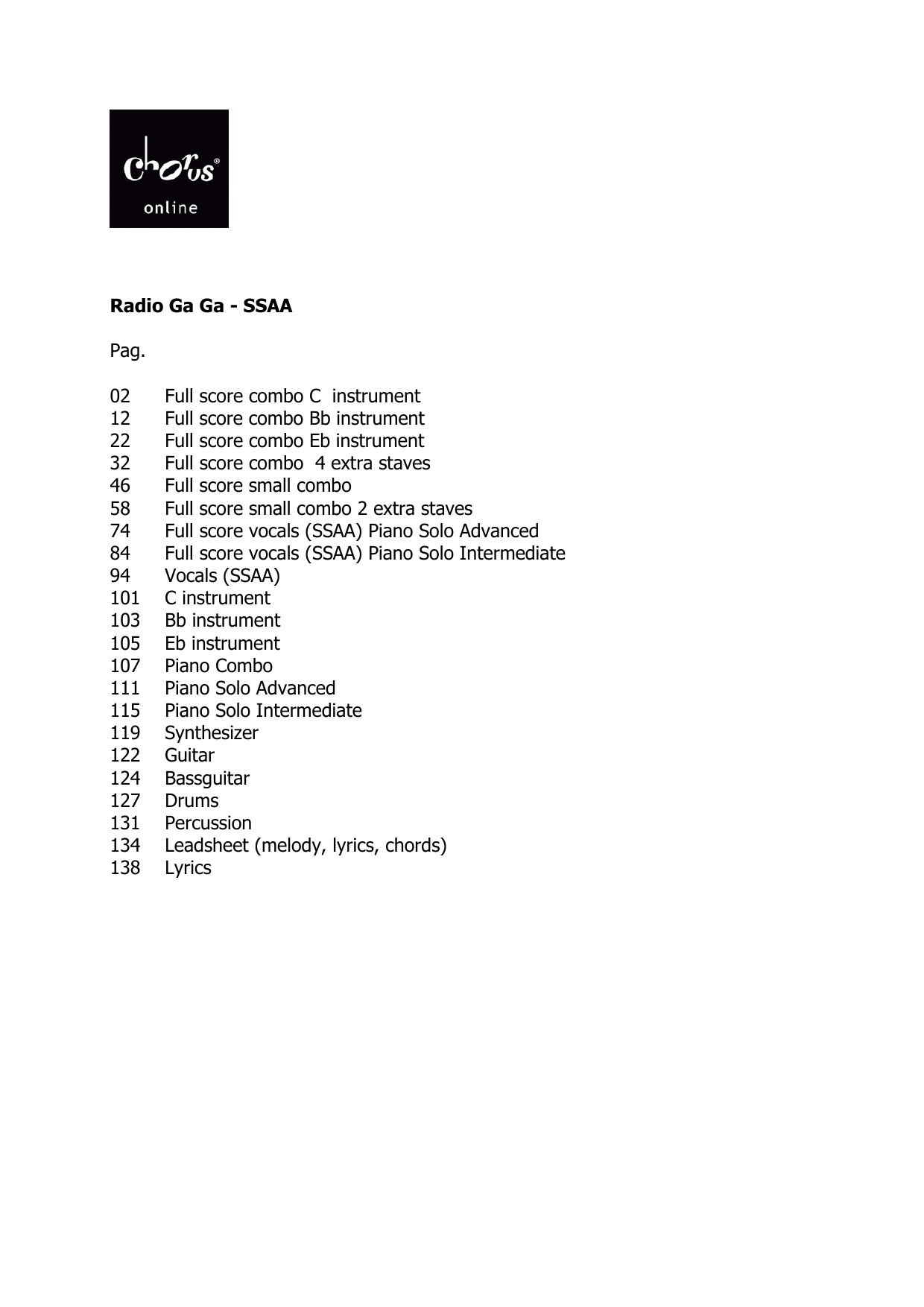
Page Count: 139
SKU: 35-DS00489780

More about this title

About the Artist: Queen

Queen redefined rock music in the 1970s and beyond by refusing to stay in one genre. Freddie Mercury's unmatched vocal range and theatrical presence, combined with Brian May's distinctive guitar work, Roger Taylor's dynamic drumming, and John Deacon's melodic bass lines, created a sound that was simultaneously grandiose and deeply musical. Their catalog spans everything from operatic arrangements to driving rock anthems, making them endlessly appealing to musicians across skill levels and ensembles.

For choral directors, Queen's music offers a masterclass in vocal writing and arrangement. Even in pop contexts, their songs demand precision, musicality, and emotional commitment from singers. "Radio Ga Ga" exemplifies this blend of accessibility and sophistication, making Queen repertoire a natural fit for choirs seeking contemporary material that respects both the singers and the audience.

Why we love this

This arrangement captures the infectious energy and stadium-ready production of the original while staying true to what makes Queen's music singable. Dirk Kokx has crafted a version that respects the harmonic sophistication underneath the pop appeal, giving your singers substantial material to work with rather than a simplified knockoff. It's a conversation starter that sounds fresh in concert without requiring your ensemble to sound like they're impersonating a rock band.

What to expect

Euphoric and propulsive. The driving pulse and layered vocals create an almost hypnotic forward motion that mirrors the original's mass appeal while the SSAA writing allows for rich harmonic textures. Singing this arrangement delivers the satisfaction of both precision and spectacle.

Who it's for

Choirs with solid rhythmic foundation and comfort with contemporary repertoire will thrive here. This works equally well for high school groups seeking a crowd pleasing showcase piece and community/college ensembles looking to program something that feels current without sacrificing musicality.

How to get the most out of it

  • Layer the rhythmic precision from the bottom up. Lock the bass line and middle voices into the pulse before asking the sopranos to carry the melody; this foundation makes the whole piece breathe together.
  • Shape the dynamics to mirror a live rock experience. The arrangement builds momentum in predictable places, so resist the urge to soften those climaxes. Let the piece swell where it wants to.
  • Balance the recorded accompaniment (if using one) so singers can hear themselves. In pop arrangements especially, singers often pull back when they hear a full track, but your audience needs to hear their voices.
  • Address the rhythmic figures that sit against the beat. Pop music often places important syllables in syncopated spots, so drill these moments separately so they feel secure rather than tentative.

How to use it

Slot this into a concert's second half where energy and momentum matter most. It pairs well with other contemporary pop arrangements or provides a high-impact bridge between classical repertoire and more experimental choral work. The 139 pages suggest this is a substantial arrangement, making it substantial enough to anchor a themed concert around modern secular songs.

Skills your students will build

  • Syncopated rhythm reading and execution
  • Harmonic blend in contemporary chord structures
  • Rhythmic independence (voices moving against the main pulse)
  • Sustaining intensity over longer phrases
  • Balance between solo and ensemble awareness

You May Also Like