Radio Ga Ga (arr. Dirk Kokx) Sheet Music Preview

Radio Ga Ga (arr. Dirk Kokx): SMATB Choral Octavo

As performed by Queen / Arranged by Dirk Kokx

Item: 35-DS00489755

Digital Download
$2.99
Description

Radio Ga Ga (arr. Dirk Kokx): SMATB Choral Octavo isn't in MakeMusic Cloud just yet...but it could be. Let us know you'd like to see it, and you'll help shape what comes next. In the meantime, start a free trial and dive into thousands of interactive titles your students can play along with today.

Sample Audio
No sample audio found.
Sample Video
Additional Details
Publisher: Hal Leonard
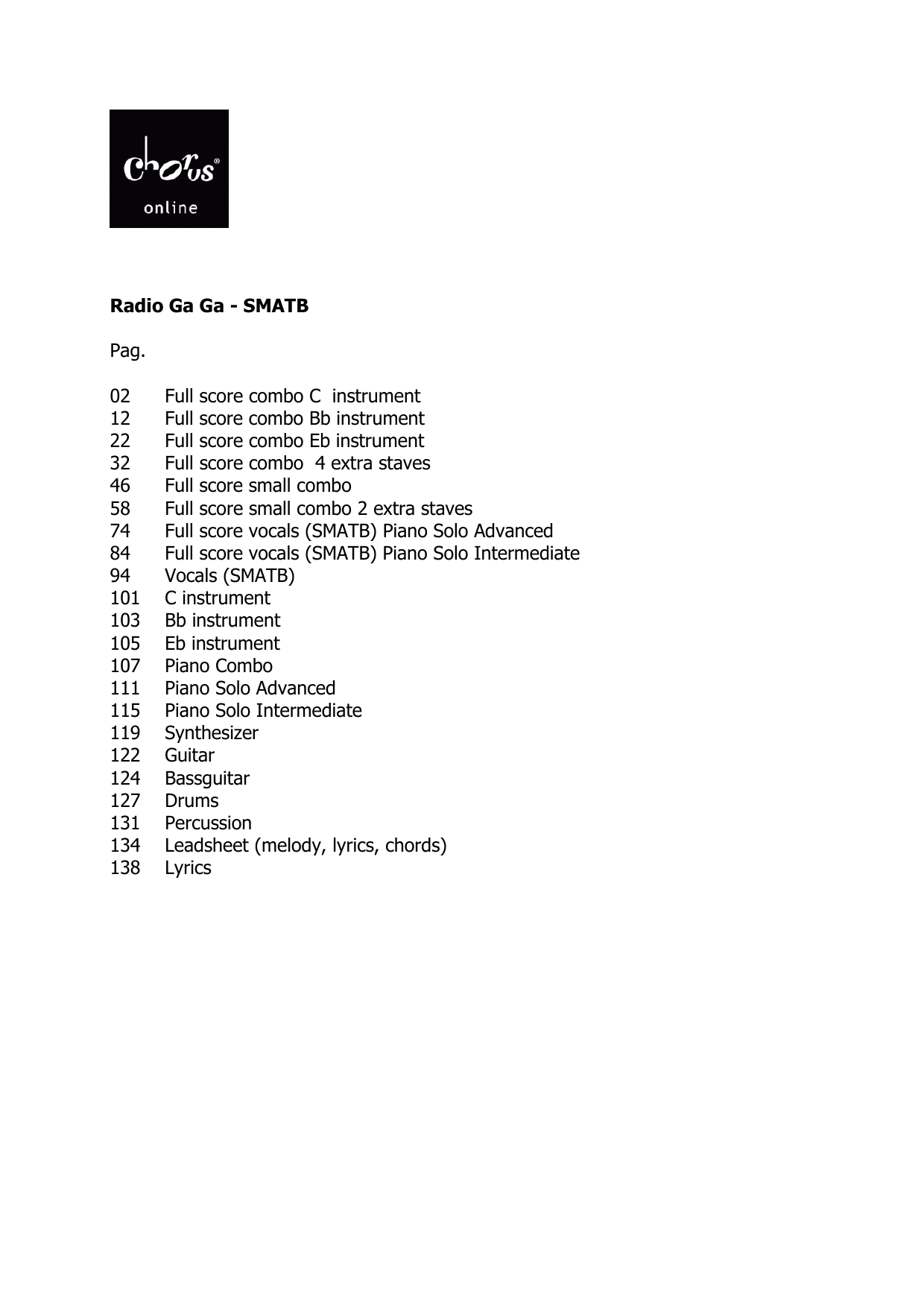
Page Count: 140
SKU: 35-DS00489755

More about this title

About the Artist: Queen

Queen redefined rock music by fusing operatic grandeur, theatrical presentation, and infectious pop sensibility. Freddie Mercury's unparalleled vocal range and the band's intricate arrangements created a sound that transcended genre boundaries, influencing generations of musicians across classical, rock, and pop worlds. Their catalog demonstrates how ambitious compositional ideas and virtuosic musicianship can achieve massive cultural impact without sacrificing artistic integrity.

For choral directors, Queen's work offers a masterclass in layering vocal lines, building tension through harmonic complexity, and understanding how melody can function at both intimate and stadium scales. Their songs translate remarkably well to ensemble settings because the compositional foundation is genuinely strong.

Why we love this

Dirk Kokx's arrangement captures the relentless energy and driving momentum of this stadium anthem while making it accessible for SMATB voicing. The 140-page score gives you room to develop distinct character and dynamic shape in each section, rewarding singers who commit to the propulsive rhythm and layered vocal textures. Programming this alongside contemporary rock or pop selections lets audiences hear how masterful orchestration and vocal writing can make a pop standard feel fresh and complex.

What to expect

Jubilant, propulsive, and celebratory. The arrangement channels the song's inherent stadium energy while creating moments of vocal interplay that feel intimate even within the larger harmonic framework. There's a buoyant confidence throughout that invites singers to lean into the rhythmic pulse and revel in the collective power of blended voices.

Who it's for

Choral ensembles seeking contemporary repertoire with genuine musical substance and strong audience appeal. This works for high school, community, and college choirs comfortable with pop idioms and eager to program something that demonstrates sophisticated arranging craft.

How to get the most out of it

  • Treat the rhythmic drive as non-negotiable. The song's power comes from precision in the syncopation and locked pulse across all four voices; any slippage in rhythm weakens the momentum considerably.
  • Shape the unison or octave passages with particular attention to breath placement and vowel consistency. These moments carry the melodic weight and must project clarity.
  • Balance the harmonic layers carefully. Secondary parts need presence without overshadowing the lead line, especially during the climactic sections where all four voices may be moving independently.
  • Emphasize the theatrical nature of the arrangement. This isn't background music; it's a performance piece that benefits from intentional dynamics, articulation, and vocal character work.

How to use it

Pair this with other contemporary pop arrangements or use it as the centerpiece of a concert exploring how theatrical rock translates to choral settings. It works equally well as a finale number that sends audiences out energized, or as a standalone set that demonstrates your ensemble's stylistic range. The extended length suggests it could anchor a pop-focused concert segment or serve as a showstopper in a mixed repertoire program.

Skills your students will build

  • Rhythmic precision in syncopated pop idioms
  • Balancing independent melodic lines within four-part harmony
  • Sustaining energy and projection through extended, driving passages
  • Interpreting theatrical vocal expression and character work
  • Coordinating harmonic blend when voices function as distinct textural layers

You May Also Like