Radetzky March: B-flat Bass Clarinet Sheet Music Preview

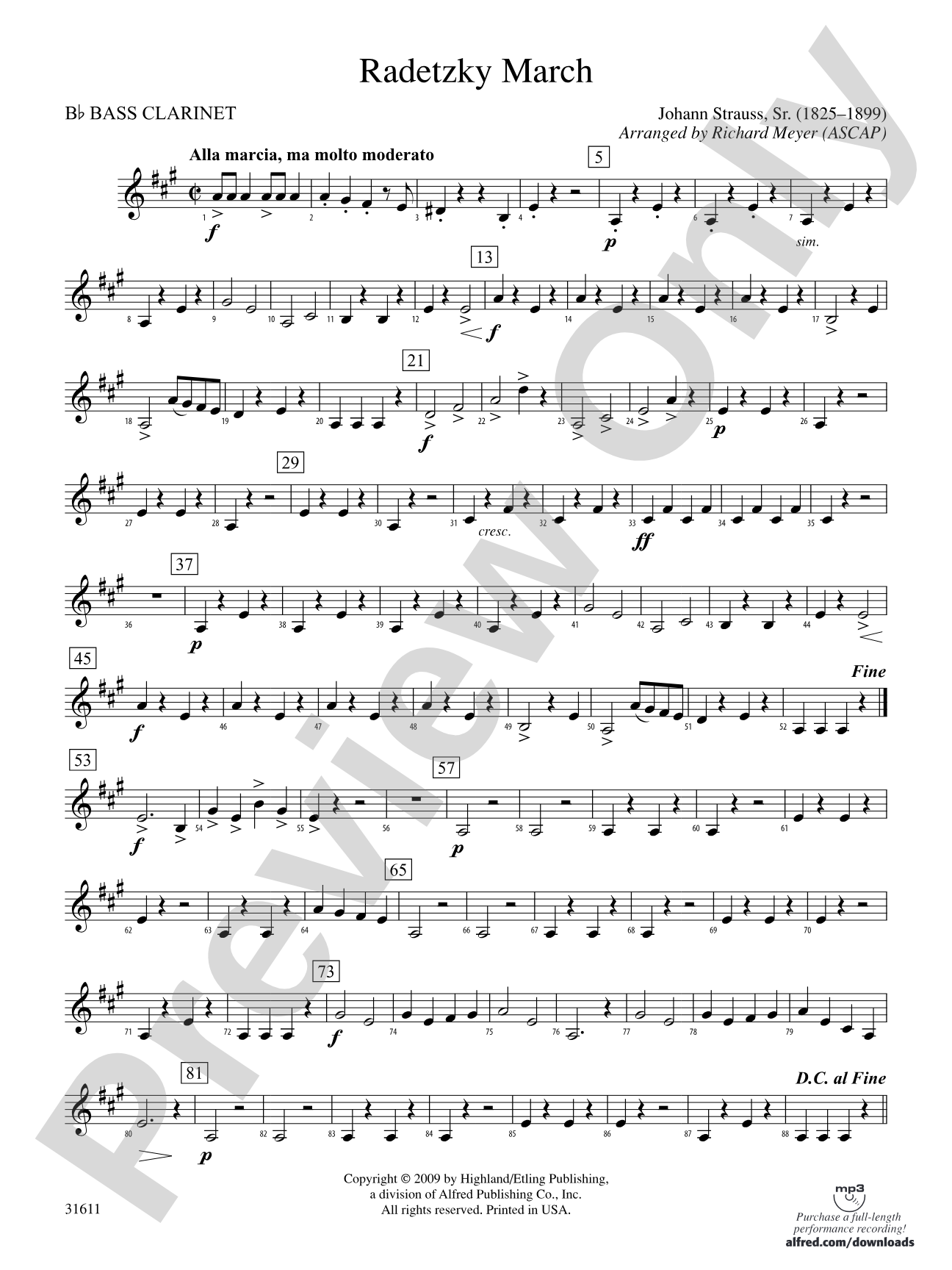
Radetzky March: B-flat Bass Clarinet

By Johann Strauss, Sr. / arr. Richard Meyer

Grade: 2

Item: 00-PC-0001774_BC

Digital Download
$3.00
Description
A perfect setting of this festive piece! Get the audience involved and carry on the great tradition of clapping and stomping along with the music. Just right for the early full orchestra experience. (3:10)

Don't just read it, hear it, play along with it, and watch your students grow with it. In MakeMusic Cloud, Radetzky March: B-flat Bass Clarinet comes alive with professional accompaniment, adjustable tempo, and built-in practice tools that turn solo practice into real progress.

Sample Audio
0:00
0:00
Sample Video
Additional Details
Series: Highland/Etling First Philharmonic
Publisher: Alfred Music
Page Count: 172
SKU: 00-PC-0001774_BC

More about this title

About the Composer: Johann Strauss

Johann Strauss (1825-1899) earned his reputation as the "Waltz King" through prolific composition and masterful orchestration. His music defined the sound of 19th-century Vienna, blending folk idioms with sophisticated harmonic language and infectious rhythmic drive.

The Radetzky March stands among his most recognizable works, written in 1848 to celebrate an Austrian military victory. Its enduring popularity in concert halls worldwide reflects both its immediate appeal and its structural brilliance, making it an ideal gateway to the Romantic orchestral repertoire for young musicians.

Why we love this

Richard Meyer's arrangement captures the unbridled energy and accessibility that make this march a perfect early-year concert opener. The Grade 2 setting gives every section meaningful material while preserving the piece's signature march character and built-in audience participation, turning a performance into a shared event rather than a formal presentation.

What to expect

Bright, energetic, and irresistibly propulsive, this march charges forward with the precision of a well-drilled ensemble and the warmth of a community celebration. The familiar tune invites listeners in immediately, creating a sense of occasion and shared joy that young musicians respond to with real enthusiasm.

Who it's for

This is an ideal first full orchestra experience for Grade 2 ensembles ready to tackle a complete conductor score and parts setup. Directors can use it confidently in their early fall programming to build ensemble cohesion and give students a taste of what serious orchestral repertoire feels like.

How to get the most out of it

  • Establish a crisp, steady tempo from the downbeat; this march thrives on rhythmic precision and forward motion. Use a clear conducting pattern to lock the ensemble together through the section entrances.
  • Encourage the audience to clap on the main beats during the familiar refrain sections. Brief the ensemble beforehand so they can play confidently while accommodating the added rhythmic layer.
  • Balance the brass and woodwind lines carefully so the melody cuts through without overpowering the harmonic support. Pay attention to dynamics in the score, especially during modulations.
  • Shape the phrases with subtle tempo elasticity at the repeat signs and transitions between sections. This prevents the march from feeling mechanical while maintaining its fundamental drive.

How to use it

Open a concert with this march to set an uplifting tone and establish immediate rapport with your audience. It also works as an effective encore that leaves listeners smiling and satisfied, or as a standalone festival piece that showcases your orchestra's musicianship without demanding an extended rehearsal commitment.

Skills your students will build

  • Reading from conductor score and individual parts simultaneously
  • Sectional balance and blend in a multi-part texture
  • Rhythmic precision and sustaining tempo through full ensemble entrances
  • Responding to audience participation without losing musical focus
  • Shaping dynamic and tempo changes across a multi-section form

You May Also Like