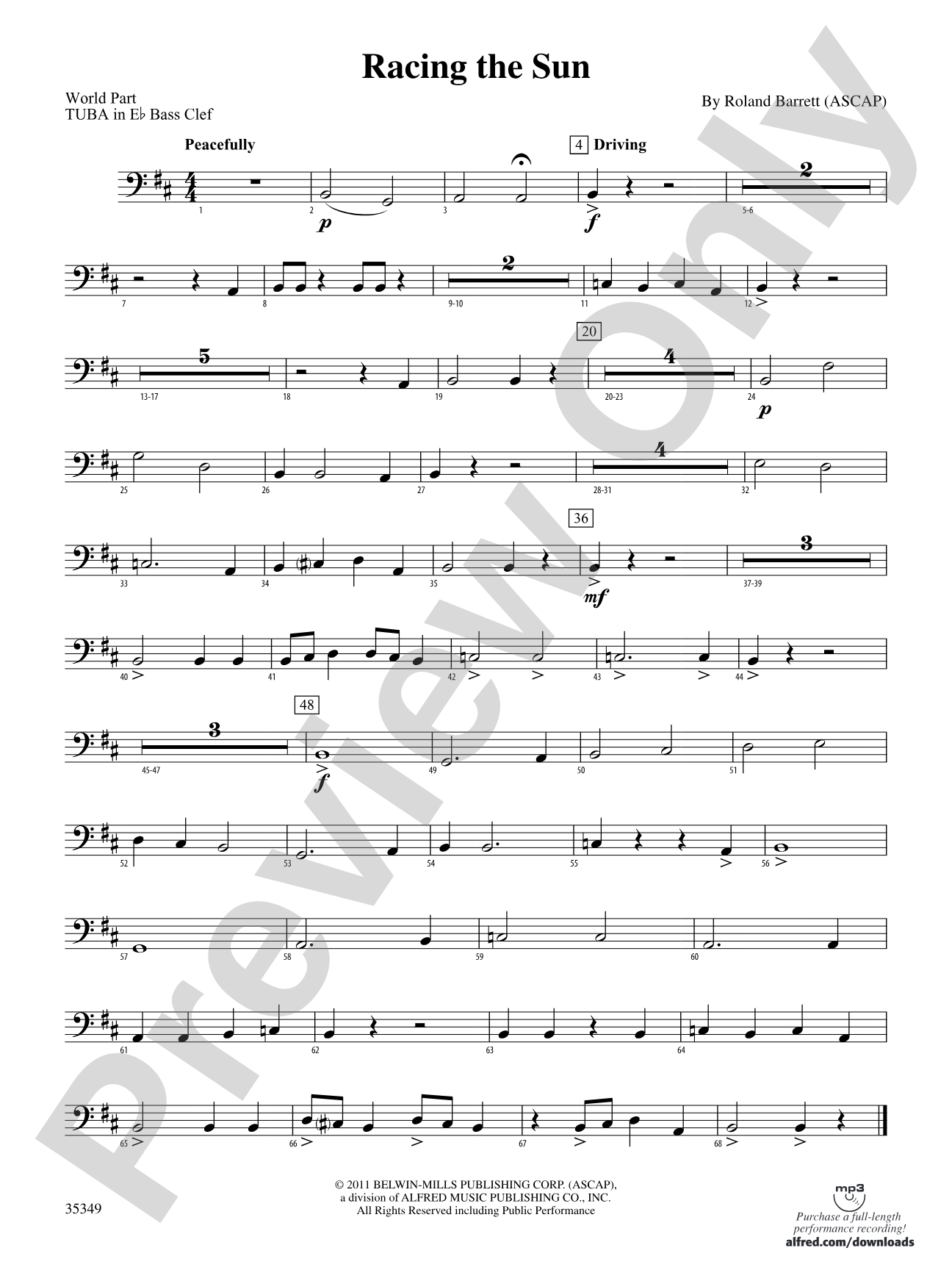
Racing the Sun: (wp) E-flat Tuba B.C. Sheet Music Preview

Racing the Sun: (wp) E-flat Tuba B.C.

By Roland Barrett

Grade: 1 (Very Easy)

Item: 00-PC-0014904_wpTBEBC

Digital Download
$3.00
Description
The inspiration for Racing the Sun comes from a phrase used by solar-powered car enthusiasts to describe the act of piloting their exotic vehicles. Employing a variety of styles and textures, this original Roland Barrett work will capture the imagination of students and listeners alike. A charming musical depiction! This title is available in MakeMusic Cloud.

Don't just read it, hear it, play along with it, and watch your students grow with it. In MakeMusic Cloud, Racing the Sun: (wp) E-flat Tuba B.C. comes alive with professional accompaniment, adjustable tempo, and built-in practice tools that turn solo practice into real progress.

Sample Audio
0:00
0:00
Sample Video
Additional Details
Series: Belwin Beginning Band
Publisher: Alfred Music
Page Count: 144
SKU: 00-PC-0014904_wpTBEBC

More about this title

About the Composer: Roland Barrett

Roland Barrett

Roland Barrett has spent over two decades shaping young musicians and developing original compositions for student ensembles. His tenure as Assistant Director of Bands informed a deep understanding of what works pedagogically; he brought that insight to the University of Oklahoma's music theory and composition faculty, where he teaches both undergraduate and graduate students and directs the arranging work for the Pride of Oklahoma marching band.

With more than two hundred published works for symphonic band, chamber groups, and marching ensembles, Barrett has earned national recognition through performances by All-State and All-Region honor bands, features on NPR and national conventions, and multiple ASCAP awards. His compositions balance accessibility with musical substance, a hallmark that makes his writing particularly valuable for student performers.

Why we love this

Grade 1 repertoire often settles for simple or forgettable; Racing the Sun refuses to. Barrett draws from a vivid real-world image—solar-powered vehicles racing light itself—and translates that energy into orchestration and style shifts that hold young musicians' attention while staying within their technical reach. Conductors report genuine engagement from their sections because the writing feels purposeful, not condescending.

What to expect

Bright, energetic, and imaginative. The music evokes motion and light without becoming frantic; instead it offers musical snapshots—textures and moods that shift and evolve. There's a sense of forward momentum paired with moments of reflection, much like watching something race toward the horizon.

Who it's for

Beginning band conductors seeking concert or festival repertoire that captures student imagination without requiring virtuosic technique. The Grade 1 level suits first-year ensembles or any group new to the fundamentals of concert band literature.

How to get the most out of it

  • Emphasize the tempo shifts that accompany style changes; use a clear preparatory gesture so the ensemble recognizes each transition as an intentional design choice rather than a conductor hesitation.
  • Balance the variety of textures by adjusting blend and weight among sections. When lighter instrumental colors emerge, bring down the overall dynamic so new voices register clearly to the listener.
  • Shape the phrasing in longer lines even at this grade level. Young players respond well to conducting with intention; show them where phrases breathe and build.

How to use it

Open a fall or winter concert with this piece to establish an accessible yet engaging tone for the audience. The vivid imagery and variety of styles also make it well-suited to festival competition, where judges appreciate original works that challenge young players to think musically rather than technically.

Skills your students will build

  • Responding to distinct style and texture changes within a single work
  • Maintaining ensemble balance across different instrumental sections and dynamics
  • Playing sustained lines and quarter-note passages with consistent tone quality
  • Following conductor cues for tempo and stylistic transitions
  • Interpreting a composer's musical story through expression rather than technique

You May Also Like