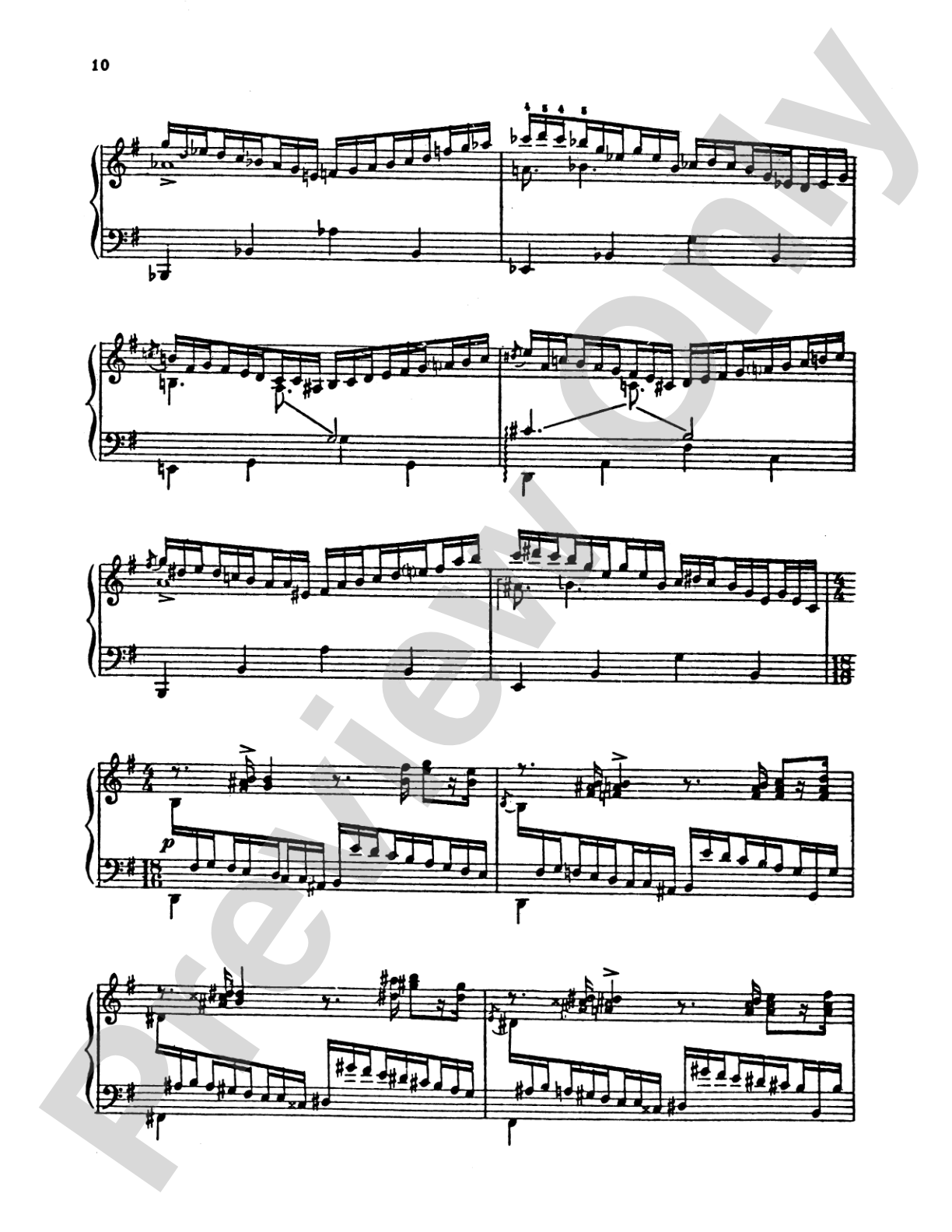
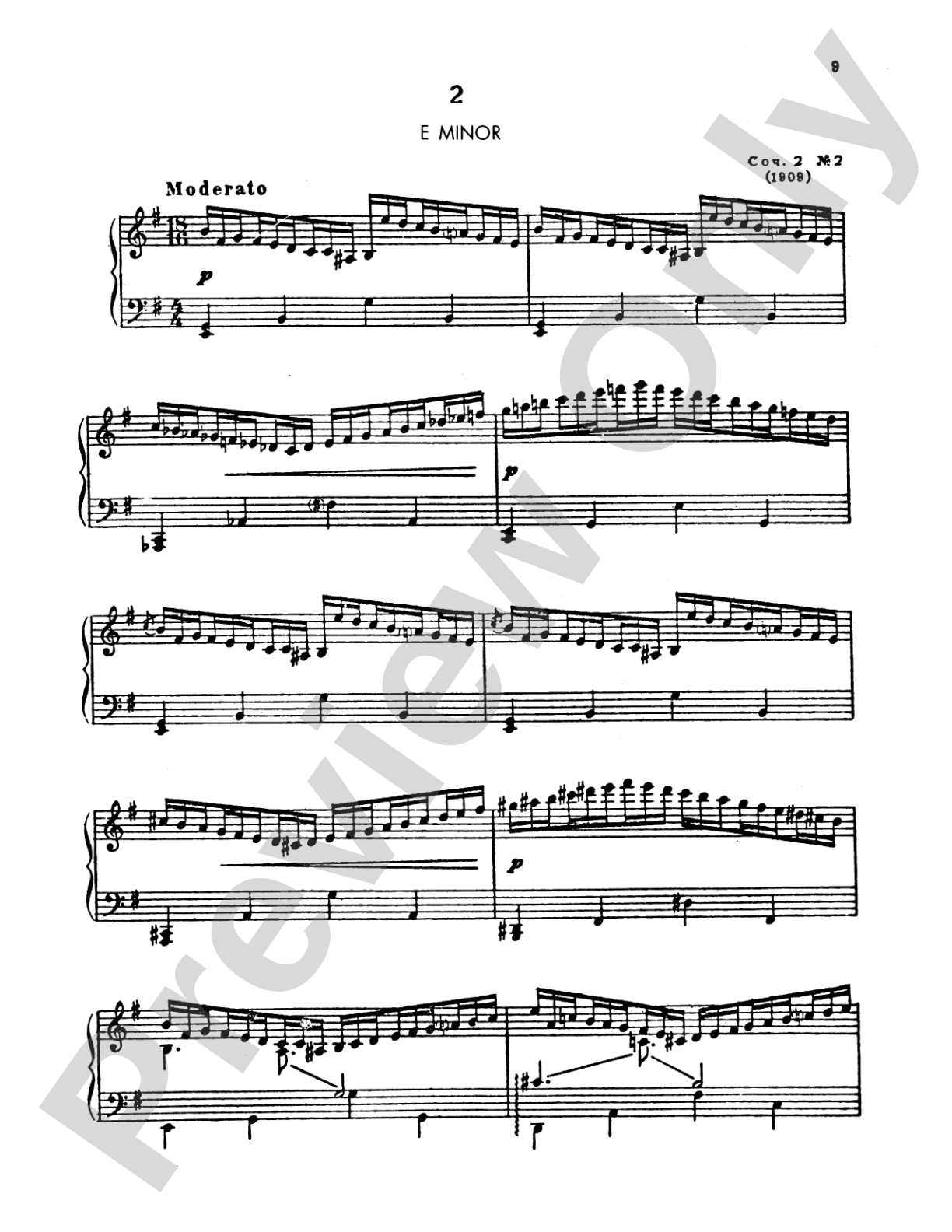
Rachmaninoff: Piano Solos (Volume I) Sheet Music Preview

Rachmaninoff: Piano Solos (Volume I)

By Sergei Prokofiev

Item: 00-PC-0011171

Digital Download
$0.99
Description
Contents: Opus 2, Four Etudes for Piano * Opus 3, Four Etudes for Piano * Opus 4, Four Pieces for Piano * Opus 11, Toccata in C Major for Piano.

Don't just read it, hear it, play along with it, and watch your students grow with it. In MakeMusic Cloud, Rachmaninoff: Piano Solos (Volume I) comes alive with professional accompaniment, adjustable tempo, and built-in practice tools that turn solo practice into real progress.

Sample Audio
No sample audio found.
Sample Video
Additional Details
Series: Kalmus Edition
Publisher: Alfred Music
Page Count: 72
SKU: 00-PC-0011171

More about this title

About the Composer: Sergei Rachmaninoff

Sergei Rachmaninoff (1873-1943) stands as one of the most significant Russian composers of the late 19th and early 20th centuries. A virtuoso pianist himself, he brought the technical and expressive demands of the concert stage directly into his compositional voice, particularly in his keyboard writing. His early works reveal a composer deeply influenced by the Romantic tradition while forging a distinctly modern harmonic language.

Rachmaninoff's piano compositions remain central to the solo repertoire because they demand and develop genuine artistry. His etudes and character pieces bridge the gap between technical studies and concert works, requiring performers to master both mechanical precision and profound musical expression. Educators value these works for their ability to stretch advanced students across all dimensions of pianism: technique, interpretation, and musical maturity.

Why we love this

This collection captures Rachmaninoff at his most structurally inventive and emotionally direct. The early opuses showcase a composer unafraid to demand absolute technical command while maintaining the lyrical, songlike quality that defines his voice. Advanced pianists will find these works both deeply rewarding to master and essential to understanding how 20th-century pianism evolved from Romantic foundations.

What to expect

These early Rachmaninoff works inhabit a world of Romantic grandeur filtered through a modern sensibility. Sumptuous harmonies and soaring melodic lines coexist with restless energy and moments of stark, searching introspection. Playing them demands both aristocratic refinement and raw emotional honesty.

Who it's for

Advanced pianists preparing for competition, recital, or conservatory repertoire requirements will find essential challenges here. This collection suits serious students working toward performance maturity and teachers seeking substantial works that combine technical rigor with genuine artistic depth.

How to get the most out of it

  • Approach the Toccata's rapid figurations as singing lines rather than mechanical exercises; Rachmaninoff's velocity always serves melodic or harmonic purpose, never decoration alone.
  • Balance the dense chromatic harmony in the etudes by clarifying voice leading through subtle pedal changes and voicing choices; let the architecture emerge naturally from how you shape each phrase.
  • Attend to the score's precise dynamic markings and tempo indications as compositional decisions, not suggestions; Rachmaninoff's notation is deliberate and reveals his conception of form and drama.
  • Develop independence in both hands by practicing the etudes slowly with separate hands longer than you might expect; these pieces expose any weakness in technical foundation immediately.

How to use it

Program individual pieces from this collection on recitals featuring Russian or early 20th-century repertoire, pairing them with Scriabin, Medtner, or contemporary works. The Toccata makes a particularly striking concert opener or finale, while the etudes work well in a thematic program exploring the etude as art form.

Skills your students will build

  • Rapid passagework and velocity control across the keyboard
  • Chromatic harmony recognition and voice leading in dense textures
  • Independent hand technique and coordination in contrasting figurations
  • Large-scale structure and phrasing in multi-movement works
  • Pedaling for harmonic clarity and sustain in Romantic-era writing
  • Interpretation of detailed dynamic and tempo markings as compositional intent

You May Also Like