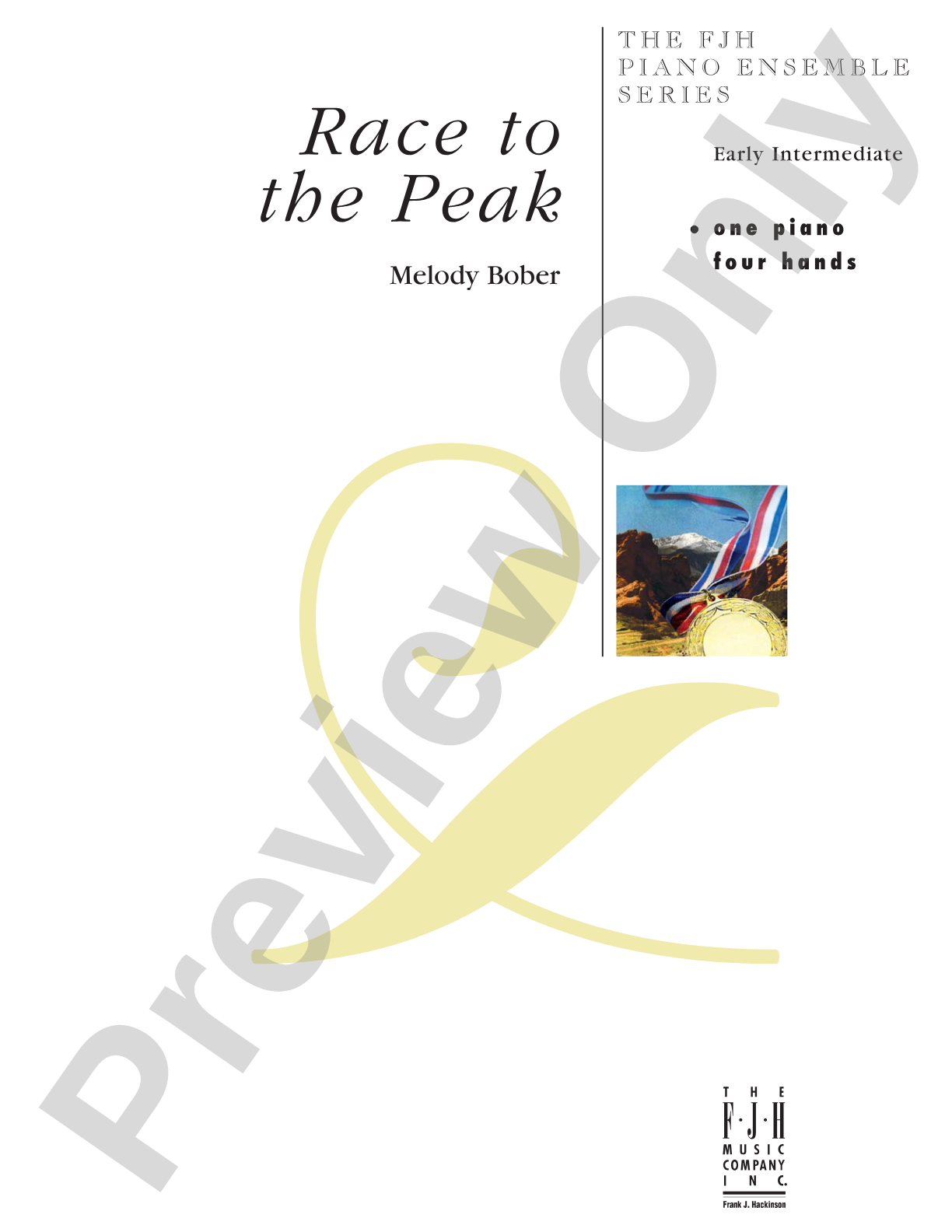
Race to the Peak is an energized, high-speed duet that explores the full range of the piano. Written in the key of D minor, this piece contains a quick rhythmic tempo with easy to learn patterns, a catchy melody in the primo part, often played in unison by both hands, and a variety of accompaniment patterns in the secondo part. Students will definitely be enthusiastic to practice and perform this duet with accuracy and speed!
Discover MakeMusic Cloud: thousands of interactive titles your students can play along with today.
Melody Bober holds degrees in music education from the University of Illinois at Urbana-Champaign and in piano performance from Minnesota State University, Moorhead. Her teachers shaped her approach to composition and pedagogy: Joel Shapiro and Andrew Froelich (piano), Mary Hoffman (music education), and Tony Caramia (jazz) all influenced her development as both performer and creator.
Bober has built a distinctive career bridging studio teaching, public school instruction, university-level work, and church music. She has conducted clinics and presented new works at piano teacher conventions across North America, earning recognition for her ability to craft pieces that genuinely motivate students. Beyond her private studio in Minnesota, Bober serves as an active church pianist and accompanist, bringing nearly two decades of public school teaching experience to her compositional voice.
Why we love this
Bober writes duets that students actually want to practice. The catchy unison melody in the primo part gives the piece instant appeal, while the rhythmic accompanying patterns in the secondo engage the other player fully. The combination of high energy and learnable material means pairs stay motivated through rehearsal and produce performances that sound polished and exciting.
What to expect
Propulsive and exhilarating, with a sense of momentum from start to finish. The D minor tonality gives it edge and drive, while the quick rhythmic patterns and full-range exploration create a feeling of racing upward, matching the title's energy perfectly.
Who it's for
Duet partners at the early intermediate to intermediate level who thrive on high-energy repertoire and want pieces that sound impressive without requiring years of collaborative experience. This works well for students who learn faster through rhythm and repetition and who respond to contemporary, motivating writing.
How to get the most out of it
Establish the tempo together before diving in. The quick rhythmic pace requires both players locked into the same pulse from measure one. Count off or use a metronome to nail the starting tempo.
Balance the melody with accompaniment; the primo player should sing through the unison passages while the secondo player keeps rhythmic patterns clean and steady underneath.
Practice hands separately on the primo part first to solidify the unison patterns, then combine. This builds confidence before adding the accompanying layer.
Rehearse the full range transitions together. The piece explores the keyboard width, so mark where each hand crosses into different registers and secure those shifts in a slow run-through.
How to use it
This duet energizes a student recital or studio showcase, especially if you need a piece that demonstrates ensemble playing without requiring an orchestra or band. Program it alongside slower or lyrical works to show range and maintain audience engagement.
Skills your students will build
Ensemble synchronization and pulse awareness
Reading rhythmic patterns at faster tempos
Navigating full-range keyboard movement
Balancing melody and accompaniment textures
Building speed and accuracy in passage work
You May Also Like
Scan to Complete Your Purchase
Use your phone's camera to scan the code below
You'll log in on your phone and the order will be added to your account