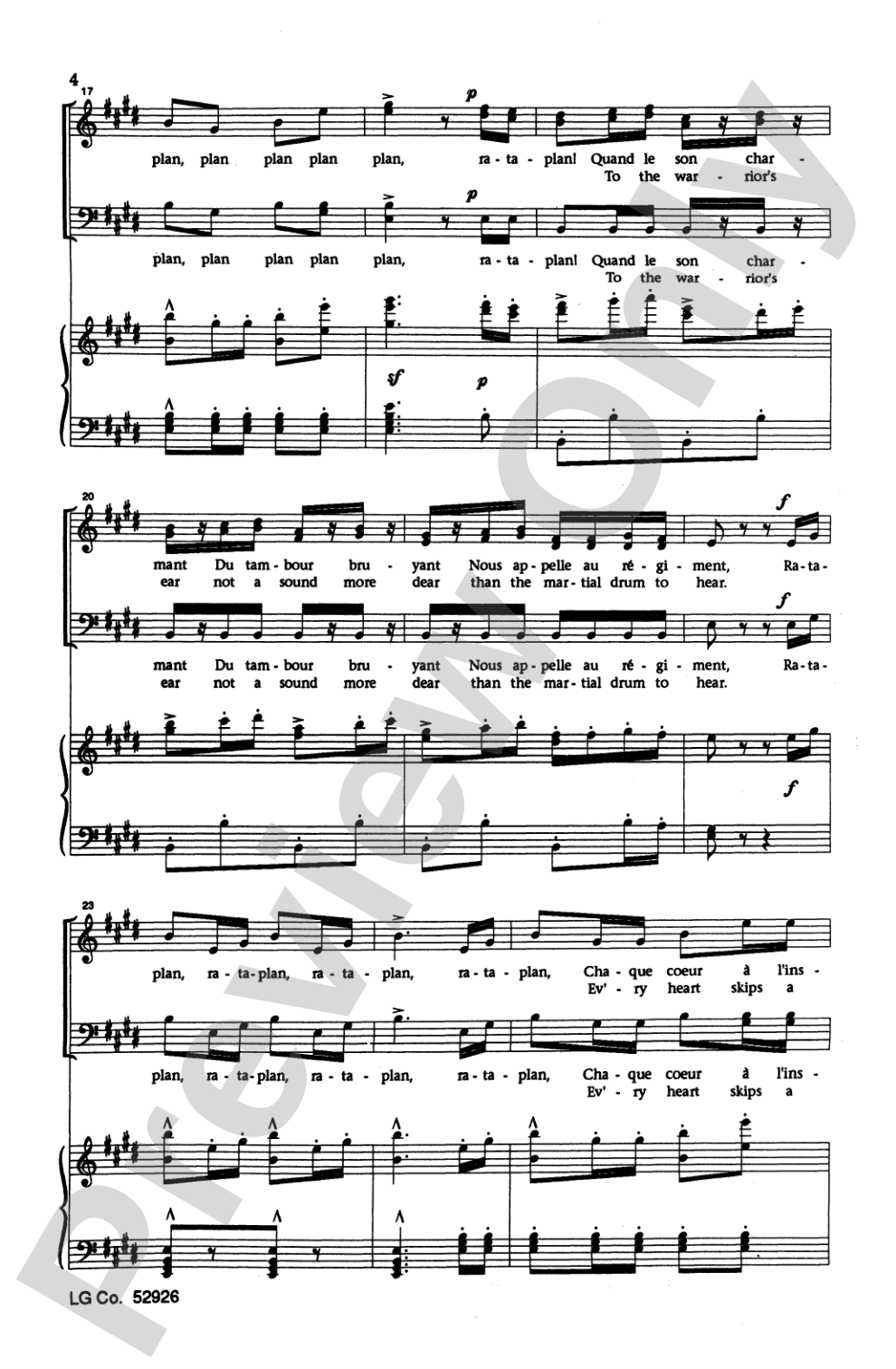
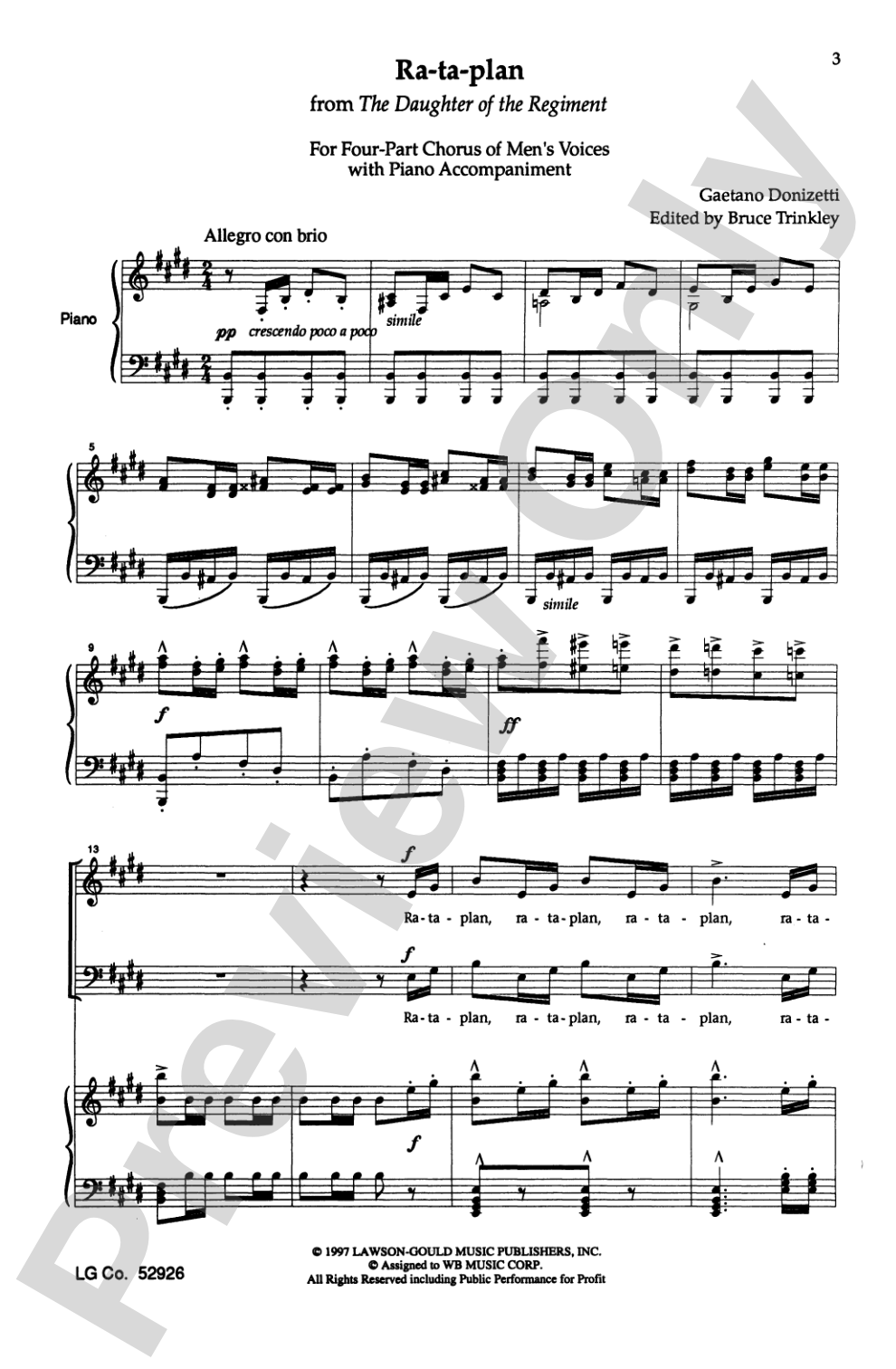
Ra-ta-plan Sheet Music Preview

Ra-ta-plan: TTBB Choral Octavo

By Gaetano Donizetti / ed. Bruce Trinkley

Item: 00-PO-0006790

Digital Download
$2.25

Minimum order quantity: 20 copies

Description

Ra-ta-plan: TTBB Choral Octavo isn't in MakeMusic Cloud just yet...but it could be. Let us know you'd like to see it, and you'll help shape what comes next. In the meantime, start a free trial and dive into thousands of interactive titles your students can play along with today.

Sample Audio
No sample audio found.
Sample Video
Additional Details
Series: Lawson-Gould
Publisher: Alfred Music
Page Count: 12
SKU: 00-PO-0006790

More about this title

About the Composer: Gaetano Donizetti

Gaetano Donizetti (1797-1848) was one of the most prolific opera composers of the Romantic era, creating over 70 works for the stage alongside a substantial body of sacred and secular vocal music. His gift for melody and dramatic expression made him a contemporary of Rossini and Bellini, and his influence on 19th-century opera remains profound.

Beyond his famous operas, Donizetti composed numerous choral works that showcase his mastery of ensemble writing and his ability to blend lyrical beauty with textural clarity. These pieces reveal a composer equally comfortable working in smaller forms and demonstrate why his music continues to resonate in rehearsal rooms and concert halls.

Why we love this

This piece captures Donizetti's gift for creating memorable melodies that sit comfortably in men's voices while maintaining genuine harmonic interest. The rhythmic vitality and character work naturally with TTBB voicing, giving singers material that feels both singable and dramatically engaging.

What to expect

Energetic and characterful, with the rhythmic drive and melodic generosity you'd expect from an opera composer working in the choral realm. The piece has theatrical flair without demanding operatic performance technique, inviting singers to engage with Donizetti's gift for memorable lines and forward motion.

Who it's for

TTBB choirs with solid intonation and basic part independence. This work suits collegiate, community, and advanced high school ensembles ready to explore the operatic tradition in choral literature. It's an accessible entry point into Romantic-era secular choral writing.

How to get the most out of it

  • Establish the rhythmic character early in rehearsal. The piece's vitality depends on crisp articulation and unified diction; mark the attacks and releases clearly before focusing on blend.
  • Balance the homophonic passages against moments where the voices separate. The shift between chordal writing and independent lines needs intention to avoid sounding thick or muddy.
  • Shape phrases with awareness of where the melody sits. Ensure the primary melodic line projects without forcing, especially if it moves between voice parts across the section.
  • Approach the text with character and humor. Donizetti's secular works often contain wit and lightness; let that energy inform your interpretation rather than singing it straight.

How to use it

Use this as a lighter, character-driven contrast to heavier choral literature or sacred works. It works well in an all-Donizetti concert segment, in a program exploring Romantic-era secular choral writing, or as a showcase for TTBB repertoire in a mixed ensemble setting.

Skills your students will build

  • Reading Romantic-era harmony and voice leading in TTBB texture
  • Balancing independent melodic lines across the ensemble
  • Maintaining rhythmic precision and energy in homophonic sections
  • Coordinating text and musical character in secular choral work

You May Also Like