
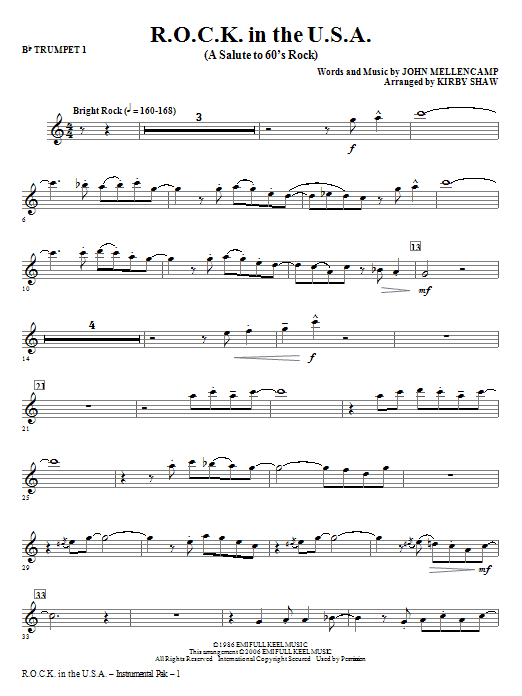

R.O.C.K. In The U.S.A. (A Salute To 60's Rock): Choral Instrumental Pak
By John Mellencamp / Arranged by Kirby Shaw
Item: 35-PK00029164
$30.00
Pickup currently not available
Buy Extra Parts (Digital PDF Download)
Parts Added to Cart!
Description
All the power of rock roll explodes in this John Mellencamp powerhouse salute to the music of an earlier time. A great concert theme and dance showcase. Performance Time: Approx. 2:20.


R.O.C.K. In The U.S.A. (A Salute To 60's Rock): Choral Instrumental Pak isn't in MakeMusic Cloud just yet...but it could be. Let us know you'd like to see it, and you'll help shape what comes next. In the meantime, start a free trial and dive into thousands of interactive titles your students can play along with today.
Request This Title
Tell us you want it.
Start Your Free Trial
Explore everything that's ready to play right now.
Sample Audio
No sample audio found.
Sample Video
No sample videos found.
Additional Details
Publisher:
Hal Leonard
SKU:
35-PK00029164
More about this title
About the Composer: John Mellencamp
John Mellencamp has spent decades crafting anthems that capture the spirit of American rock and roll. His songwriting balances raw energy with genuine storytelling, earning him recognition as one of rock's most enduring voices since the 1970s. For music educators, his work offers accessible yet substantial material that resonates with students while maintaining artistic credibility.
Mellencamp's influence on popular music extends to how he approaches nostalgia and cultural reflection. His ability to honor the past while creating something vital in the present makes his compositions valuable teaching tools for understanding both rock history and contemporary songwriting craft.
Why we love this
This arrangement captures everything that makes rock concerts memorable: infectious grooves, layered harmonies, and moments built for genuine audience connection. Kirby Shaw's orchestration respects Mellencamp's original vision while opening the piece to smaller ensembles, making a stadium-ready concept accessible to your actual resources. The two-minute-twenty runtime fits perfectly into concert programming without demanding rehearsal time that outpaces the payoff.
What to expect
The performance thrums with the confidence of a band that knows exactly what it's doing. You hear the swagger of 1960s rock refracted through Mellencamp's mature perspective, which creates something both familiar and unmistakably his own. This isn't ironic or campy; it's a genuine celebration delivered with full conviction.
Who it's for
Concert choirs of any size who want a contemporary rock piece with genuine substance, not novelty arrangements. This works equally well for singers developing comfort with popular music and for musicians who live in rock idiom and deserve serious repertoire. Directors seeking a show closer that sends audiences out energized will find everything they need here.
How to get the most out of it
- Lock the rock pocket early in rehearsal; once your ensemble owns the rhythmic foundation, the vocals and harmonies sit naturally. Don't chase tempo variations that pull the groove off center.
- Balance the lead voice against supporting parts so the melody cuts through the full arrangement. Soloists need space, but this is an ensemble piece first.
- Treat dynamics as storytelling. The build from verse to chorus works because players and singers commit to the quiet moments before the explosion.
- Let the accompaniment breath where Mellencamp's phrasing allows. Stopping for a beat isn't laziness; it's permission to hit the next section harder.
How to use it
Program this as your concert finale if you want to send the audience home with their energy up and conversations already starting in the lobby. It pairs well with other pop or rock selections but also stands apart effectively after classical or art song material, providing genuine stylistic contrast. Save it for later in the year once your ensemble's musicianship is solid enough to handle contemporary idiom without sounding tentative.
Skills your students will build
- Maintaining consistent groove and pulse in contemporary ensemble music
- Balancing lead and supporting vocal lines in rock voicings
- Interpreting dynamic contrast as expressive storytelling rather than volume alone
- Coordinate rhythmic precision with stylistic freedom in rock arrangements