
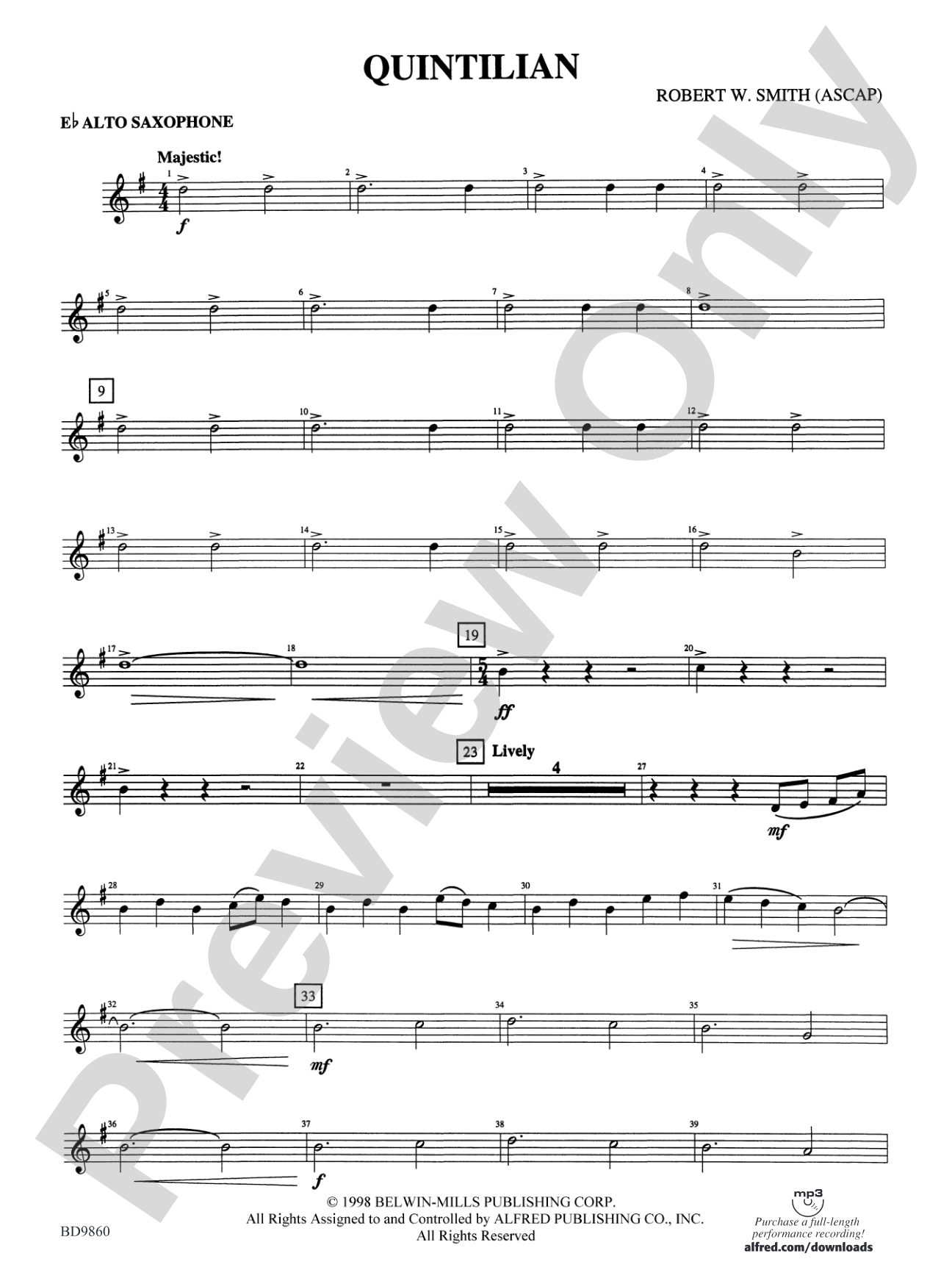

Quintilian: E-flat Alto Saxophone
By Robert W. Smith
Grade: 1 (Very Easy)
Item: 00-PC-0002088_AX1
$3.00
Pickup currently not available
Description
Quintilian was inspired by the work of the ancient Roman philosopher and educator of the same name, who set forth the original seven liberal arts as the ideal curriculum for educated citizens. After a stirring Roman style fanfare, Mr. Smith uses a quintal theme in both harmony and rhythm to propel the work through its development to a highly dramatic conclusion. This work deserves your close attention! Riveting. (2:38)


Don't just read it, hear it, play along with it, and watch your students grow with it. In MakeMusic Cloud, Quintilian: E-flat Alto Saxophone comes alive with professional accompaniment, adjustable tempo, and built-in practice tools that turn solo practice into real progress.
Open in the Player
Jump straight in and assign it today.
Start Your Free Trial
Open this title and explore the full library in minutes.
Sample Audio
1
Audio File
--:--
0:00
0:00
Sample Video
No sample videos found.
Additional Details
Series:
Belwin Beginning Band
Publisher:
Alfred Music
Page Count:
230
SKU:
00-PC-0002088_AX1
More about this title
About the Composer: Robert W. Smith

Robert W. Smith stands among America's most frequently performed composers for concert band and orchestra, with more than 400 published works to his credit. He earned a Bachelor's degree in Music Education from Troy State University in Alabama and a Master's degree in Music from the University of Miami, training that informs both the accessibility and sophistication of his writing.
Smith's original compositions have circulated globally, from concert halls across North America and Europe to stages in Australia, Asia, and beyond. His orchestral symphonies The Divine Comedy and The Odyssey have become touchstones in the repertoire, while works like The Tempest have established themselves as standards for developing ensembles. Beyond the concert hall, his music has been featured on major television broadcasts, Olympic ceremonies, and ceremonial occasions ranging from state visits to opening day celebrations at professional sports venues.
Why we love this
Smith knows exactly how to write for beginning bands without resorting to simplification that strips away musicality. Quintilian opens with an arresting Roman fanfare and builds forward momentum through a quintal harmonic idea that players at this level find both accessible and genuinely satisfying to execute. The programmatic anchor (connecting to classical education and the liberal arts) gives your students something concrete to think about beyond the notes on the page.
What to expect
Quintilian opens with ceremonial grandeur rooted in ancient Rome, then propels forward with propulsive harmonic energy built from quintal sonorities. The piece balances structural clarity with dramatic engagement, rewarding careful listening and disciplined ensemble execution throughout its brief span.
Who it's for
Beginning concert bands seeking literature that respects their developing musicianship while offering genuine artistic substance. This works for school ensembles at the Grade 1 level and also serves as a confident closer or opening piece for community bands building repertoire that doesn't patronize the players.
How to get the most out of it
- Set the fanfare with ceremonial weight and precise rhythmic clarity; this opening establishes the piece's architectural confidence and signals to the audience what kind of experience awaits.
- Balance the quintal theme across sections so the harmonic identity emerges clearly; resist letting any one section dominate, especially in early rehearsals when parts may still be insecure.
- Shape the development section with long-line awareness even at moderate tempos; Smith builds intensity through texture and layering rather than speed alone.
- Prepare for the dramatic conclusion by drilling the rhythmic precision it demands; the payoff comes from collective tightness and unified dynamic control.
How to use it
Program this as a concert opener to establish energy and focus immediately, or use it as a finale to a program celebrating classical themes or interdisciplinary learning (pairing well with humanities curriculum units). The 2:38 duration makes it ideal for pacing a mixed-repertoire concert without consuming performance real estate.
Skills your students will build
- Playing quintal harmonies with intonation precision
- Executing fanfare rhythms with coordinated articulation across the full ensemble
- Sustaining long phrases at developing band level without loss of focus
- Responding to dramatic dynamic and textural shifts
- Maintaining rhythmic integrity during developmental passages