
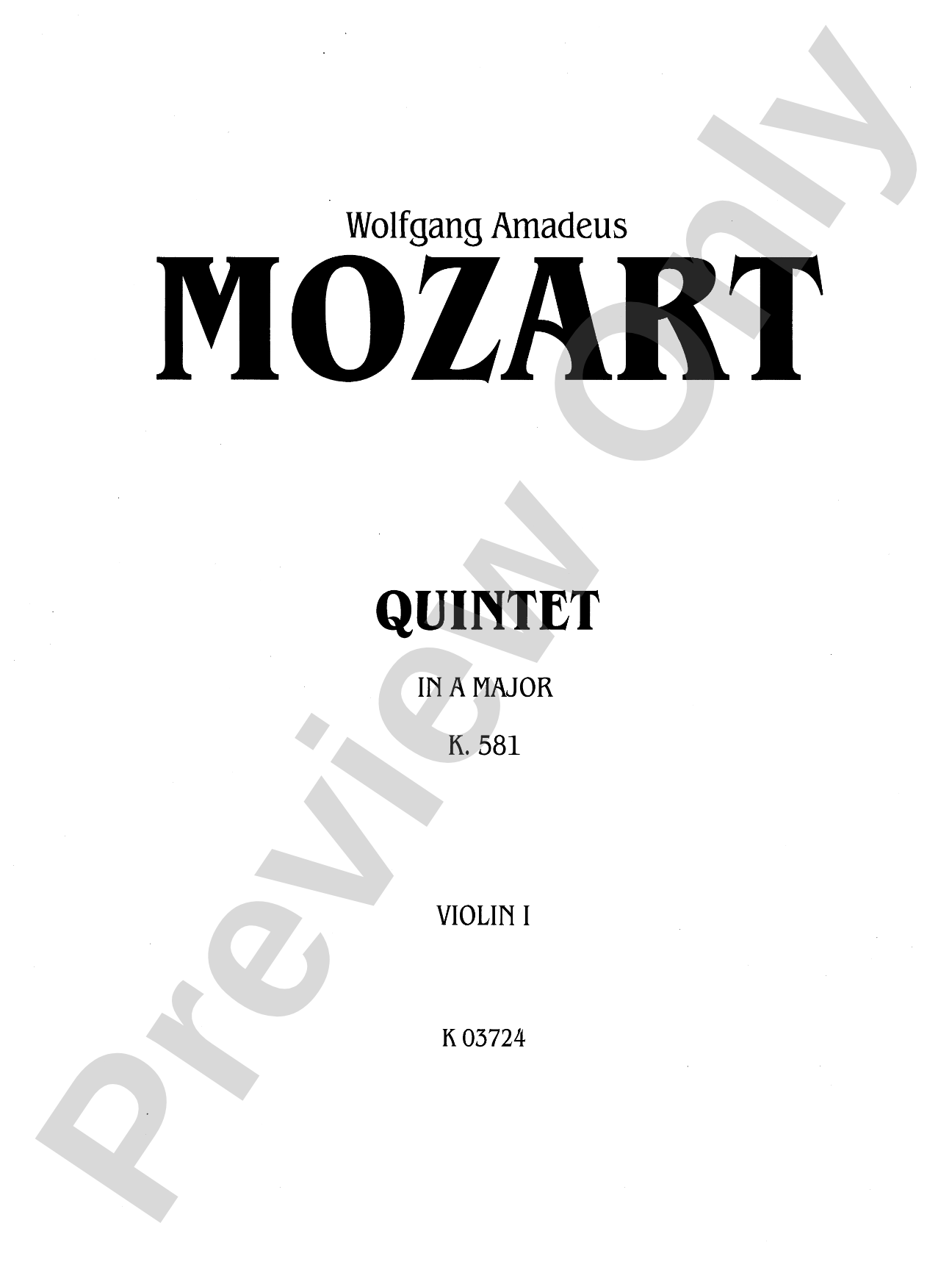
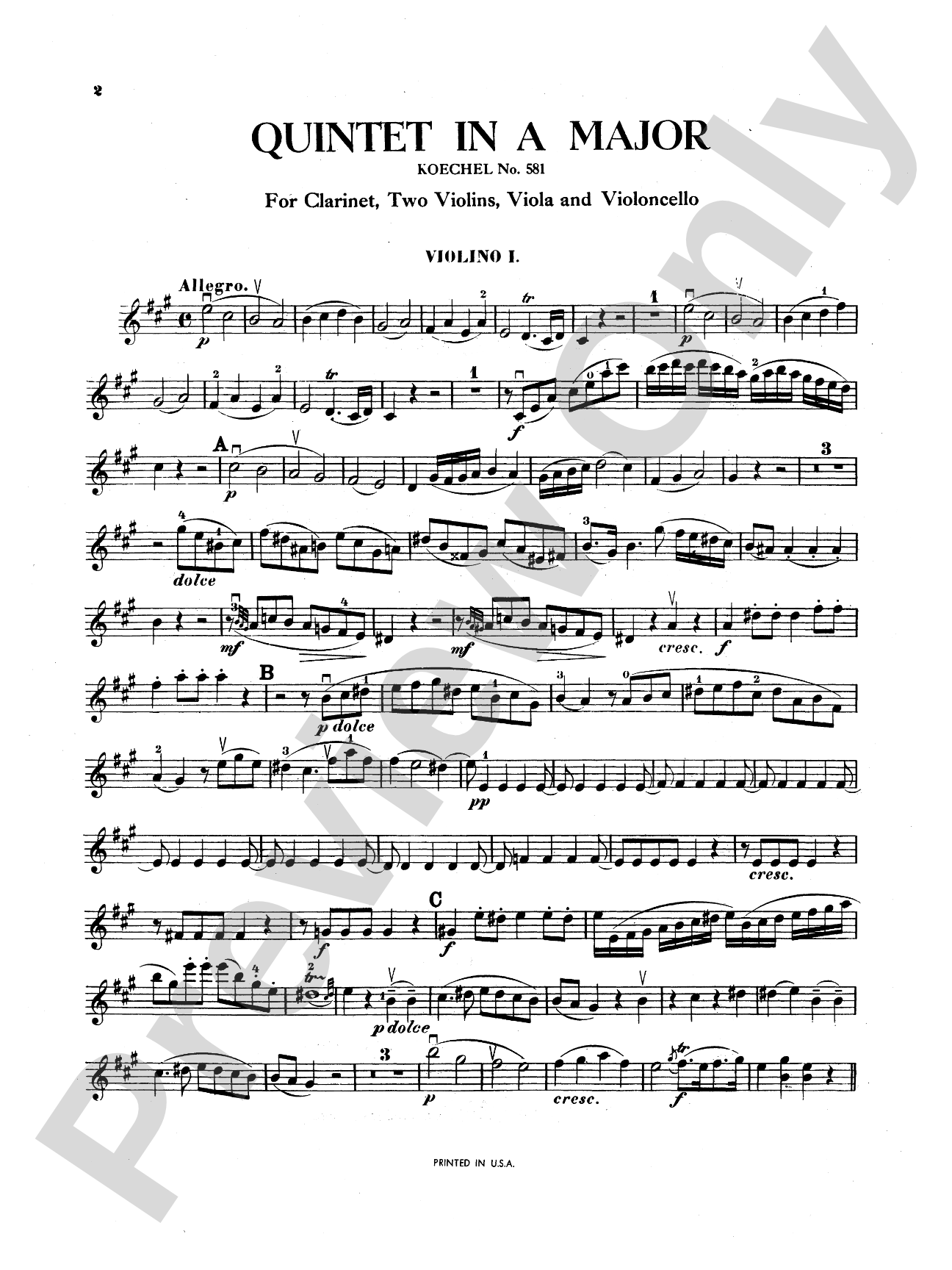
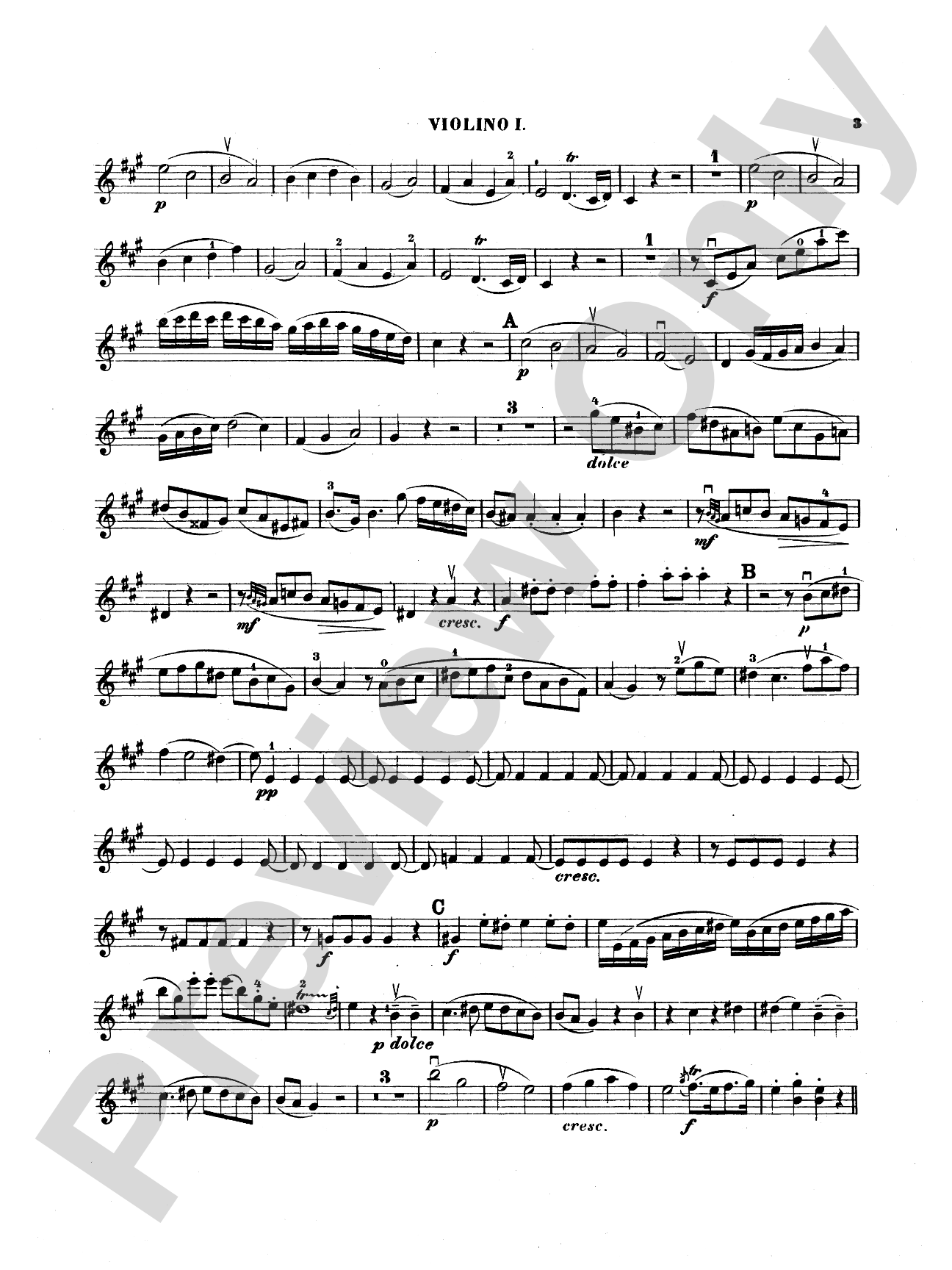

Quintet, K. 581: 1st Violin
By Wolfgang Amadeus Mozart
Item: 00-PC-0002522_VN1
$3.00
Pickup currently not available
Description
Clarinet quintet (clarinet, 2 violins, viola, violincello).


Don't just read it, hear it, play along with it, and watch your students grow with it. In MakeMusic Cloud, Quintet, K. 581: 1st Violin comes alive with professional accompaniment, adjustable tempo, and built-in practice tools that turn solo practice into real progress.
Open in the Player
Jump straight in and assign it today.
Start Your Free Trial
Open this title and explore the full library in minutes.
Sample Audio
No sample audio found.
Sample Video
No sample videos found.
Additional Details
Series:
Kalmus Edition
Publisher:
Alfred Music
Page Count:
40
SKU:
00-PC-0002522_VN1
Instrumentation:
Clarinet (in A) & String Quartet
More about this title
About the Composer: Wolfgang Amadeus Mozart
Mozart composed the Clarinet Quintet in A major, K. 581, in 1788 for his friend and fellow Freemason Anton Stadler, a virtuoso clarinetist of the Vienna court. Written during a remarkably productive year that also saw the completion of his final three symphonies, this work represents Mozart's deepest exploration of chamber music and the clarinet's expressive potential. The quintet stands as one of the few major Classical chamber works that grants an wind instrument genuine partnership with strings rather than subordinate accompaniment.
Mozart's gift for melodic invention and harmonic sophistication reaches its full maturity in this score. He shapes the four movements to showcase the clarinet's agility, warmth, and dramatic range while writing string parts that demand genuine musicianship from each player. The work has remained central to the chamber music repertoire since its premiere and serves as a touchstone for understanding both the Classical style and the clarinet's emerging role as a solo and ensemble instrument.
Why we love this
This is one of those rare works where every musician on stage gets a moment to shine. The clarinet never dominates at the expense of the strings, and the writing for the string quartet is as sophisticated and rewarding as anything Mozart composed in that medium. Programming this quintet signals that your ensemble is serious about chamber repertoire and gives advanced young musicians a masterwork they'll return to throughout their lives.
What to expect
The Clarinet Quintet unfolds with an intimacy that feels like eavesdropping on a conversation among equals. The first movement's serene opening gives way to passages of genuine drama and rhythmic playfulness, while the slow movement reveals the clarinet's capacity for both nobility and tenderness. By the finale, all five voices have woven themselves into a texture so natural it seems inevitable.
Who it's for
Advanced chamber musicians preparing for festival competitions, college ensemble programs, or professional concert performance. This work demands secure intonation, mature musicianship, and genuine collaboration from all five players. It serves equally well for serious high school students capable of sustained focus and pianistic approach to ensemble balance.
How to get the most out of it
- Balance the clarinet's A instrument tuning carefully with the strings; the higher pitch can easily overwhelm if not voiced with restraint in ensemble passages.
- Shape the first movement's themes through subtle dynamic shaping rather than exaggeration; Mozart's elegance depends on understatement.
- Attend to the violas role as both harmonic anchor and countermelodic voice, especially in the Larghetto where it often carries the deepest lyricism.
- Let the finale's rondo sections breathe with lightness; resist the urge to rush the conversational back-and-forth between clarinet and strings.
How to use it
This quintet works beautifully as the centerpiece of an all-Mozart chamber concert or paired with other Classical wind and string combinations. It also stands alone as a recital opener that immediately establishes artistic seriousness and gives audiences a complete musical statement in roughly 30 minutes. Consider programming it alongside a Mozart piano sonata or string quartet to deepen the evening's exploration of his harmonic language.
Skills your students will build
- Blending a wind instrument in equal partnership with strings
- Reading A clarinet parts transposed from concert pitch
- Sustaining intonation over extended movements requiring continuous ensemble listening
- Interpreting Classical phrasing and articulation through score study
- Balancing accompanimental and thematic roles within the same movement
- Negotiating rapid passagework while maintaining textural clarity