Quiet Waters Sheet Music Preview

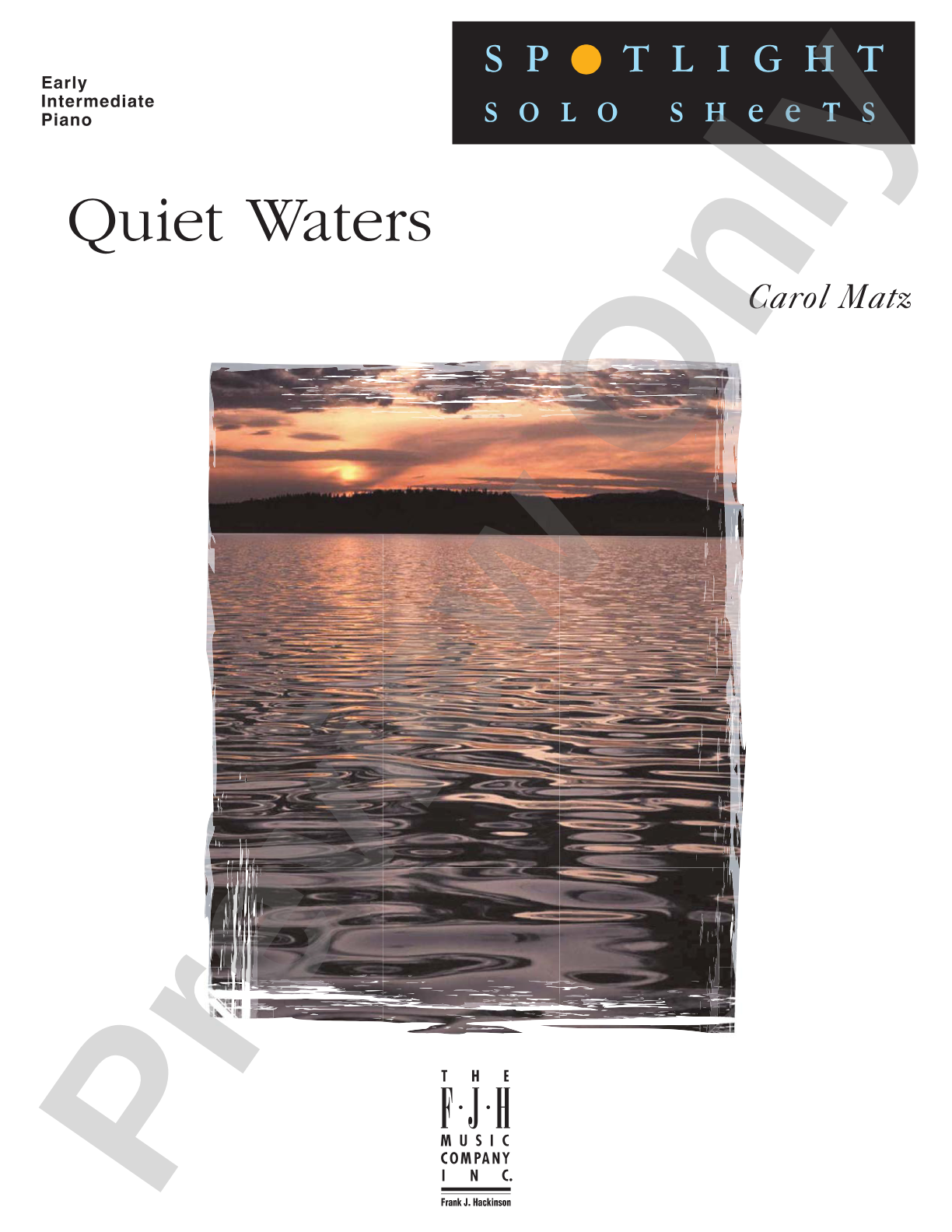
Quiet Waters: Piano

By Carol Matz

Item: 98-DS4104

Digital Download
$2.50
Description
As the title suggests, Quiet Waters is a beautiful piece that offers a gentle, flowing melody. Enchanting piano solo promotes legato playing, careful balance between voices, and much opportunity for expression and rubato effects.

Quiet Waters: Piano isn't in MakeMusic Cloud just yet...but it could be. Let us know you'd like to see it, and you'll help shape what comes next. In the meantime, start a free trial and dive into thousands of interactive titles your students can play along with today.

Sample Audio
No sample audio found.
Sample Video
Additional Details
Series: Spotlight Solo Sheets
Publisher: The FJH Music Company, Inc.
SKU: 98-DS4104

More about this title

About the Composer: Carol Matz

Carol Matz

Carol Matz brings three decades of practical classroom experience to her compositions and arrangements. She has published over 300 works for piano students while maintaining an active teaching studio and conducting workshops internationally across North America, Europe, and the Pacific. Her formal training in composition, arranging, and orchestration at the University of Miami shaped her ability to write across multiple genres and ensembles, from jazz big bands to string quartets.

Beyond concert works, Matz has contributed studio arrangements for recording artists and built a reputation for creating piano literature that balances pedagogical soundness with genuine musical interest. Her Famous & Fun series, published by Alfred Music, represents her commitment to repertoire that engages students rather than simply serving as technical exercises.

Why we love this

Quiet Waters delivers the rare combination of musical substance and genuine accessibility. The flowing melody and jazz idiom give students something they actually want to play, while the rubato and balance demands develop interpretive maturity without overwhelming intermediate players.

What to expect

Quiet Waters evokes stillness without stasis, with a melody that seems to drift gently across a shimmering harmonic landscape. The jazz vocabulary brings warmth and sophistication to what could otherwise feel purely classical, creating music that feels both introspective and alive.

Who it's for

Intermediate piano students ready to move beyond technical studies into pieces that reward musical maturity. The piece suits pianists comfortable with flowing sixteenth-note passage work who are beginning to understand how rubato and pedaling shape expression.

How to get the most out of it

  • Shape the legato line as though you're singing it; allow the melody to breathe naturally rather than mechanically connecting every note.
  • Listen carefully to voice independence in passages where multiple lines move together. Balance the accompaniment softly so the melody floats above without effort.
  • Experiment with subtle tempo flexibility in phrases marked for rubato. Record yourself to hear whether your inflections enhance the music or interrupt its flow.
  • Use the sustain pedal strategically to support legato playing, but change it frequently enough to keep harmonies clear and prevent muddiness.

How to use it

This works beautifully as a solo recital piece that showcases a student's interpretive abilities rather than flashy technique. It also pairs well in a concert program with more energetic works, offering audiences a moment of musical reflection and giving soloists a chance to demonstrate their sensitivity to tone and phrasing.

Skills your students will build

  • Legato playing and voice independence across hands
  • Pedal control in service of harmonic clarity
  • Rubato and tempo flexibility
  • Dynamic balance between melody and accompaniment
  • Jazz harmonic language and voicing

You May Also Like