Quiet Nights Of Quiet Stars (Corcovado) (arr. Kirby Shaw) Sheet Music Preview

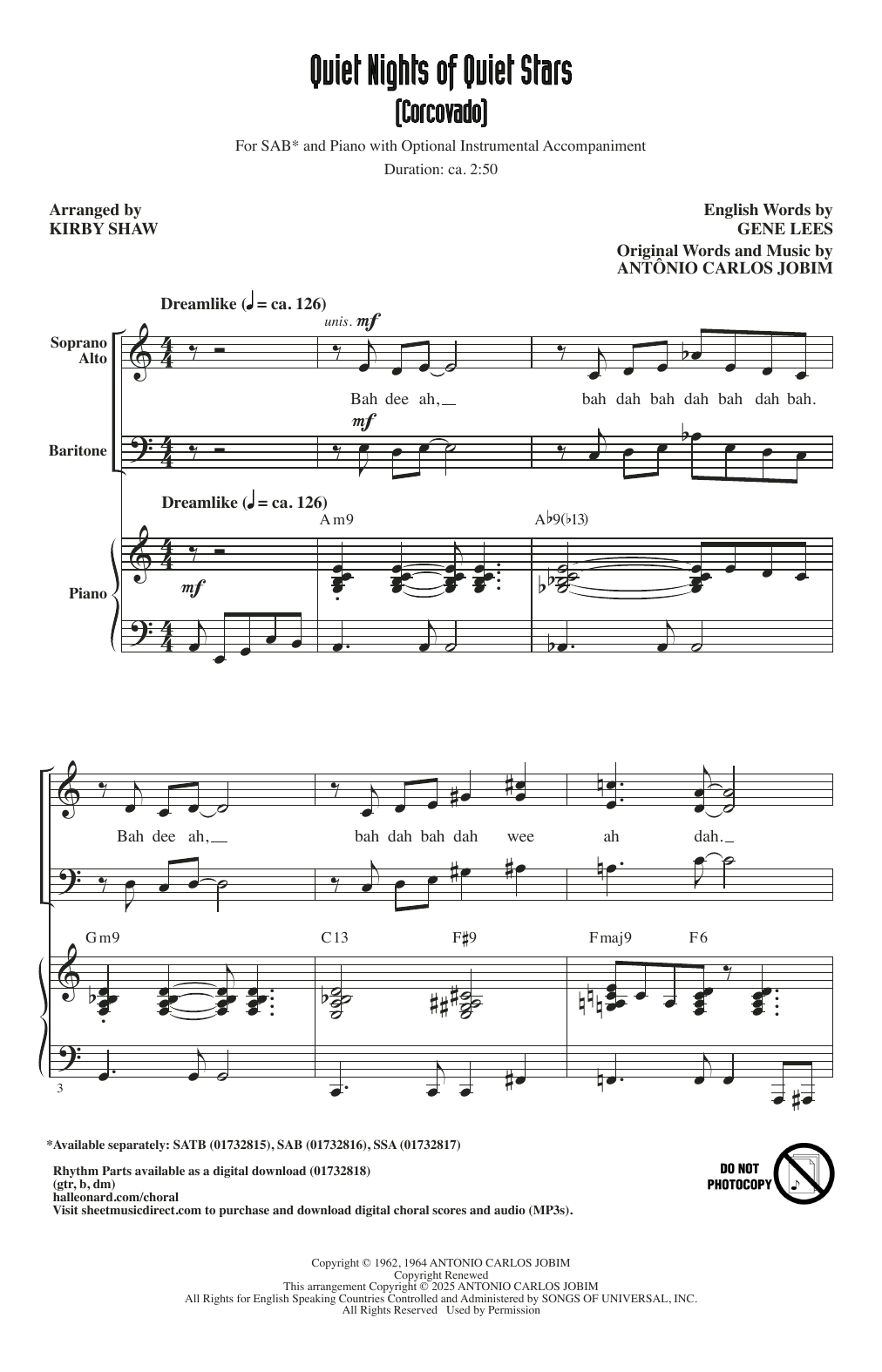
Quiet Nights Of Quiet Stars (Corcovado) (arr. Kirby Shaw): SAB Choral Octavo

Arranged by Kirby Shaw

Item: 35-DS01627545

Digital Download
$2.50
Description

Quiet Nights Of Quiet Stars (Corcovado) (arr. Kirby Shaw): SAB Choral Octavo isn't in MakeMusic Cloud just yet...but it could be. Let us know you'd like to see it, and you'll help shape what comes next. In the meantime, start a free trial and dive into thousands of interactive titles your students can play along with today.

Sample Audio
No sample audio found.
Sample Video
Additional Details
Publisher: Hal Leonard
Page Count: 7
SKU: 35-DS01627545

More about this title

About the Arranger: Kirby Shaw

Kirby Shaw

Kirby Shaw's influence on choral music extends across continents and decades. With formal training in Music Education, Choral Composition, and Choral Conducting from San Jose State, Colorado State, and the University of Washington, Shaw has built a career bridging classical choral traditions and jazz vocal idioms. He founded and directed acclaimed vocal jazz ensembles at multiple universities, collaborated with legends like Bobby McFerrin and Al Jarreau, and created over 2,500 choral arrangements that have sold nearly 20 million copies worldwide.

Shaw's prolific output and multiple ASCAP awards reflect a rare combination of compositional craft and pedagogical insight. His arrangements consistently serve both the learning needs of student singers and the artistic ambitions of directors seeking contemporary repertoire. Currently directing the Jefferson State Choral Coalition at Southern Oregon University, Shaw continues to commission new works and create educational recordings that shape how singers approach jazz, pop, and Latin idioms.

Why we love this

Shaw's treatment of this Brazilian classic respects the melody's lyrical beauty while making the harmonic language accessible for SAB choirs. The voicing sits naturally across the three parts, avoiding the stretched ranges that can undermine this tender standard in less experienced arrangements. Audiences hear sophistication; your singers experience attainable musicality.

What to expect

Warm and contemplative, with the gentle sway of a Rio night. The arrangement invites singers into intimate, close harmonies that feel more like conversation than performance. There's a sophistication in the harmonic movement that listeners recognize immediately, even as the voicing remains approachable.

Who it's for

Choirs comfortable with lyrical singing and willing to embrace the jazz and Latin harmonic vocabulary without overthinking it. This works equally well for show choirs incorporating standards into a set, concert choirs seeking accessible contemporary arrangements, and community ensembles drawn to the bossa nova tradition.

How to get the most out of it

  • Let the accompaniment breathe during the intro and key transitions. Resist rushing the tempo; this piece depends on space and air for its intimate quality.
  • Shape the phrase contours in each voice part independently, then listen for how they weave together. The altos and tenors carry harmonic depth that shouldn't disappear into a single block sound.
  • Explore the Latin rhythmic underpinnings without over-emphasizing percussion. A light touch from your rhythm section keeps the arrangement's elegance intact.
  • Balance the vocal line so the soprano melody remains audible even when inner voices add harmonic interest. Test this balance in various seat configurations.

How to use it

Pair this with other Latin or jazz standards to create a thematic set exploring global popular song traditions. It also serves as a palate cleanser in mixed concert programs, offering both accessibility and artistic substance between heavier classical or contemporary works. Consider it for spring concerts where lighter, more lyrical material feels seasonally appropriate.

Skills your students will build

  • Singing jazz harmonies and extensions (7ths, 9ths) without scooping or oversinging
  • Maintaining part integrity within close, homophonic textures
  • Understanding rhythmic feels in bossa nova and Latin accompaniment patterns
  • Lyrical phrasing across longer musical sentences
  • Blending voice timbres to create ensemble cohesion in jazz and pop idioms

You May Also Like