
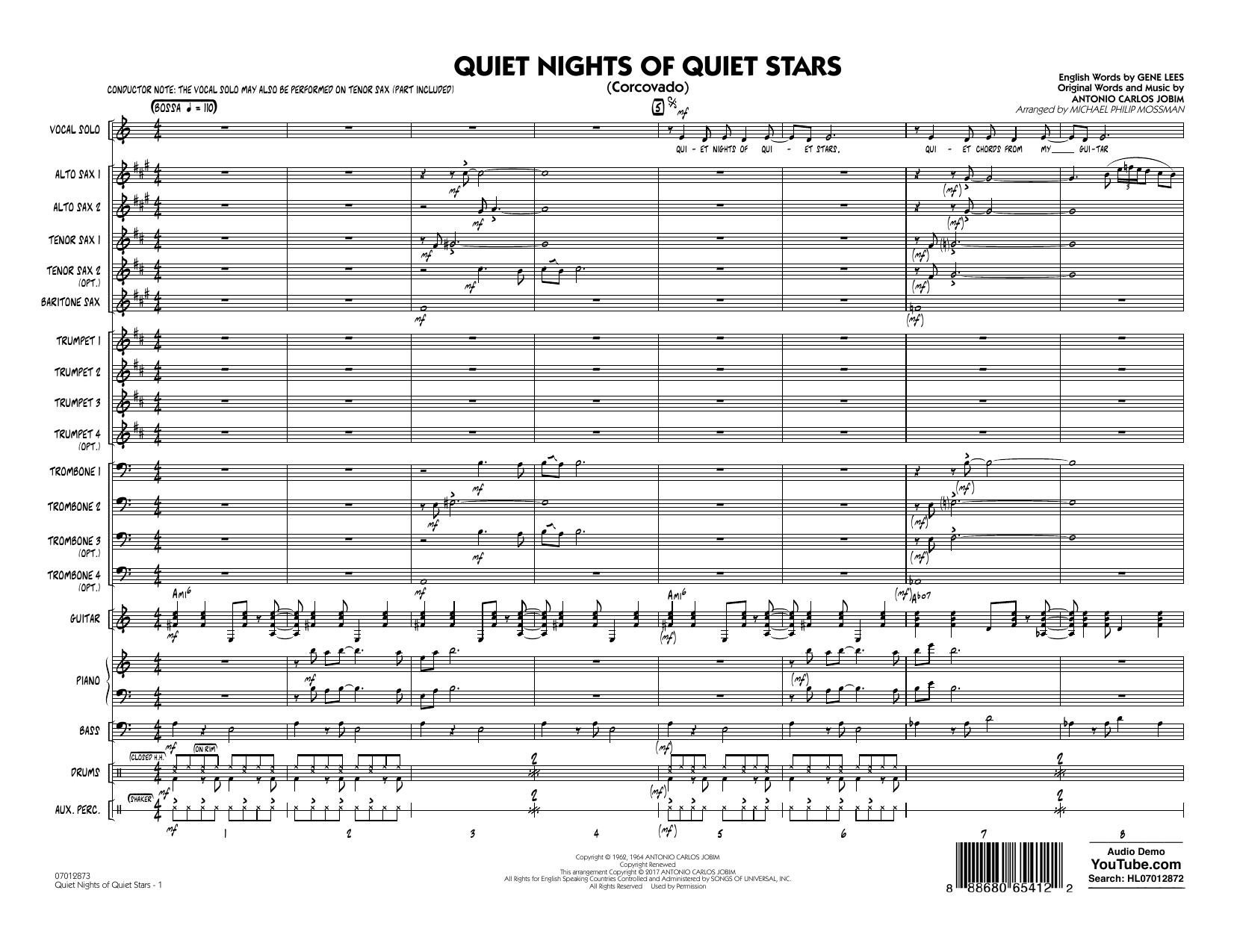

Quiet Nights of Quiet Stars (Corcovado): Jazz Ensemble Conductor Score & Parts
Arranged by Michael Philip Mossman
Grade: 3-4
Item: 35-PK00368653
$55.00
Pickup currently not available
Buy Extra Parts (Digital PDF Download)
Parts Added to Cart!
Description
Recorded by countless jazz artists ranging from Stan Getz and Astrud Gilberto to Miles Davis and Frank Sinatra, Jobim's refined classic is a welcome addition on any program. This chart is sure to be a delight for any vocalist! (opt. tenor solo feature)


Quiet Nights of Quiet Stars (Corcovado): Jazz Ensemble Conductor Score & Parts isn't in MakeMusic Cloud just yet...but it could be. Let us know you'd like to see it, and you'll help shape what comes next. In the meantime, start a free trial and dive into thousands of interactive titles your students can play along with today.
Request This Title
Tell us you want it.
Start Your Free Trial
Explore everything that's ready to play right now.
Sample Audio
No sample audio found.
Sample Video
No sample videos found.
Additional Details
Publisher:
Hal Leonard
SKU:
35-PK00368653
More about this title
About the Arranger: Michael Philip Mossman
Michael Philip Mossman is a trumpeter, composer, and arranger with deep roots in both jazz and classical music. His arrangements for jazz ensemble are known for their accessibility without sacrificing musical substance, making sophisticated repertoire playable for developing musicians.
Why we love this
Mossman captures the essential elegance of Jobim's melody while writing parts that sit comfortably for intermediate players. The optional tenor solo gives you flexibility to feature a strong soloist or let the vocalist carry the day, and the chart breathes with the same sophistication that made the original recordings timeless.
What to expect
Warm, unhurried, and deeply lyrical. The arrangement wraps you in the gentle sophistication of a Rio night, with lush harmonies and a rhythm section pocket that feels natural and swinging without ever pushing.
Who it's for
Jazz ensembles at the intermediate level looking to program a standard that connects with audiences while building musicianship. This works especially well if you have a vocalist who can deliver the lyrical beauty the melody demands.
How to get the most out of it
- Balance the ensemble to let the vocalist sit naturally in the front; the arrangement supports rather than competes.
- Keep the tempo unhurried and conversational. This piece lives in space and restraint, not in rushing the phrase.
- Shape the saxophone section lines with subtle dynamic breathing so accompaniment figures feel like conversation rather than accompaniment.
How to use it
Place this on a concert where you want to shift the energy toward intimacy and sophistication. It pairs beautifully with uptempo swingers on either side and gives your vocalist a signature moment that audiences genuinely connect with.
Skills your students will build
- Balancing ensemble blend around a featured vocalist
- Playing with space and restraint rather than volume
- Executing smooth harmonic transitions in jazz voicings
- Interpreting swing feel in a ballad context
- Reading and executing optional solo lines over changes