
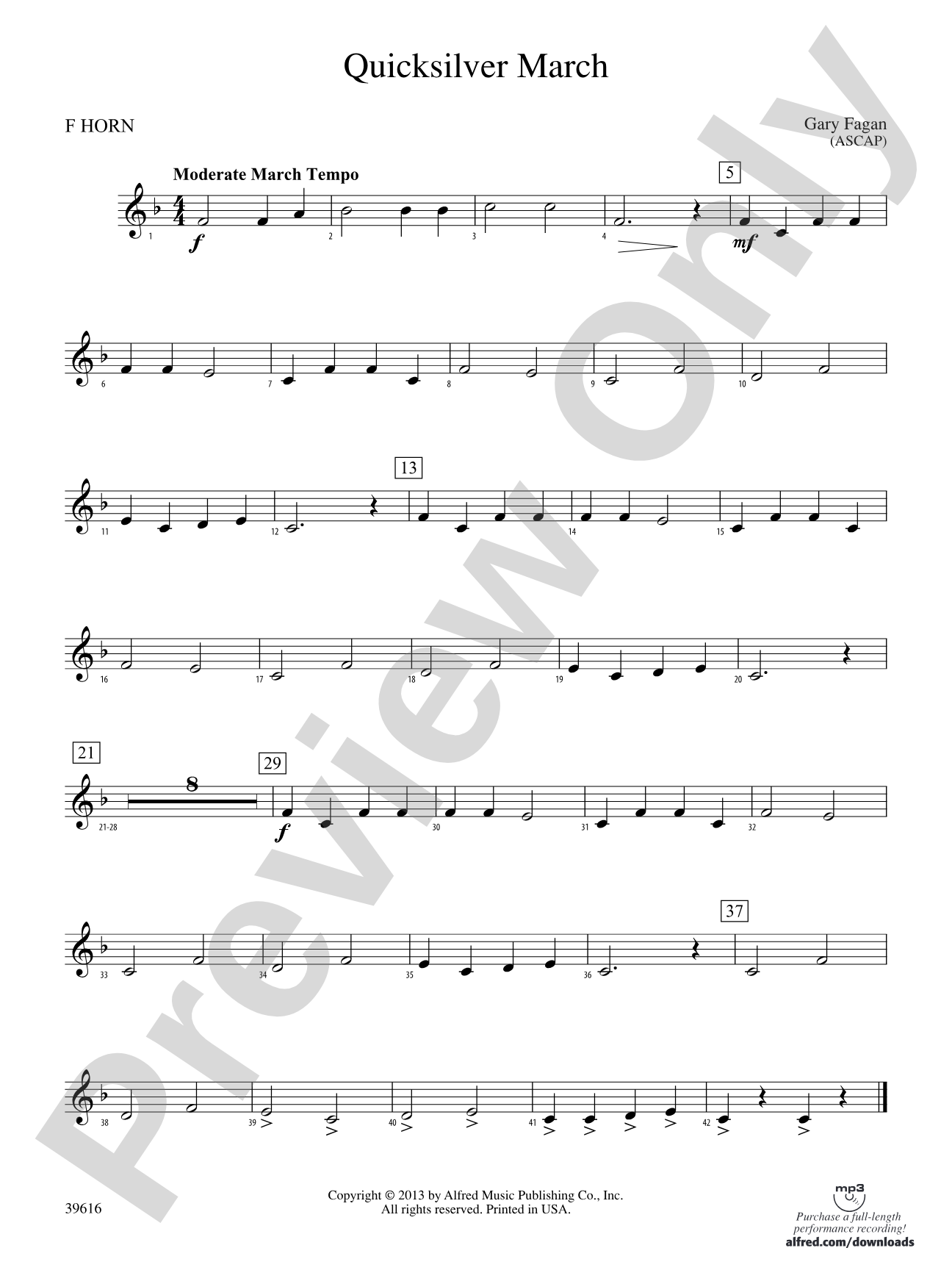

Quicksilver March: 1st F Horn
By Gary Fagan
Grade: 0.5 (Very Easy)
Item: 00-PC-0015890_H1
$3.00
Pickup currently not available
Description
Written in the traditional march style, this piece is designed to give very young players experience with the marcato style of playing. Technical and range requirements are held to a minimum in this exciting march for beginning level bands. (1:30) This title is available in MakeMusic Cloud.


Don't just read it, hear it, play along with it, and watch your students grow with it. In MakeMusic Cloud, Quicksilver March: 1st F Horn comes alive with professional accompaniment, adjustable tempo, and built-in practice tools that turn solo practice into real progress.
Open in the Player
Jump straight in and assign it today.
Start Your Free Trial
Open this title and explore the full library in minutes.
Sample Audio
1
Audio File
--:--
0:00
0:00
Sample Video
No sample videos found.
Additional Details
Series:
Alfred Debut Series
Publisher:
Alfred Music
Page Count:
120
SKU:
00-PC-0015890_H1
More about this title
About the Composer: Gary Fagan

Gary Fagan brings four decades of band direction experience to his work as a composer and arranger. A Virginia educator who led ensembles in Albemarle County for 36 years, he has earned recognition including the Central Virginia Outstanding Middle School Teacher award and multiple Outstanding Educator honors. His compositions and arrangements have been performed at the Midwest Band and Orchestra Clinic, the White House, and prominent civic ceremonies.
Fagan holds degrees in music education from Bridgewater College and a master's degree from James Madison University, where he currently serves as a University Supervisor and adjunct faculty member in arranging. Active as a clinician, adjudicator, and percussionist with the Charlottesville Band, he maintains memberships in the National Band Association, Phi Beta Mu Bandmasters Fraternity, and ASCAP. His deep understanding of ensemble development and beginning-level pedagogy shapes music written specifically for young players.
Why we love this
Fagan understands what beginning bands need: accessible ranges, straightforward notation, and parts that genuinely excite young players rather than bore them. The marcato focus gives students a clear technical objective without overwhelming them, making this an ideal opener for contests or the first concert of the season. At just 90 seconds, it fits perfectly into a program while building confidence in very young ensembles.
What to expect
Quicksilver March bounces with the unmistakable energy of a traditional march. The marcato style gives it a bright, snappy articulation that feels almost playful, making it feel like a celebration rather than a technical exercise. Young players experience the satisfaction of sounding polished and confident in this accessible, spirited arrangement.
Who it's for
Young concert bands in their first or second year of study benefit most from this piece. Directors working with Grade 0.5 ensembles will find the range and technical demands refreshingly honest, allowing every player to participate fully without frustration.
How to get the most out of it
- Establish the marcato articulation early in rehearsal with concert A or B-flat; have the band sustain and release together before adding pitch specifics. Clean marcato creates the crisp, military character that makes this march effective.
- Balance the melody across sections rather than letting it rest entirely in the clarinets. Young bands benefit from doubling the theme, which strengthens intonation and ensemble listening.
- Keep the tempo steady and confident. A march loses its character if the pulse wavers; use a metronome in rehearsal and conduct with clear, unambiguous beats.
- Emphasize rhythmic precision in the accompaniment figures. Even very young players can lock in tight rhythms with focused repetition, which makes the whole ensemble sound more polished.
How to use it
Open a concert with this piece to establish energy and confidence in a young audience and ensemble alike. Its brevity and straightforward appeal make it an excellent contest or festival entry for bands still building fundamental skills. You might also pair it with other short, energetic works to create a "Getting Started" program that showcases ensemble growth.
Skills your students will build
- Marcato articulation and note clarity
- Steady pulse and march rhythm accuracy
- Ensemble balance and intonation in a unison or near-unison melody
- Dynamic control at the very easy level
- Confidence performing in a traditional concert structure