
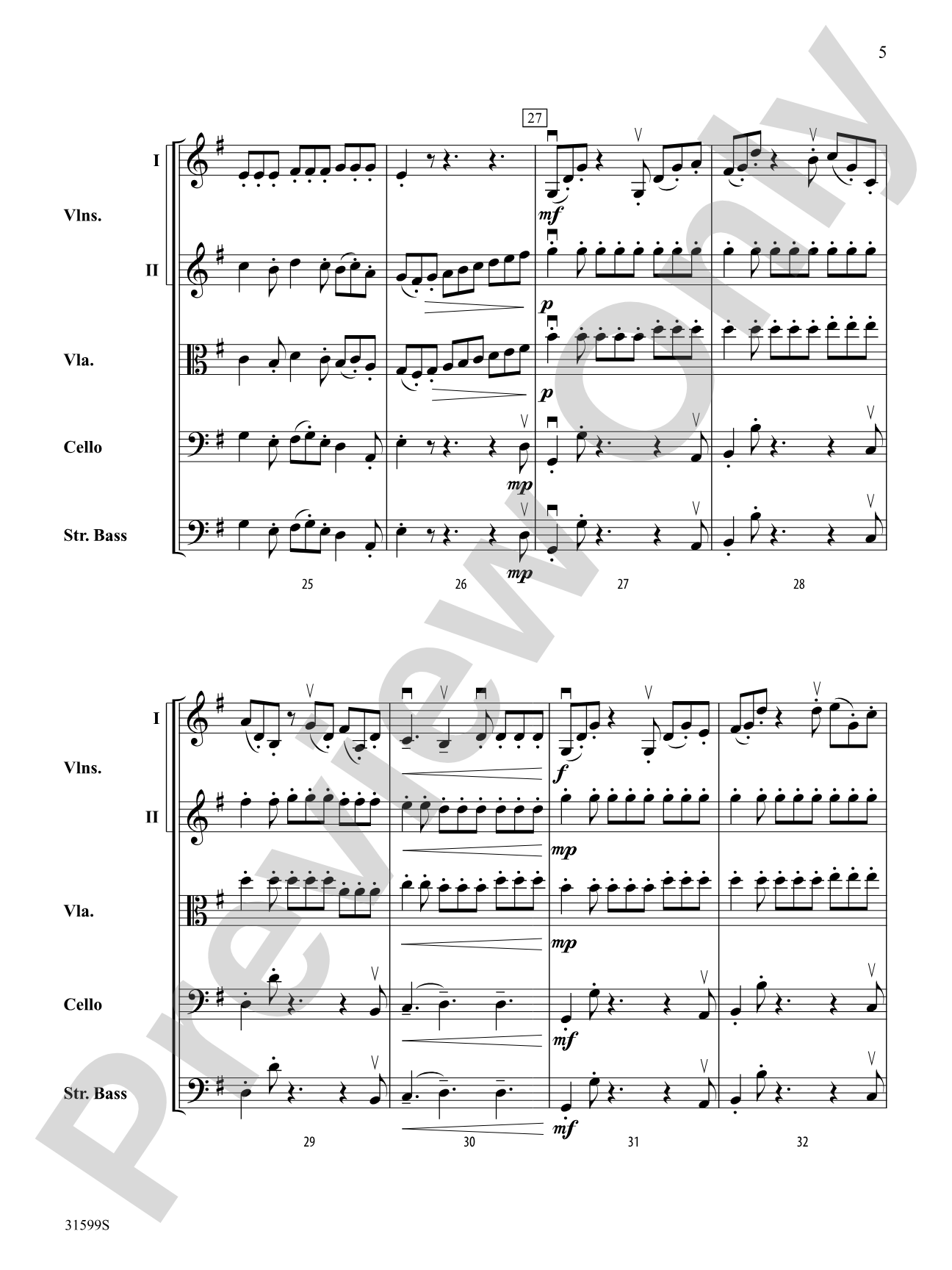
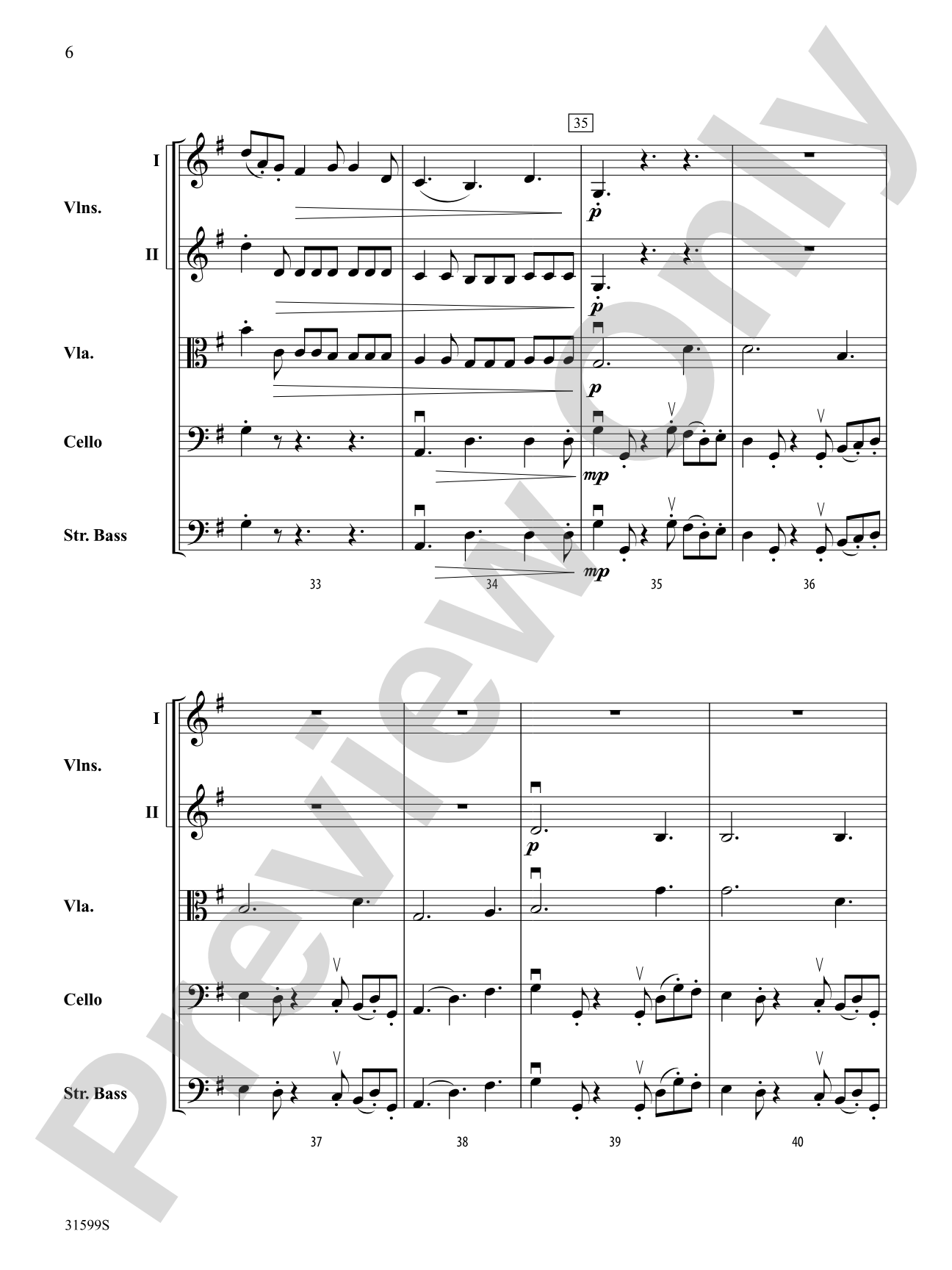
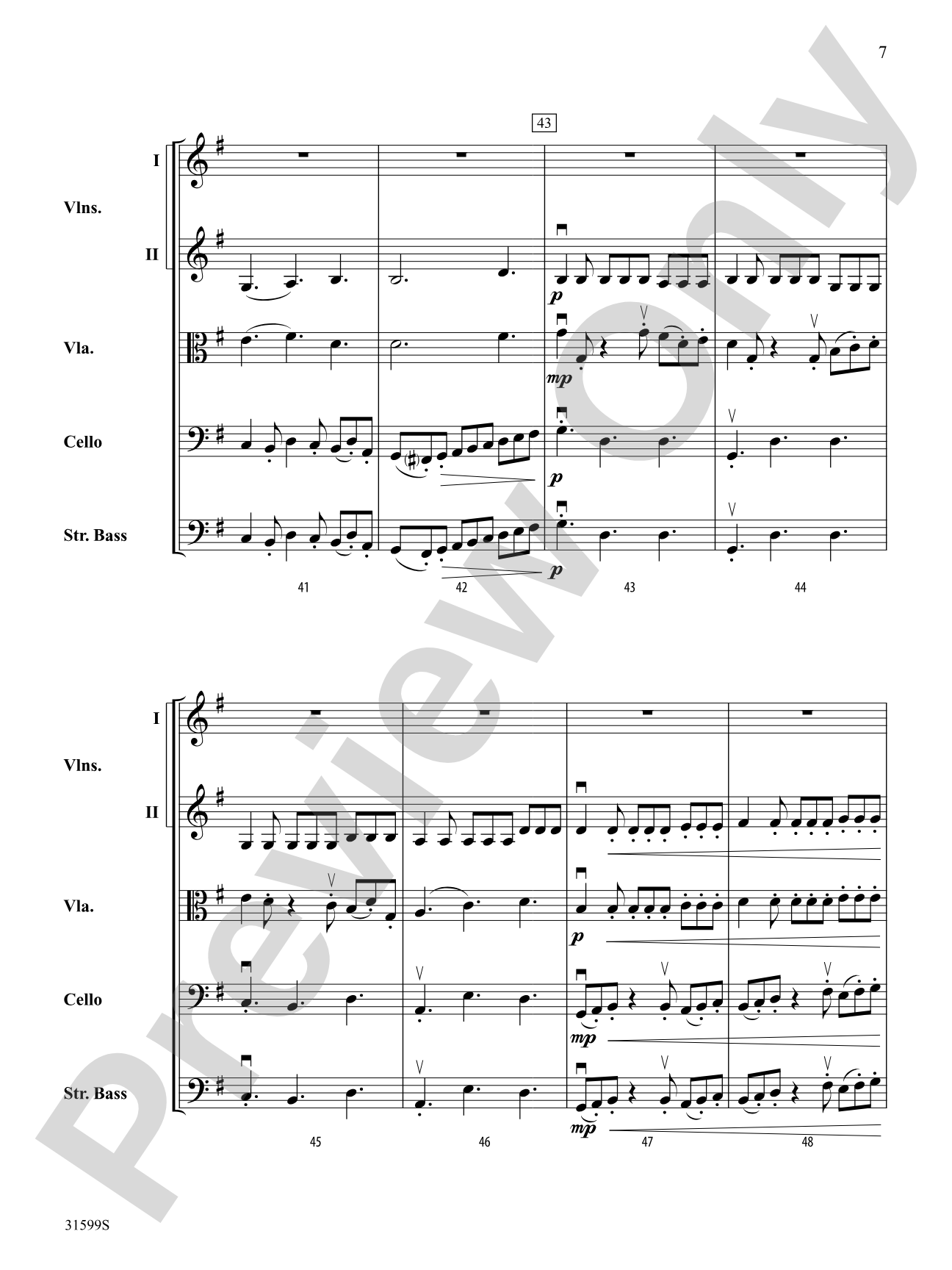
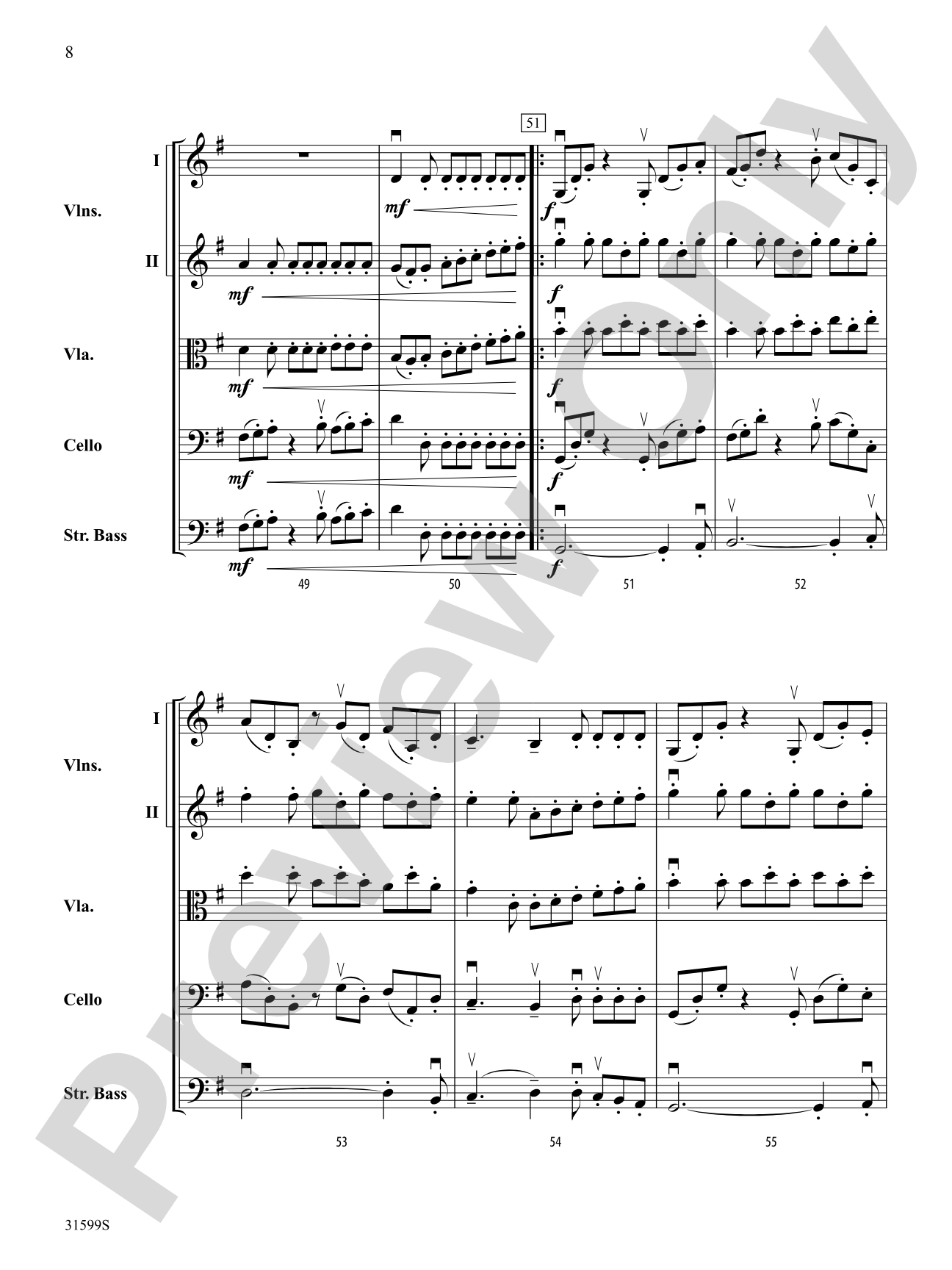



Quicksilver: String Orchestra Conductor Score & Parts
By Doug Spata
Grade: 2.5
Item: 00-PK-0001774

$49.00
Pickup currently not available
Buy Extra Parts (Digital PDF Download)
| Product | Price | Quantity |
|---|---|---|
| Quicksilver: Score | $7.00 | |
| Quicksilver: 1st Violin | $5.99 | |
| Quicksilver: 2nd Violin | $5.99 | |
| Quicksilver: Viola | $5.99 | |
| Quicksilver: Cello | $5.99 | |
| Quicksilver: String Bass | $5.99 |
Parts Added to Cart!
Description
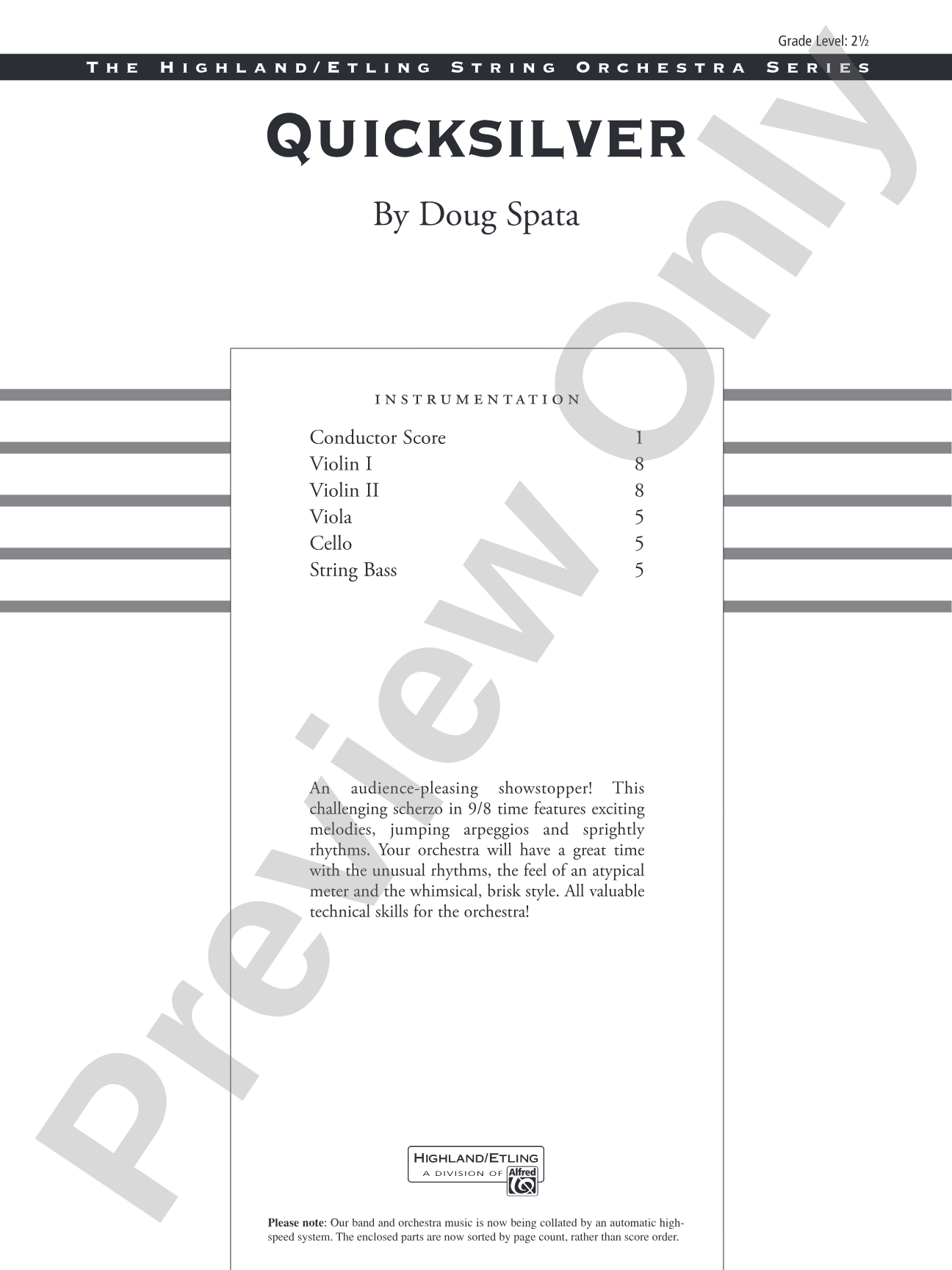
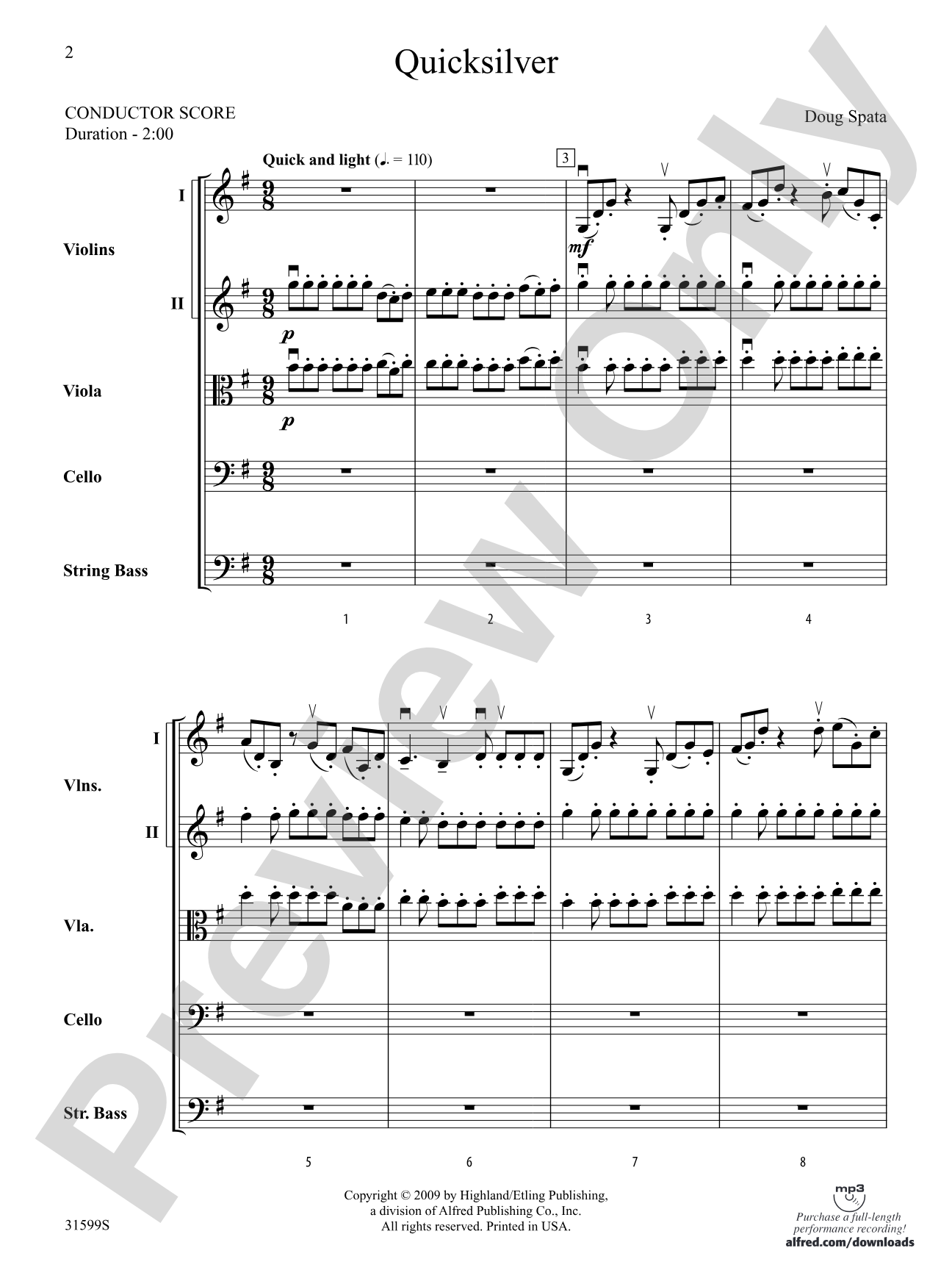
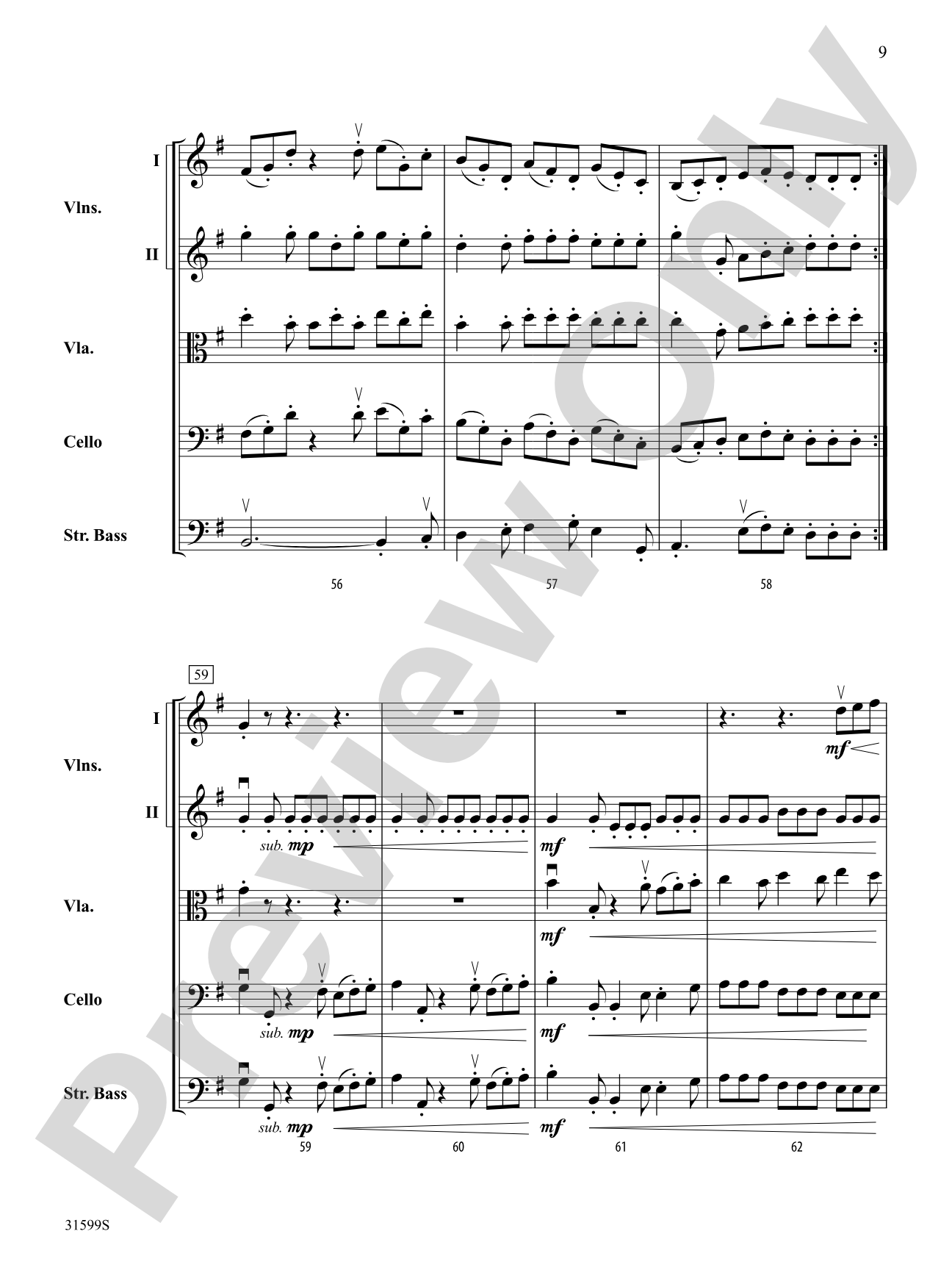
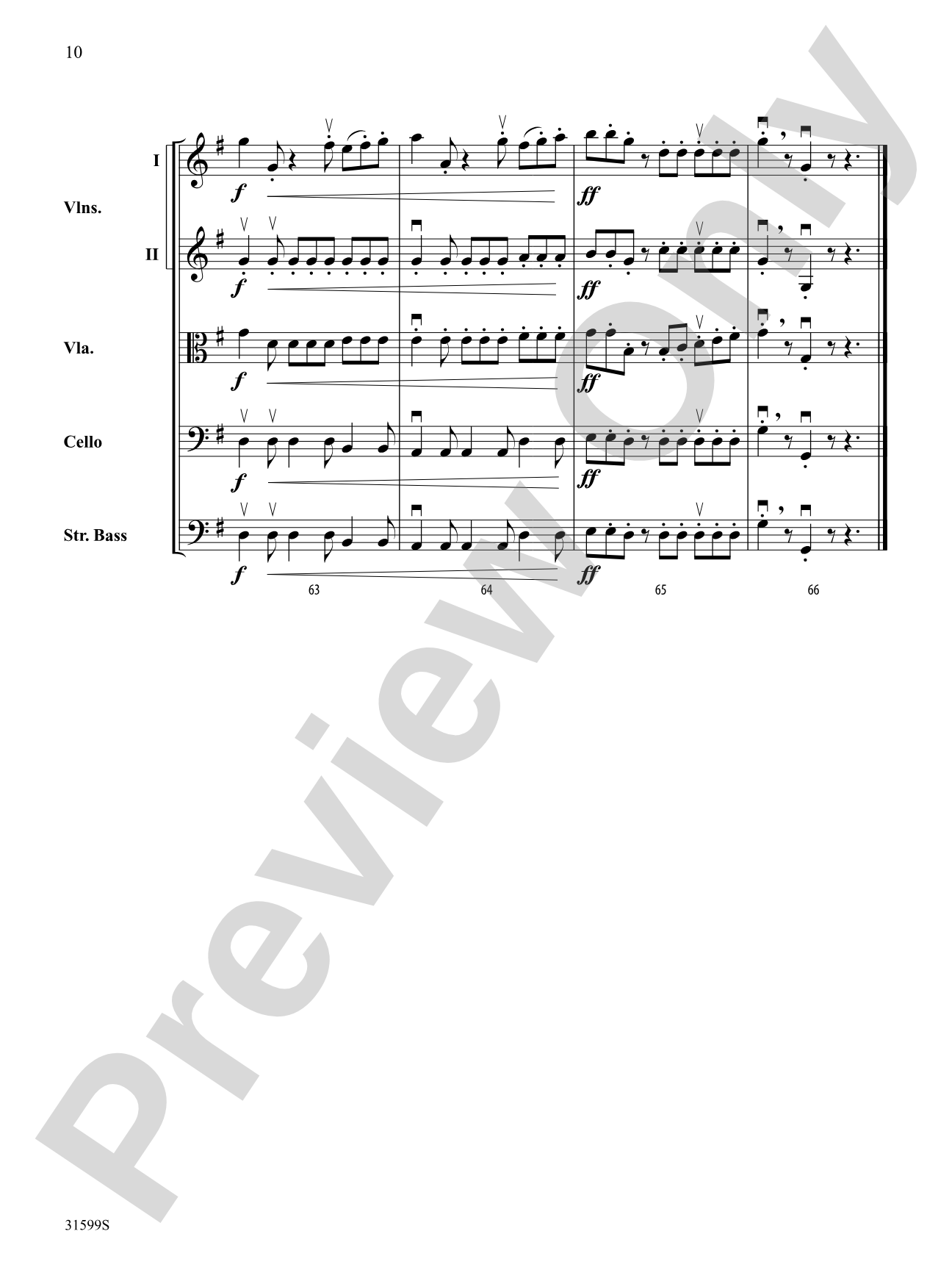
An audience-pleasing showstopper! This challenging scherzo in 9/8 time features exciting melodies, jumping arpeggios, and sprightly rhythms. Your orchestra will have a great time with the unusual rhythms, the feel of an atypical meter, and the whimsical, brisk style. All valuable technical skills for the orchestra! This title is available in MakeMusic Cloud.


Don't just read it, hear it, play along with it, and watch your students grow with it. In MakeMusic Cloud, Quicksilver: String Orchestra Conductor Score & Parts comes alive with professional accompaniment, adjustable tempo, and built-in practice tools that turn solo practice into real progress.
Open in the Player
Jump straight in and assign it today.
Start Your Free Trial
Open this title and explore the full library in minutes.
Sample Audio
1
Audio File
--:--
0:00
0:00
Sample Video
No sample videos found.
Additional Details
Series:
Highland/Etling String Orchestra
Publisher:
Alfred Music
Page Count:
124
SKU:
00-PK-0001774
More about this title
About the Composer: Doug Spata

Doug Spata is a composer whose background as a clarinetist informed his early musical training, but his work as an orchestra director redirected his compositional focus toward string music. His gift for writing idiomatically for strings has earned him recognition among music educators and student musicians alike, with performances of his award-winning compositions throughout the United States and internationally.
Beyond his contributions to string orchestra repertoire, Spata has composed extensively across multiple genres and ensemble sizes. His catalog includes operas, ballet scores, symphonies, and chamber works that demonstrate his versatility and depth as a composer for performers of all levels.
Why we love this
Spata nails the balance between technical challenge and genuine fun that Grade 2.5 orchestras crave. The 9/8 meter isn't presented as an obstacle to overcome but as the rhythmic foundation of a piece that feels as natural as it is exciting, making Quicksilver genuinely rewarding to conduct and for students to master.
What to expect
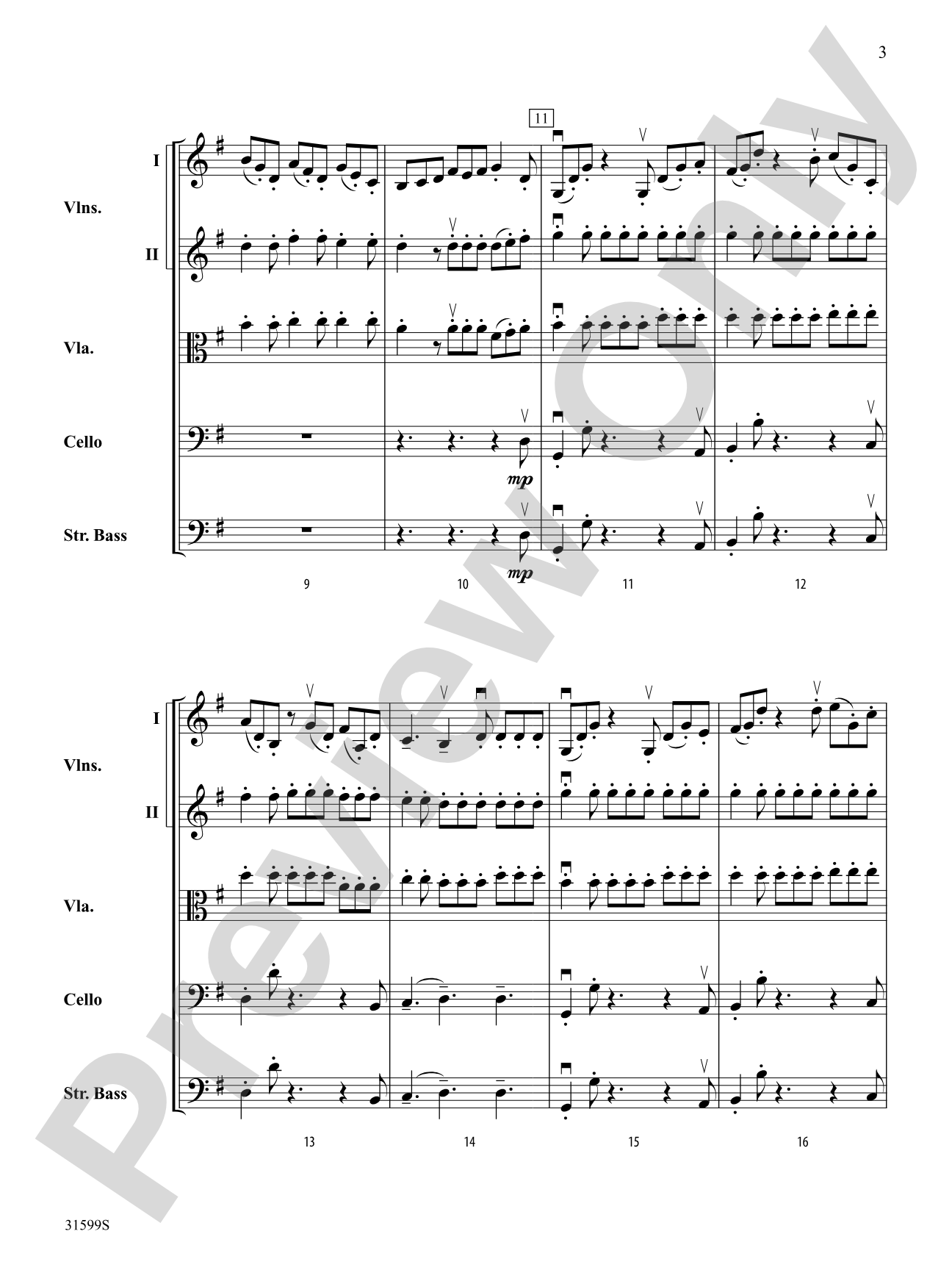
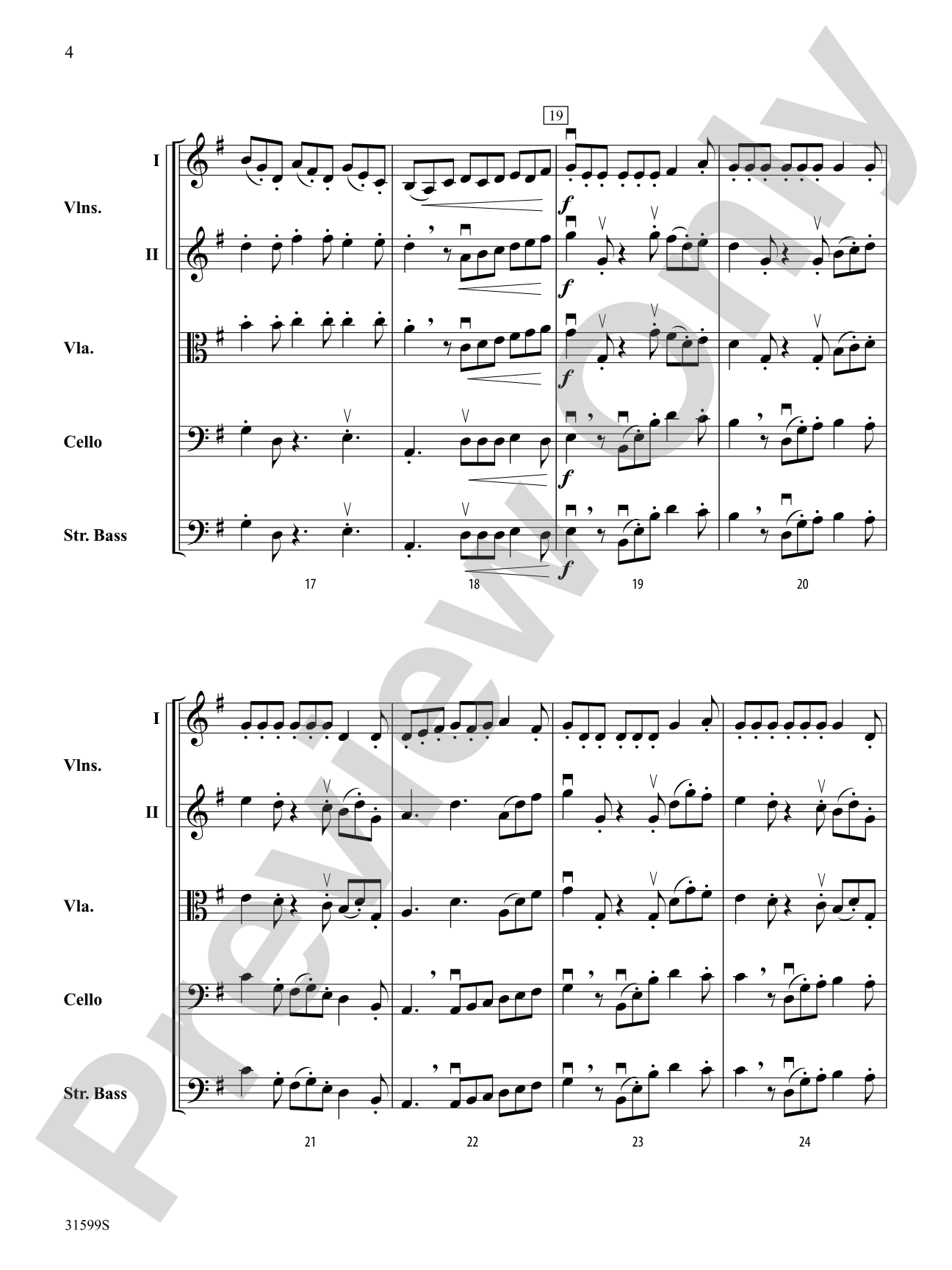
Quicksilver lives up to its name: bright, darting, impossible to pin down. The rhythm dances in 9/8 with the energy of a scherzo, while arpeggios tumble and leap across the ensemble like quick flicks of light. There's playfulness in every bar, yet the piece demands real rhythmic precision and ensemble coordination.
Who it's for
Developing string orchestras ready to tackle metric challenges without sacrificing the joy of playing. This score engages both experienced ensembles looking to expand their technical vocabulary and younger orchestras prepared to grow into the demands of unconventional time signatures.
How to get the most out of it
- Establish the pulse clearly in 9/8 by conducting a relaxed three-beat pattern at a tempo that lets the arpeggios sparkle without becoming muddy.
- Lock in the articulation of the jumping arpeggio figures across sections; they need to sound crisp and unified for the piece's brisk character to land.
- Shape the melodies through dynamic contrast rather than relying on tempo changes; the whimsical quality emerges from clear phrasing and intentional rubato between sections.
- Allow the rhythm section and bass voices to anchor the ensemble's confidence in 9/8 by giving them slightly more attention in early rehearsals before asking upper voices to float their lines.
How to use it
Position this as an exciting mid-concert energy boost or a contest showcase piece that demonstrates your orchestra's rhythmic maturity. Its approachable Grade 2.5 level combined with genuine showmanship makes it ideal for family concerts where audiences appreciate spirited, accessible string music.
Skills your students will build
- Subdividing and maintaining pulse in 9/8 meter
- Articulating rapid arpeggios with rhythmic precision
- Balancing scalar lines and accompaniment figures across sectional roles
- Executing and responding to clear conducting patterns in compound meter
- Shaping melodies within an active, rhythmically driven texture