Queen Of Soul (A Salute to Aretha Franklin) Sheet Music Preview

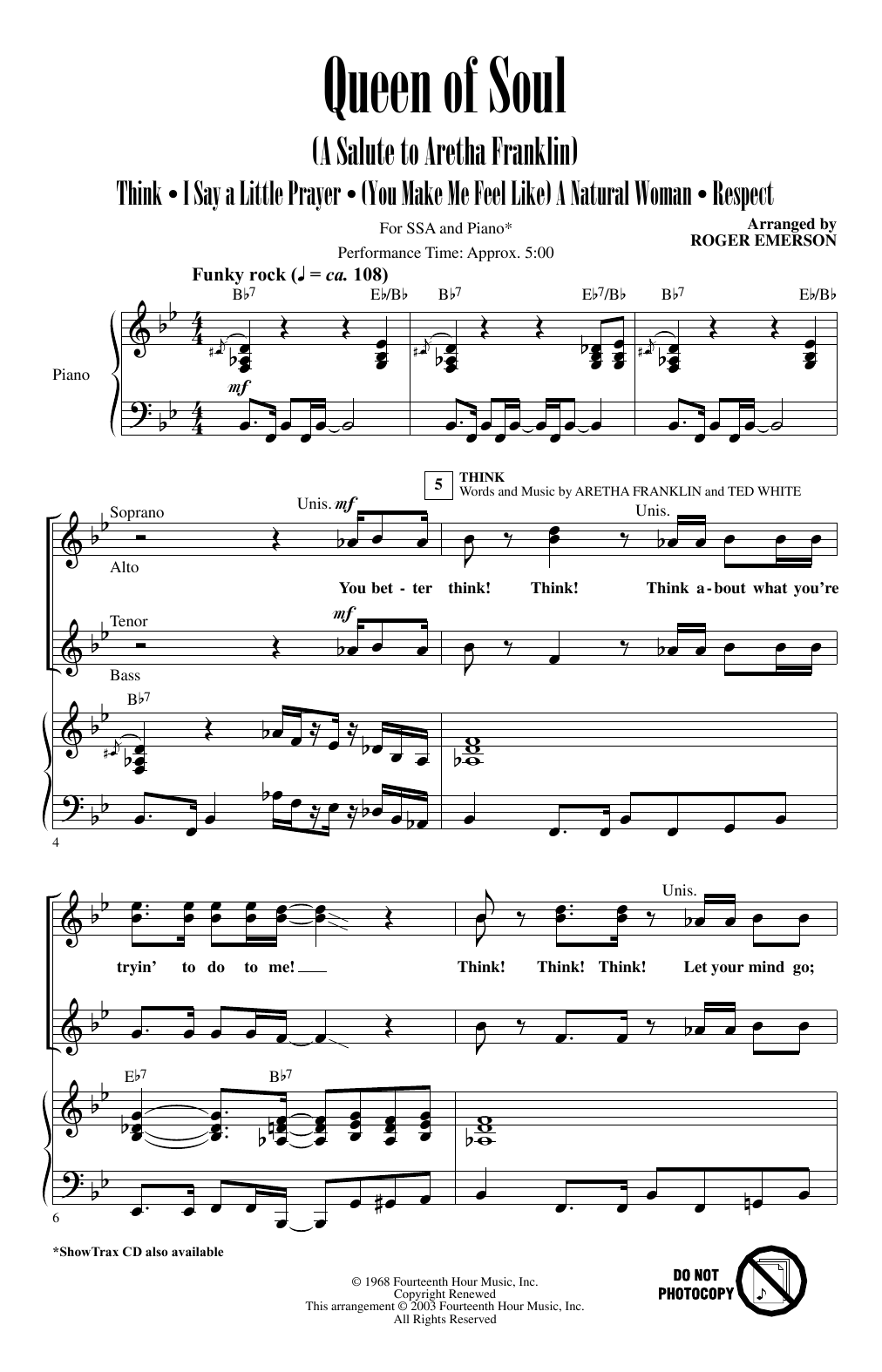
Queen Of Soul (A Salute to Aretha Franklin): SSA Choral Octavo

As performed by Aretha Franklin / Arranged by Roger Emerson

Item: 35-DS01540282

Digital Download
$2.50
Description

Queen Of Soul (A Salute to Aretha Franklin): SSA Choral Octavo isn't in MakeMusic Cloud just yet...but it could be. Let us know you'd like to see it, and you'll help shape what comes next. In the meantime, start a free trial and dive into thousands of interactive titles your students can play along with today.

Sample Audio
No sample audio found.
Sample Video
Additional Details
Publisher: Hal Leonard
Page Count: 15
SKU: 35-DS01540282

More about this title

About the Artist: Aretha Franklin

Aretha Franklin earned her title as the Queen of Soul through a career spanning seven decades, during which she redefined what it meant to be a vocalist in popular music. Her command of phrasing, dynamic control, and emotional authenticity influenced generations of singers across jazz, R&B, gospel, and pop genres. Franklin's vocal approach combined the spiritual depth of her gospel roots with sophisticated harmonic sensibilities, making her interpretations masterclasses in musicianship.

In the classroom, Franklin's legacy offers students a living example of how technique serves expression. Her recordings demonstrate how a singer shapes melody through rhythmic flexibility, strategic breath placement, and tonal color to create meaning. Directors recognize in her work a standard of vocal excellence that transcends genre and era.

Why we love this

Roger Emerson's arrangement captures Franklin's signature intensity while keeping the voicing accessible for developing choirs. The arrangement honors her dramatic sense of phrasing without requiring soloists with professional-level technical prowess, making this a genuine celebration rather than an imitation.

What to expect

The piece radiates the confidence and power that Franklin brought to every performance. Singers will feel the drive of a groove built on strong rhythmic foundation, the lift of well-crafted harmonies, and the satisfaction of performing music that audiences recognize and respect. There's a celebratory energy here, tempered by the soulfulness that made Franklin's interpretations so moving.

Who it's for

This arrangement works for upper level middle school through adult choirs seeking repertoire that combines cultural significance with musical substance. It's ideal for ensembles that have solid blend and breath control but don't require soloists with extensive performance experience.

How to get the most out of it

  • Study recordings of Franklin performing this material. Pay attention to where she delays the beat, stretches phrases, and uses silence for dramatic effect. Your singers don't need to replicate her every choice, but understanding her phrasing vocabulary will deepen your interpretation.
  • Balance the rhythmic precision of the accompaniment with vocal flexibility in the melody line. Franklin's strength came partly from her ability to play against the beat, and your singers should feel permission to breathe naturally rather than snap rigidly to the grid.
  • Build dynamic contrast across the piece. Franklin performed with architectural awareness of tension and release; mark your score to show where the arrangement builds and where it pulls back, then rehearse those transitions as deliberately as you would in a classical work.

How to use it

Feature this as a standalone tribute concert or as the centerpiece of a program exploring African American musical traditions and their impact on popular music. It also serves as an excellent bridge between concert music and contemporary repertoire for choirs working to diversify their season's offerings.

Skills your students will build

  • Stylistically informed phrasing in pop and jazz idioms
  • Rhythmic flexibility and precision within a groove-based accompaniment
  • Dynamic contrast and dramatic pacing across a longer formal structure
  • Blending vocal tone while maintaining individual voice quality
  • Interpreting a musical arrangement that requires understanding of historical context

You May Also Like