
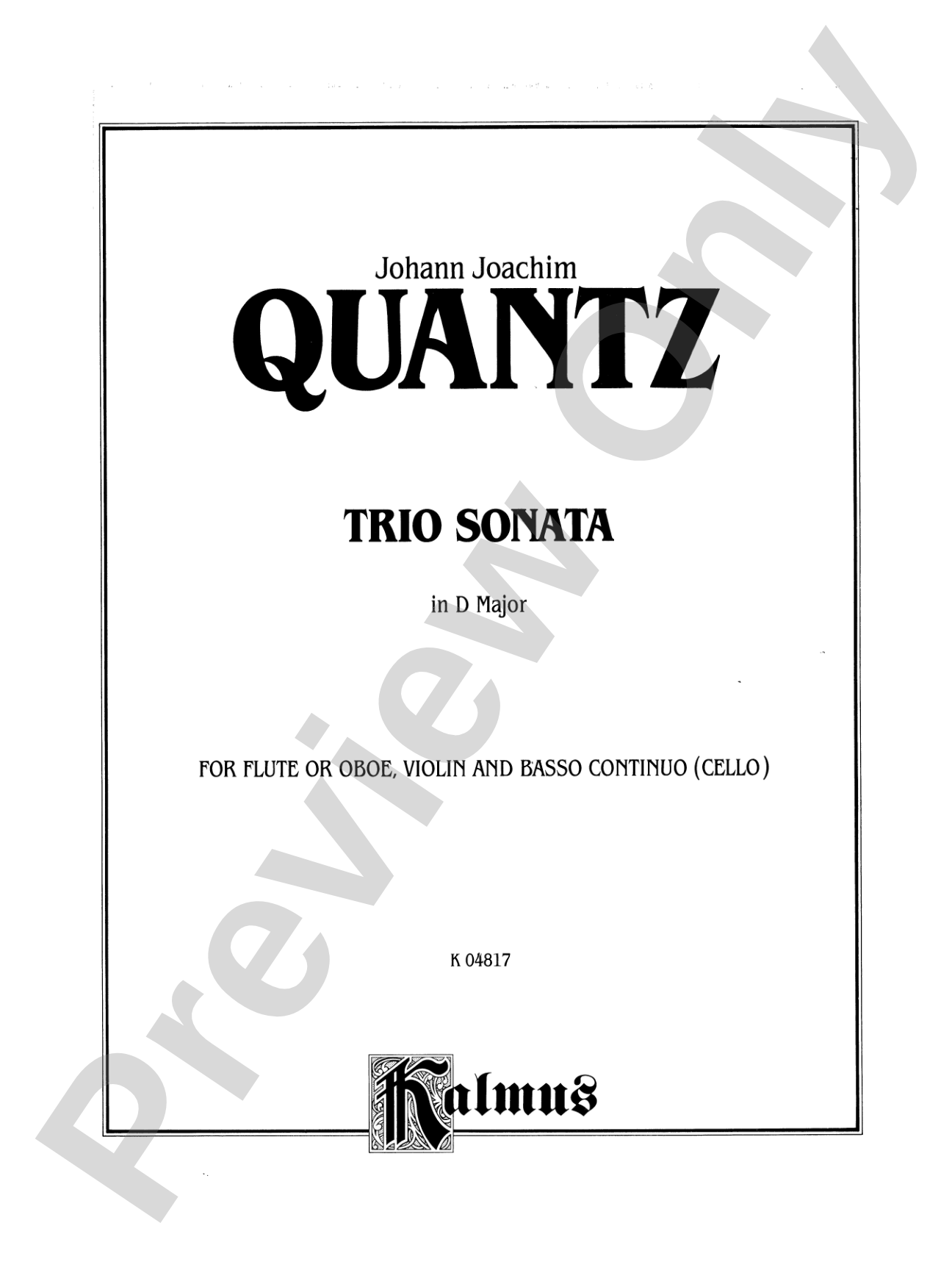

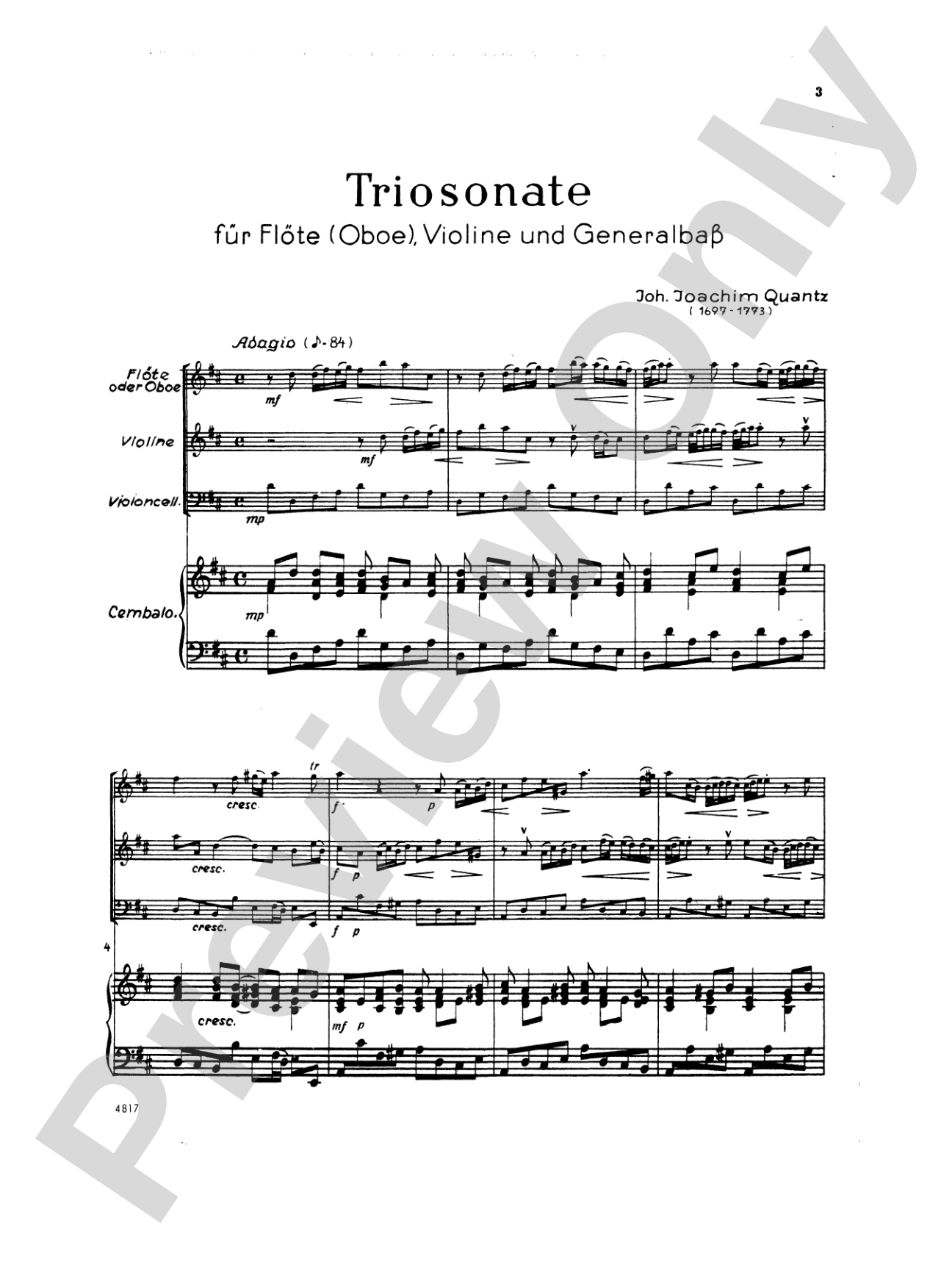
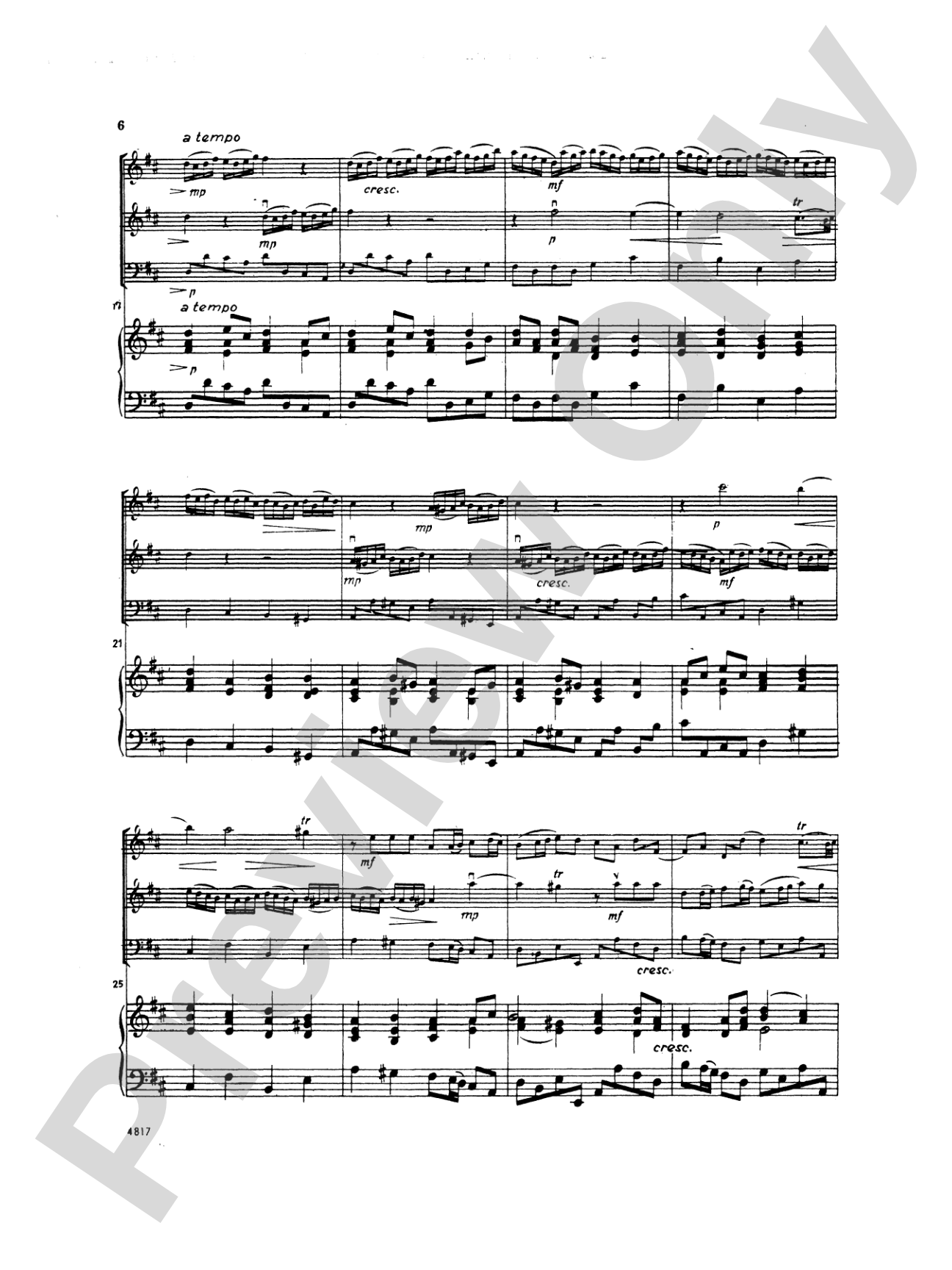
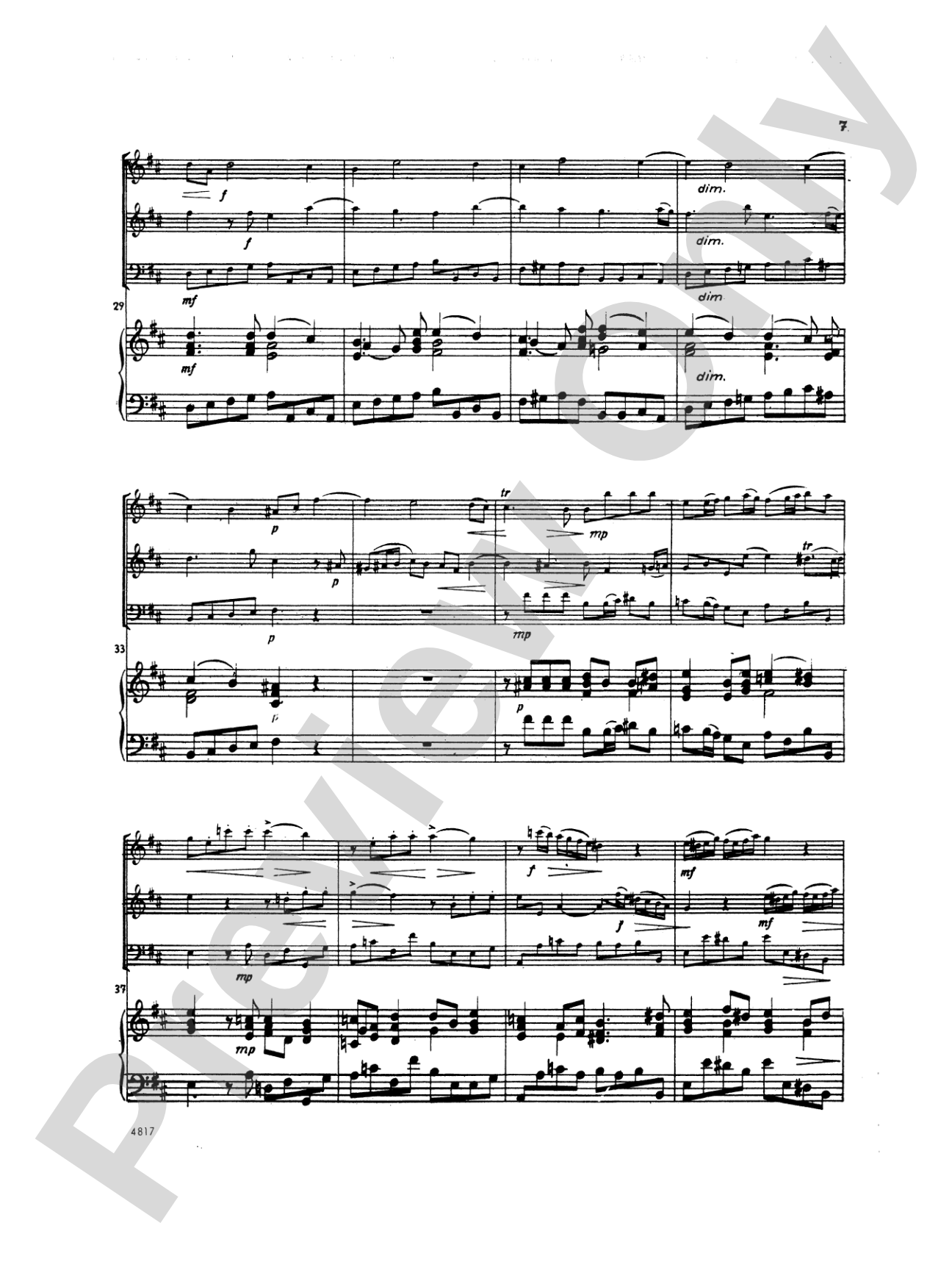
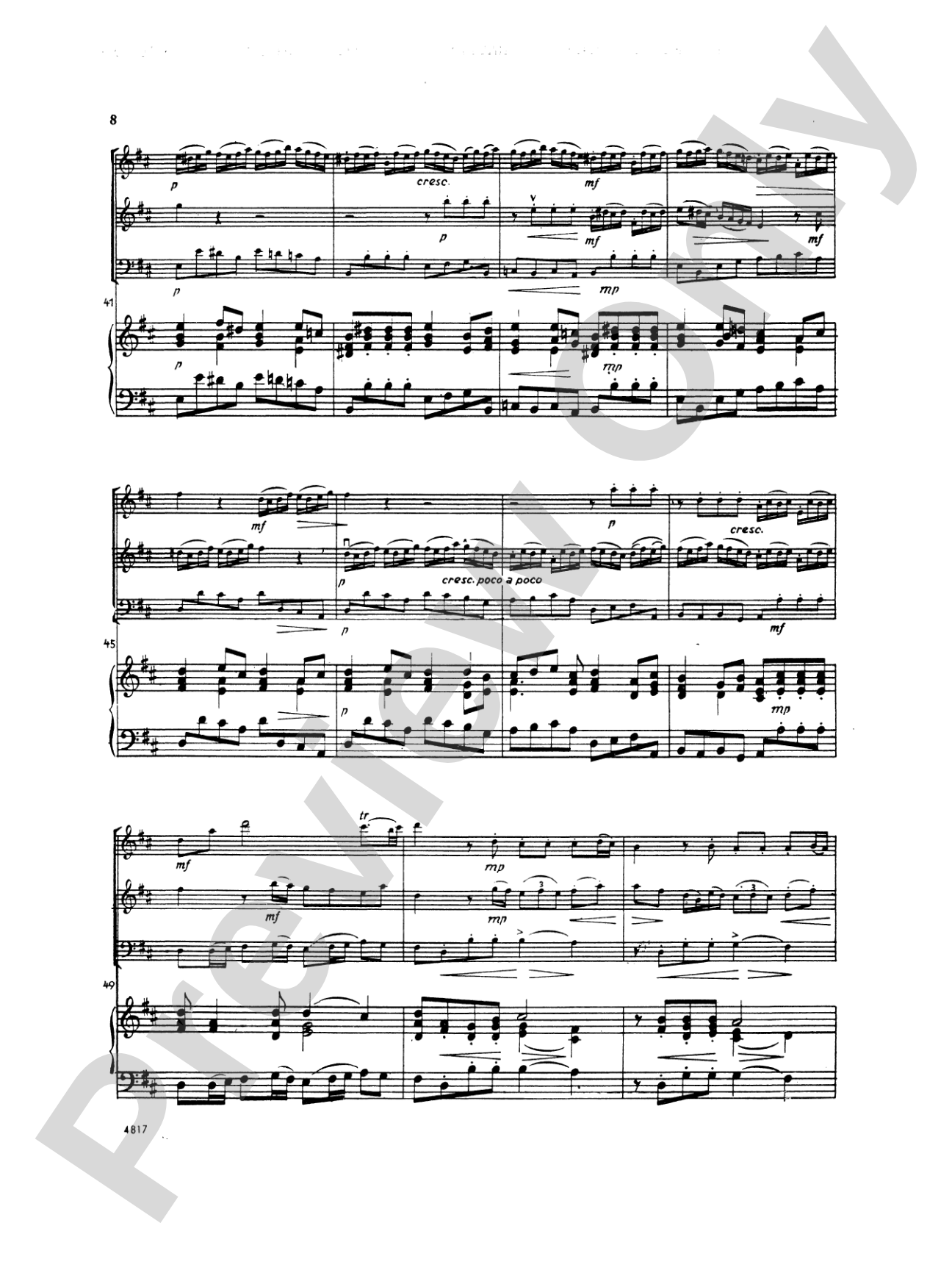
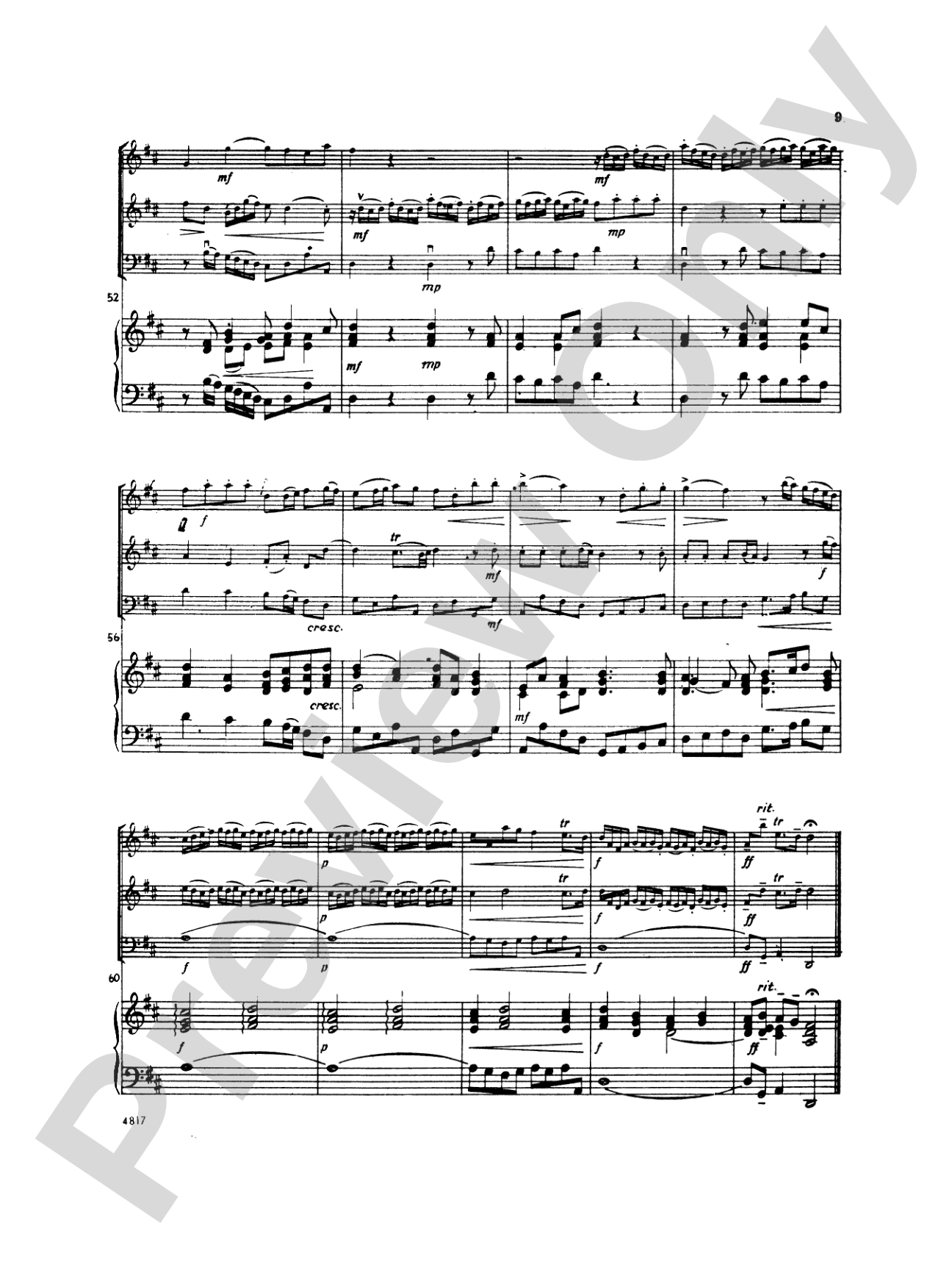
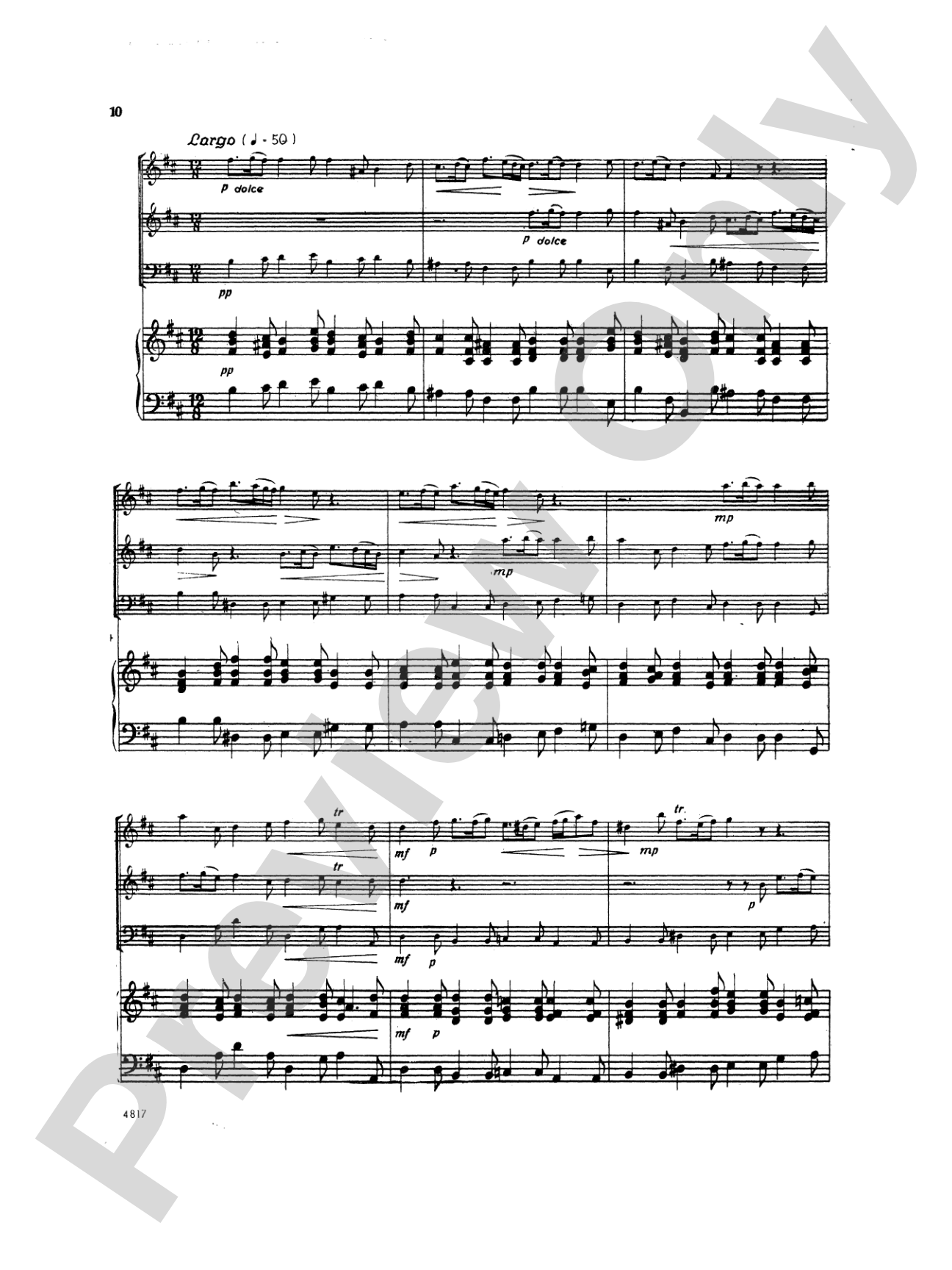
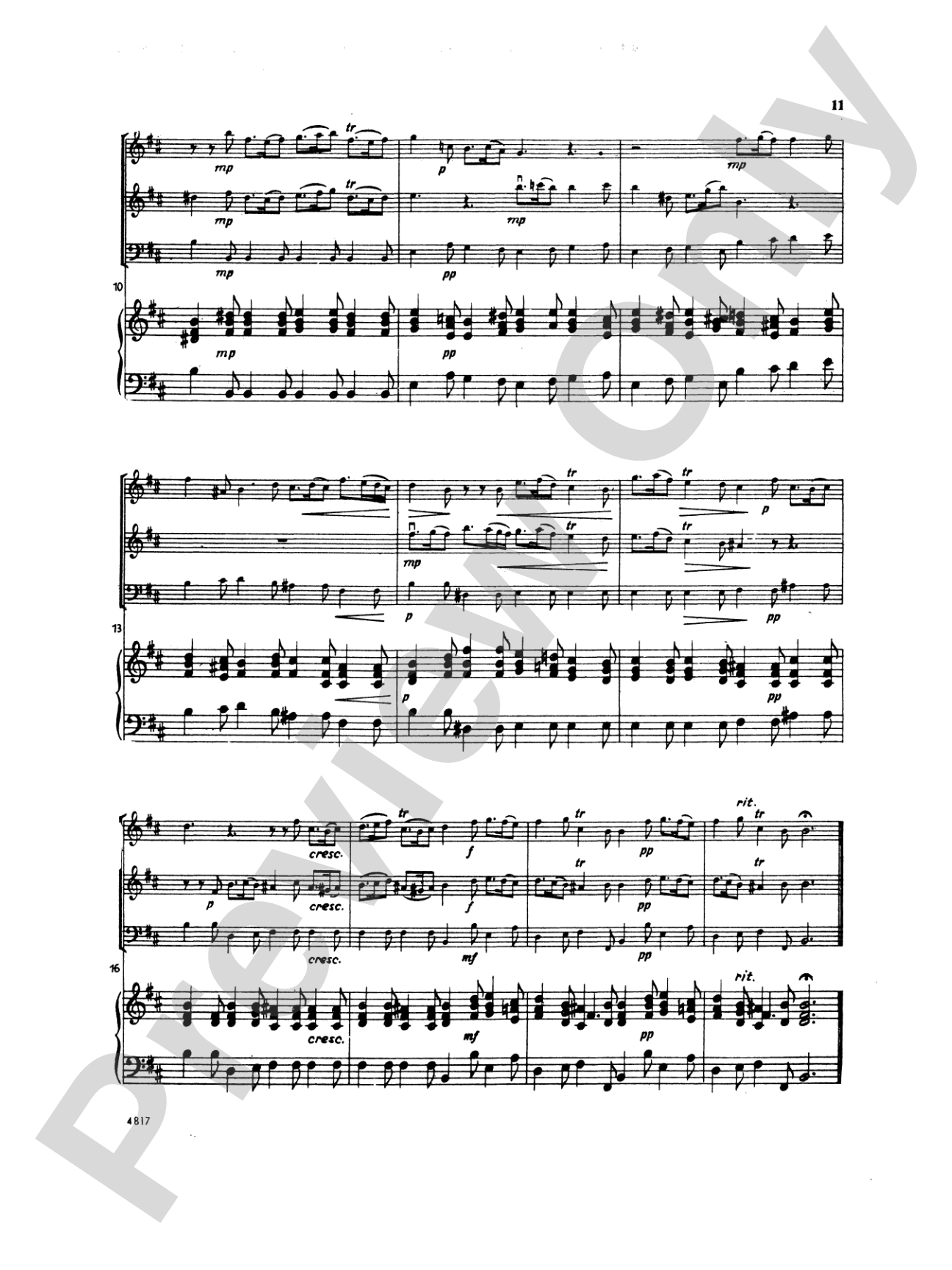
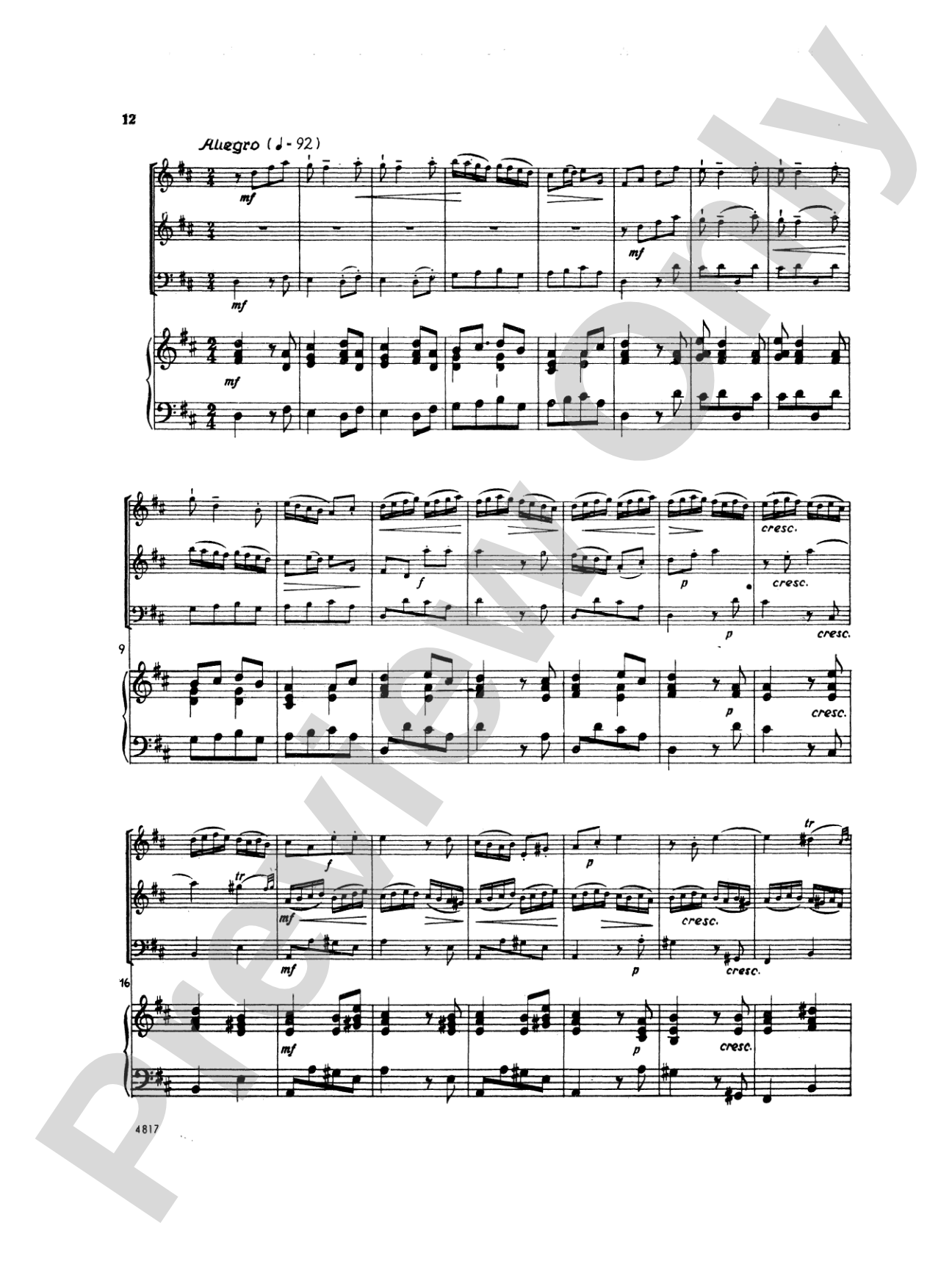
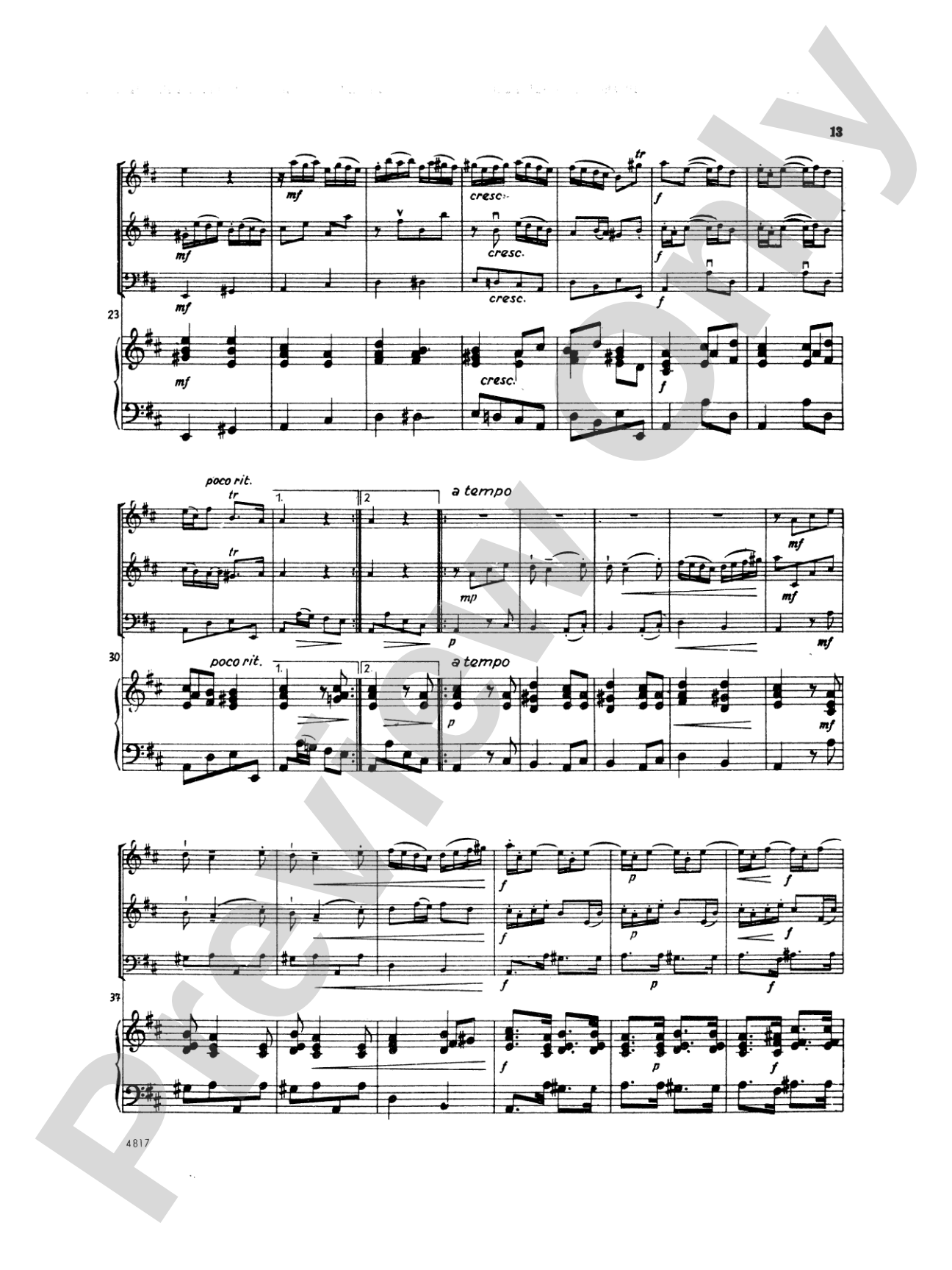


Quantz: Trio Sonata in D Major: Chamber Trio Score & Parts
By Johann Quantz
Item: 00-PK-0003619

$9.99
Pickup currently not available
Parts Added to Cart!
Related Items
Trio Sonata in D Major: Chamber Trio Score & Parts |
$9.95
|
View |
Description


Don't just read it, hear it, play along with it, and watch your students grow with it. In MakeMusic Cloud, Quantz: Trio Sonata in D Major: Chamber Trio Score & Parts comes alive with professional accompaniment, adjustable tempo, and built-in practice tools that turn solo practice into real progress.
Open in the Player
Jump straight in and assign it today.
Start Your Free Trial
Open this title and explore the full library in minutes.
Sample Audio
No sample audio found.
Sample Video
No sample videos found.
Additional Details
Series:
Kalmus Edition
Publisher:
Alfred Music
Page Count:
28
SKU:
00-PK-0003619
Instrumentation:
Flute (Oboe), Violin, & Basso Continuo
More about this title
About the Composer: Johann Quantz
Johann Quantz (1697-1773) was a Baroque flutist and composer whose prolific output shaped the development of the flute as a solo instrument and chamber ensemble voice. As a performer in the courts of various European nobility and eventually as Frederick the Great's flute teacher and composer, Quantz wrote nearly 300 works, including hundreds of sonatas, concerti, and chamber pieces that remain central to understanding 18th-century chamber music.
Quantz's compositional voice bridges the late Baroque and early Classical periods, marked by melodic clarity, elegant phrasing, and a deep understanding of what made music idiomatic to the flute. His trio sonatas exemplify the genre's essential characteristics: a central melodic line supported by a secondary harmonic voice and continuo foundation, all crafted with the precision and proportional balance that defined his artistic approach.
Why we love this
Quantz trio sonatas occupy an essential middle ground for chamber ensembles stepping beyond beginner repertoire into substantive Baroque literature. The writing is transparent and singable without being simplistic; the continuo part invites real collaboration rather than mere accompaniment, and the flute-violin dialogue models how complementary voices can support and enhance each other. Programming this work signals to audiences and students alike that chamber music at this level demands serious attention to period style and ensemble balance.
What to expect
Graceful and conversational, with the lightness and poise characteristic of galant-era chamber music. The work balances structural integrity with melodic charm; phrases unfold with natural ease, and the trio texture creates an intimate space where each voice can be heard clearly. There is elegance without affectation, and a sense of proportional balance that feels immediately satisfying.
Who it's for
Intermediate to advanced chamber ensembles with access to period-appropriate continuo instrumentation (harpsichord or fortepiano with cello or violone). This work suits flutists or oboists with solid technical facility and musicians ready to engage with Baroque stylistic conventions, including ornamentation, articulation, and the interpretive freedom the genre allows.
How to get the most out of it
- Balance the flute and violin as equal melodic partners rather than featuring the flute exclusively; the interplay between them drives the sonata's architecture.
- Approach the continuo line as an active participant in the conversation, not background texture; the basso continuo player's voice entries and harmonic choices should be audible.
- Shape phrases according to the harmonic rhythm and natural breathing points rather than mechanical measure divisions; Baroque phrasing often spans across barlines.
- Maintain a clear pulse without heavy accents; the elegance of Quantz's writing depends on forward motion and rhythmic transparency.
How to use it
This trio works beautifully in a program exploring Baroque chamber music or as a bridge between earlier dance-suite repertoire and Classical-era sonata forms. It pairs naturally with other Quantz works, contemporaneous trio sonatas by Handel or Telemann, or as a contrasting lighter piece within a recital of larger chamber works.
Skills your students will build
- Baroque articulation and ornamentation conventions
- Melodic dialogue and phrase shaping between two independent voices
- Continuo realization and the harmonic language of the early 18th century
- Period-appropriate ensemble balance and intonation in non-equal temperament contexts
- Reading figured bass notation and understanding harmonic function