
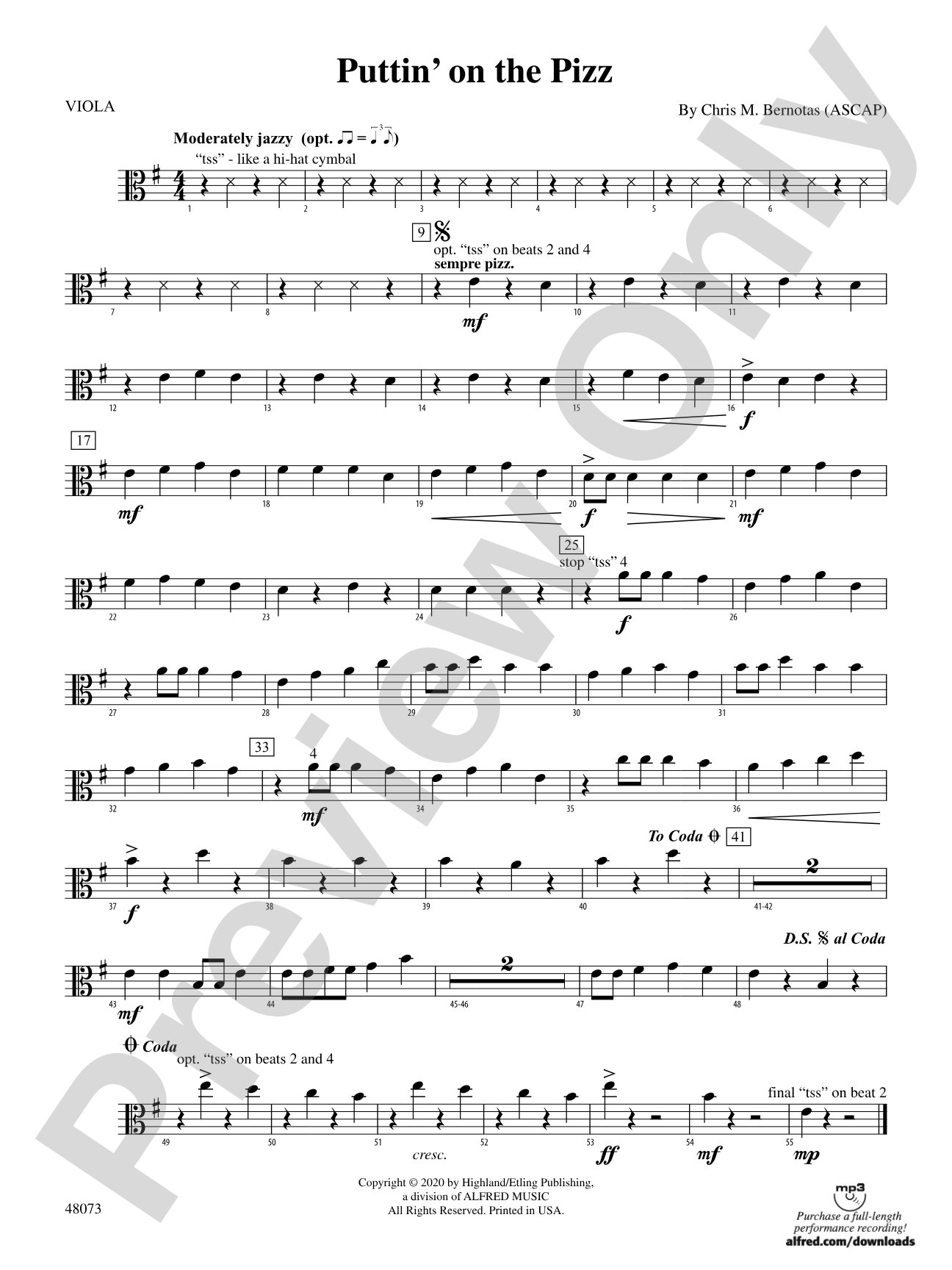

Puttin' on the Pizz: Viola
By Chris M. Bernotas
Grade: 1
Item: 00-PC-0018414_VA1
$5.99
Pickup currently not available
Description
This title features Alfred Music's String Orchestra FLEX options. That means that every part in this set is now transposed into every other part, so you can play this title with any combination of like- or mixed-string ensemble. After purchasing this set, decide what additional parts you need to meet the unique needs of your ensemble, then download and print them for free at alfred.com/supplemental---free of charge.
Puttin' on the Pizz by Chris Bernotas is sure to become a favorite selection of students and directors. The descending bass line sets the stage for this fun piece. All notes stay in first position and the string orchestra plays pizzicato throughout. Students also have the chance to act as the percussion section. With the optional use of 'swinging' eighth notes, Puttin' on the Pizz could be a fun way to introduce a jazzy style to the string orchestra. Everyone in the audience (and in the orchestra) will be tapping their toes to this piece. Violin 2 and Viola are doubled, as are Cello and String Bass, which will work perfectly for younger string orchestras. Correlated to Sound Innovations for String Orchestra, Book 1, Level 4. (2:30) This title is available in MakeMusic Cloud.


Puttin' on the Pizz by Chris Bernotas is sure to become a favorite selection of students and directors. The descending bass line sets the stage for this fun piece. All notes stay in first position and the string orchestra plays pizzicato throughout. Students also have the chance to act as the percussion section. With the optional use of 'swinging' eighth notes, Puttin' on the Pizz could be a fun way to introduce a jazzy style to the string orchestra. Everyone in the audience (and in the orchestra) will be tapping their toes to this piece. Violin 2 and Viola are doubled, as are Cello and String Bass, which will work perfectly for younger string orchestras. Correlated to Sound Innovations for String Orchestra, Book 1, Level 4. (2:30) This title is available in MakeMusic Cloud.
Don't just read it, hear it, play along with it, and watch your students grow with it. In MakeMusic Cloud, Puttin' on the Pizz: Viola comes alive with professional accompaniment, adjustable tempo, and built-in practice tools that turn solo practice into real progress.
Open in the Player
Jump straight in and assign it today.
Start Your Free Trial
Open this title and explore the full library in minutes.
Sample Audio
1
Audio File
--:--
0:00
0:00
Sample Video
Additional Details
Series:
Sound Innovations for String Orchestra
Publisher:
Alfred Music
Page Count:
66
SKU:
00-PC-0018414_VA1
More about this title
About the Composer: Chris M Bernotas

Chris M Bernotas brings more than 25 years of experience as a composer, conductor, and music educator to every project he undertakes. Currently serving as Director of Instrumental Publications for Alfred Music, he has shaped pedagogical materials used by ensembles worldwide, from beginning students to advanced groups. His compositions balance musicality with clear developmental purpose, making them accessible without sacrificing artistic substance.
Bernotas draws his compositional voice from direct classroom experience. He has worked extensively with students at all levels and regularly guest conducts and leads clinician workshops, giving him insight into what teachers and young musicians actually need from their repertoire. Beyond composing, he has co-authored several instrumental resources including the Sound Innovations series, Sound Artistry, and Sound Performance. His work reflects a deep commitment to fostering both technical growth and musical confidence in the next generation of ensemble players.
Why we love this
The FLEX transposition feature removes the logistical headache of managing odd instrumentation without forcing you to rewrite parts by hand. Bernotas writes with genuine understanding of early-level string technique and rhythm, so even this playful pizzicato piece reinforces foundational skills while students are having fun rather than grinding through exercises. The optional swing rhythms and student percussion parts give you multiple entry points for differentiation and engagement.
What to expect
Playful and groove-oriented, with a walking bass line that immediately suggests movement and lightness. The pizzicato texture keeps the sound bright and buoyant, while the optional swing treatment lets you lean into a casual, jazz-inflected swagger that feels contemporary and fun rather than stuffy or formal.
Who it's for
String orchestra directors working with Grade 1 to 1.5 ensembles, particularly those with limited or mixed instrumentation who need flexibility without administrative burden. This piece also serves Suzuki-based programs and community orchestras managing variable roster sizes, since the FLEX parts let you download only what you need.
How to get the most out of it
- Establish the pizzicato articulation clearly before rehearsal begins; have students pluck with a consistent "pop" and bring the finger back quickly to stop the sound rather than letting notes ring.
- Lock the descending bass line between cellos and basses first, as it anchors the entire harmonic motion; once that groove sits, the upper voices will find their pocket more easily.
- If you opt for swinging eighth notes, demonstrate the swing feel with a recorded example or by conducting it yourself before asking students to apply it; young players often need to hear the lilt before they can execute it.
- Assign the optional percussion parts (likely hand claps or simple rhythm hits) to students who benefit from rhythmic responsibility without reading complex pitched notation, turning what could be a benching opportunity into active participation.
How to use it
Open a winter or spring concert with this piece to set an accessible, upbeat tone and signal that string orchestra repertoire can swing as well as soar. It pairs well alongside more lyrical selections, giving your program dynamic contrast while keeping the technical demands reasonable for younger ensembles. Use it as a vehicle for introducing jazz style and rhythmic interpretation without overloading students with unfamiliar notation or advanced techniques.
Skills your students will build
- Pizzicato articulation and control
- First-position intonation across all string parts
- Rhythmic ensemble accuracy with an active walking bass line
- Swing rhythm interpretation and feel (optional)
- Coordination and timing while managing rhythmic roles alongside pitched parts