

Put a Little Love in Your Heart: SAB Choral Octavo
Arr. Jeff Funk
Item: 00-PO-0004754
$2.25
Minimum order quantity: 20 copies
One moment…
Related Items
Put a Little Love in Your Heart: SATB Choral Octavo |
$2.25
|
View | |
Put a Little Love in Your Heart: 2-Part Choral Octavo |
$2.25
|
View | |
Put a Little Love in Your Heart: SATB Choral Octavo |
$2.25
|
View | |
Put a Little Love in Your Heart: SAB Choral Octavo |
$2.25
|
View | |
Put a Little Love in Your Heart: 2-Part Choral Octavo |
$2.25
|
View | |
Put a Little Love in Your Heart: Choral Octavo SoundTrax CD |
$27.99
|
View |
Description
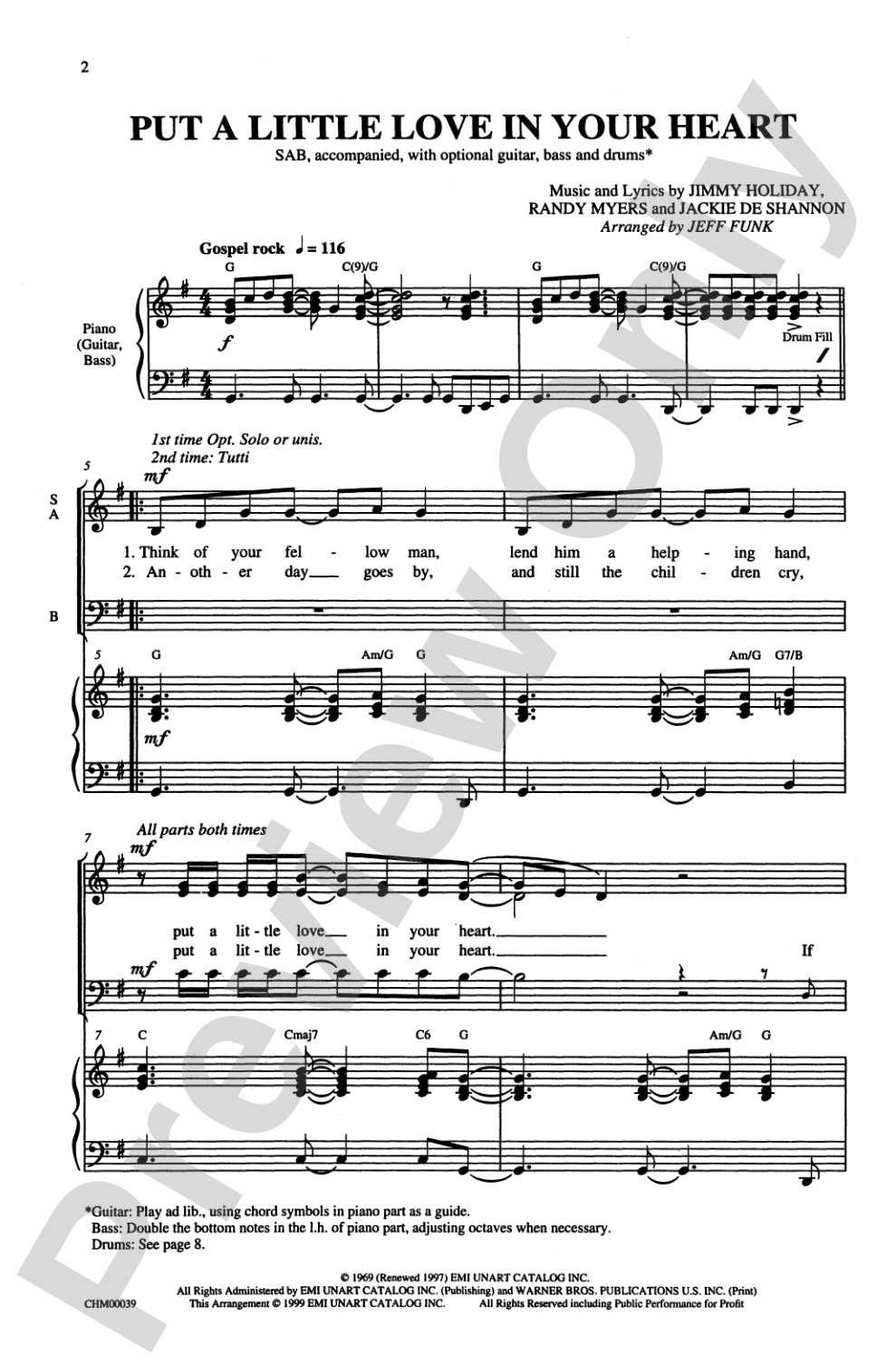
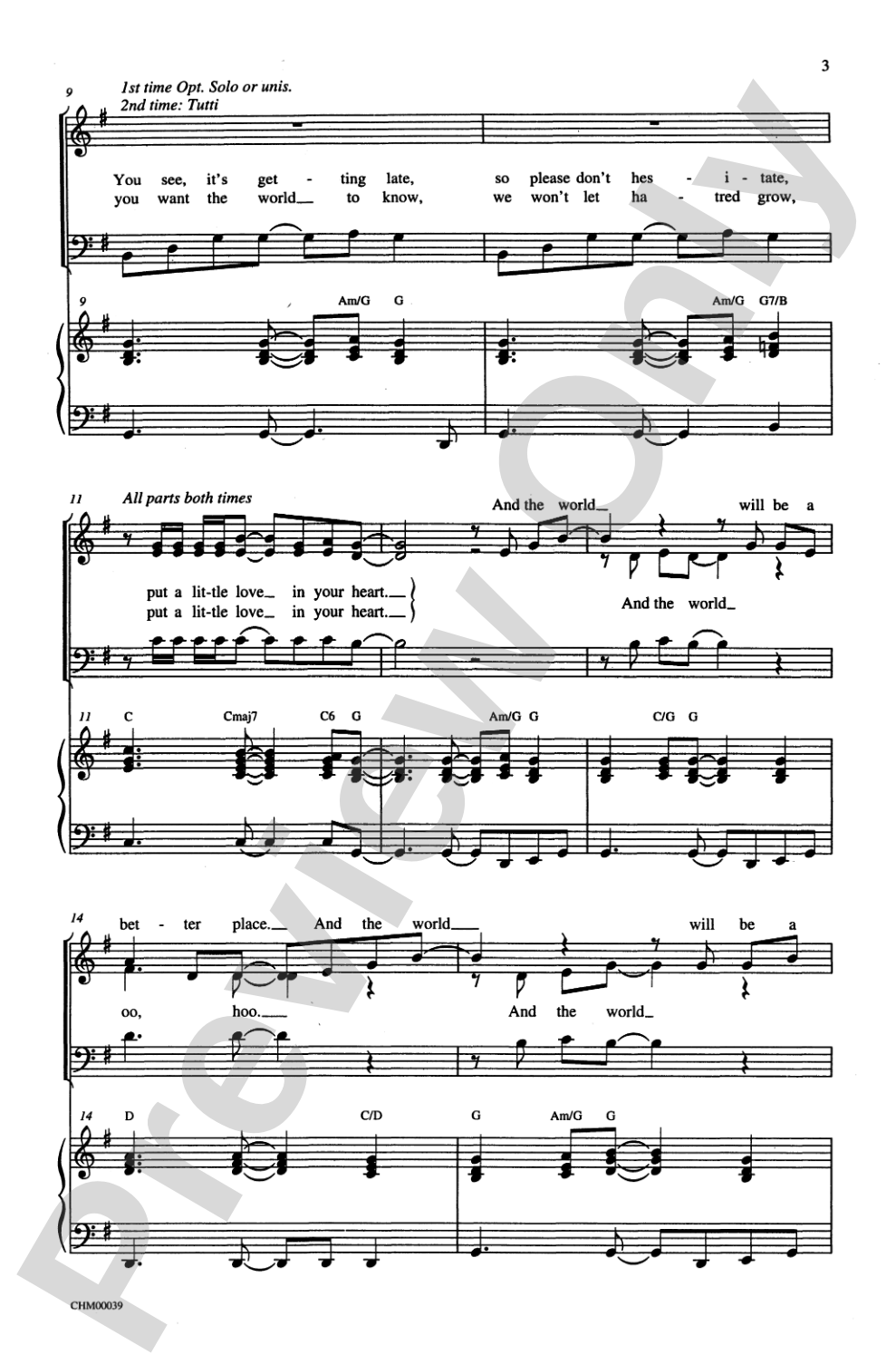
Everyone loves this popular tune and Jeff's arrangement makes for a great choral presentation. This is a wonderful song for promoting brotherhood and universal cooperation in the new century. Peace and love are echoed themes from the 60s to today and the lyrics for this selection offer just that.


Put a Little Love in Your Heart: SAB Choral Octavo isn't in MakeMusic Cloud just yet...but it could be. Let us know you'd like to see it, and you'll help shape what comes next. In the meantime, start a free trial and dive into thousands of interactive titles your students can play along with today.
Request This Title
Tell us you want it.
Start Your Free Trial
Explore everything that's ready to play right now.
Sample Audio
No sample audio found.
Sample Video
No sample videos found.
Additional Details
Series:
Alfred Archive Edition: Alfred Pop Choral Series
Publisher:
Alfred Music
Page Count:
8
SKU:
00-PO-0004754
More about this title
About the Arranger: Jeff Funk

Jeff Funk built a prolific publishing career starting at eighteen with his song "Fly to the Sky Tonight," and has since composed and arranged hundreds of choral works that have sold over 1.7 million copies worldwide. A summa cum laude graduate of Millikin University (1993), he gained national recognition when NBC selected his composition "Believe in the Music" as the opening song for the 2000 Macy's Thanksgiving Day Parade telecast.
Beyond his work in choral music, Funk has expanded into fiction writing, with his first short story published in a paperback anthology, and serves as an assistant editor for Necro Publications. He resides in Auburn, Indiana.
Why we love this
Funk's arrangement taps into why this song endures: a melody so memorable that audiences immediately connect, paired with lyrics about universal love and cooperation that resonate across generations. The SAB voicing makes it accessible for choirs with lighter soprano sections or developing singers without sacrificing the emotional weight of the message. This is the kind of piece that audiences leave humming and that reminds singers why they joined choir in the first place.
What to expect
Warm, optimistic, and genuinely hopeful without veering into saccharine. The familiar melody invites singers to focus on communicating the message rather than wrestling with complex vocal writing, creating a performance that feels both polished and heartfelt.
Who it's for
Intermediate and developing choirs seeking accessible, uplifting repertoire with a contemporary feel. Directors programming concerts that celebrate themes of peace, unity, or social responsibility will find this piece connects immediately with audiences of all ages.
How to get the most out of it
- Lean into the lyrical quality of the melody line. The sopranos carry the primary tune, so encourage them to shape phrases with genuine warmth rather than pushing for volume.
- Balance the alto and bass parts carefully in sections where they support the soprano line. These voices anchor the harmony and need to sit just below the surface without disappearing.
- Use the recorded accompaniment to lock in the groove, especially if your choir is less comfortable with steady rhythmic precision. The track provides both security and a professional sonic foundation.
- Emphasize the unison or homophonic passages that frame the verses. These moments of unity reinforce the song's message about togetherness and give the arrangement its most powerful emotional beats.
How to use it
Pair this with other pop or secular choral arrangements for a concert focused on contemporary themes, or use it as a closing number that leaves audiences with an affirming send-off. Its accessible style and uplifting message make it equally effective as a community outreach performance or a season finale.
Skills your students will build
- Blending SAB voicing with secure inner parts
- Communicating lyrics with emotional authenticity in a pop idiom
- Maintaining stylistic consistency when singing with recorded accompaniment
- Understanding harmonic support in three-part mixed voicing