
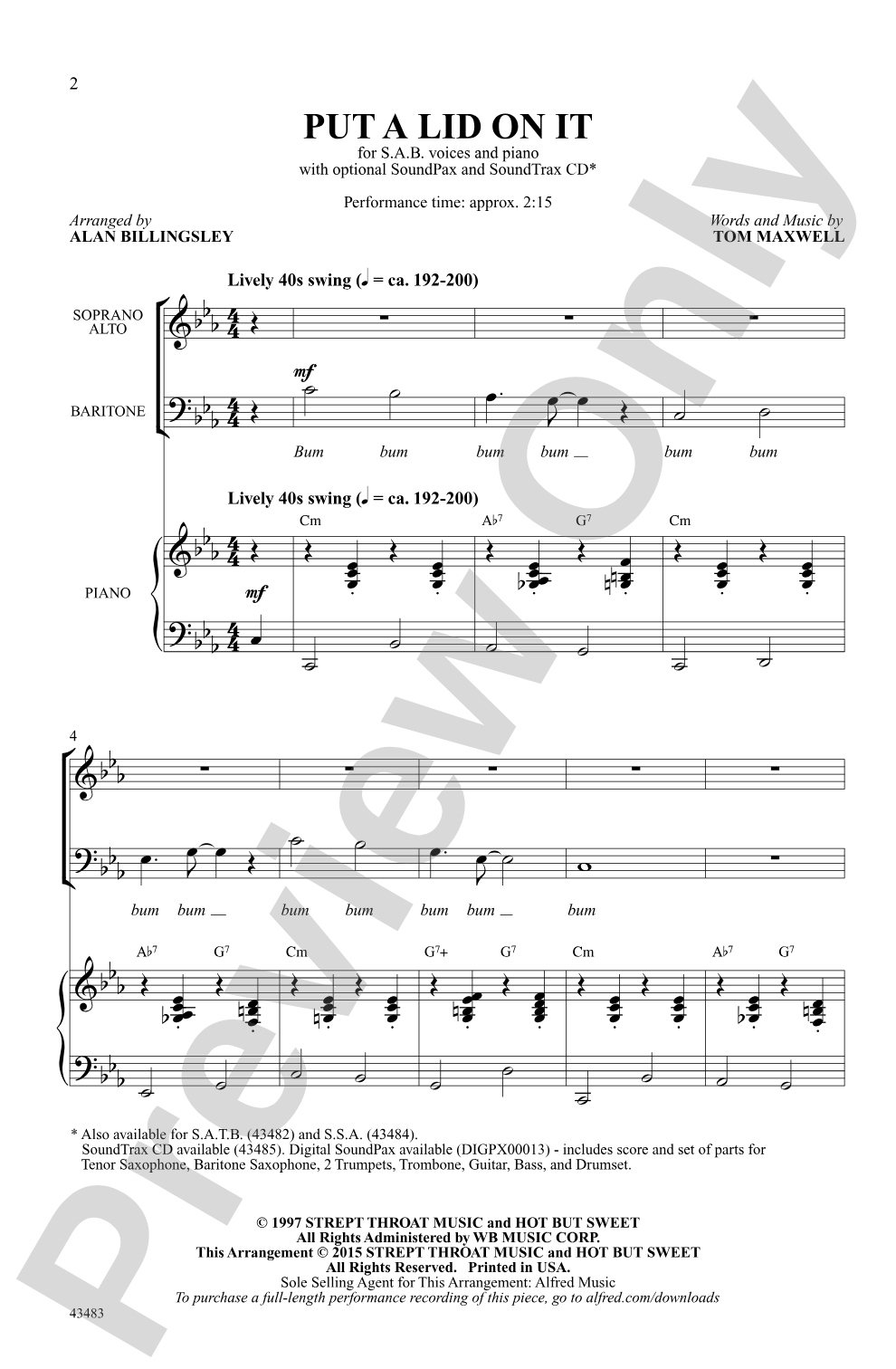
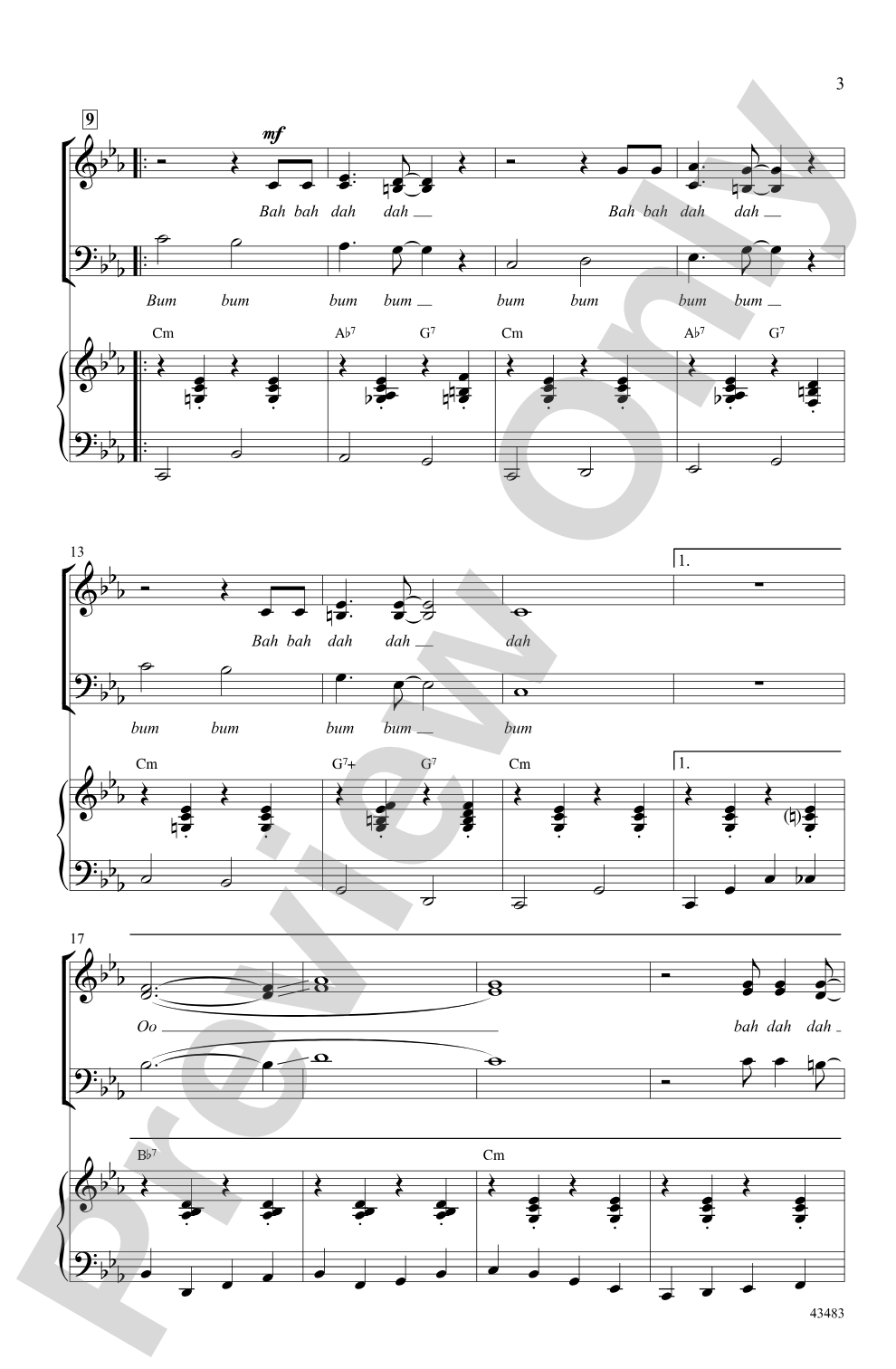
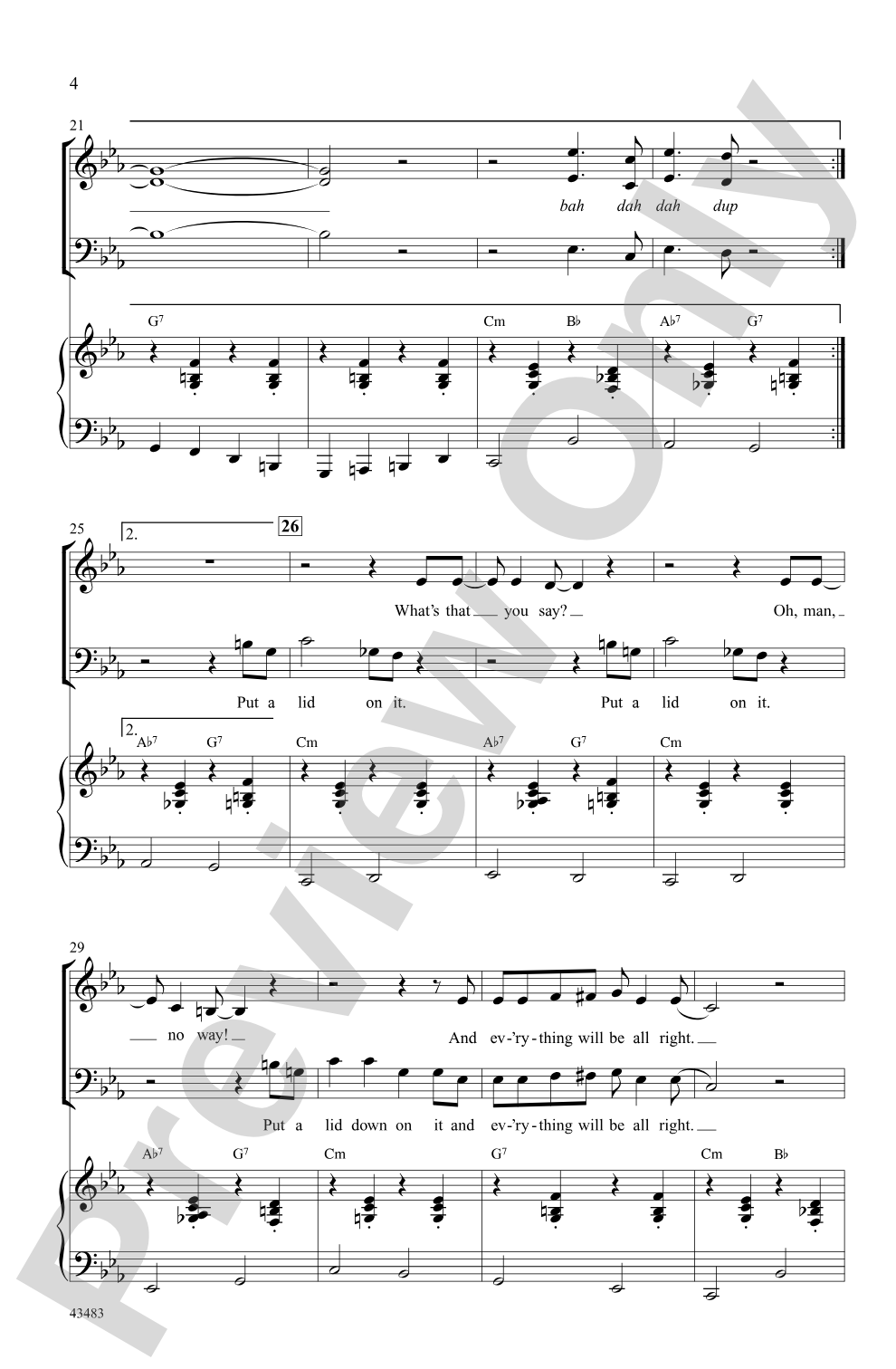

Put a Lid on It: SAB Choral Octavo
Words and music by Tom Maxwell / arr. Alan Billingsley
Item: 00-PO-0003393
$2.00
Minimum order quantity: 20 copies
One moment…
Related Items
Put a Lid on It: SoundTrax Digital Audio Download |
$29.99
|
View | |
Put a Lid on It: SATB Choral Octavo |
$2.00
|
View | |
Put a Lid on It: SSA Choral Octavo |
$2.00
|
View | |
Put A Lid On It: Choral Octavo Digital SoundPax |
$35.00
|
View | |
Put a Lid on It: SATB Choral Octavo |
$2.00
|
View | |
Put a Lid on It: SAB Choral Octavo |
$2.00
|
View | |
Put a Lid on It: SSA Choral Octavo |
$2.00
|
View | |
Put a Lid on It: Choral Octavo SoundTrax CD |
$29.99
|
View |
Description
A stylish swing tune from the Squirrel Nut Zippers that is hot, hot, hot! With infectious jazz harmonies and rhythms that jump off the page, this arrangement will really energize your next concert!


Put a Lid on It: SAB Choral Octavo isn't in MakeMusic Cloud just yet...but it could be. Let us know you'd like to see it, and you'll help shape what comes next. In the meantime, start a free trial and dive into thousands of interactive titles your students can play along with today.
Request This Title
Tell us you want it.
Start Your Free Trial
Explore everything that's ready to play right now.
Sample Audio
1
Audio File
--:--
0:00
0:00
Sample Video
No sample videos found.
Additional Details
Series:
Alfred Pop Choral Series
Publisher:
Alfred Music
Page Count:
12
SKU:
00-PO-0003393
More about this title
About the Composer: Tom Maxwell
Tom Maxwell is the co-founder and primary songwriter of Squirrel Nut Zippers, the swing revival band that emerged from Chapel Hill, North Carolina in the 1990s. His compositions blend vintage jazz aesthetics with contemporary energy, making him a distinctive voice in the neo-swing movement that brought big band sounds back into popular music.
Maxwell's arrangements and original compositions have made Squirrel Nut Zippers' catalog rich material for choral and instrumental educators seeking high-energy, stylistically engaging pieces. His work demonstrates how popular idioms can be adapted for classroom and concert settings while retaining their infectious appeal and musical sophistication.
Why we love this
Alan Billingsley's arrangement captures the infectious swagger of the original without requiring a full jazz ensemble. The SAB voicing keeps parts singable and energetic while the jazz harmonies and rhythmic drive stay front and center, making this a genuine crowd-pleaser that doesn't ask your singers to compromise on style.
What to expect
Sleek and confident, like stepping into a 1940s jazz club reimagined for today. The arrangement swings with a sophisticated lightness, balancing wit and musical substance. Singers feel the energy of a big band sound compressed into three parts.
Who it's for
Choirs with SAB voicing who want contemporary repertoire with genuine groove and musicality. This works for high school ensembles, community choirs, and college groups looking to program something stylish that engages audiences and keeps singers invested.
How to get the most out of it
- Lock the rhythmic foundation by having the altos establish the swing feel early in rehearsal; their steady pulse underneath the melodic lines determines whether the whole piece swings or drags.
- Layer in the sopranos and basses once the rhythm section is secure, then focus on precision with syncopated entrances and the punchy articulations that give this arrangement its characteristic bite.
- Coordinate with the recorded accompaniment during early rehearsals so singers internalize the groove, then gradually reduce dependence on the track so your choir owns the rhythm independently.
- Shape phrases dynamically across the jazz harmonies; let the harmonic movement guide your dynamics rather than treating each measure with equal weight, which keeps the arrangement sounding sophisticated rather than mechanical.
How to use it
Program this as an energizing opener or closer that breaks up a concert of more traditional repertoire. It pairs well with other contemporary pop or jazz-influenced pieces and gives audiences an immediate sense that your choir performs music from multiple styles with equal commitment.
Skills your students will build
- Swing rhythm and jazz phrasing conventions
- Reading syncopated rhythmic patterns in SAB texture
- Maintaining independence when parts move against each other
- Balancing harmony blend while singing characteristic jazz articulations
- Responding to recorded accompaniment and internalizing groove